
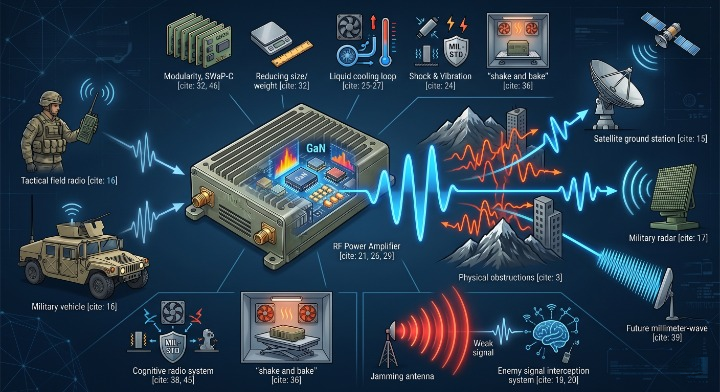
Imagine your field unit loses signal during a critical maneuver because the transmitter lacks the strength to pierce atmospheric interference. This degradation in signal integrity can lead to mission failure or compromised safety for personnel in high-stakes environments. By integrating high-efficiency amplification, you ensure robust, long-range connectivity that remains stable under the most demanding battlefield conditions.
RF Power Amplifiers are used in military communication systems to convert low-power radio frequency signals into high-power signals capable of traveling vast distances while resisting jamming and environmental noise. These components serve as the final stage of a transmitter, ensuring that critical data reaches its destination across land, sea, and air. Without this amplification, the complex waveforms used in modern defense would dissipate before reaching tactical command centers.
Why are RF power amplifiers vital for defense?
RF Power Amplifiers provide the necessary gain to ensure clear voice, video, and data transmission across contested environments. You rely on these systems to maintain a tactical advantage by extending the operational reach of your communication hardware. These devices are the engine of the transmitter, determining how far a signal can travel and how well it survives interference.
Does signal reach impact mission success?
Think about it: in a remote theater of operations, a weak signal is as dangerous as no signal at all. You need your equipment to perform flawlessly whether you are transmitting from a dense jungle or a mountainous peak.
But that is not all:
- Reliable long-range communication.
- Enhanced resistance to electronic jamming.
- Support for high-bandwidth data streams.
Key Takeaway: Amplification is the cornerstone of signal persistence, allowing for reliable data exchange across thousands of miles in diverse terrain.
| Feature | Military Benefit |
|---|---|
| High Gain | Extends transmission distance to remote units |
| Signal Linearity | Preserves complex data integrity |
| Ruggedness | Ensures operation in extreme climates |
This data shows that high-gain systems are essential for maintaining the link budget required for secure military operations.
How do SATCOM systems benefit from signal boosting?
Satellite communications (SATCOM) require immense power to push signals through the Earth’s atmosphere to orbiting assets. You utilize specialized amplifiers to overcome path loss, which is the natural weakening of a signal as it travels through space. This ensures that global command and control remains uninterrupted regardless of your geographic location.
Is uplink stability improved by amplification?
Here is the deal: satellite uplinks must maintain a specific power level to ensure the transponder receives a clear signal. If the power fluctuates, your connection can drop, leading to a loss of situational awareness.
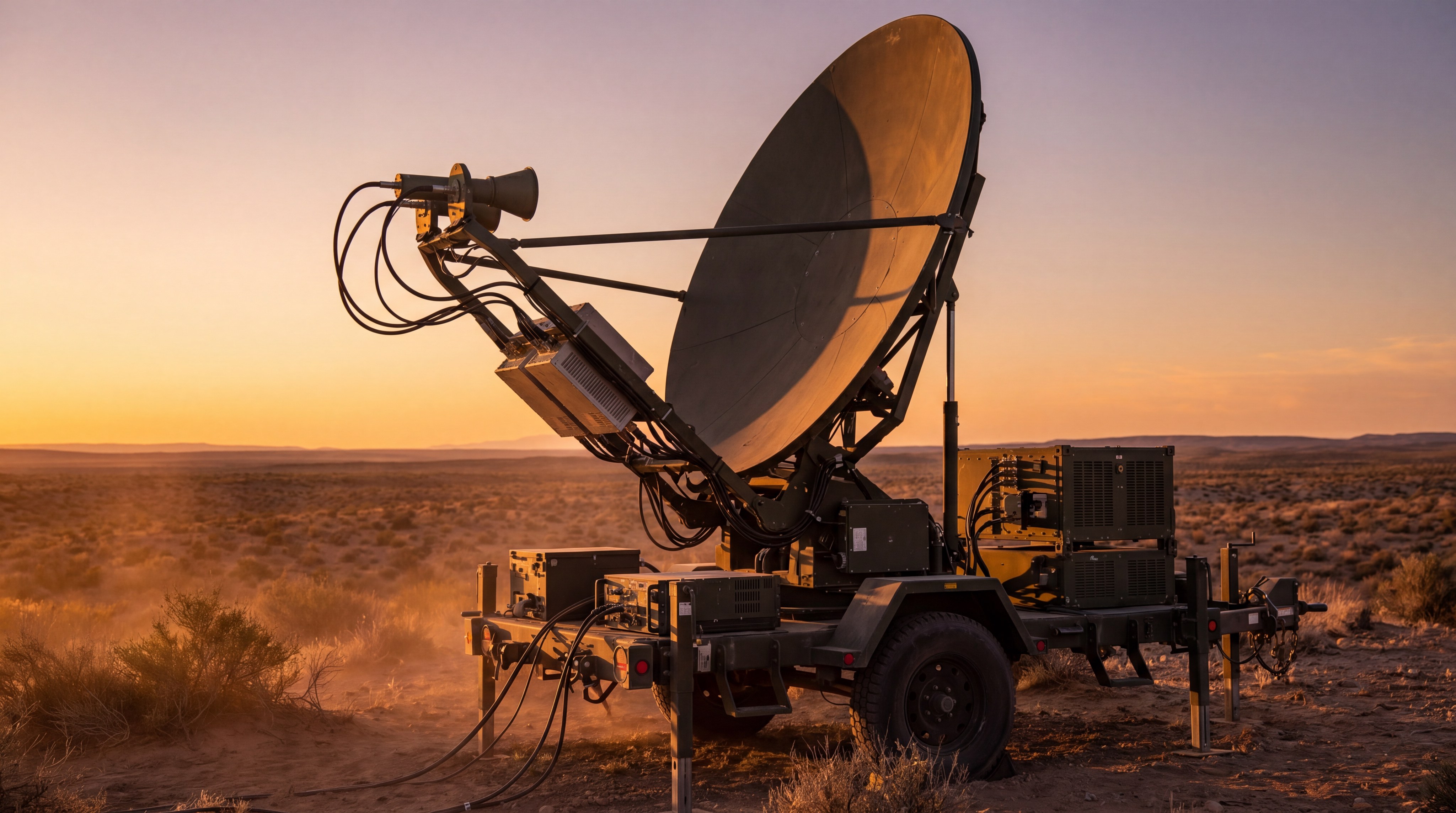
Consider these SATCOM requirements:
- High frequency stability for Ka and Ku bands.
- Redundant power systems for 24/7 uptime.
- Narrowbeam precision for secure uplinks.
Key Takeaway: High-power amplification is mandatory for SATCOM to overcome the significant attenuation encountered during atmospheric transit.
| Component | Role in SATCOM |
|---|---|
| BUC (Block Upconverter) | Converts and boosts signal for uplink |
| TWTA or SSPA | Provides the final power surge |
| Parabolic Dish | Focuses the amplified signal toward the satellite |
Effective amplification in SATCOM environments directly correlates to higher data throughput and lower latency for strategic communications.
What role does power amplification play in radar?
RF Power Amplifiers are fundamental to radar systems because they dictate the “eyesight” distance of your detection equipment. By increasing the peak power of transmitted pulses, you allow the system to detect smaller, more distant targets with higher resolution. This capability is critical for early warning systems and missile defense where every second of reaction time matters.
Can detection range be extended effectively?
The bottom line is this: the distance a radar wave can travel and return depends heavily on the initial power output. You can only see as far as your amplifier allows your signal to bounce back from a target.
But that is not all:
- Improved detection of stealth aircraft.
- Higher resolution for target discrimination.
- Faster scanning rates for rapid-moving threats.
Key Takeaway: Radar performance is intrinsically linked to the peak power output of the amplification stage, defining the safety perimeter of any defense installation.
| Radar Type | Power Requirement |
|---|---|
| Long-Range Surveillance | Extremely high peak power |
| Fire Control | High precision and high power |
| Weather Radar | Moderate power with high sensitivity |
Optimizing the amplification stage allows for a significant expansion of the operational bubble in both defensive and offensive radar configurations.
Can RF amplifiers improve tactical data links?
Tactical data links move massive amounts of real-time intelligence between aircraft, ground vehicles, and naval vessels. You require consistent power to maintain these high-speed networks, often in environments where the enemy is actively trying to disrupt your connection. Amplifiers ensure that these links stay “locked,” providing a seamless common operational picture for all commanders.
How is network reliability maintained?
Think about it: in a fast-moving combat scenario, your data link is your lifeline for coordinates and intelligence. You cannot afford a “buffering” moment when lives are on the line.
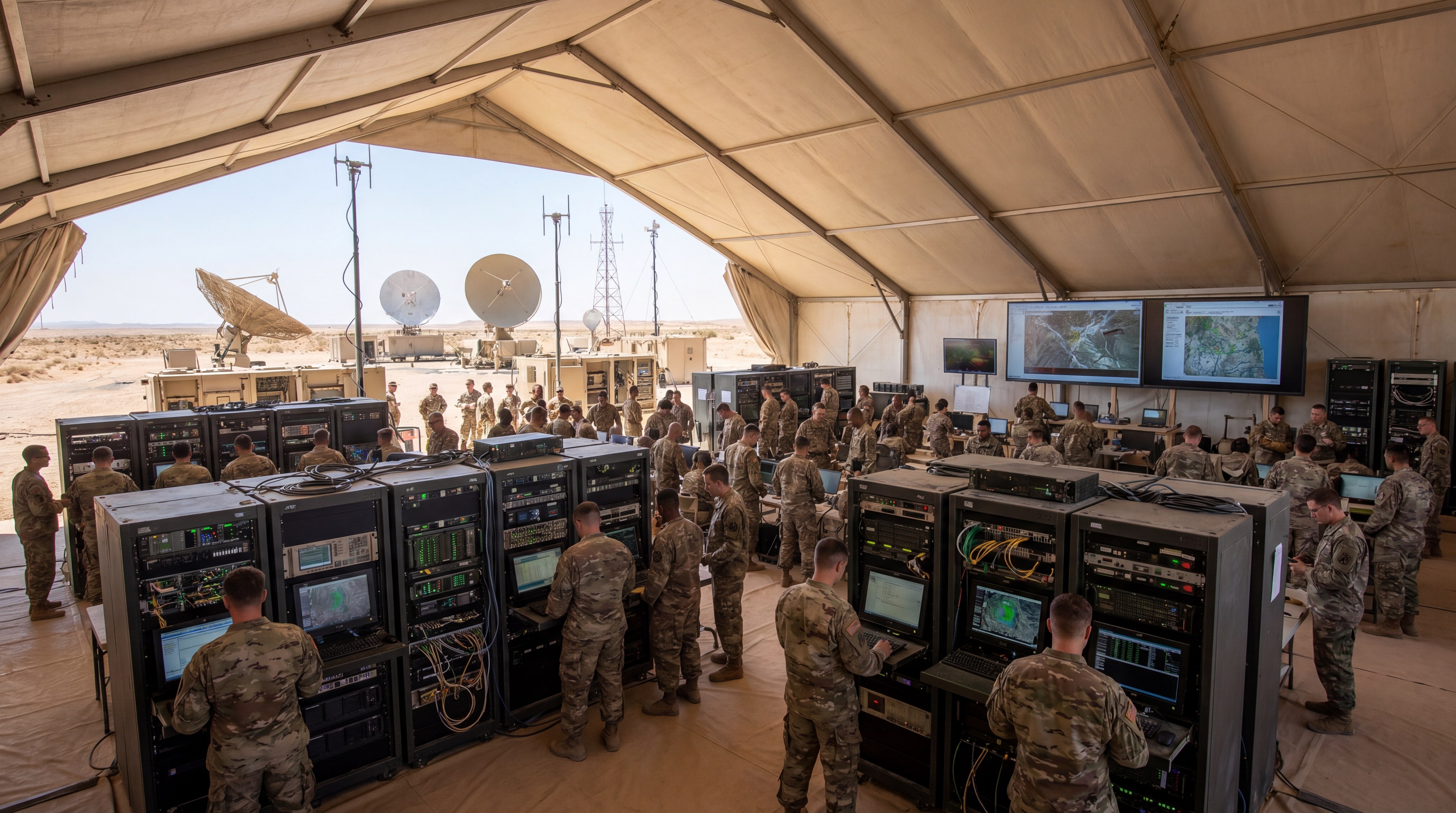
Key benefits of boosted data links:
- Real-time video streaming from UAVs.
- Secure encrypted voice channels.
- Interoperability between different military branches.
Key Takeaway: Robust amplification supports the high-speed data rates necessary for modern network-centric warfare and multi-domain operations.
| Link Category | Typical Usage |
|---|---|
| Link 16 | Standard for NATO air-to-air/ground |
| MANET | Mobile Ad-hoc Networking for ground troops |
| Wideband | High-capacity data for ISR missions |
Reliable amplification ensures that these tactical links remain resilient against both distance-related loss and electronic interference.
How is electronic warfare supported by high power?
In electronic warfare (EW), RF Power Amplifiers are used to overwhelm enemy sensors or protect your own assets through jamming. You use high-power output to create “noise” that masks your position or disrupts the enemy’s ability to communicate. These amplifiers must be agile, capable of operating across broad frequency ranges to counter evolving threats.
Is frequency agility a requirement?
The deal is this: an EW system is only as good as its ability to hit the right frequency with enough force to matter. If you can’t out-power the enemy signal, your jamming efforts will fail.
But that is not all:
- Broad-spectrum coverage to counter varied threats.
- Rapid pulse modulation for deceptive jamming.
- High-speed switching between defensive and offensive modes.
Key Takeaway: Power is the primary weapon in electronic warfare, used to dominate the electromagnetic spectrum and deny enemy situational awareness.
| EW Application | Amplification Goal |
|---|---|
| Jamming | Overwhelm the target frequency |
| Signals Intelligence | Boost faint signals for analysis |
| Deception | Mimic enemy signals at high power |
The strategic use of high-power amplification in EW can effectively neutralize enemy technological advantages without firing a single shot.
What design factors define military-grade hardware?
Military-grade amplifiers differ from commercial versions because they must withstand extreme physical and electrical stress. You look for hardware that is ruggedized to survive high-vibration environments, such as inside a fighter jet or a tracked vehicle. These units must also operate in a wide temperature range, from desert heat to high-altitude freezing.
Does durability affect long-term costs?
The bottom line is this: if your hardware fails in the field, the cost isn’t just financial; it’s operational. You need equipment that has a high Mean Time Between Failures (MTBF) to ensure mission readiness.
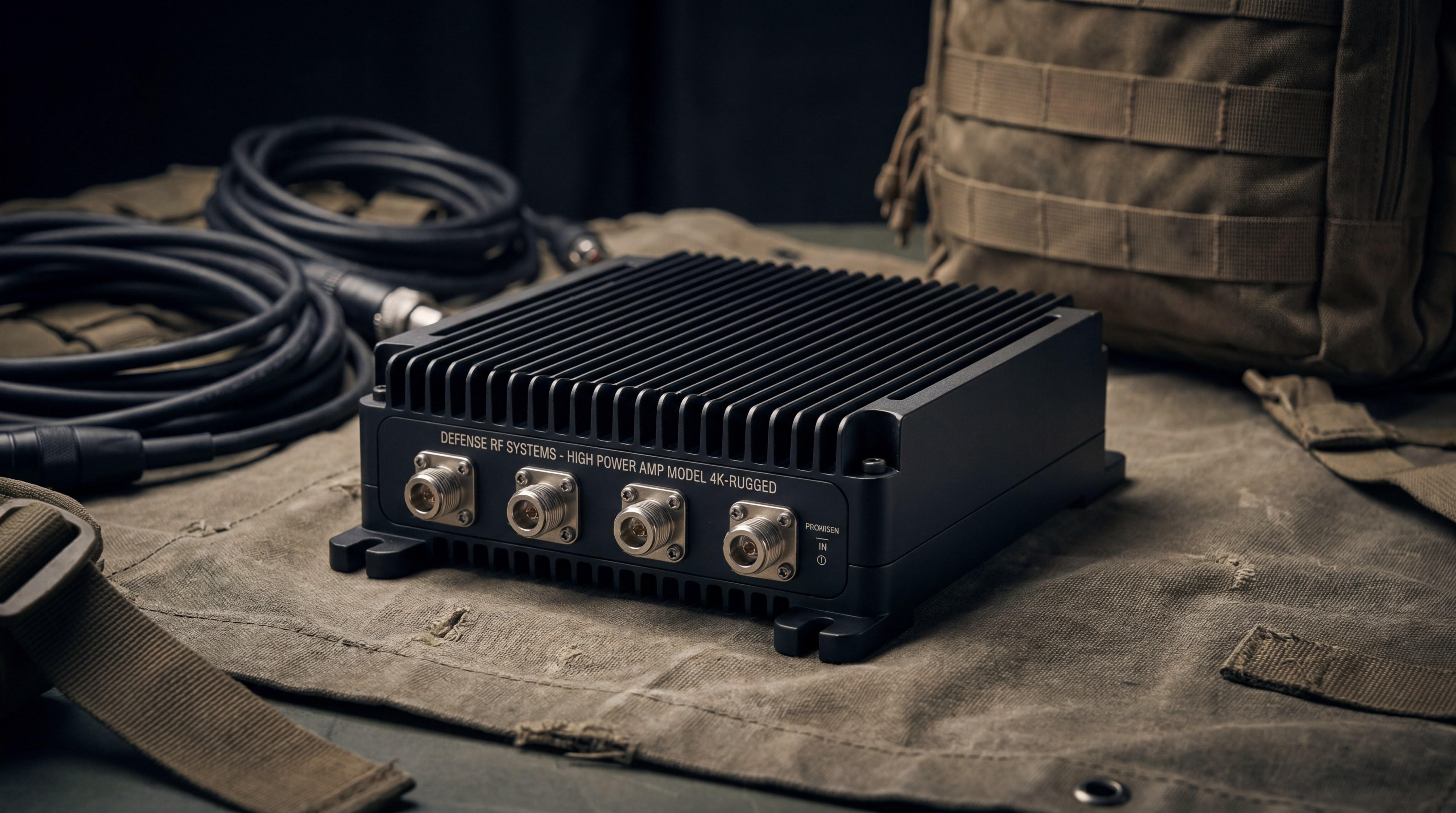
Military-grade specifications include:
- MIL-STD-810 for environmental testing.
- MIL-STD-461 for electromagnetic interference.
- Hermetic sealing to prevent moisture ingress.
Key Takeaway: Ruggedization ensures that amplification systems remain operational under the most punishing physical conditions on Earth.
| Standard | Test Criteria |
|---|---|
| MIL-STD-810G | Shock, vibration, and extreme temps |
| IP67 | Dust-tight and waterproof immersion |
| MIL-STD-461G | EMI/EMC compatibility |
Adhering to these standards ensures that your communication infrastructure remains the most reliable part of your tactical kit.
Why is thermal management crucial in the field?
High-power RF Power Amplifiers generate a significant amount of heat during operation. You must manage this thermal load to prevent the system from throttled performance or total hardware failure. In a military context, you often don’t have the luxury of air-conditioned server rooms, so the amplifier must dissipate heat efficiently in stagnant air.
Can heat sink design improve life cycles?
Think about it: every degree of temperature rise can shorten the life of a semiconductor. You need advanced cooling solutions to keep your mission-critical systems running for years.
Here is the deal:
- Heat pipes and advanced fins for conduction.
- Liquid cooling for high-density power modules.
- Thermal sensors for automatic protection shut-offs.
Key Takeaway: Efficient thermal management is the silent protector of amplification hardware, preventing premature failure during extended deployments.
| Cooling Method | Best Use Case |
|---|---|
| Passive Convection | Low-noise, low-maintenance field units |
| Forced Air (Fans) | Mobile command vehicles |
| Liquid Cold Plates | High-power shipboard or stationary radar |
Thermal efficiency directly impacts the SWaP (Size, Weight, and Power) constraints that drive modern military equipment design.
How do GaN technologies change modern defense?
Gallium Nitride (GaN) has revolutionized the defense sector by offering higher power density and efficiency compared to traditional silicon. You can now deploy smaller, lighter amplifiers that pack a more powerful punch, which is essential for man-portable equipment and UAVs. This technology allows for broader bandwidths, meaning one amplifier can do the job that previously required three.
Is efficiency the main driver for GaN?
The deal is this: when you use GaN, you get more RF power out for every watt of DC power you put in. This reduces battery drain and lowers the amount of waste heat your system has to manage.
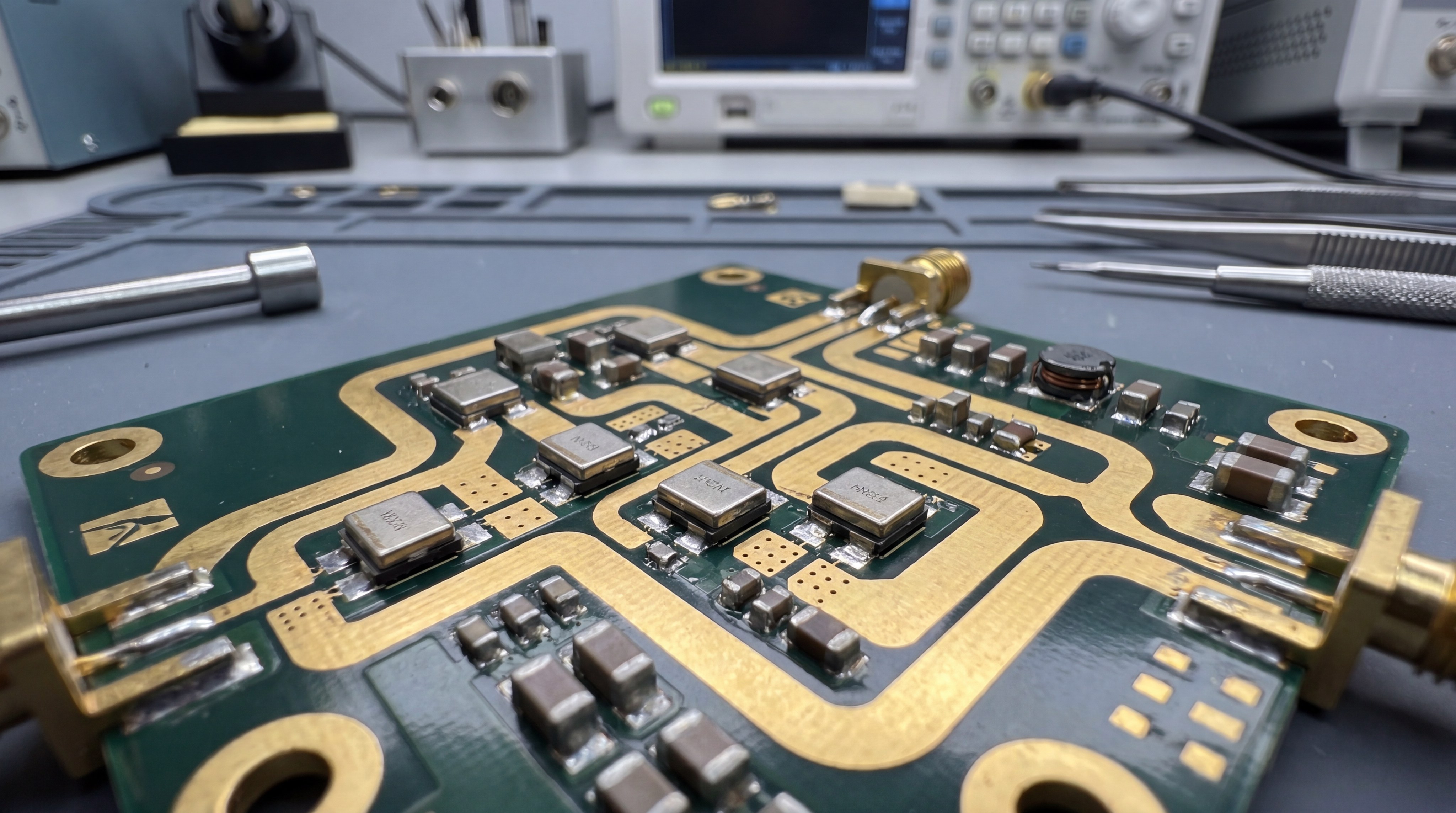
GaN advantages include:
- Operation at much higher voltages.
- Superior thermal conductivity properties.
- Smaller physical footprint for integration.
Key Takeaway: GaN technology enables the next generation of high-performance, compact amplification systems for agile military platforms.
| Technology | Efficiency | Power Density |
|---|---|---|
| LDMOS (Silicon) | Moderate | Low |
| GaN on SiC | High | Very High |
| GaAs | High | Moderate |
The shift to GaN represents a fundamental leap in how power is managed and deployed in the modern electronic battlespace.
What are the challenges of broadband operations?
Military RF Power Amplifiers must often operate across a wide range of frequencies without losing efficiency. You face the challenge of maintaining “flatness”—ensuring the power remains consistent across the entire spectrum. This is difficult because components naturally behave differently at 30 MHz versus 3000 MHz, requiring sophisticated engineering to balance.
Can one amplifier cover multiple bands?
Think about it: if you can carry one radio that covers all bands, you save weight and simplify your logistics. However, designing an amplifier that doesn’t sacrifice performance at the band edges is a massive hurdle.
But that is not all:
- Complex matching networks for impedance.
- Harmonic suppression across octaves.
- Dynamic biasing to optimize efficiency.
Key Takeaway: Broadband capability is the “holy grail” of military RF design, providing the flexibility needed for multi-mission hardware.
| Range | Typical Military Use |
|---|---|
| HF (3-30 MHz) | Over-the-horizon voice |
| VHF/UHF (30-3000 MHz) | Tactical ground-to-air |
| SHF (3-30 GHz) | SATCOM and high-res radar |
Successfully overcoming broadband challenges ensures that your forces remain connected across any frequency required by the mission.
Frequently Asked Questions
Can I integrate these amplifiers into existing SDR platforms?
Yes, most modern amplifiers are designed with standardized interfaces to work seamlessly with Software Defined Radios (SDR). You can easily pair a high-gain module with an SDR to transform a low-power digital signal into a robust tactical broadcast.
What’s the best way to determine the power level I need?
The best way is to perform a link budget analysis that accounts for distance, antenna gain, and expected atmospheric loss. You should also factor in a “fade margin” to ensure connectivity remains stable during poor weather conditions.
Can I use these systems in maritime environments?
You certainly can, provided the housing is rated for salt-fog environments and features corrosion-resistant finishes. Maritime units typically require hermetic sealing to protect the internal circuitry from high humidity and salt air.
What’s the best frequency range for long-distance ground comms?
Lower frequencies in the HF and VHF bands are generally best for long-distance ground communications due to their ability to follow the Earth’s curvature or bounce off the ionosphere. However, for high-data-rate video, you will likely need to move into the UHF or SHF bands.
Can I customize the form factor for specific vehicle mounts?
Most factory-direct manufacturers offer custom chassis designs to fit unique space constraints in armored vehicles or aircraft. You can specify mounting points and connector orientations to ensure the amplifier fits your existing rack or enclosure perfectly.
At CorelixRF, we are dedicated to pushing the boundaries of what is possible in the electromagnetic spectrum. Our vision is to empower global defense forces with the most reliable, efficient, and powerful amplification technologies available. To learn more about our standard platforms or custom engineering services, contact us today and let us help you secure your communication future.