
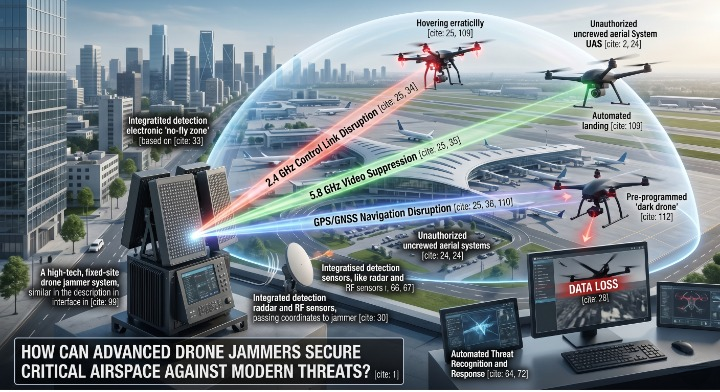
Protecting sensitive airspace from unauthorized uncrewed aerial systems (UAS) is no longer an optional security measure for high-value infrastructure. You face a growing threat from low-cost, high-capability drones that can easily bypass traditional fences and ground-based surveillance. This vulnerability leaves your assets exposed to industrial espionage, smuggling, and potential physical damage. Implementing professional-grade Drone Jammers from a reliable RF platform provides the necessary electronic barrier to neutralize these intruders and maintain operational continuity.
Why is drone security essential for infrastructure?
Drone security is necessary to protect sensitive infrastructure from surveillance, sabotage, and the unauthorized delivery of hazardous contraband. Utilizing Drone Jammers ensures that these aerial threats cannot maintain a stable connection to their operators while over your property. Drone Jammers serve as a final line of defense when passive detection systems fail to deter a motivated intruder.
What are the primary aerial threats?
Think about this: modern drones are no longer just toys, but sophisticated tools for data collection. You must be prepared for a variety of intrusion styles that target different vulnerabilities in your facility.
- Aerial Surveillance: Capturing high-resolution footage of restricted areas and security protocols.
- Payload Delivery: Dropping contraband or harmful materials into secure zones.
- Electronic Interception: Hovering near communication nodes to steal data wirelessly.
How do unauthorized drones impact safety?
But wait, there’s more to consider regarding physical safety. A single drone collision with critical cooling systems or power lines can trigger a catastrophic failure and massive financial loss.
- Operational Downtime: Flights must be grounded and systems checked after an intrusion.
- Personnel Risk: Heavy drones falling from the sky pose a direct threat to your workforce.
- Facility Breaches: Drones can be used to scout physical blind spots for ground intruders.
Key Takeaway: Airspace security is a fundamental component of modern perimeter defense that requires active signal mitigation to be effective.
| Threat Category | Risk Priority | Mitigation Strategy |
|---|---|---|
| Surveillance | High | Frequency Saturation |
| Contraband | Critical | Link Disruption |
| Collisions | Medium | Path Redirection |
How do drone jammers effectively disrupt signals?
These systems disrupt signals by emitting radio frequency interference that drowns out the communication link between a drone and its operator. Most Drone Jammers target the 2.4 GHz and 5.8 GHz bands used for command, control, and video transmission. By saturating these frequencies, the device forces the drone into a pre-programmed fail-safe mode, such as landing or returning to its launch point.
What frequencies are most vulnerable?
You might be wondering: which signals are actually targeted during a security event? Most commercial drones rely on a specific set of frequencies that are easily identified by modern hardware.
- Command and Control: Usually found in the 2.4 GHz or 433 MHz spectrum.
- Video Downlink: High-bandwidth 5.8 GHz signals used for first-person views.
- Navigation (GNSS): GPS signals that allow the drone to follow a specific flight path.
Why is signal-to-noise ratio important?
The best part? You don’t need infinite power to be successful; you only need to exceed the signal strength of the remote controller. By lowering the signal-to-noise ratio at the drone’s receiver, you effectively “blind” the aircraft.
- Effective Range: Higher power levels allow you to engage targets at greater distances.
- Precision Targeting: Tight beams focus energy only on the threat, preserving your local networks.
- Saturation Depth: Ensuring the noise floor remains high enough to prevent signal re-acquisition.
Key Takeaway: Effective jamming is achieved by overwhelming the target’s receiver with targeted noise across all critical communication bands.
| Frequency | Function | Jamming Method |
|---|---|---|
| 433 MHz | Long-Range Control | Narrowband Pulse |
| 2.4 GHz | Standard Control | Wideband Saturation |
| 5.8 GHz | Video Feed | High-Power Shielding |
What role does the regulatory environment play?
The regulatory environment dictates who can legally operate counter-UAS technology and defines the technical standards required to prevent interference with public communications. Drone Jammers are currently subject to strict oversight by the FAA to ensure that security measures do not compromise the safety of crewed aviation. Following these guidelines is essential for any enterprise looking to deploy a long-term defense strategy.
Why are committees forming to set standards?
Let’s look closer: why is the government suddenly focused on counter-UAS rules? As more organizations deploy electronic defenses, the risk of accidental interference with legitimate flight systems increases.
- Airspace Superiority: Maintaining clear channels for emergency and commercial aircraft.
- Standardized Testing: Creating a benchmark for hardware reliability and safety.
- Accountability: Ensuring that mitigation actions are logged and justified.
How does policy impact technology adoption?
Here is the kicker: without clear rules, many security teams are hesitant to invest in active defense systems. Standardized policies provide the legal framework you need to move from passive monitoring to active protection.
- Certification Requirements: Hardware must meet specific emission limits to be approved.
- Operator Licensing: Ensuring that only trained professionals activate mitigation tools.
- Remote ID Integration: Allowing security systems to distinguish between “friend” and “foe” aircraft.
Key Takeaway: Compliance with evolving aviation standards ensures that your security investment remains legally viable and technically safe.
| Policy Area | Objective | Implementation |
|---|---|---|
| Spectrum Use | Avoid Interference | Frequency Filtering |
| Safety Standards | Protect Crewed Flight | Directional Antennae |
| Usage Rights | Authorized Access | Regulatory Licensing |
Which RF platforms support long-range jamming?
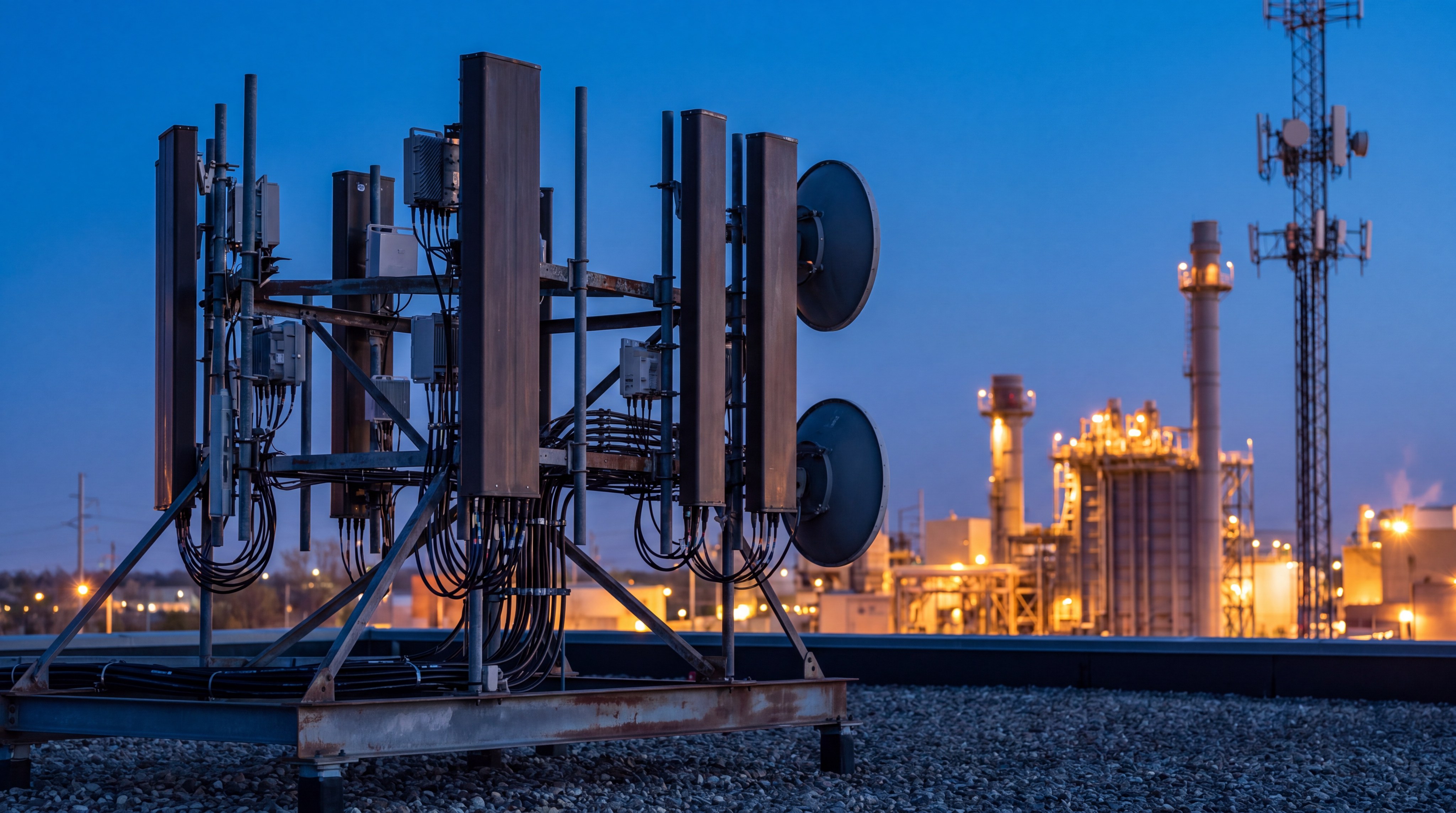
Long-range defense requires high-performance RF platforms capable of maintaining signal integrity over several kilometers of open airspace. Modern Drone Jammers utilize specialized front-end modules and high-power amplifiers to achieve the necessary reach. These platforms must be agile enough to switch between different drone protocols in milliseconds to counter rapid frequency hopping.
How do front-end modules simplify design?
Believe it or not: integrating detection and mitigation into a single module is the most efficient way to build a defense system. This modular approach allows you to scale your coverage as your facility grows or as drone technology advances.
- Unified Design: Combines signal generation and amplification in one housing.
- Thermal Management: Integrated cooling systems prevent hardware failure during prolonged use.
- Interface Compatibility: Simplifies the connection to external sensors like radar or cameras.
Why is frequency agility necessary?
Now, consider this: drones are becoming smarter and more resistant to static jamming. If your system cannot follow a hopping signal, the intruder will simply bypass your electronic wall.
- Dynamic Response: Automatically adjusting output to match the intruder’s frequency changes.
- Multi-Target Handling: Simultaneously disrupting several drones using different protocols.
- Future-Proofing: Easily updating signal libraries to handle new drone models.
Key Takeaway: Scalable and agile RF platforms are the foundation of a counter-UAS system that can grow alongside emerging threats.
| Platform Feature | Benefit | Security Value |
|---|---|---|
| Modular RF | Easy Upgrades | Long-Term Versatility |
| High Gain | Increased Range | Early Engagement |
| Low Noise | Clean Signal | Reduced Collateral Impact |
Why is multi-sensor integration necessary?
Multi-sensor integration is necessary to eliminate false positives and ensure that mitigation is only applied to verified threats within your protected zone. Drone Jammers perform best when they are cued by a combination of radar, radio frequency sensors, and optical tracking. This layered approach allows you to detect silent or autonomous drones that might be missed by a single-technology system.

Can detection work without mitigation?
Think about this: what good is knowing a threat is present if you have no way to stop it? While detection provides awareness, it does nothing to prevent a payload drop or unauthorized surveillance.
- Awareness Limitations: Detection alone only documents the security breach.
- Response Time: Automated mitigation triggers can stop a drone faster than a human guard.
- Evidence Gathering: Sensors provide the data needed to prosecute unauthorized operators.
How do radar and RF sensors collaborate?
It gets better when these two technologies work in tandem. Radar tracks the physical location of the object, while RF sensors identify the specific communication signature of the drone.
- Radar Strength: Detecting non-transmitting (autonomous) drones through physical tracking.
- RF Sensor Strength: Identifying the make and model of the drone by its signal profile.
- Cross-Verification: Reducing false alarms from birds or other small flying objects.
Key Takeaway: A multi-sensor strategy is the only way to achieve near-100% reliability in complex or noisy urban environments.
| Sensor Type | Detection Method | Best Use Case |
|---|---|---|
| Radar | Physical Reflection | All-Weather Tracking |
| RF Scanner | Signal Analysis | Protocol Identification |
| EO/IR Camera | Visual/Thermal | Positive Identification |
How does amplifier technology improve defense?
Amplifier technology improves defense by providing the high-efficiency power needed to disrupt signals at long distances while minimizing the physical size of the hardware. Modern Drone Jammers leverage Gallium Nitride (GaN) components to achieve superior thermal performance and higher output levels. These advancements mean you can deploy more powerful systems in smaller, less conspicuous installations.
What is the benefit of integrated antennas?
Why does this matter? By combining the amplifier directly with the antenna structure, you eliminate signal loss that occurs in long cable runs.
- Power Efficiency: More of the energy generated actually reaches the target.
- Compact Footprint: Easier to install on existing rooftops or light poles.
- Simplified Maintenance: Fewer connectors and cables mean fewer points of failure.
Why is GaN technology a game-changer?
Here is the kicker: traditional amplifiers generate massive amounts of heat that can degrade performance over time. GaN technology allows for higher power density without the need for bulky, expensive cooling systems.
- Reliability: Longer operational life in harsh outdoor environments.
- Speed: Faster switching times for complex frequency-hopping protocols.
- Power: Higher wattage output from a significantly smaller module size.
Key Takeaway: Utilizing GaN-based amplifiers allows for a more potent defense system that is easier to deploy and maintain.
| Technology | Power Density | Thermal Load |
|---|---|---|
| LDMOS | Moderate | High |
| GaN | High | Low |
| Vacuum Tube | Very High | Critical |
What are the safety risks of improper jamming?
The primary safety risks involve “signal bleed” that can inadvertently disrupt legitimate communication networks like Wi-Fi, cellular, or emergency radio bands. Drone Jammers must be precision-engineered to ensure the disruption is localized strictly to the target drone. Failure to control the output can lead to legal liabilities and the failure of your own internal communication systems.
How can jamming affect legitimate signals?
But that’s not all. If your defense system is not properly filtered, you could unintentionally knock out your facility’s own security radios or local public safety towers.
- Network Downtime: Disrupting critical data flows for your operations.
- Emergency Interference: Blocking signals used by first responders during a crisis.
- Collateral Damage: Impacting neighboring businesses or residential areas.
What precautions ensure urban safety?
Let’s look closer: how do you prevent these issues in a crowded city environment? Using directional antennas and precise frequency filtering is the industry standard for safe mitigation.
- Directional Beams: Pointing the energy only at the sky, away from ground-based networks.
- Frequency Notching: Avoiding specific bands used by local emergency services.
- Power Limiting: Using only the minimum energy required to neutralize the specific threat.
Key Takeaway: Precision engineering and directional control are vital to preventing your drone defense from becoming a liability.
| Risk Factor | Possible Impact | Mitigation Tool |
|---|---|---|
| Signal Bleed | Network Outage | Bandpass Filters |
| Over-Powering | Hardware Damage | Power Calibration |
| Multipath | Unpredictable Zones | Shielded Antennae |
How will future standards shape the industry?
Future standards will likely move toward mandatory hardware certification to ensure that every system on the market is both effective and safe for use in public airspace. As aviation authorities refine their rules, Drone Jammers will need to meet rigorous benchmarks for signal purity and response accuracy. This shift will benefit buyers by providing a clear way to verify that the equipment they purchase actually works as advertised.
Will hardware testing become more rigorous?
You might be wondering: will I have to replace my system every few years? While the core technology is stable, the testing protocols used to prove compliance will certainly become more detailed.
- Performance Benchmarks: Proving the system can handle specific drone protocols.
- Interference Audits: Verifying that the device does not bleed into protected bands.
- Certification Labels: Providing a “stamp of approval” for regulated industries.
How can engineers prepare for new rules?
The best part? Building systems based on open, modular architectures allows you to adapt to new rules without starting from scratch.
- Software-Defined RF: Updating mitigation libraries via simple firmware updates.
- Modular Hardware: Swapping out filter modules as regulatory bands change.
- Compliance Logging: Building in automated reporting features for regulatory audits.
Key Takeaway: The move toward standardized certification will improve the overall quality and reliability of the counter-UAS market.
| Future Trend | Expected Result | Buyer Impact |
|---|---|---|
| Certifications | Uniform Performance | Lower Risk |
| Unified Databases | Global Threat Intel | Faster Updates |
| Automation | Hands-off Defense | Reduced Staff Costs |
Why is mobile deployment becoming standard?
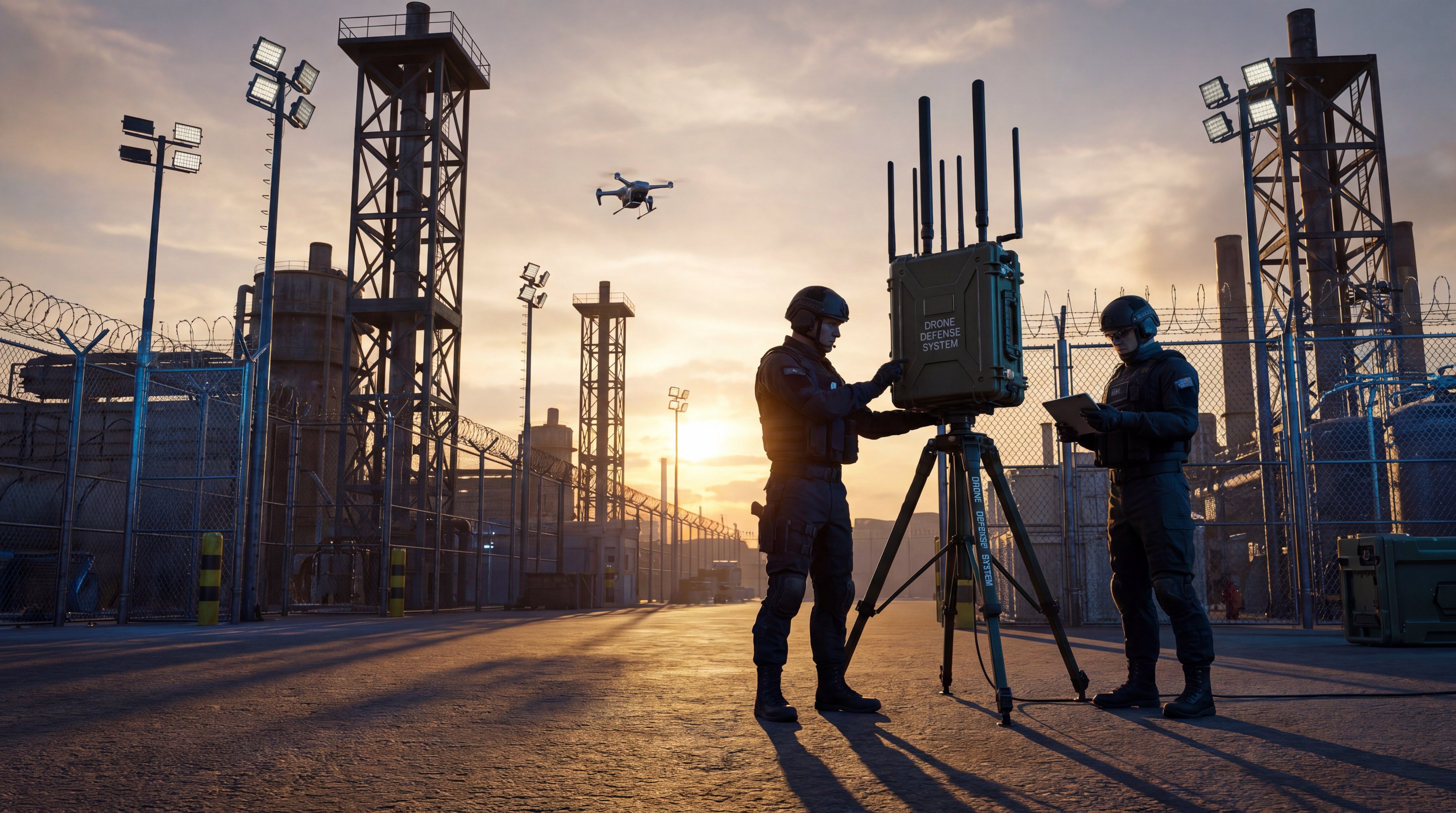
Mobile deployment is becoming standard because it allows you to adapt your security posture to temporary events, VIP movements, or changing perimeter requirements. Drone Jammers are now available in vehicle-mounted and portable formats that can be set up in minutes. This flexibility is essential for protecting large areas like stadiums or industrial complexes where a fixed installation may have blind spots.
What are the benefits of portable systems?
Think about this: static sensors cannot follow a threat that moves outside your initial property line. Portable units give your security team the tactical advantage of mobility.
- Rapid Setup: Deploying an electronic shield in minutes during an incident.
- Tactical Versatility: Moving the jammer to block a specific flight corridor.
- Event-Based Security: Protecting temporary gatherings without permanent construction.
How do mobile units handle power needs?
Here is the kicker: high-power jamming requires a significant amount of energy, which can be a challenge for mobile units. Modern systems use high-density battery platforms and efficient amplifiers to maintain long runtimes.
- Integrated Batteries: Eliminating the need for noisy generators in the field.
- External DC Input: Allowing the system to run off vehicle power indefinitely.
- Power Optimization: Automatically scaling output based on the distance to the target.
Key Takeaway: Portability ensures that your drone defense can respond to threats wherever they appear, not just where your sensors are fixed.
| Deployment Type | Lead Time | Typical Use |
|---|---|---|
| Fixed Pole | Permanent | Critical Infrastructure |
| Mobile Trailer | 1–2 Hours | Public Festivals |
| Handheld/Tactical | Seconds | VIP Protection |
How can enterprises choose the right solution?
Choosing the right solution requires you to perform a detailed audit of your specific RF environment and the level of threat you expect to face. You must evaluate the frequency range, the power output, and the integration capability of any Drone Jammers before committing to a purchase. Balancing high-performance engineering with long-term reliability ensures that your airspace remains secure against both current and future drone technologies.

What are the key performance metrics?
Now, consider this: not all jammers are created equal, and raw power is not the only metric that matters. You must also look at how quickly the system can identify a threat and engage it.
- Frequency Breadth: Does it cover everything from 30 MHz to 6 GHz?
- Engagement Speed: How many milliseconds between detection and disruption?
- Output Stability: Can the system maintain peak power during a sustained attack?
How to balance cost and capability?
It gets better when you invest in a modular system that can grow with you. Instead of buying the most expensive unit upfront, start with a core platform and add frequency modules as needed.
- Total Cost of Ownership: Consider the cost of firmware updates and maintenance.
- Integration Ease: Can the hardware talk to your existing security operations center?
- Scalability: The ability to add more jamming nodes as your facility expands.
Key Takeaway: The ideal counter-drone solution combines high-precision RF hardware with the flexibility to adapt to an evolving threat landscape.
| Selection Metric | Importance | Target Specification |
|---|---|---|
| Freq Coverage | Critical | 30 MHz to 6 GHz+ |
| Response Time | High | Sub-100 Milliseconds |
| System Life | Medium | 10+ Year Hardware Path |
*
Frequently Asked Questions
Can I use these systems in a residential neighborhood?
Use is generally restricted to government, law enforcement, and authorized critical infrastructure operators to prevent widespread disruption of public wireless signals.
What’s the best way to handle a “swarming” drone attack?
The most effective approach is a wideband saturation technique coupled with a multi-target tracking system that can disrupt multiple different communication protocols simultaneously.
How do I know if my facility is currently being surveilled?
Passive RF sensors are the best tool for this, as they can “hear” the drone’s transmission even if the aircraft is hidden behind buildings or trees.
Can drone pilots bypass these jammers with different firmware?
Advanced pilots may try to change frequencies, but a high-quality jammer with a broad frequency library and rapid-hopping capability can usually track and neutralize these changes.
What is the legal risk if I accidentally jam a neighbor’s Wi-Fi?
To minimize this risk, you should use highly directional antennas and conduct an RF site survey to ensure your “jamming zone” does not overlap with civilian areas.
Ready to secure your airspace with factory-direct RF excellence? For technical reviews, custom configurations, or to discuss your specific site requirements, contact us today.