

City-wide drone detection makes cities safer by providing a centralized, real-time umbrella of visibility that identifies unauthorized aerial threats before they can reach sensitive urban areas. In the current landscape, small drones have become ubiquitous, often slipping through the cracks of traditional perimeter-based security systems.

A single rogue pilot can halt major airport traffic or conduct illegal surveillance on private infrastructure, leaving security teams completely blind to the exact flight path or intent. This lack of coordination often leads to reactive responses that are too little, too late. Integrated metropolitan networks solve this by combining distributed sensors with high-power Drone Jammers to neutralize risks across the entire skyline efficiently.
1. What is City-Wide Drone Detection and Mitigation?
City-wide drone detection and mitigation is a networked security framework that uses distributed radio frequency sensors to monitor and neutralize unauthorized drones across an entire metropolitan area. These systems often incorporate high-performance Drone Jammers to ensure that once a threat is identified, it can be safely redirected or grounded.
Defining the Scope of Urban Airspace Security
Urban airspace security involves shifting from protecting a single building to creating a comprehensive grid that covers miles of complex city terrain. This requires a multi-layered approach that integrates various sensor types to overcome the “noise” of a busy city.
The truth is: site-specific protection is no longer enough when drones can travel miles in minutes.
- Continuous 24/7 monitoring of the metropolitan grid.
- Integration of RF, radar, and optical sensors.
- Scalable coverage that grows with city expansion.
Shifting from Localized to Metropolitan Coverage
Modern solutions move away from heavy hardware installations at every site in favor of a cloud-linked sensor network that provides data to any authorized device. This allows security professionals to maintain awareness without being tethered to a specific command center.
But wait, there’s more: these systems are often infrastructure-independent, meaning they can be deployed rapidly.
- Secure cloud portals for real-time data access.
- Elimination of fragmented data silos between agencies.
- Mobile alerts for security teams on the move.
The Role of Integrated RF Sensors and Transmitters
Radio frequency technology serves as the backbone for identifying incoming signals and preparing hardware for necessary signal disruption. High-power amplifiers are used to ensure the signal reaches the target drone regardless of urban interference.
Think about this: without high-quality RF components, the system is essentially deaf and mute.
- Wideband detection to catch various drone protocols.
- High-gain transmitters for effective mitigation.
- Automated signal classification using AI databases.
Key Takeaway: City-wide security provides a scalable, cloud-based solution that replaces isolated security measures with a unified metropolitan defense grid.
| Component | Function | Benefit |
|---|---|---|
| Distributed Sensors | Real-time tracking | Total airspace visibility |
| Cloud Platform | Data aggregation | Instant multi-agency alerts |
| Mitigation Tools | Threat neutralization | Prevention of incidents |
This analysis confirms that moving to a networked model is the only way to effectively manage the high volume of drone activity in modern cities.
2. Why is Urban Airspace Vulnerability Increasing?
Urban airspace vulnerability is increasing because the rapid proliferation of consumer drones has outpaced the ability of traditional security measures to monitor the sky. As these devices become more capable, the need for active defense tools like Drone Jammers has transitioned from a military luxury to a public safety necessity.
The Rise of Unauthorized Flights in Major Cities
The volume of drone incursions in major hubs like New York and Los Angeles has reached record highs, posing risks to public safety and privacy. Many of these flights occur in restricted areas, often near flight paths or crowded public venues.
The bottom line is: the sheer number of drones makes manual observation impossible.
- Thousands of monthly violations in major cities.
- Drones being used for smuggling and espionage.
- Increased risk of mid-air collisions with helicopters.
Limitations of Traditional Monitoring Methods
Visual observation and acoustic sensors frequently fail in noisy, high-density urban environments where buildings block sightlines and traffic drowns out rotor noise. These outdated methods leave large “blind spots” that unauthorized pilots can easily exploit.
Make no mistake: relying on the naked eye is a recipe for security failure.
- Acoustic sensors confused by city traffic.
- Visual cameras limited by weather and night.
- Manual reporting causing delayed response times.
The Growing Need for Scalable Drone Jammers
Detection alone is insufficient if security teams lack the tools to act once a drone is confirmed as a threat. As sophisticated drones become more resistant to simple interference, the requirement for robust, professional-grade Drone Jammers becomes a central pillar of defense.
The reality is: you cannot stop a determined pilot with an alert alone.
- Requirement for non-kinetic neutralization.
- Safety in public spaces compared to physical interception.
- Integration with detection for automated responses.
Key Takeaway: The combination of high drone volume and the failure of traditional sensors necessitates a transition toward advanced RF-based detection and active mitigation.
| Vulnerability Driver | Impact on Safety | Mitigation Requirement |
|---|---|---|
| High Drone Volume | Overwhelmed security | Automated detection |
| Urban Obstacles | Blocked sightlines | RF-based tracking |
| Sophisticated Tech | Resistant flight modes | High-power jammers |
Our research suggests that cities ignoring the aerial dimension of security are leaving their critical infrastructure exposed to significant modern risks.
3. How Do High-Power RF Amplifiers Enable Effective Drone Jammers?
High-power RF amplifiers enable effective Drone Jammers by providing the necessary signal strength to overcome the control links used by unauthorized pilots at long distances. These components act as the “engine” of the system, ensuring that the interference signal remains dominant even in environments with heavy electromagnetic noise.

The Critical Role of Wideband RF Power
Wideband power amplifiers allow Drone Jammers to cover multiple frequency bands simultaneously, preventing drones from hopping to a different channel to escape interference. This ensures that the defense system remains effective against a wide variety of commercial and custom-built drones.
The truth is: if your amplifier lacks power, the drone will simply ignore the jamming attempt.
- Sufficient gain to reach miles away.
- Stable output across the entire frequency spectrum.
- Ability to handle high duty cycles during long events.
Precision Signal Injection for Targeted Mitigation
Modern systems use precision signal injection to target specific control and navigation frequencies without disrupting local communication like Wi-Fi or emergency radios. This surgical approach is essential for using mitigation tools in sensitive urban environments.
But wait, there’s more: precision prevents “collateral damage” to the city’s digital infrastructure.
- Targeted jamming of GPS/GNSS signals.
- Interruption of 2.4 GHz and 5.8 GHz video links.
- Minimal impact on surrounding licensed frequencies.
Why GaN Technology is a Game Changer for Jammers
Gallium Nitride (GaN) technology allows for higher power density and efficiency, enabling the creation of compact, high-performance units that can be easily deployed on rooftops or vehicles. This technological leap has made city-wide deployment much more feasible and cost-effective.
Believe it or not: GaN delivers more power in a smaller footprint than ever before.
- Reduced cooling requirements for outdoor units.
- Higher reliability in extreme temperature conditions.
- Faster switching speeds for advanced waveforms.
Key Takeaway: High-power RF amplifiers, particularly those using GaN, are the essential hardware components that turn detection data into successful threat neutralization.
| RF Specification | Impact on Jammers | User Benefit |
|---|---|---|
| High Power Output | Increased effective range | Stops drones further away |
| Wideband Coverage | Multi-frequency support | Counters all drone types |
| GaN Efficiency | Lower heat/Smaller size | Easier urban installation |
Effective mitigation depends entirely on the quality of the RF chain, making the choice of amplifier the most critical hardware decision in urban defense.
4. Which Frequency Bands are Critical for Urban Counter-UAS Operations?
Critical frequency bands for urban counter-UAS operations primarily include the low-frequency control links and the common 2.4 GHz and 5.8 GHz bands used for telemetry and video. Comprehensive coverage ensures that regardless of the drone’s sophistication, the security system can interrupt its ability to navigate or transmit data.
Disrupting Low-Frequency Control Links (30–512 MHz)
Lower frequency bands are often used for long-range drone control because they can penetrate obstacles better than high-frequency signals. Monitoring these bands is essential for catching drones operating from miles outside the city center.
The truth is: ignoring the lower spectrum leaves a gap for long-range threats.
- Penetration through dense building materials.
- Long-distance control of industrial drones.
- Detection of non-standard, custom RC links.
Targeting Common Navigation and Video Bands (2–6 GHz)
The 2.4 GHz and 5.8 GHz bands are the most common frequencies for commercial drone operations, including live video streaming to the pilot. Most consumer-grade equipment operates within these windows, making them the primary targets for any detection system.
But wait, there’s more: these bands are also the most crowded, requiring high selectivity.
- Interruption of HD video return feeds.
- Severing the pilot’s “first-person view” (FPV).
- Forcing the drone into “return to home” mode.
Securing High-Frequency Communications (6–18 GHz)
As technology evolves, some advanced drones are moving toward higher frequency bands to avoid traditional interference and achieve higher data rates. Systems must be future-proofed to cover these microwave frequencies to ensure long-term security.
Think about this: high-frequency threats are the next frontier of aerial espionage.
- Countering satellite-linked drone systems.
- Targeting high-bandwidth data exfiltration.
- Protecting against emerging 5G-linked drones.
Key Takeaway: A successful urban defense strategy must cover a wide spectrum, from 30 MHz to 18 GHz, to ensure no drone can operate undetected or unmitigated.
| Frequency Band | Common Usage | Defense Priority |
|---|---|---|
| 30 – 512 MHz | Long-range control | High (Industrial threats) |
| 2.4 / 5.8 GHz | Consumer video/data | Critical (Most common) |
| 6 – 18 GHz | Advanced microwave | Emerging (Future-proofing) |
Understanding these bands allows city planners to deploy the right hardware to the right locations, maximizing the effectiveness of the metropolitan grid.
5. Can Drone Jammers be Integrated into Existing City Infrastructure?
Drone Jammers can be integrated into existing city infrastructure by mounting them on rooftops, cell towers, or public safety vehicles to create a seamless mesh of protection. Because modern systems are often cloud-based, they can leverage the city’s existing fiber or cellular networks to communicate without requiring new cabling.
Zero-Install vs. Fixed-Site Infrastructure
City-wide systems can be deployed as “zero-install” cloud services for detection, while active Drone Jammers are typically installed at fixed critical nodes like government buildings or water treatment plants. This hybrid approach balances rapid coverage with robust physical defense where it is needed most.
The reality is: you can have detection running in hours, even if hardware takes longer.
- Software-defined sensors for rapid rollout.
- Fixed-site mitigation for high-value targets.
- Scalable nodes that can be added as budgets allow.
Leveraging Cloud-Based Monitoring for Mobile Units
Security teams can use mobile applications to monitor the airspace and activate portable units directly from their smartphones or tablets. This decentralizes the command structure, allowing officers on the street to respond to threats in their immediate vicinity.
But wait, there’s more: the cloud allows for instant updates to drone signature libraries.
- Real-time alerts sent to field officers.
- Remote activation of fixed jamming units.
- GPS coordination between mobile and fixed assets.
Deploying Jammers on Public Safety Vehicles
Vehicle-mounted systems provide a “bubble” of protection that moves with VIP convoys or emergency response teams during high-profile events. These mobile units are essential for protecting dynamic environments where fixed sensors might have limited reach.
Check this out: mobile protection ensures that security follows the crowd.
- Rapid response to spontaneous drone sightings.
- Protection for parades and marathons.
- Integration with vehicle power and comms.
Key Takeaway: Flexible deployment options, ranging from fixed infrastructure to mobile vehicle units, allow cities to build a comprehensive defense tailored to their unique layout.
| Deployment Method | Best Use Case | Key Advantage |
|---|---|---|
| Rooftop Fixed Sites | Critical infrastructure | Continuous, high-power protection |
| Mobile Vehicles | VIP convoys/Events | Dynamic, movable defense |
| Cloud-Only Nodes | Wide-area monitoring | Low cost, rapid deployment |
By leveraging existing assets, municipalities can significantly lower the barrier to entry for high-level airspace security.
6. How Does City-Wide Detection Coordinate with Active Mitigation?
City-wide detection coordinates with active mitigation by using automated software logic that triggers a defense protocol as soon as an unauthorized drone enters a pre-defined “no-fly” zone. This seamless handoff between identifying a threat and neutralizing it is what prevents security gaps and human error during high-stress incidents.
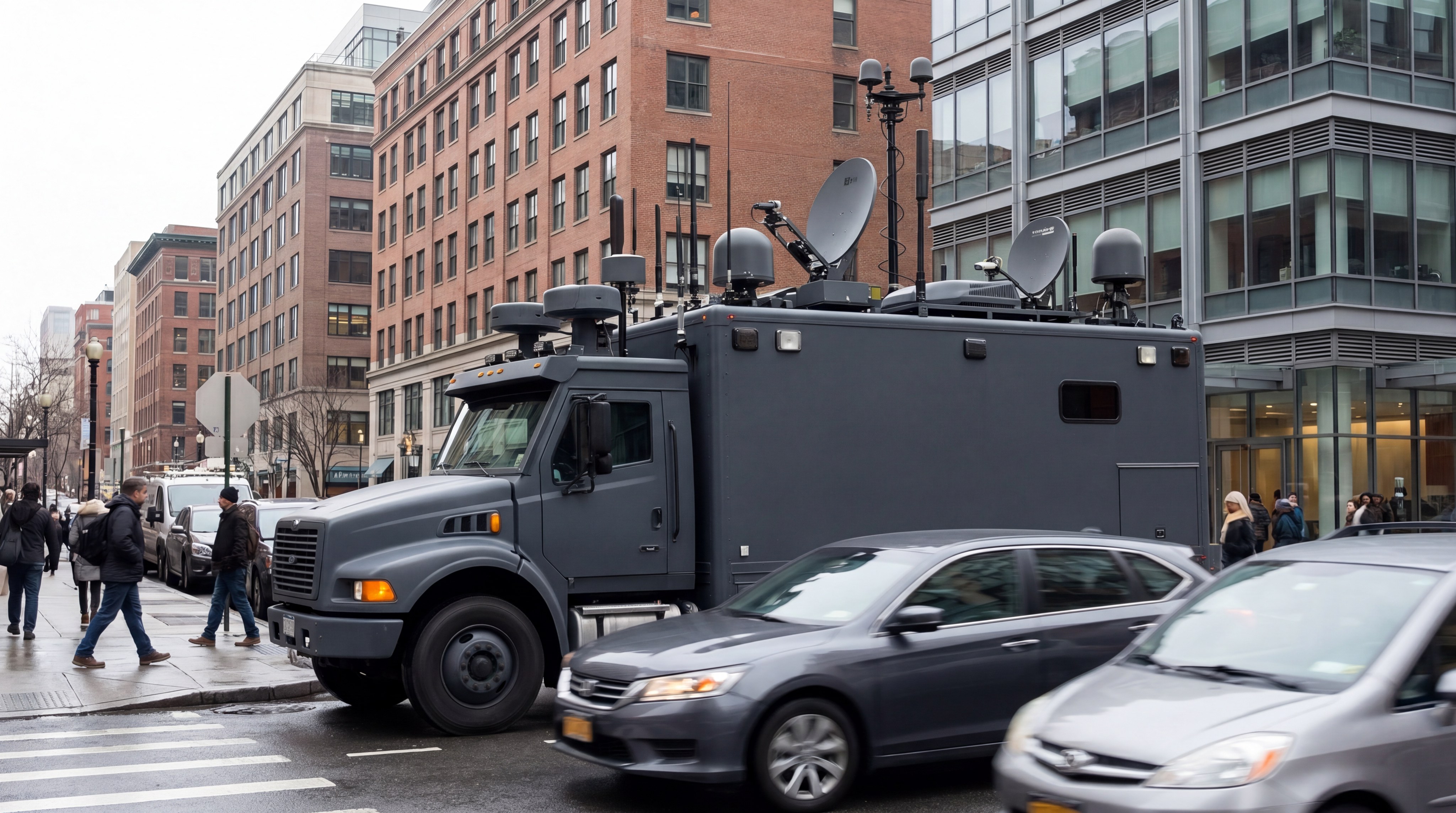
Automating the Detect-to-Defeat Workflow
When a sensor identifies a drone signature, the system immediately calculates its flight path and intent. If the drone breaches a security perimeter, the system can automatically engage mitigation hardware without waiting for a manual command.
The truth is: in drone defense, every second of manual delay is a risk.
- Automated classification of drone models.
- Instant activation of frequency-specific interference.
- Reduction of human-in-the-loop latency.
Real-Time Data Sharing with Law Enforcement
City-wide networks allow private security teams at stadiums or airports to share live flight data and pilot locations with local police departments. This collaborative environment ensures that the person flying the drone can be apprehended while the drone itself is being neutralized.
But wait, there’s more: finding the pilot is the only way to stop repeat offenders.
- Direct data feeds to police dispatch.
- Pilot location mapping for rapid ground response.
- Shared evidence logs for legal prosecution.
Reducing Response Times for Critical Infrastructure
Early warning is the most important factor in protecting sensitive sites like power plants or data centers. By detecting a drone miles away, the system provides ample time to clear personnel or deploy countermeasures before the threat arrives.
The reality is: early detection transforms a crisis into a managed event.
- Alerts triggered at the city boundary.
- Pre-planned “defensive bubbles” around assets.
- Integration with facility-wide lockdown systems.
Key Takeaway: The integration of detection and mitigation into a single automated workflow ensures that threats are handled with surgical precision and minimal delay.
| Coordination Stage | Action Taken | Security Result |
|---|---|---|
| Early Detection | RF signature identified | Warning issued to security |
| Path Analysis | Intent and risk assessed | Perimeter response triggered |
| Active Mitigation | Targeted jammer engaged | Drone safely neutralized |
Coordinated responses ensure that the sky remains as secure as the ground, providing a full 3D security posture for the modern city.
7. What are the Safety Considerations for Deploying Drone Jammers in Public Spaces?
Safety considerations for deploying Drone Jammers in public spaces focus on managing electromagnetic collateral damage and ensuring that critical city services remain uninterrupted. Using high-quality Drone Jammers with precise frequency control allows security teams to neutralize threats without affecting the Wi-Fi or cellular networks used by the public.
Managing Electromagnetic Collateral Damage
It is vital to ensure that signal disruption is confined strictly to the bands used by unauthorized drones. Advanced hardware uses high-Q filters and precision amplification to prevent signal leakage into adjacent bands used by legitimate services.
The truth is: a “messy” signal can do more harm than the drone itself.
- Use of narrow-band interference techniques.
- Strict control over the effective jamming radius.
- Regular testing for signal harmonics and noise.
Compliance and Regulatory Standards
Using certified hardware that meets local and international standards is non-negotiable for municipal deployment. Compliance ensures that the equipment operates within safe power limits and follows established protocols for emergency situations.
But wait, there’s more: regulatory compliance protects the city from legal liability.
- Adherence to FCC or regional spectrum rules.
- Verification of non-interference with aviation.
- Certified hardware for use in civilian areas.
Ensuring Non-Interference with First Responders
“Smart” mitigation technology allows for surgical frequency exclusion, which protects the communication channels used by police, fire, and medical teams. This ensures that even while a drone is being grounded, first responders can communicate clearly during the incident.
Believe it or not: you can jam a drone and leave a radio 2 inches away untouched.
- Dynamic notch filtering for emergency bands.
- Priority-based signal management systems.
- Coordination with public safety frequency managers.
Key Takeaway: Safety in urban mitigation is achieved through precision hardware and strict adherence to regulatory standards that prioritize public communication stability.
| Risk Factor | Mitigation Strategy | Safety Outcome |
|---|---|---|
| Signal Leakage | Precision filtering | Wi-Fi/Cellular stays online |
| Legal Liability | Certified hardware | Regulatory compliance met |
| Comms Interference | Notch frequency exclusion | Emergency radios remain clear |
By prioritizing these safety metrics, cities can deploy active defense systems with full confidence that they are enhancing, not hindering, public safety.
8. Why is Unit-Level Validation Essential for Urban Defense Systems?
Unit-level validation is essential because it guarantees that every piece of RF hardware performs exactly as specified in real-world urban conditions. In a mission-critical environment where a drone must be stopped, relying on “batch averages” or estimated data can lead to catastrophic failure when the equipment is actually needed.
The Importance of Factory-Direct Performance Data
Technical buyers must insist on unit-specific test data for output power and gain flatness. This ensures that the specific amplifier installed on a rooftop has the “muscle” to overcome local interference and reach its target.
The truth is: a 3dB difference in testing can mean a 50% loss in effective range.
- Verification of maximum saturated power.
- Documentation of gain stability over time.
- Confirmed efficiency ratings for thermal management.
Testing RF Stability in Complex Environments
Cities create complex signal environments with “multipath” interference caused by reflections off glass and steel buildings. Robust factory testing simulates these conditions to ensure the hardware maintains a stable signal even in high-interference zones.
But wait, there’s more: urban testing prevents “signal fading” in the field.
- Stress testing under extreme temperature cycles.
- Validation against common urban RF background noise.
- Testing for signal consistency across broad bands.
Reducing Integration Risks through 3-Stage Inspection
A rigorous quality control process—including incoming component checks, in-process assembly monitoring, and final unit inspection—prevents hardware failures. This “defense-in-depth” approach to manufacturing ensures that integration starts with a verified baseline.
The reality is: you don’t want to find a hardware flaw while a drone is overhead.
- ISO 9001 and GJB 9001C certified processes.
- Automated test benches for repeatable accuracy.
- Full documentation package delivered with every unit.
Key Takeaway: Unit-level validation transforms a list of specifications into a guaranteed performance tool that security teams can rely on during a crisis.
| Quality Standard | Requirement | User Benefit |
|---|---|---|
| Unit-Level Data | Individual test records | Verified range and power |
| Environmental Testing | Thermal/Shock/Vibration | Reliable outdoor operation |
| Multi-Stage QC | 3-point inspection path | Zero-failure integration |
Investing in validated hardware is the only way to ensure that a city-wide security network remains a reliable asset rather than a liability.
9. How Can Municipalities Get Started with Large-Scale Airspace Security?
Municipalities can get started with large-scale airspace security by conducting a baseline study to understand the frequency and types of drone violations currently occurring in their area. This data-driven approach allows for the selection of the right Drone Jammers and sensors based on actual threat patterns rather than guesswork.

Conducting a Baseline Study of Drone Activity
The first step is a “detection-only” phase where cities gather data on where drones are flying and who is flying them. This evidence is often used to convince lawmakers to pass local ordinances protecting critical facilities from unauthorized flights.
The truth is: you will be shocked by how many drones are already in your sky.
- Identifying “hotspots” for unauthorized flights.
- Tracking the most common drone models used.
- Measuring the peak times for aerial activity.
Selecting the Right RF Hardware for City Environments
Procurement teams must balance power, frequency coverage, and thermal management for long-term outdoor installations. Selecting hardware that uses GaN technology and offers wideband coverage ensures the system remains effective as drone technology evolves.
But wait, there’s more: modular hardware allows you to upgrade parts without a full overhaul.
- Priority on high-power output for urban range.
- Requirement for IP-rated, weather-resistant enclosures.
- Focus on integrated cooling for 24/7 operation.
Evaluating the Feasibility of Integrated Solutions
Moving from a pilot program to a full-scale network requires partnership with expert manufacturers who understand both the hardware and the software integration. Phased implementation allows the city to scale its security as the threat landscape changes.
The reality is: you don’t have to secure the whole city in a single day.
- Starting with high-priority “red zones.”
- Partnering with vendors for engineering reviews.
- Establishing multi-agency data sharing protocols.
Key Takeaway: A phased, data-backed approach allows cities to build a robust aerial defense grid that is both effective and fiscally responsible.
| Roadmap Stage | Primary Focus | Success Metric |
|---|---|---|
| Data Collection | Baseline drone activity | Number of detections recorded |
| Pilot Program | Hardware fit-check | Successful identification of tests |
| Full Expansion | Metropolitan grid coverage | 100% visibility of restricted zones |
By taking the first step of observation, cities can move from being vulnerable to being proactive leaders in modern urban safety.
10. Frequently Asked Questions about Urban Drone Jammers?
Addressing common technical concerns regarding the implementation and operation of Drone Jammers within a metropolitan environment.
1. Can I monitor multiple drones simultaneously with a city-wide system?
Yes, modern cloud-based networks are designed to track hundreds of unique signatures across a metropolitan grid at once. This multi-target capability ensures that a coordinated “swarm” attack or multiple independent violations are all handled in real-time.
2. What’s the best way to protect a stadium from unauthorized drone incursions?
The best approach is a layered defense that combines long-range RF detection with high-power directional jammers. This allows security to identify the drone as it approaches the outer perimeter and neutralize it before it ever reaches the crowd.
3. How do I know if my Drone Jammers are compliant with local signal regulations?
You must verify that your hardware comes with certified unit-level test data and follows regional spectrum standards like FCC or CE. Working with a factory-direct manufacturer ensures that all compliance documentation is organized and provided with the hardware.
4. Can I integrate third-party sensors into a cloud-based detection network?
Yes, most advanced platforms use open APIs to integrate radar, PTZ cameras, and acoustic sensors into a single dashboard. This “sensor fusion” creates a more robust picture of the sky and reduces the likelihood of false positives.
5. How do I know if a drone is friendly or a threat?
The system compares the drone’s signature and Remote ID data against a whitelist of authorized flights, such as media or delivery drones. Anything that does not have a confirmed digital handshake or follows an erratic flight path is flagged as a potential threat.
*
As the urban sky becomes more crowded, the responsibility to protect the public from aerial threats has never been more urgent. Our vision is a future where cities are truly 3D-secure, combining cutting-edge RF engineering with seamless cloud integration to keep citizens safe. We provide the high-power hardware and expertise needed to turn this vision into a reality, from standard broadband modules to custom microwave systems. To begin securing your municipality’s airspace, contact us today for a comprehensive engineering review of your project requirements.