
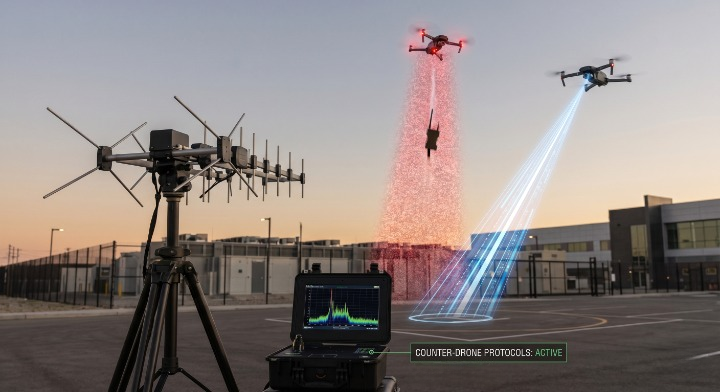
Unauthorized drone incursions represent a significant threat to your facility’s privacy, intellectual property, and physical security. When a rogue aircraft enters your restricted airspace, traditional security protocols often fail to provide the immediate response required to neutralize the threat. You need a sophisticated understanding of electronic countermeasures to protect your perimeter from industrial espionage or physical harm. Implementing professional Drone Jammers and spoofing protocols allows you to regain control over your aerial environment through precision signal interruption.
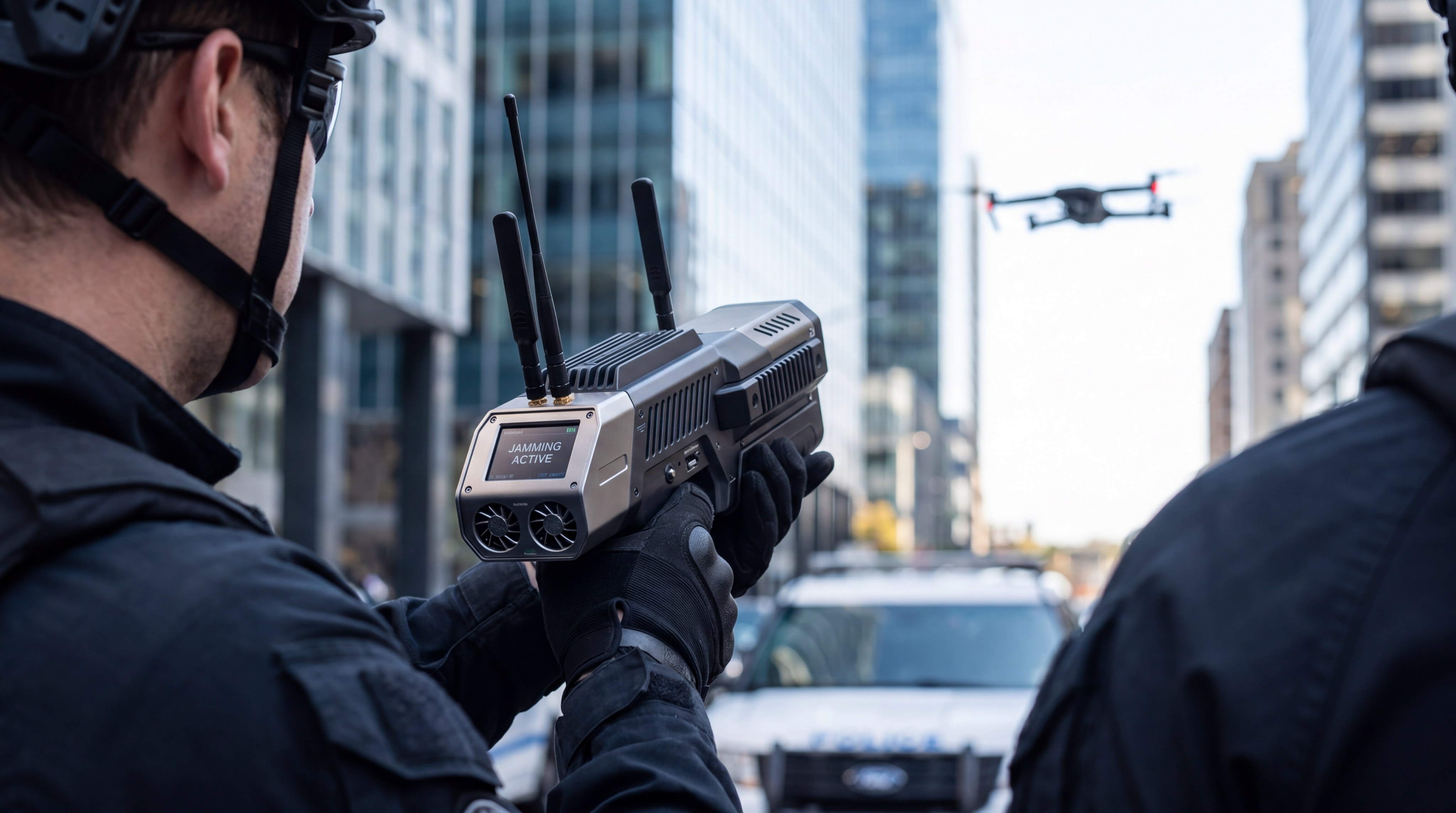
What is drone jamming and how does it work?
Drone jamming is the intentional act of emitting radio frequency (RF) signals to disrupt the communication link between an unmanned aerial vehicle (UAV) and its operator. By saturating the drone’s reception with high-power “noise,” professional Drone Jammers prevent the aircraft from receiving legitimate steering commands or telemetry updates. You effectively create a localized “blind spot” where the drone can no longer communicate with the remote pilot.
The mechanics of frequency interference
Most commercial drones utilize specific industrial, scientific, and medical (ISM) bands, such as 2.4 GHz or 5.8 GHz, for flight control. When you deploy a mitigation system, it targets these exact frequencies to sever the connection.
But here is the kicker:
- Frequency Matching: The system identifies the specific channel used by the rogue craft.
- Power Saturation: It transmits a stronger signal than the original controller to overwhelm the receiver.
- Signal Masking: The legitimate data packets are lost within the electronic noise.
Key Takeaway: Jamming works by overwhelming the drone’s communication receiver with a higher-powered signal on the same frequency band.
| Component | Function | Result |
|---|---|---|
| Signal Generator | Creates interference waveform | Targeted frequency noise |
| Power Stage | Amplifies the signal | Overpowers legitimate controller |
| Antenna | Directs energy at the drone | Concentrated disruption zone |
This process ensures that the pilot loses all visual and control feedback, forcing the drone into an automated failsafe state.
How does jamming differ from drone spoofing?
Jamming serves as a blunt instrument to block communications, whereas spoofing is a sophisticated technique used to impersonate legitimate control signals. While Drone Jammers focus on denying access to the spectrum, spoofing tricks the drone’s onboard logic into following instructions from an unauthorized source. This allows security teams to manipulate the flight path rather than simply stopping the flight.
Takeover protocols and protocol manipulation
Spoofing involves broadcasting a signal that mimics the specific remote-control protocol of the target drone. This requires deep technical knowledge of the drone’s communication handshake and encryption methods.
Think about it:
- Protocol Emulation: Creating a signal that the drone perceives as the original pilot.
- GPS Spoofing: Sending false coordinates to confuse the drone’s navigation system.
- Data Interception: Accessing the drone’s telemetry and video feed during the takeover.
Key Takeaway: Jamming blocks the signal entirely, while spoofing tricks the drone into following a new, illegitimate command source.
| Feature | Jamming | Spoofing |
|---|---|---|
| Method | Signal Noise | Protocol Impersonation |
| Control | Denial of Link | Full Flight Takeover |
| Complexity | Moderate | High |
This distinction is vital because spoofing requires precision hardware capable of replicating complex digital signatures rather than just generating raw power.
What tools are used for electronic interruption?
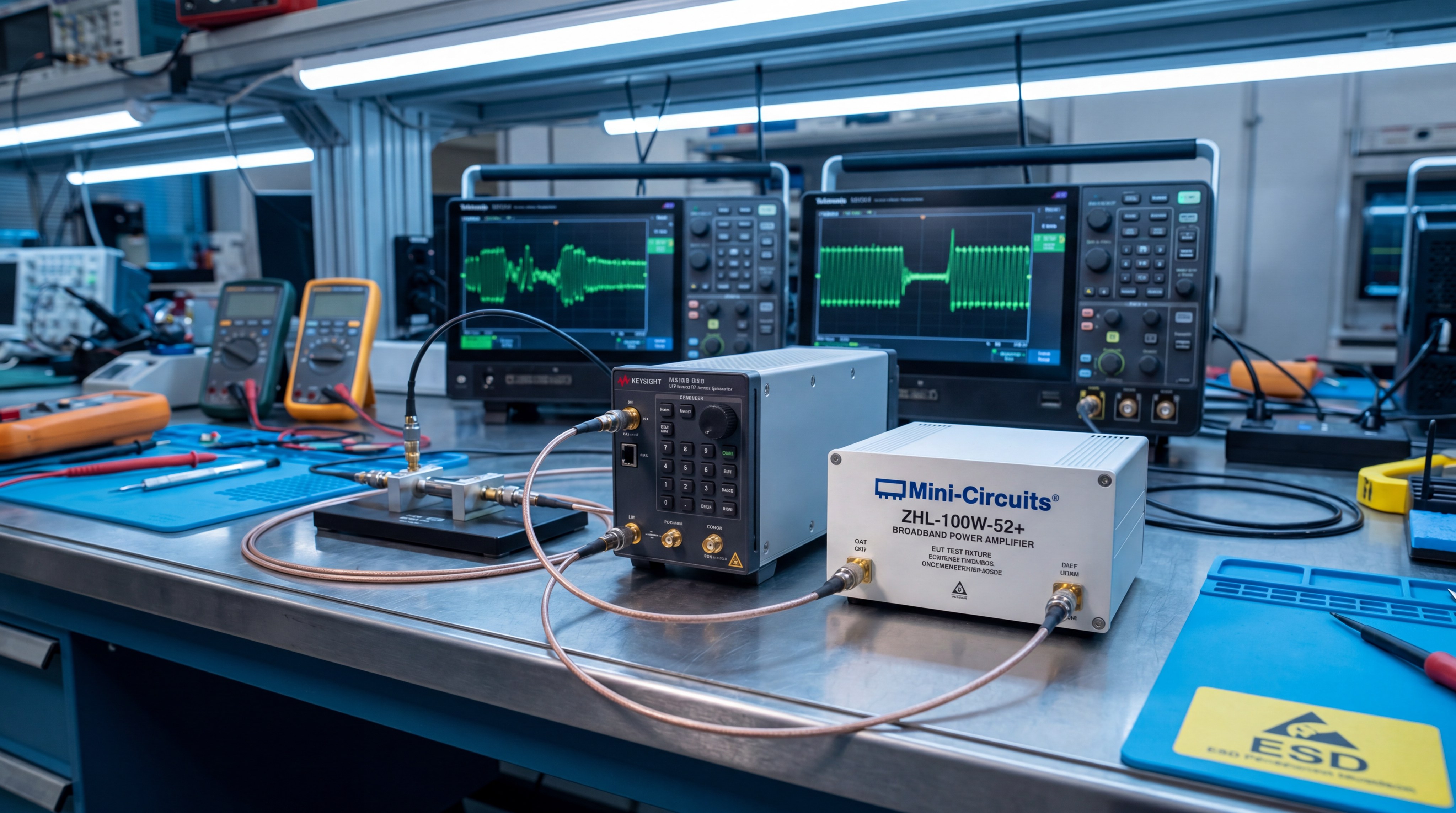
The primary tools for electronic interruption include high-gain transmitters, specialized antennas, and Broadband RF power amplifiers designed to maintain signal integrity over distance. Professional Drone Jammers rely on these components to project enough energy to overcome the drone’s internal filtering and long-range receivers. You must select hardware that matches the specific threat bands encountered in your environment.
Critical hardware for signal generation
Effective interruption requires a precise signal source to create the interference pattern. Technical teams often use software-defined radio (SDR) platforms to adapt to evolving drone frequencies.
It gets better:
- Amplifier Modules: These ensure the signal carries enough wattage to reach the target at long range.
- Directional Antennas: These allow you to “aim” the interference precisely at the rogue drone.
- Cooling Systems: High-power transmitters generate significant heat and require thermal management for continuous operation.
Key Takeaway: Professional mitigation requires a synchronized chain of signal generators, high-power amplifiers, and directional antennas.
| Hardware | Requirement | Purpose |
|---|---|---|
| SDR Module | Versatility | Multi-band threat coverage |
| RF Power Amp | High Wattage | Extended interruption range |
| LNA | Sensitivity | Detecting incoming signals |
Selecting the right combination of these tools is the difference between a successful defense and a perimeter breach.
What happens to a drone once it is jammed?
When a drone loses its link due to interference, its behavior is determined by factory-set or user-defined failsafe protocols. Drone Jammers trigger these responses by severing the telemetry and control data stream. You must be prepared for the drone to execute one of several pre-programmed maneuvers once the pilot is locked out.
Automated failsafe maneuvers
Modern drones are designed to avoid crashing during signal loss by initiating a safe-flight routine. The most common responses are a vertical landing or an autonomous flight to a home point.
You might be wondering:
- Return to Home (RTH): The drone uses GPS to fly back to its original takeoff coordinates.
- Hover and Land: The drone stays in place and slowly descends to the ground.
- Lost Link Mode: The drone may continue on a pre-programmed path if it was flying autonomously.
Key Takeaway: Jammed drones do not usually “fall from the sky” but instead execute pre-defined safety routines like landing or returning to base.
| Failsafe Mode | Drone Action | Security Risk |
|---|---|---|
| RTH | Fly to takeoff point | May cross sensitive areas |
| Hover/Land | Vertical descent | Potential landing on property |
| No Failsafe | Drift with wind | Unpredictable crash |
Monitoring the drone’s reaction is crucial to ensure that its “failsafe” landing does not cause additional damage to your personnel or equipment.
Which industries use drone jamming technology?
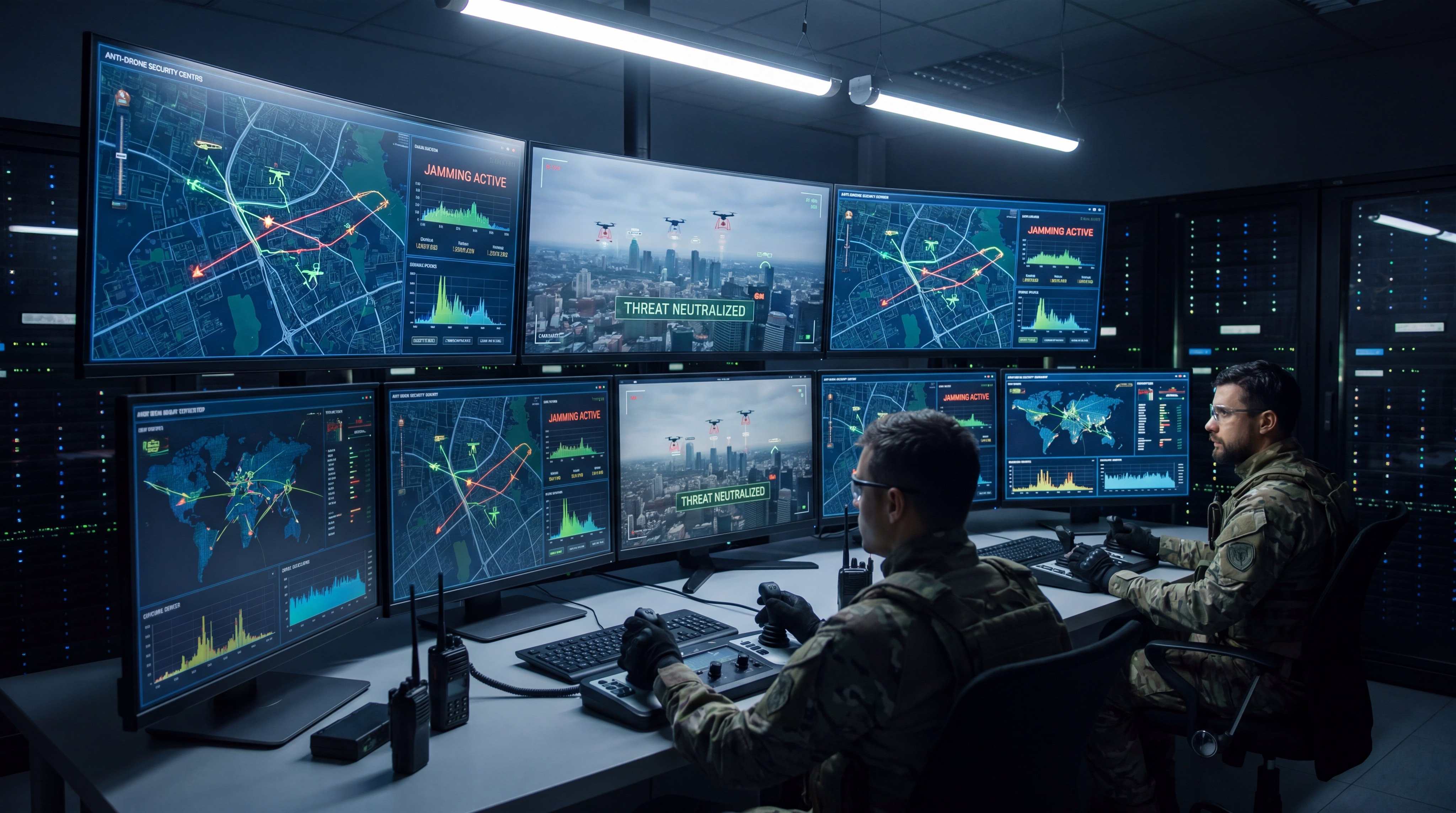
High-security sectors such as military defense, law enforcement, and critical infrastructure management are the primary users of drone mitigation systems. These organizations utilize SDR signal source modules and professional Drone Jammers to create permanent or temporary “no-fly” zones. You will find these systems protecting assets where aerial surveillance or physical payloads pose a catastrophic risk.
Strategic defense and asset protection
Prisons and correctional facilities use these tools to stop the delivery of contraband over facility walls. In military contexts, jamming is essential for preventing enemy reconnaissance from identifying troop movements.
Believe it or not:
- Airports: Preventing unauthorized drones from interfering with manned aircraft flight paths.
- Government Buildings: Protecting sensitive meetings from aerial espionage.
- Data Centers: Ensuring that proprietary information remains secure from overhead signal interception.
Key Takeaway: Any organization managing high-value assets or public safety risks requires an electronic aerial defense strategy.
| Industry | Primary Threat | Goal |
|---|---|---|
| Correctional | Smuggling | Denial of delivery |
| Energy | Sabotage | Perimeter integrity |
| Public Safety | Crowd hazards | Controlled landing |
By integrating these technologies, these sectors can proactively manage the growing risk of rogue drone flights in their airspace.
Is jamming and spoofing drones legal for you?
The use of Drone Jammers is strictly regulated by international and local communications authorities to prevent interference with authorized radio signals. You must understand that in many jurisdictions, including the United States, operating these devices as a private citizen or enterprise is a federal offense. These tools are typically reserved for specific government, military, and law enforcement agencies authorized to manage the RF spectrum.
Regulatory constraints and penalties
The Federal Communications Commission (FCC) prohibits the marketing, sale, or operation of equipment that intentionally blocks authorized radio communications. This is because jammers do not discriminate and can block 911 calls or emergency responder frequencies.
The bottom line is:
- Strict Licensing: Only authorized agencies can legally deploy high-power jamming hardware.
- Heavy Fines: Illegal use can result in massive monetary penalties and equipment seizure.
- Criminal Charges: In severe cases, unauthorized jamming can lead to imprisonment.
Key Takeaway: While the technology exists, legal deployment is limited to authorized government and law enforcement entities.
| Authority | Regulation | Consequence |
|---|---|---|
| FCC | No unauthorized RF blocking | Civil fines / Seizure |
| FAA | Interference with aircraft | Federal prosecution |
| Local Law | Noise/Spectrum pollution | Potential local charges |
You must verify your legal authority before purchasing or deploying any form of electronic counter-drone technology.
What are the primary safety risks of jamming?
The biggest safety risk of using Drone Jammers is the potential for collateral interference with critical communication networks. When you deploy Directional antennas to stop a drone, the signal “bleeding” can disrupt nearby Wi-Fi, cellular networks, or emergency services. This “spectral pollution” creates a dangerous environment where public safety could be compromised while trying to stop a single drone.
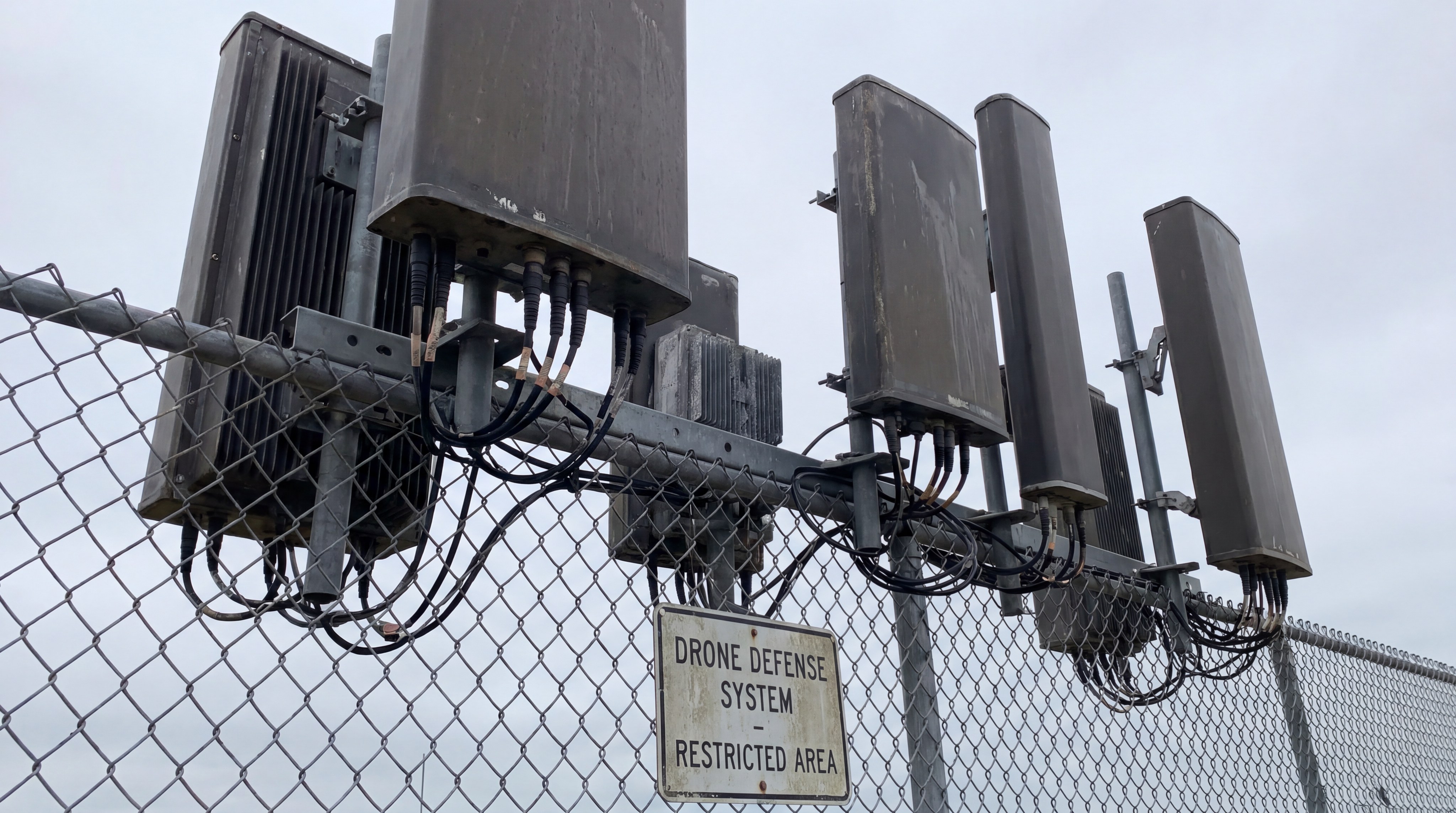
Unintended consequences of RF noise
Jamming a drone also removes the pilot’s control without giving you full authority over where the aircraft lands. If a jammed drone carries a hazardous payload, a forced vertical landing could lead to accidental detonation or chemical spills.
Now, consider this:
- Emergency Service Blackouts: Interruption of police or fire department radio links.
- GPS Denied Environments: Accidental blocking of navigation for nearby manned vehicles.
- Payload Hazards: Uncontrolled landing of drones carrying dangerous materials.
Key Takeaway: Jamming is an “incomplete” countermeasure that can cause significant unintended disruption to the surrounding electronic ecosystem.
| Risk Factor | Potential Impact | Mitigation |
|---|---|---|
| Signal Bleed | Cellular/Wi-Fi outage | Precision frequency targeting |
| Uncontrolled Landing | Property damage | Controlled protocol takeover |
| Radio Interference | Blocked emergency calls | Low-power directional focus |
Strategic planning and precision hardware are required to minimize these risks when deploying counter-drone systems.
How is RF hardware selected for mitigation?
Selecting hardware for Drone Jammers requires a deep analysis of frequency coverage, power output, and duty cycle requirements. You need equipment that can handle the specific protocols of the threats you anticipate, from standard Wi-Fi drones to long-range industrial units. Reliability is paramount, as the system must function instantly and flawlessly when a threat is detected.
Technical specifications for defense
The frequency range must cover at least the 400 MHz to 6 GHz spectrum to be effective against a majority of commercial threats. High-wattage output is necessary for systems protecting large perimeters where the drone must be engaged at a distance.
Keep in mind:
- Bandwidth Coverage: The system must cover multiple bands simultaneously to prevent “channel hopping.”
- Gain Flatness: Ensuring the power is consistent across the entire targeted frequency range.
- Interface Options: The ability to integrate the hardware into a larger automated security network.
Key Takeaway: Hardware selection must balance broadband coverage with the power levels needed for your specific perimeter size.
| Spec Metric | Ideal Range | Importance |
|---|---|---|
| Frequency | 30 MHz to 6 GHz+ | Threat versatility |
| Power Output | 50W to 500W+ | Engagement distance |
| Duty Cycle | Continuous (CW) | Sustained disruption |
Your choice of hardware defines the ultimate success of your aerial security perimeter against modern rogue drones.
Can pilots bypass electronic interference?
Advanced drone pilots can utilize several tactics to bypass standard Drone Jammers and electronic countermeasures. Modern drones often incorporate frequency-hopping spread spectrum (FHSS) technology or Millimeter-wave amplifiers to maintain links in high-noise environments. You must stay ahead of these tactical evolutions by deploying systems that offer broadband, real-time frequency adaptation.
Advanced evasion and autonomous flight
If a drone is programmed to fly a pre-set GPS mission, it may ignore RF control interference entirely. Some high-end units even use “computer vision” to navigate without GPS, making them immune to standard satellite signal spoofing.
Here is the truth:
- Frequency Hopping: Rapidly switching channels to stay ahead of a narrow-band jammer.
- Shielded Electronics: Protecting internal circuits from external electromagnetic noise.
- Optical Navigation: Using cameras to find landmarks instead of relying on external signals.
Key Takeaway: Sophisticated threats use autonomous navigation and frequency hopping to maintain flight even under heavy electronic interference.
| Evasion Tactic | Mechanism | Defense Response |
|---|---|---|
| FHSS | Rapid channel switching | Broadband “Barrage” jamming |
| Autonomous Flight | No RF link needed | Physical interception |
| Visual GPS | Camera-based navigation | Optical sensor disruption |
As these technologies become more accessible to rogue operators, your mitigation strategies must evolve toward multi-layered, protocol-aware defense systems.
What is the future of drone mitigation tech?
The next generation of Drone Jammers will leverage Artificial Intelligence (AI) to identify and surgically target specific drone signatures. This approach reduces collateral damage by only interrupting the specific threat signal while leaving surrounding communications intact. You can expect to see a move toward higher frequencies as drone manufacturers explore the millimeter-wave spectrum for low-latency control.
The rise of intelligent RF defense
AI-driven systems will be able to distinguish between a friendly drone and a threat based on its RF fingerprint. This “surgical jamming” allows for high-security environments to remain operational while neutralized rogue threats.
The future looks like this:
- Cognitive Radio: Systems that learn and adapt to new evasion tactics in real-time.
- Integrated Multi-Sensor: Combining RF jamming with laser and kinetic countermeasures.
- Higher Frequency Focus: Moving defense systems into the 24 GHz to 100 GHz range.
Key Takeaway: Future systems will be defined by AI-driven precision and the ability to operate in the ultra-high frequency microwave bands.
| Innovation | Impact | Timeline |
|---|---|---|
| AI Fingerprinting | No collateral noise | 1-3 Years |
| mmWave Defense | High-speed link disruption | 2-5 Years |
| Autonomous Kill | Zero human delay | 5+ Years |
Staying at the forefront of these developments is essential for maintaining a secure and resilient aerial defense posture.
*
Securing your airspace requires a technical and strategic approach to RF management. Whether you are dealing with simple commercial threats or sophisticated autonomous aircraft, understanding the nuances of jamming, spoofing, and signal hardware is critical. Our vision is to provide the high-performance RF components necessary to build the world’s most resilient aerial defense systems. To learn more about integrating our precision hardware into your security infrastructure, contact us today.
Drone Mitigation FAQ
Can I legally buy a drone jammer for my home?
In most countries, including the US, it is illegal for private citizens to buy, sell, or operate signal jamming devices, as they interfere with authorized public communications.
What’s the best way to detect a drone before jamming?
RF sensors and radar systems provide the best early warning, allowing you to identify a drone’s presence and frequency before initiating any electronic interruption.
Can I stop a drone without using electronics?
While physical methods like nets or trained birds exist, they have much shorter ranges and lower success rates compared to professional electronic countermeasures.
What’s the most effective frequency to target?
Most drones operate on the 2.4 GHz and 5.8 GHz bands, though high-end threats may use cellular frequencies (LTE/5G) or specialized UHF bands.
Can I take control of a rogue drone’s camera?
Spoofing techniques can potentially allow you to view a drone’s camera feed, but this requires specific hardware capable of de-encrypting the manufacturer’s protocol.
Authorized RF engineering and compliance review
For regulated RF systems, this page should be used as an engineering and compliance review path, not as a public deployment checklist. CorelixRF starts with authorization status, operating region, frequency plan, output limit, antenna interface, safety controls, thermal limits and acceptance documents.
- RFQ checklist – send the data buyers usually forget, including band, power, duty cycle, interface and test standard
- delivery documentation – check what documents can support incoming inspection, FAT review and long-term maintenance
- quality and certification review – review the quality and compliance evidence before the project moves into procurement
- RF front-end platform – compare the RF chain as a system instead of selecting one isolated module
- RF configurator – turn frequency, power, thermal and interface requirements into a first configuration brief
- case studies – review similar engineering paths before sending an RFQ
- engineering contact – send the application notes, block diagram or target specification to engineering sales
This keeps the discussion inside lawful, authorized RF programs while still giving procurement teams a clear way to request amplifier, antenna, SDR source, documentation and factory review.