

Yes, you are ready for 2026 if you adopt a proactive, multi-layered defense strategy today. Unauthorized aerial incursions are rising at an alarming rate, threatening the safety of critical infrastructure and public venues globally. Without a robust plan involving sophisticated detection and Drone Jammers, your facility remains a soft target for corporate espionage and physical disruption. Implementing these technologies now ensures you stay ahead of the curve as the skies become increasingly crowded and complex.
Will rising threats make mitigation the top priority?
Rising threats will absolutely shift the security focus from simple detection to active mitigation by the start of 2026. This shift is driven by the sheer volume of illicit drone flights and the increased availability of high-payload consumer hardware. Organizations are realizing that knowing a threat exists is useless if they lack the Drone Jammers necessary to stop it.
The complexity of these threats means that passive monitoring is no longer a viable standalone solution for high-security zones. Security directors must now evaluate how their kinetic and non-kinetic responses integrate with local law enforcement protocols.
Can drone jammers neutralize evolving aerial risks?
Think about it: as drones become more resilient to simple signal interference, the precision of your hardware becomes the deciding factor in success. Modern interference systems must be capable of surgical precision to avoid disrupting legitimate communication networks while effectively grounding threats.
- Precision frequency targeting to minimize collateral RF interference.
- Automated response triggers linked to multi-sensor detection arrays.
- Directional signal emission to maximize range and effectiveness.
The best part? These systems allow for a non-destructive way to regain control of your restricted airspace without the risks associated with physical projectiles.
How will training adapt to more frequent incursions?
Here is the kicker: even the most advanced hardware fails if the personnel operating the system are not trained for high-stress, rapid-response scenarios. Training in 2026 will move toward immersive simulation and real-world “red teaming” exercises to ensure 100% readiness.
- Simulated swarm attacks to test operator decision-making speed.
- Cross-departmental drills involving security, IT, and legal teams.
- Regular technical workshops on RF signal management and regulatory changes.
You must treat aerial security training with the same rigor as fire safety or active shooter protocols to ensure a cohesive defense.
What is the key takeaway for security mitigation?
The bottom line is that mitigation is the new standard, and you cannot afford to wait for an incident to occur before acting. Investing in a robust defense layer ensures that your detection alerts are followed by immediate, effective action.
Key Takeaway: Mitigation via active signal disruption is becoming mandatory for high-risk sites to ensure continuous operational safety and threat neutralization.
| Component | 2025 Standard | 2026 Prediction |
|---|---|---|
| Primary Goal | Awareness | Immediate Neutralization |
| Response Time | > 2 Minutes | < 30 Seconds |
| Integration | Standalone | Full Ecosystem |
The data clearly indicates a transition from reactive observation to proactive, automated neutralization strategies for all critical sites.
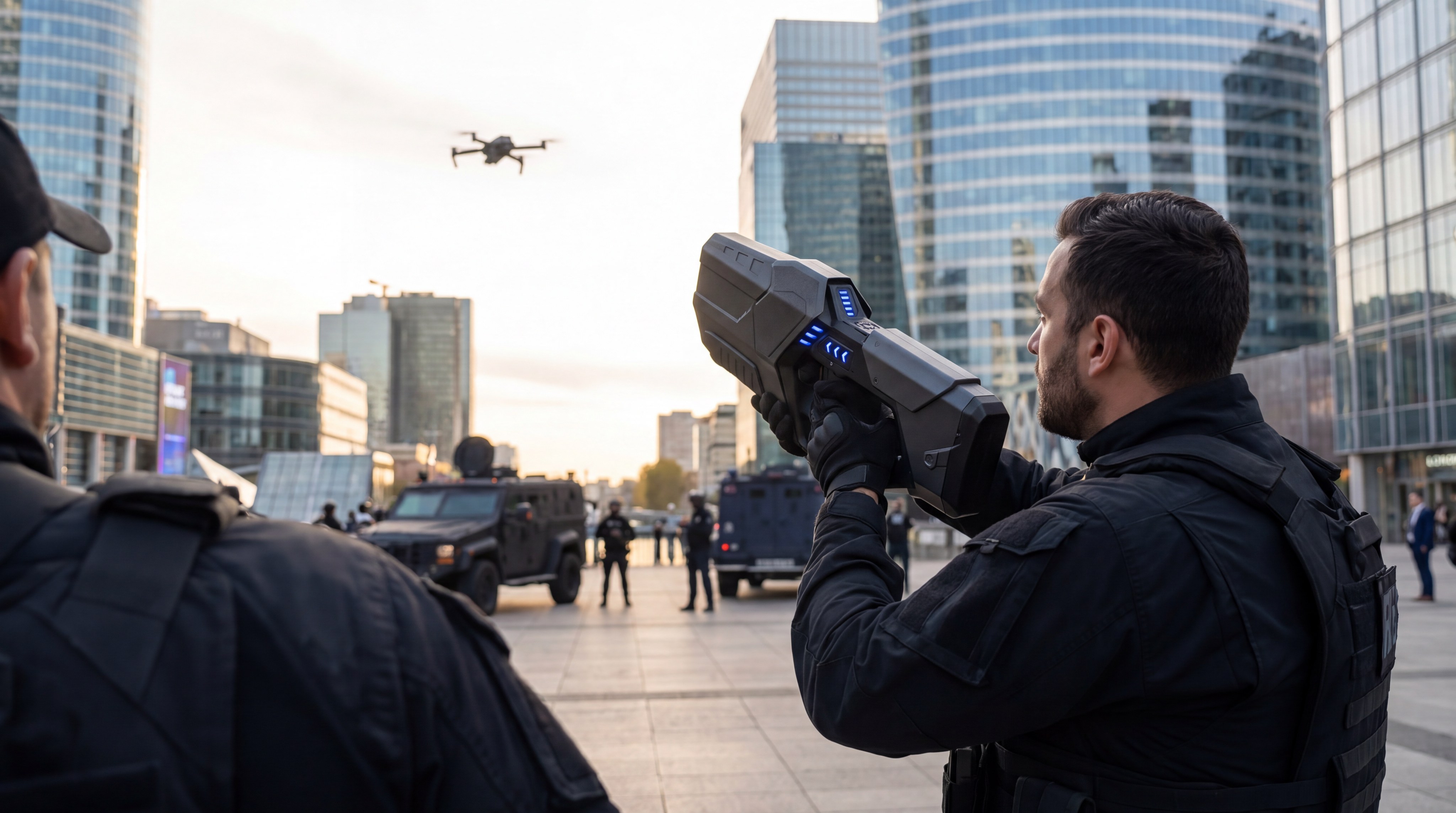
How will AI change the future of drone defense?
AI will transform drone defense by enabling real-time classification and automated decision-making that far exceeds human capability. The integration of artificial intelligence into Drone Jammers allows systems to identify specific flight patterns and choose the most effective disruption frequency instantly.
This technological leap is necessary because human operators often struggle to differentiate between a hobbyist and a malicious actor in a split second. AI-driven platforms provide a level of certainty that reduces false positives and ensures a calibrated response to every unique threat.
Can autonomous drones bypass traditional detection?
Believe it or not, drones that do not rely on constant RF links for navigation can easily slip past sensors that only look for standard remote signals. Autonomous systems using computer vision and inertial navigation require a new breed of multi-spectral sensors to be detected reliably.
- Acoustic sensors to pick up unique motor and propeller signatures.
- Optical recognition software that identifies drone silhouettes against complex backgrounds.
- Radar systems capable of tracking small, low-altitude objects with high clutter rejection.
The reality is that your defense must be as smart as the drones attempting to bypass it, requiring constant software updates and machine learning.
Will AI-driven software improve response accuracy?
You should know that AI software does more than just detect; it optimizes the entire counter-measure chain to ensure success on the first attempt. By analyzing the drone’s behavior, the AI can predict its likely flight path and direct energy exactly where it is needed.
- Automated gain control to maintain signal strength against moving targets.
- Smart frequency hopping to counter drones with anti-jamming capabilities.
- Real-time reporting and forensic data logging for post-incident analysis.
Wait, there’s more: these AI systems can learn from every encounter, meaning your defense becomes stronger and more efficient with every detected flight.
What is the key takeaway for AI integration?
AI is the primary force multiplier that will allow small security teams to manage large-scale aerial threats without increasing headcount. Embracing autonomous defense platforms is the only way to counter the coming wave of autonomous aerial vehicles effectively.
Key Takeaway: Artificial Intelligence is shifting from a luxury feature to a core requirement for any C-UAS platform intended to operate in complex environments.
| AI Feature | Impact on Defense | Efficiency Gain |
|---|---|---|
| Pattern Recognition | Reduced False Alarms | 85% |
| Auto-Targeting | Faster Interception | 90% |
| Learning Loops | Evolving Threat Protection | Continuous |
Strategic implementation of AI ensures that your security infrastructure evolves at the same pace as the threats it is designed to stop.
Is Drone as First Responder the new safety standard?
Drone as First Responder (DFR) programs will become the backbone of public safety in 2026, providing eyes on the scene minutes before ground units arrive. These programs rely on high-performance Drone Jammers to protect their own fleet from external interference while operating in urban corridors.
The speed of an aerial response can be the difference between life and death in emergency medical or active pursuit situations. Cities that implement DFR see a significant reduction in response times and a massive increase in situational awareness for command centers.
How does DFR technology improve emergency response?
Look at it this way: a drone can fly directly over traffic and obstacles that would delay a traditional ambulance or police cruiser. By arriving first, the drone provides live, high-definition video to the Wireless Data Link of responding officers.
- Thermal imaging for finding missing persons in low-light conditions.
- Gas sensors for detecting hazardous leaks before human entry.
- Two-way audio for communicating with victims or de-escalating conflicts remotely.
Here is the kicker: the intelligence gathered in those first two minutes often dictates the entire strategy for the ground team’s arrival.
Can police use drones to reduce operational risks?
You’ll find that using drones for high-risk surveillance allows police departments to keep their human assets out of the line of fire. Whether it is a hostage situation or a barricaded suspect, aerial platforms provide a safe vantage point for critical observation.
- Reducing the need for high-speed ground pursuits that endanger the public.
- Mapping interior spaces using specialized indoor tactical drones.
- Providing overwatch for large public gatherings without intrusive ground presence.
The best part? This technology allows for a “de-escalation first” approach that prioritizes the safety of both the public and the officers involved.
What is the key takeaway for public safety drones?
DFR is not just about flying; it is about data integration and the rapid delivery of actionable intelligence to those who need it most. Protecting these assets from interference is paramount to ensuring they remain operational during a crisis.
Key Takeaway: DFR technology is revolutionizing public safety by providing immediate aerial overwatch, but these systems must be shielded by robust RF defense.
| DFR Benefit | Operational Impact | Safety Improvement |
|---|---|---|
| Rapid Arrival | Arrival within 90 seconds | High |
| Live Stream | Enhanced Command Control | Critical |
| Risk Reduction | Keeps officers at a distance | Maximum |
The adoption of DFR programs indicates a significant move toward data-driven policing that prioritizes rapid awareness and reduced physical confrontation.

Does drone tech redefine modern airspace superiority?
Modern airspace superiority is no longer defined by the quantity of manned aircraft but by the effectiveness of your counter-UAS capabilities. In 2026, the dominance of the low-altitude sky will belong to those who can deploy and protect Drone Jammers across their entire operational theater.
The shift from expensive, manned platforms to swarms of low-cost drones has leveled the playing field for many actors. Consequently, national security strategies are pivoting toward electronic warfare as the primary method for maintaining sovereignty over domestic and tactical airspaces.
Is counter-UAS capability now more vital than pilots?
Think about it: a single technician operating a sophisticated C-UAS system can neutralize a million-dollar aerial threat without ever leaving their desk. The focus of defense spending has moved from cockpit training to high-power signal processing and RF engineering.
- Solid-state power amplifiers that enable long-range signal disruption.
- Software-defined radios that can adapt to new frequencies in milliseconds.
- Automated tracking systems that manage multiple targets simultaneously.
The best part? These systems don’t experience fatigue, G-force limitations, or the psychological stress that human pilots face in combat.
How will global defense strategies shift by 2026?
You should be aware that the concept of “air superiority” is being decentralized, moving from large airbases to modular, mobile defense units. Defense forces are now prioritizing the protection of individual convoys and temporary installations using portable interference technology.
- Integration of C-UAS into every infantry and vehicle squad.
- Development of “denial zones” where unauthorized flight is physically impossible.
- Heavy investment in GaN-based RF components for smaller, more powerful defense modules.
Here is the kicker: the next conflict will be won in the electromagnetic spectrum, not necessarily through traditional air-to-air dogfights.
What is the key takeaway for national security?
Airspace superiority has moved from the stratosphere to the “dirt to a thousand feet” zone, where drones operate most effectively. Mastering this low-altitude domain is the number one priority for modern defense architects worldwide.
Key Takeaway: Air superiority in 2026 depends on the ability to control the RF spectrum and neutralize small, high-speed aerial threats at scale.
| Defense Shift | Legacy Focus | 2025 Focus |
|---|---|---|
| Asset Type | Manned Jets | Distributed Swarms |
| Neutralization | Kinetic Missiles | Electronic Disruption |
| Training | Pilot Proficiency | RF/AI Engineering |
The strategic landscape is being rewritten, placing electronic warfare and signal integrity at the center of all modern defense doctrines.
Will market consolidation lead to unified solutions?
Market consolidation is expected to accelerate in 2026, resulting in more unified, “plug-and-play” security ecosystems that simplify procurement. Smaller companies are being absorbed by larger entities to create comprehensive suites that include everything from sensors to Drone Jammers.
This trend is a direct response to customer demand for systems that work together without complex custom integration. For you, this means fewer vendors to manage and higher reliability across your entire security stack as components are designed to communicate natively.
Are modular platforms replacing standalone sensors?
The best part about the current market evolution is the move toward modularity, where you can swap components as threats evolve. Instead of buying a completely new system every two years, you can simply upgrade the RF module or the detection software.
- Interchangeable amplifier modules to increase disruption range.
- Standardized data protocols like SAPIENT for multi-vendor compatibility.
- Cloud-based updates that push new threat signatures to your hardware instantly.
Believe it or not, this modular approach significantly lowers the total cost of ownership while keeping your defenses at the cutting edge.
Why are specialized manufacturers merging operations?
Here is the kicker: the complexity of modern C-UAS requires expertise in radar, optics, RF, and AI, which few single companies possess entirely. Mergers allow these specialists to combine their strengths into a single, invincible platform that covers all detection and mitigation bases.
- Combining high-power RF amplifier technology with advanced SDR signal generation.
- Integrating long-range thermal cameras with precision radar tracking.
- Sharing R&D costs to accelerate the deployment of next-generation GaN technology.
You should know that this consolidation is leading to more stable pricing and better long-term support for industrial and government clients.
What is the key takeaway for industry consolidation?
Consolidation is creating a more professional and reliable industry, moving away from the “wild west” of experimental startups. You should look for partners who offer integrated solutions that are built on open architectures for future flexibility.
Key Takeaway: A unified security solution reduces integration headaches and ensures that all parts of your defense ecosystem speak the same language.
| Market Trend | Old Approach | 2025 Unified Approach |
|---|---|---|
| Procurement | Fragmented Vendors | Single Ecosystem |
| Maintenance | Custom Fixes | Standardized Modules |
| Upgrades | Hardware Replacement | Software/Module Swaps |
The move toward unified platforms ensures that you spend less time on system integration and more time on active threat management.
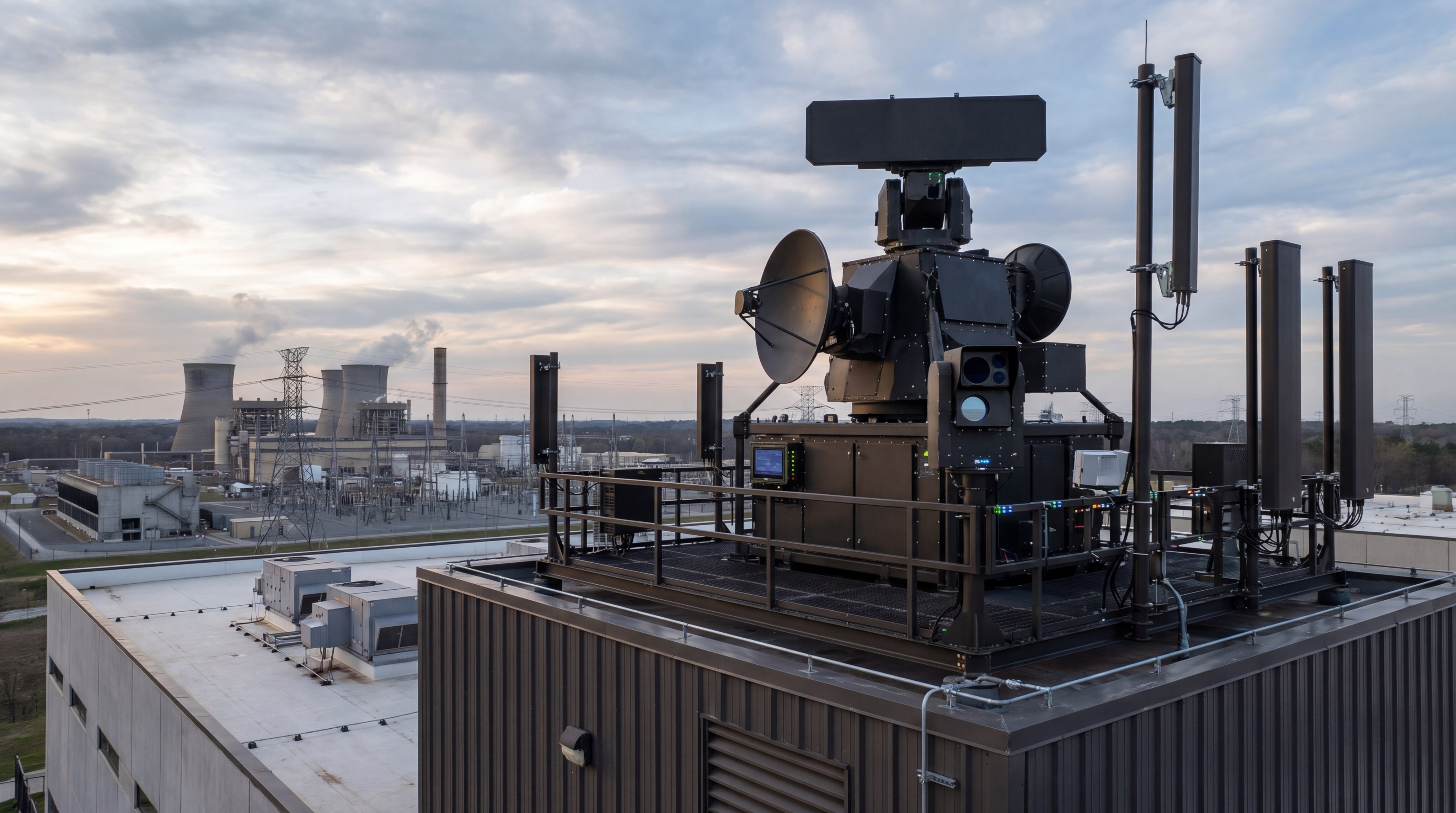
Can regulation keep pace with rapid aerial innovation?
Regulation is struggling to keep up with drone technology, but 2026 will see significant legal frameworks established for C-UAS operations. Many regions are currently reviewing laws to allow private entities to use Drone Jammers in specific, high-risk environments.
As the economic impact of drone-related disruptions increases, governments are under pressure to provide legal clarity. Navigating this landscape requires a partner who understands the technical requirements of compliance and the latest legislative updates.
Will new laws mandate drone jammers for infrastructure?
You might find it surprising, but some governments are considering making active drone defense a requirement for certain critical sites. Just as fire alarms are mandated, signal disruption for data centers and power plants could soon be a legal necessity.
- Mandatory C-UAS risk assessments for all tier-1 infrastructure providers.
- Defined “no-fly” zones with legal authorization for immediate signal denial.
- Certification requirements for all hardware used in civilian-dense areas.
Think about it: once these laws are passed, being “ready” for 2025 will no longer be optional—it will be a matter of legal compliance.
How will remote ID requirements impact urban security?
Remote ID is the digital license plate for drones, and in 2026, it will be the primary way to separate “friend from foe” in city skies. Systems that integrate Remote ID data can automatically ignore authorized flights while focusing all resources on anonymous threats.
- Real-time lookup of flight intent and operator credentials.
- Automated alerting when a drone deviates from its registered flight path.
- Correlation of RF signatures with digital ID tokens for 100% verification.
Wait, there’s more: Remote ID also provides a legal audit trail, making it much easier to prosecute those who violate your restricted airspace.
What is the key takeaway for regulatory compliance?
Stay informed because the legal landscape for C-UAS is shifting rapidly, and what was restricted yesterday might be authorized tomorrow. Working with compliant hardware manufacturers ensures that your investment remains legal and effective throughout its lifecycle.
Key Takeaway: Regulatory hurdles are clearing as governments recognize that passive detection is insufficient for protecting national interests and private property.
| Regulatory Factor | 2025 Status | 2026 Outlook |
|---|---|---|
| Jamming Legality | Restricted/Emergency | Authorized for Critical Sites |
| Remote ID | Initial Rollout | Full Enforcement |
| Site Mandates | Optional | Required for Tier-1 |
The evolving legal framework will provide the necessary protection for organizations to deploy active defense measures without fear of litigation.
Are you prepared for the threat of autonomous swarms?
Autonomous swarms represent the most significant threat to security in 2026, as they can overwhelm single-target defense systems. To counter this, your facility needs Drone Jammers capable of wide-area saturation and multi-frequency disruption.
Unlike a single drone, a swarm works as a hive, sharing data to find gaps in your perimeter. Defeating a swarm requires a shift from “tracking a dot” to “denying a zone,” utilizing high-power RF energy to create a total exclusion area.
Can single-target sensors handle swarm saturation?
Look at the facts: most traditional sensors are designed to track one or two objects with high precision, which is useless against fifty. A swarm attack is designed to saturate your sensors and exhaust your response capabilities through sheer numbers.
- Digital beamforming to create multiple “null zones” simultaneously.
- Wideband monitoring that detects dozens of control signals at once.
- AI-prioritization that identifies the lead drones in a swarm hierarchy.
Here is the kicker: if your system isn’t designed for multi-target engagement, a swarm will simply fly around your single-point defense.
Will wideband signal jammers be necessary for defense?
You should consider that swarms often use multiple communication bands to remain resilient against interference. A successful defense must utilize broadband RF Power Amplifiers to blanket the entire likely spectrum of control.
- Covering everything from VHF/UHF up to the 6 GHz microwave bands.
- Using high-power GaN technology to maintain signal density over large areas.
- Deploying omnidirectional antennas to ensure 360-degree protection against all vectors.
The best part? Modern broadband systems can target multiple frequencies without needing separate antennas for every single band.
What is the key takeaway for swarm protection?
Preparing for swarms is about increasing your power output and your processing bandwidth to match the scale of the threat. If you are only prepared for a single drone, you are essentially leaving the door open for a coordinated attack.
Key Takeaway: Swarm defense requires a transition to wideband, high-power denial systems that can manage dozens of simultaneous threats across multiple frequencies.
| Threat Type | Sensor Requirement | Mitigation Strategy |
|---|---|---|
| Single Drone | Precision Tracking | Targeted Jamming |
| Small Group | Multi-Target Radar | Sector Denial |
| Mass Swarm | Wideband Scanning | Omnidirectional RF Blanket |
The scale of aerial threats is expanding, making it essential to invest in hardware that can grow in power and complexity as swarm technology evolves.
Why is high RF power essential for signal disruption?
High RF power is the engine that drives every successful C-UAS operation by ensuring your signal reaches the target before it reaches your facility. Without the raw power provided by industrial Drone Jammers, a sophisticated drone can easily “shout over” your interference.
In 2025, as drones fly faster and use more resilient comms, the distance at which you can engage them becomes critical. High-power systems give you the “stand-off” distance needed to neutralize a threat before it can drop a payload or capture sensitive data.
Do broadband amplifiers provide better jamming range?
Think about it: a broadband amplifier allows you to hit multiple frequency targets with the same high-power output, ensuring no signal is missed. By utilizing RF Power Amplifier technology, you can maintain a consistent defense across a massive frequency range.
- High gain flatness ensures consistent performance across the entire spectrum.
- Efficiency in power conversion reduces heat and increases operational uptime.
- Compact designs allow high-power modules to be mounted on mobile platforms.
The best part? Broadband capability means your system is future-proofed against drones that might move to non-standard frequencies.
Will GaN technology dominate high-power RF systems?
You should know that Gallium Nitride (GaN) is the gold standard for 2026 because it offers higher power density than traditional silicon. This allows for smaller, lighter, and much more powerful disruption systems that can be deployed anywhere.
- Lower power consumption for the same RF output level.
- Better thermal management, allowing for continuous operation in hot environments.
- Superior reliability under the high-stress conditions of active jamming.
Here is the kicker: GaN technology is what enables the next generation of handheld and portable defense units to be effective at ranges previously only possible with truck-mounted systems.
What is the key takeaway for RF power requirements?
Power is the ultimate arbiter in the electronic warfare battle; if you have more power and better efficiency, you win the engagement. Never compromise on the quality of your power amplifiers, as they are the heart of your aerial defense.
Key Takeaway: High-power GaN amplifiers are the critical components that enable effective, long-range defense against even the most resilient commercial and military drones.
| Tech Type | Power Density | Thermal Efficiency | Range Capability |
|---|---|---|---|
| Legacy Silicon | Low | Average | Limited |
| Standard GaN | High | High | Excellent |
| Next-Gen GaN | Extreme | Maximum | Superior |
Focusing on high-power, efficient RF chains ensures that your defense system can actually stop a drone, rather than just annoying its operator.
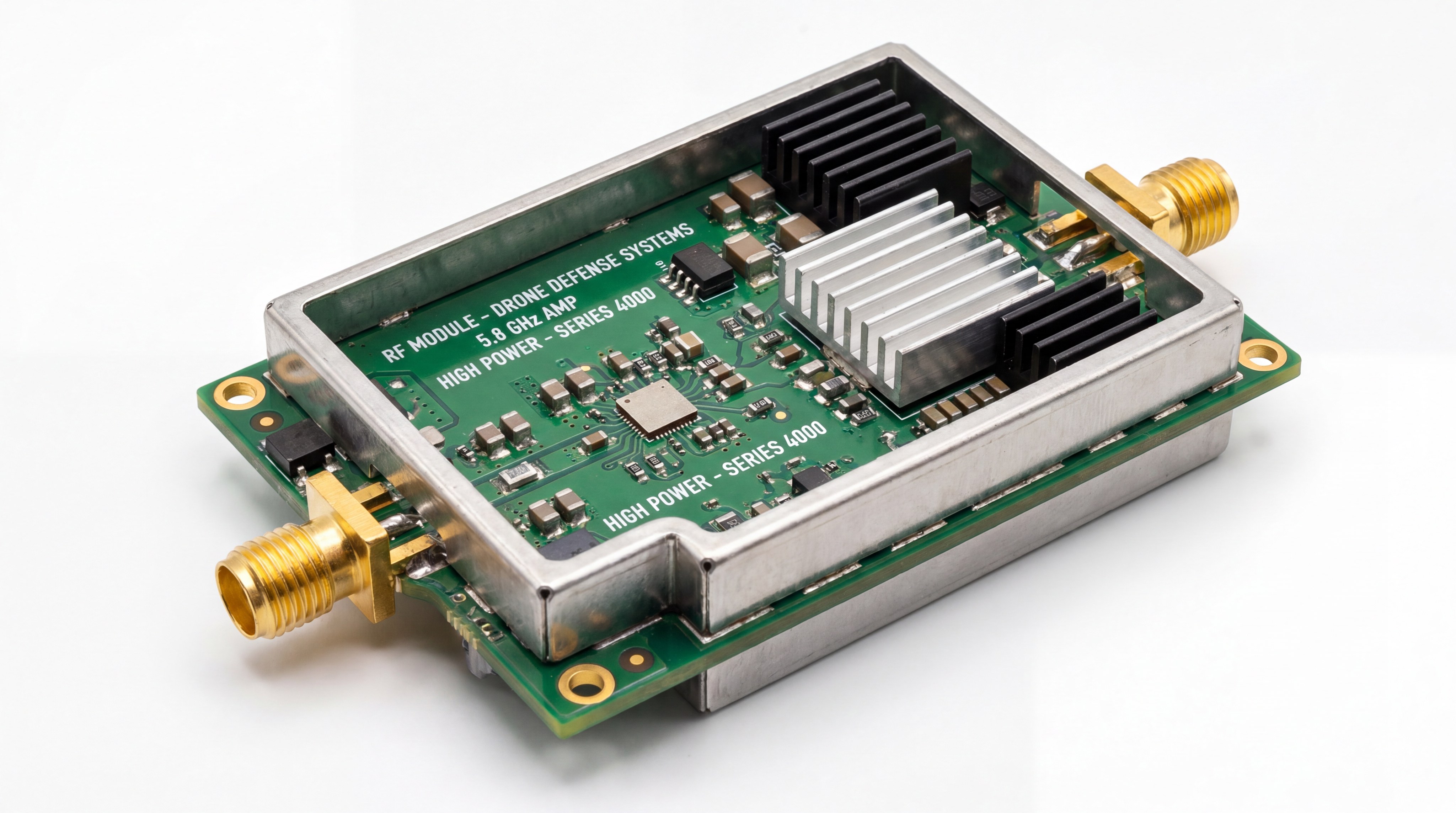
Is counter-UAS scalability achievable for cities?
Scalability is the biggest challenge for urban drone security, but modular platforms make it achievable for metropolitan areas in 2025. By deploying a network of Drone Jammers linked to a central command, a city can create a safe corridor for legitimate commerce.
The goal is to move away from “island” defenses and toward a “blanket” approach where the entire city’s low-altitude airspace is managed. This requires massive integration with existing urban infrastructure like light poles, buildings, and transit centers.
Can modular platforms secure entire metropolitan areas?
Look at the possibilities: modular units can be installed gradually, starting with sensitive government buildings and expanding to cover high-traffic shopping and stadium districts. This “Lego-style” expansion makes the high cost of city-wide security much easier to manage over several budget cycles.
- Centralized management software that controls thousands of distributed nodes.
- Automated hand-off as a drone moves from one sensor’s coverage to another.
- Scalable power levels to ensure minimal disruption to civilian Wi-Fi and cell networks.
The best part? These modular systems can be updated remotely, ensuring the entire city is protected against the latest firmware updates from drone manufacturers.
How do front-end systems integrate with existing tech?
Believe it or not, your C-UAS doesn’t have to be a separate silo; it can integrate with your existing CCTV and physical security networks. By sharing data across platforms, your security team gets a truly 3D view of every threat, both on the ground and in the air.
- CCTV cameras that automatically slew to the location provided by RF sensors.
- Physical access control systems that lock down doors when an aerial threat is detected.
- Integration with local 911 dispatch for immediate police response.
Here is the kicker: a unified front-end reduces training time and ensures that your operators aren’t overwhelmed by too many different screens and alerts.
What is the key takeaway for urban scalability?
Urban scalability is about network density and smart integration, not just buying the biggest jammer available. A well-coordinated network of smaller, smarter units is far more effective in a city than a few massive, high-power installations.
Key Takeaway: City-wide drone security is a marathon, not a sprint, requiring a scalable, modular architecture that integrates with existing smart-city infrastructure.
| Scaling Phase | Infrastructure | Primary Goal |
|---|---|---|
| Phase 1 | Critical Sites Only | Asset Protection |
| Phase 2 | Transit & Public Venues | Public Safety |
| Phase 3 | Metropolitan Mesh | Airspace Management |
A phased approach to urban C-UAS ensures that you build a solid foundation of protection that can expand as the city’s needs and threats grow.
Will airspace truly become a managed public utility?
By the end of 2026, low-altitude airspace will transition from a chaotic “free-for-all” to a managed public utility similar to roads or telecommunications. This shift is driven by the need to facilitate thousands of commercial delivery drones while using Drone Jammers to keep the “wild” drones away from restricted paths.
Managing this space requires sophisticated traffic management systems (UTM) that can authorize, track, and—if necessary—neutralize flights in real-time. This transformation will fundamentally change how we view the sky above our homes and businesses.
Can cities monitor low-altitude traffic safely?
Think about the complexity: monitoring thousands of small objects moving at 40 mph through narrow urban canyons requires a massive sensor density. Cities are beginning to treat these sensor networks as essential infrastructure, just like water or electricity.
- Integrating UTM data with local law enforcement and aviation authorities.
- Utilizing COFDM Video Transmitters for interference-free monitoring.
- Creating “digital fences” that automatically alert authorities to unauthorized entries.
The best part? This level of monitoring allows for the safe expansion of drone delivery services, which could revolutionize urban logistics and reduce road traffic.
Will specialized antennas become urban infrastructure?
You should expect to see specialized C-UAS and comms antennas becoming a standard fixture on city skylines. These arrays are designed to manage the complex RF environment of a city while providing precision targeting for security measures.
- MIMO antenna systems to handle multiple data streams in high-multipath environments.
- Directional arrays that focus energy only on the “illegal” areas of the sky.
- Aesthetic integration into street furniture to maintain public acceptance.
Wait, there’s more: these antennas won’t just be for security; they will also support the high-bandwidth data links needed for autonomous flight and smart-city data.
What is the key takeaway for the future of airspace?
The sky is no longer empty space; it is a valuable asset that must be managed, protected, and monetized. If you aren’t thinking about how to secure your “air rights,” you are ignoring one of the most significant security frontiers of the decade.
Key Takeaway: Airspace management is becoming an essential government and corporate function, requiring advanced RF technology to ensure safety and order.
| Airspace Era | Status | Primary Technology |
|---|---|---|
| The Past | Unmanaged | Visual Line of Sight |
| The Present | Emerging Regulation | Passive Detection |
| 2025 & Beyond | Managed Utility | Active RF Control/UTM |
Transitioning to a managed utility model ensures that the benefits of drone technology can be realized without compromising the safety and privacy of the public.
*
Frequently Asked Questions
Can I legally use a drone jammer on my private property?
No, not currently without specific government authorization. In most jurisdictions, including the US under FCC and FAA rules, signal jamming is restricted to federal agencies and authorized entities because it can interfere with critical communications. However, legislation is rapidly evolving to allow more flexibility for critical infrastructure and high-security sites by 2026.
What’s the best way to detect a drone that isn’t using Wi-Fi?
Use a multi-sensor approach involving radar and optical sensors. While RF sensors are great for consumer drones, professional-grade or autonomous drones often fly “dark.” Radar provides the physical tracking of the object, while high-definition cameras with AI can confirm the threat visually regardless of the signal it is emitting.
How do I know if my facility is at high risk for drone threats?
Assess your “attractiveness” to an adversary based on your data and physical assets. If you manage a data center, a power plant, a correctional facility, or a high-profile corporate headquarters, you are a primary target for aerial espionage or disruption. Any site that requires strict perimeter security on the ground is now at risk from the air.
Can weather conditions affect my drone defense system?
Yes, significantly. Heavy rain, fog, and snow can reduce the range of optical sensors and certain high-frequency radars. To maintain a 24/7 defense, you must use a combination of RF sensing and ruggedized hardware that is rated for extreme environments to ensure your Drone Jammers stay operational in all conditions.
How often should I update my drone security software?
Monthly at a minimum. Drone manufacturers release firmware updates and new models constantly, often designed to bypass previous security measures. A C-UAS system is only as good as its threat library, so ensure your system has a direct link to a cloud-based update service to stay protected against the latest “zero-day” aerial threats.
*
Conclusion: Securing Your Future in the 2026 Skies
The predictions are clear: 2025 will be the year where drone security moves from a niche concern to a primary pillar of corporate and national defense. As threats become more autonomous, more coordinated, and more frequent, the traditional “wait and see” approach will lead to catastrophic failure. You must take initiative today to evaluate your vulnerabilities and invest in the RF Power Amplifiers and intelligent systems required to keep your airspace clean.
The vision for the next decade is one of a “managed sky,” where innovation flourishes under the protection of sophisticated, high-power defense layers. Don’t be the organization that learns about drone security after a breach occurs. To discuss your specific project requirements or to receive an engineering review of your current aerial defense posture, please contact us today. Your path to a secure 2025 starts with a single, strategic decision to protect your most valuable assets from the top down.
Authorized RF engineering and compliance review
For regulated RF systems, this page should be used as an engineering and compliance review path, not as a public deployment checklist. CorelixRF starts with authorization status, operating region, frequency plan, output limit, antenna interface, safety controls, thermal limits and acceptance documents.
- RFQ checklist – send the data buyers usually forget, including band, power, duty cycle, interface and test standard
- delivery documentation – check what documents can support incoming inspection, FAT review and long-term maintenance
- quality and certification review – review the quality and compliance evidence before the project moves into procurement
- RF front-end platform – compare the RF chain as a system instead of selecting one isolated module
- RF configurator – turn frequency, power, thermal and interface requirements into a first configuration brief
- case studies – review similar engineering paths before sending an RFQ
- engineering contact – send the application notes, block diagram or target specification to engineering sales
This keeps the discussion inside lawful, authorized RF programs while still giving procurement teams a clear way to request amplifier, antenna, SDR source, documentation and factory review.
Critical Infrastructure RF Security Review Path
For authorized security, test or integration programs, use this article as a compliance-first planning reference rather than an operating instruction. The practical next step is to review the RF chain as an engineered system: source, amplifier, antenna, control interface, load condition, thermal margin and acceptance evidence.
- Review RF front-end platform architecture when the project combines signal source, amplifier, antenna and control logic.
- Compare RF power amplifier platforms for band, output power, duty cycle, cooling and protection behavior.
- Match RF antenna platforms to coverage pattern, gain, connector, VSWR and installation limits.
- Prepare an RFQ checklist before requesting datasheets, test data or a factory engineering review.
Send your RF system requirements to CorelixRF engineering for a compliance-aware review path.