
Primary engineering guide: this near-duplicate reference has been consolidated under How to Protect Your Facility with Anti Drone Technology?. Use the primary guide for the latest RF engineering review, compliance-safe wording, RFQ inputs and factory documentation path.
- Open the primary guide for the current topic cluster.
- Prepare RFQ inputs before requesting engineering review.
- Use the RF configurator to summarize band, power, interface and duty-cycle needs.
- Review delivery documentation for FAT-style evidence and shipment records.
- Contact CorelixRF when the project has a documented scope.
Archived page topic: How to Secure Your Airspace Using Advanced Drone Identification Technology?. This page remains available for reference, but search engines are pointed to the primary guide through canonical consolidation.
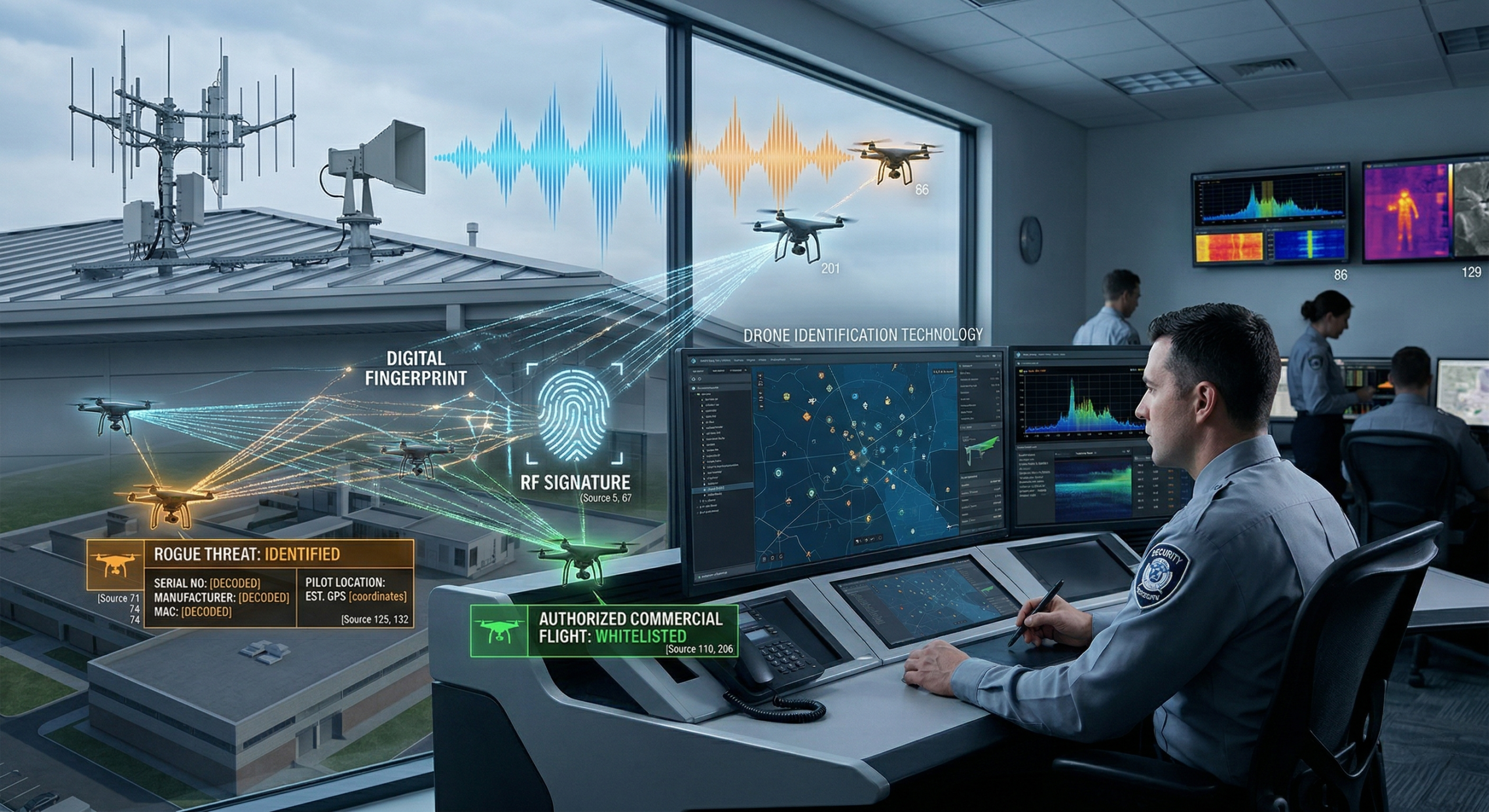
The power of drone identification technology lies in its ability to transform raw detection data into surgical, actionable intelligence that distinguishes friend from foe in real-time. When a radar blip appears over a high-security facility, your security team faces a critical moment of uncertainty. Without the ability to identify the specific make, model, or intent of the aircraft, your Counter-Drone Systems are essentially operating in the dark.
This lack of clarity often leads to operational paralysis where fear of legal liability prevents action against legitimate threats, or conversely, aggressive responses result in the shutdown of authorized commercial flights. The frustration of seeing an object on a screen but not knowing its “digital fingerprint” creates a high-stakes guessing game that no professional organization can afford. Advanced identification technology solves this by extracting unique identifiers, allowing you to whitelist authorized drones and focus exclusively on neutralizing genuine risks with absolute precision.
Is Detection Enough to Secure Your Airspace?
Detection is merely the first step toward situational awareness, providing an alert that an object is present without explaining what that object represents. To effectively utilize Counter-Drone Systems, you must bridge the gap between knowing an object is in the air and understanding its specific identity.
This process moves your security posture from a state of passive observation to active decision-making. By incorporating robust identification protocols, you ensure that every alert is backed by technical data rather than human intuition.
The limitations of raw visibility
Visibility alone does not equal security because many objects can trigger a primary detection sensor. Radar might pick up a flock of birds or a small hobbyist drone, but it cannot differentiate between the two without secondary data streams.
Here is the deal:
- Radar signals often struggle with low-altitude clutter.
- Acoustic sensors can be overwhelmed by urban background noise.
- Optical cameras require clear line-of-sight and ideal weather.
Without identification, your team is forced to investigate every single alert manually, which leads to sensor fatigue and missed threats.
Moving from awareness to decision-making
The transition from awareness to action requires the “I” in the Detection, Tracking, and Identification (DTI) framework. Once a signature is identified, you can apply specific rules of engagement based on the drone’s unique profile.
Think about it:
- Authorized news crews can be whitelisted automatically.
- Unknown signatures can be flagged for immediate inspection.
- Persistent offenders can be tracked across multiple sessions.
Key Takeaway: Identification provides the necessary context to move from simple awareness to precise, legally defensible security actions.
| Feature | Detection Only | Full DTI Integration |
|---|---|---|
| Visibility | Alerts of an object | Identifies specific drone type |
| Actionability | High uncertainty | Immediate response protocols |
| Risk Level | High false-alarm rate | Precise threat assessment |
Detection provides the “where,” but identification provides the “what,” which is the foundation of any professional security response.
Why is Real-Time Identification Critical?
Real-time identification allows security teams to instantly distinguish between authorized commercial assets and rogue threats in increasingly crowded airspaces. Modern Counter-Drone Systems must operate with split-second timing to prevent a breach before it escalates into a catastrophic event.
When multiple drones are operating in the same vicinity, the ability to tag each one individually is the only way to maintain order. This capability prevents the “friendly fire” scenario where an authorized inspection drone is accidentally jammed or captured.
Differentiating between friend and foe
In mixed-fleet environments, identifying a drone’s digital serial number is the only way to ensure operational continuity. Without this data, your security team might accidentally interfere with a critical infrastructure inspection or a medical delivery flight.
But wait, there’s more:
- Friendly drones can be registered in a local database.
- Unknown craft are treated with a higher level of scrutiny.
- Communication links are analyzed to determine the drone’s origin.
By filtering out the “noise” of authorized traffic, you can dedicate 100% of your defensive resources to genuine incursions.
Managing complex mixed-fleet airspaces
As commercial drone use grows, urban airspaces are becoming highly congested and difficult to monitor. Identifying the specific communication protocol of each drone allows you to manage this complexity without shutting down the entire sky.
The bottom line is this:
- Identification allows for tiered response levels.
- Low-risk hobbyists can be warned via ground protocols.
- High-risk tactical drones can be targeted for mitigation.
Key Takeaway: Real-time ID prevents operational paralysis by providing the clarity needed to handle complex aerial traffic without disrupting authorized business.
| Objective | Identification Role | Operational Benefit |
|---|---|---|
| De-confliction | Separates authorized drones | No downtime for legal flights |
| Threat Grading | Assesses payload/intent | Efficient resource allocation |
| Safety | Prevents collateral damage | Secure environment maintenance |
Operational efficiency relies on the ability to act only when necessary, which is impossible without real-time data.
How Do Traditional Technologies Fall Short?
Traditional sensors like radar and acoustic systems often fail to identify small, modern sUAS because they were originally designed for larger, louder aircraft. To truly secure a facility, advanced Counter-Drone Systems must move beyond these legacy limitations to detect the subtle signals emitted by commercial drones.
Many legacy systems struggle in urban environments where “noise” from buildings, cars, and other electronics creates a chaotic background. These systems often produce a high volume of false positives, which can desensitize your security personnel over time.
The blindness of radar and acoustics
Radar is excellent at finding metal objects in the sky, but many modern drones are made of composite materials that have a very low radar cross-section. This means a small drone can often “hide” in plain sight within the radar’s noise floor.
It gets worse:
- Acoustic sensors are easily defeated by wind or traffic.
- Birds and large insects can mimic drone movement on radar.
- Ground clutter in cities masks low-flying threats.
Relying solely on these methods leaves a significant gap in your defensive perimeter that sophisticated actors can easily exploit.
Why line-of-sight sensors fail in cities
Optical and infrared sensors require a direct line-of-sight to identify a target, which is rarely available in dense urban or industrial settings. Buildings, trees, and weather conditions like fog or heavy rain can render these expensive cameras completely useless.
Here is the truth:
- Drones can use tall structures to mask their approach.
- Thermal signatures of small drones are often very weak.
- High-resolution tracking is difficult at long distances.
Key Takeaway: Legacy sensors lack the precision to identify modern drones, necessitating a shift toward radio frequency analysis for reliable protection.
| Technology | Identification Weakness | Environmental Barrier |
|---|---|---|
| Radar | Struggles with small sUAS | Urban clutter & birds |
| Acoustic | Drowned out by city noise | High-decibel environments |
| EO/IR | Requires clear line-of-sight | Weather and obstructions |
Using the wrong tool for the job leads to a false sense of security that disappears the moment a real threat arrives.
What Defines the Ideal Identification Capability?
An ideal identification capability is defined by its ability to extract a drone’s unique “digital DNA” rather than simply noting its physical presence. Effective Counter-Drone Systems must be able to decode the communication between the drone and the controller to find the serial number and manufacturer details.
This level of granularity allows you to understand exactly what you are facing before the drone even reaches your perimeter. It also ensures that your system remains effective even if the drone is not broadcasting a standard Remote ID signal.
Extracting unique drone identifiers
The most powerful identification systems use deep signal analysis to pull a unique hardware ID from the radio transmission. This information is much more reliable than visual identification because it cannot be hidden by paint or physical modifications.
Believe it or not:
- Serial numbers allow for legal tracking of ownership.
- MAC addresses identify the specific radio hardware.
- Protocol signatures reveal the drone’s software version.
Having access to this data allows your security team to build a comprehensive case file for every unauthorized incursion.
Identifying modified or tampered drones
Hostile actors often modify their drones to hide their identity or bypass standard geographic restrictions. A high-end identification system can detect these anomalies by analyzing the timing and frequency patterns of the signal.
The secret is this:
- Custom firmware changes the way a drone communicates.
- Tampered Remote ID modules leave digital traces.
- Frequency-hopping patterns can be matched to known threats.
Key Takeaway: Ideal identification goes beyond basic broadcasts to analyze the underlying radio signals, ensuring that even “stealth” drones are recognized.
| Capability | Basic Identification | Advanced Identification |
|---|---|---|
| Identifier | General drone class | Unique Serial Number & Make |
| Signal Source | Remote ID broadcast only | Full RF communication analysis |
| Integrity | Easily spoofed | Detects tampered signatures |
Relying on the drone to “announce” itself via Remote ID is a gamble that professional security teams should never take.
Can RF Cyber Counter-Drone Systems Provide Better Clarity?
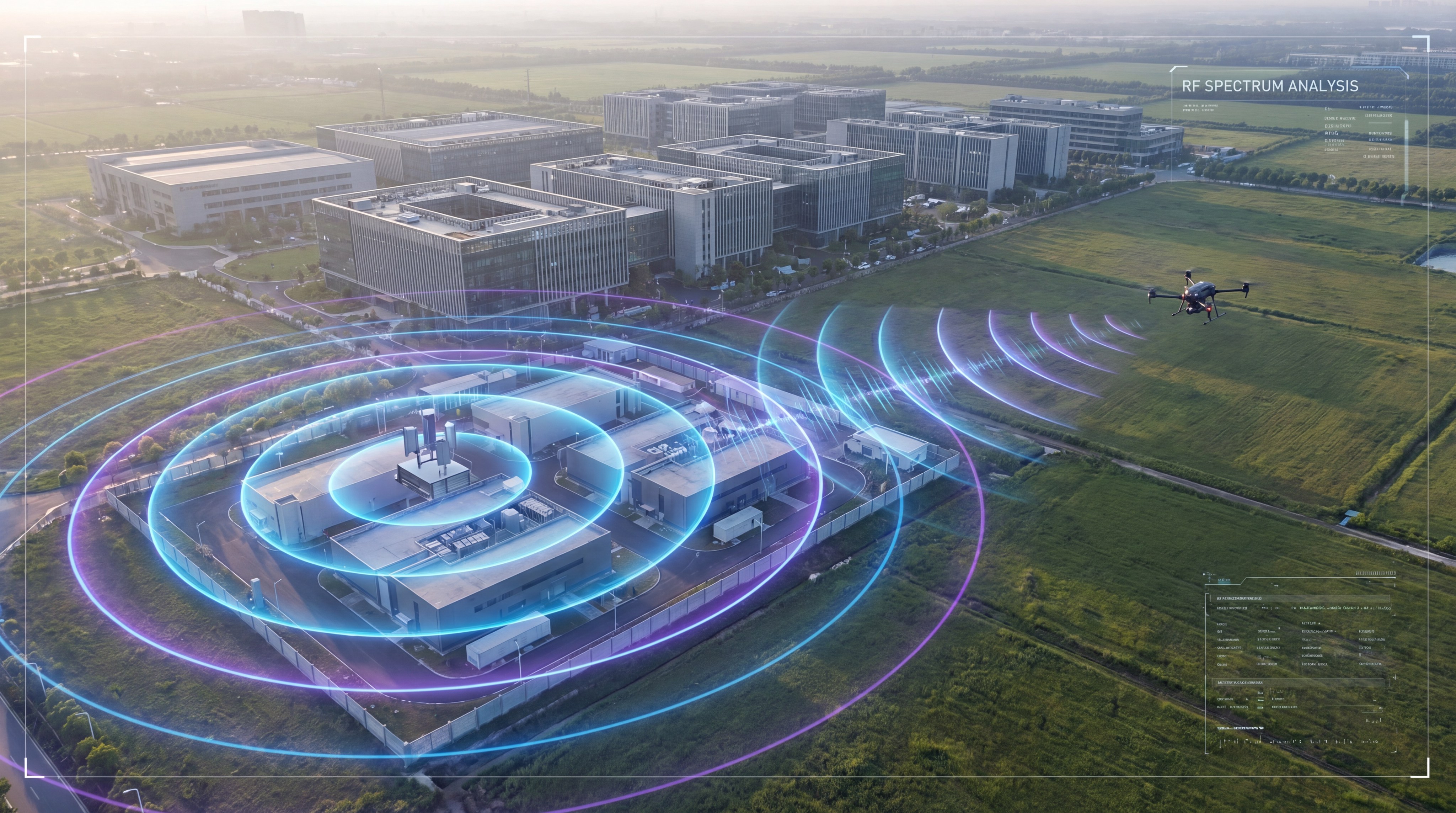
RF cyber solutions provide unparalleled clarity by passively scanning the radio spectrum to identify the unique communication links used by unmanned aircraft. These specialized Counter-Drone Systems don’t just “see” the drone; they understand its language and telemetry.
Because these systems are passive, they do not interfere with other local electronics or communications infrastructure. This makes them ideal for use in sensitive areas like airports, hospitals, and high-density urban centers.
Passive scanning for unique communication
Passive RF scanning works by “listening” for the specific radio signatures used by commercial and tactical drones. This method is highly effective because a drone cannot fly without maintaining a link to its controller or a GPS satellite.
Consider this:
- No signals are emitted, making the system invisible to detection.
- Continuous monitoring works 24/7 in all weather.
- Multiple drones can be tracked simultaneously across bands.
This approach provides a “digital dome” over your facility that is nearly impossible for a radio-controlled craft to penetrate unnoticed.
Minimizing false positives in loud areas
In areas with high WiFi and cellular traffic, traditional sensors often trigger on non-threat signals. RF cyber systems use digital protocol matching to ensure that only actual drone communication triggers an alert.
The reality is simple:
- WiFi routers are ignored by the sensing algorithms.
- Cellular towers do not trigger false aerial alerts.
- Bluetooth devices are filtered out automatically.
Key Takeaway: RF cyber technology offers a quiet, accurate, and non-disruptive way to maintain total airspace awareness in complex environments.
| Advantage | RF Cyber Approach | Impact on Security |
|---|---|---|
| Interference | Minimal (Passive) | Operates in dense RF zones |
| Accuracy | Digital protocol matching | Zero birds-as-drones errors |
| Intelligence | Detailed telemetry data | Real-time tracking of intent |
The accuracy of your data determines the quality of your response, making RF analysis the gold standard for identification.
What is the “Secret Sauce” of Counter-UAS?
The “secret sauce” of a successful defense strategy is the ability to maintain operational continuity through advanced whitelisting and tagging features. These tools allow Counter-Drone Systems to operate autonomously, only alerting human operators when a genuine threat is confirmed.
Whitelisting ensures that your own drones—and those of your authorized partners—can perform their duties without interference. Meanwhile, tagging allows you to keep a permanent record of “frequent flyers” who may be probing your defenses for weaknesses.
Whitelisting authorized aerial assets
Whitelisting is the process of adding a drone’s unique digital signature to a “safe” list within your security software. Once whitelisted, the drone can fly within your perimeter without triggering alarms or defensive countermeasures.
The advantage is clear:
- Logistics drones can deliver goods without delay.
- Maintenance crews can inspect towers safely.
- Emergency services drones receive priority clearance.
By automating the recognition of friendly assets, you reduce the workload on your security operations center.
Building a database of known threats
Tagging unauthorized drones allows you to build a historical database of incursions over time. This data is vital for identifying patterns, such as a specific pilot who returns to the same spot every Tuesday at sunset.
Here is why it matters:
- Repeat offenders can be escalated for police intervention.
- Signature trends help you predict future attack vectors.
- Forensic data supports legal action against illegal pilots.
Key Takeaway: Whitelisting and tagging turn a reactive sensor into a proactive management tool that secures your sky without stopping your business.
| Method | Function | Strategic Use Case |
|---|---|---|
| Whitelisting | Grants “Safe” status to IDs | Logistics and media drones |
| Tagging | Labels unauthorized IDs | Tracking persistent intruders |
| Forensics | Records drone signatures | Legal prosecution evidence |
Airspace management is about more than just defense; it is about creating a controlled environment where technology can thrive safely.
How do Counter-Drone Systems Locate the Pilot?
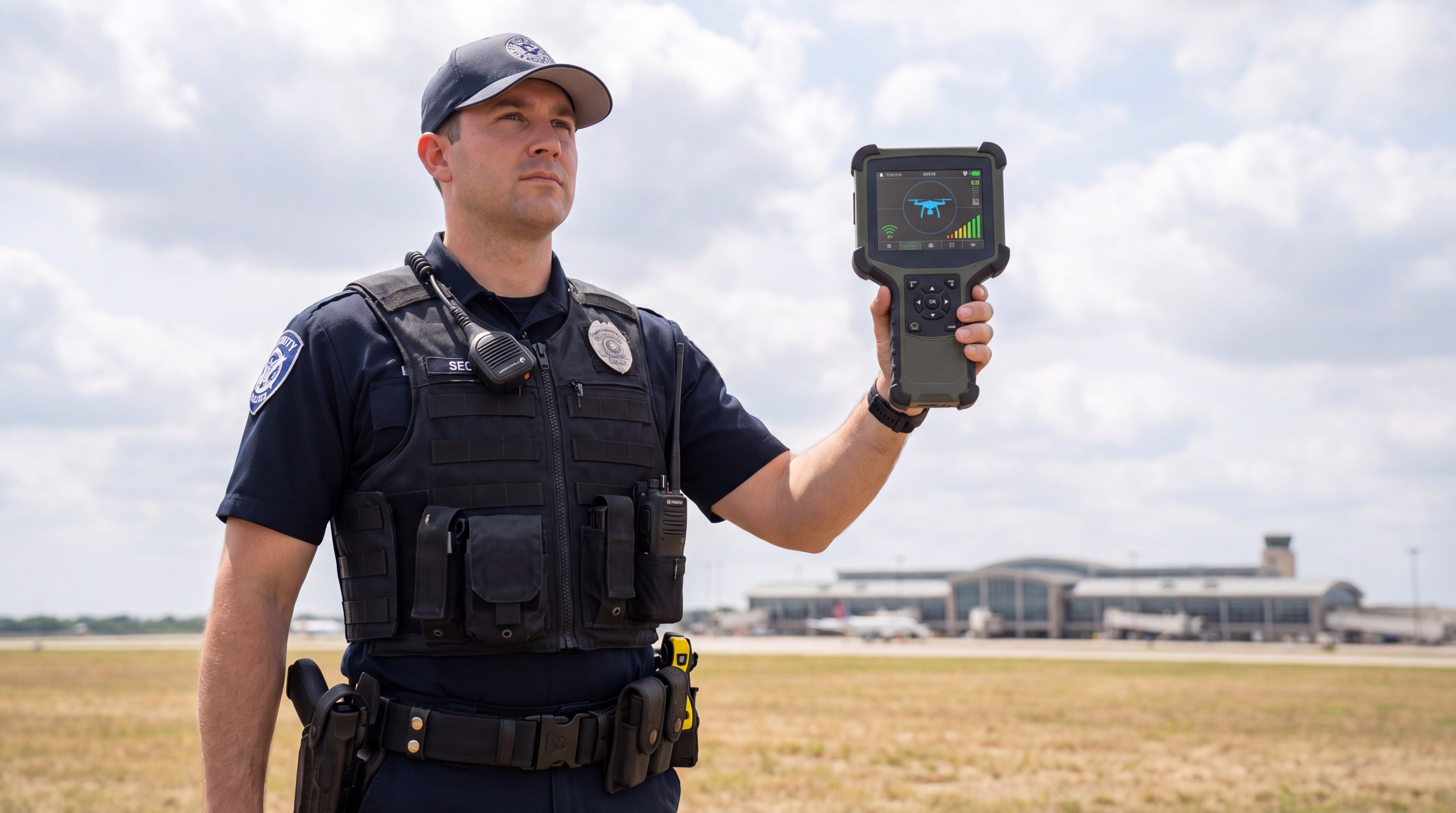
Advanced identification technology doesn’t just stop at finding the aircraft; it actively pinpoints the location of the ground controller. By analyzing the uplink and downlink signals, these Counter-Drone Systems can show you exactly where the pilot is standing in real-time.
This capability is the ultimate deterrent because it removes the anonymity that most rogue pilots rely on. Knowing the “home point” and current controller coordinates allows security teams to intercept the threat at its source before it causes damage.
Tracking the home location of the threat
Most drones are programmed to return to a specific “Home Point” if they lose their signal or run low on battery. Advanced RF identification can decode this GPS coordinate from the drone’s telemetry stream.
The logic is simple:
- The drone tells you where it started its flight.
- Uplink analysis reveals the pilot’s current movement.
- Security teams can be dispatched to the launch site.
Locating the pilot is often more effective than stopping the drone, as it prevents the person from simply launching a second aircraft.
Prioritizing the source over the vehicle
While the drone is the immediate physical threat, the pilot is the intelligence behind the mission. Focusing your identification technology on the controller allows you to neutralize the threat’s ability to navigate and make decisions.
But wait, there’s more:
- Predicting pilot behavior helps anticipate the drone’s path.
- Identifying the remote type reveals the pilot’s likely skill level.
- Source-focused defense minimizes the need for kinetic action.
Key Takeaway: Identification technology eliminates the pilot’s anonymity, allowing for rapid ground intervention and long-term threat prevention.
| Target | Data Provided | Strategic Outcome |
|---|---|---|
| Drone | Lat, Long, Altitude | Immediate local mitigation |
| Pilot | Launch point & location | Law enforcement intervention |
| Home Point | Original GPS coordinates | Intelligence on staging areas |
True security is achieved when the person behind the controller realizes they are no longer invisible to your sensors.
How to Select the Right RF Hardware?
Selecting the right RF hardware requires a deep understanding of the frequency bands and power levels needed to cover your specific site. To build reliable Counter-Drone Systems, you must choose components that have been tested against the most common commercial and tactical threats.
The quality of your hardware determines the sensitivity of your identification capabilities. Using low-grade consumer parts will result in missed detections and inaccurate data when you need it most.
Frequency and power matching for C-UAS
Most commercial drones operate in the 2.4 GHz and 5.8 GHz bands, but many industrial or custom drones use lower frequencies for longer range. Your identification hardware must be able to scan across a wide spectrum to ensure no threats are missed.
Keep these factors in mind:
- 30 MHz to 6 GHz covers most modern threats.
- High-gain amplifiers increase detection range significantly.
- Broadband signal generators allow for better testing.
Matching your hardware to the local RF environment ensures that your system doesn’t “overload” or miss faint signals from distance drones.
The importance of 46-step military QC
When security is on the line, you cannot afford hardware failure. Professional-grade RF components undergo rigorous 46-step quality control processes to ensure they can operate in extreme temperatures and high-interference zones.
The deal is this:
- ISO 9001 certification ensures consistent performance.
- GJB 9001C standards meet military-grade reliability.
- Custom ODM/OEM options allow for specific site tailoring.
Key Takeaway: High-quality hardware is the backbone of identification accuracy, providing the sensitivity needed to catch threats that cheaper systems miss.
| Selection Factor | Requirement | Importance |
|---|---|---|
| Frequency | 30 MHz to 6 GHz | Full spectrum coverage |
| Quality | ISO 9001 & GJB 9001C | Mission-critical reliability |
| Customization | OEM/ODM flexibility | Application-specific design |
Investing in the right hardware today prevents the catastrophic costs of a security breach tomorrow.
Is Your Counter-Drone System Ready for Future Threats?
As drone technology evolves, hostile actors are increasingly using frequency-hopping and stealth protocols to bypass basic security. To stay ahead, your Counter-Drone Systems must be capable of adapting to these new communication methods through software updates and directional hardware.
Future threats will likely involve swarms of drones acting in coordination, which requires identification systems that can handle dozens of targets at once. Moving toward autonomous AI recognition will be critical for managing this increased complexity.
Scaling with directional antenna arrays
Directional antennas are becoming essential for identification because they allow you to focus your “hearing” in one specific direction. This significantly increases the range and clarity of the signal, allowing you to identify drones that are several kilometers away.
The benefit is massive:
- Side-lobes and interference are filtered out.
- Signal-to-noise ratios are greatly improved.
- Target location accuracy is increased exponentially.
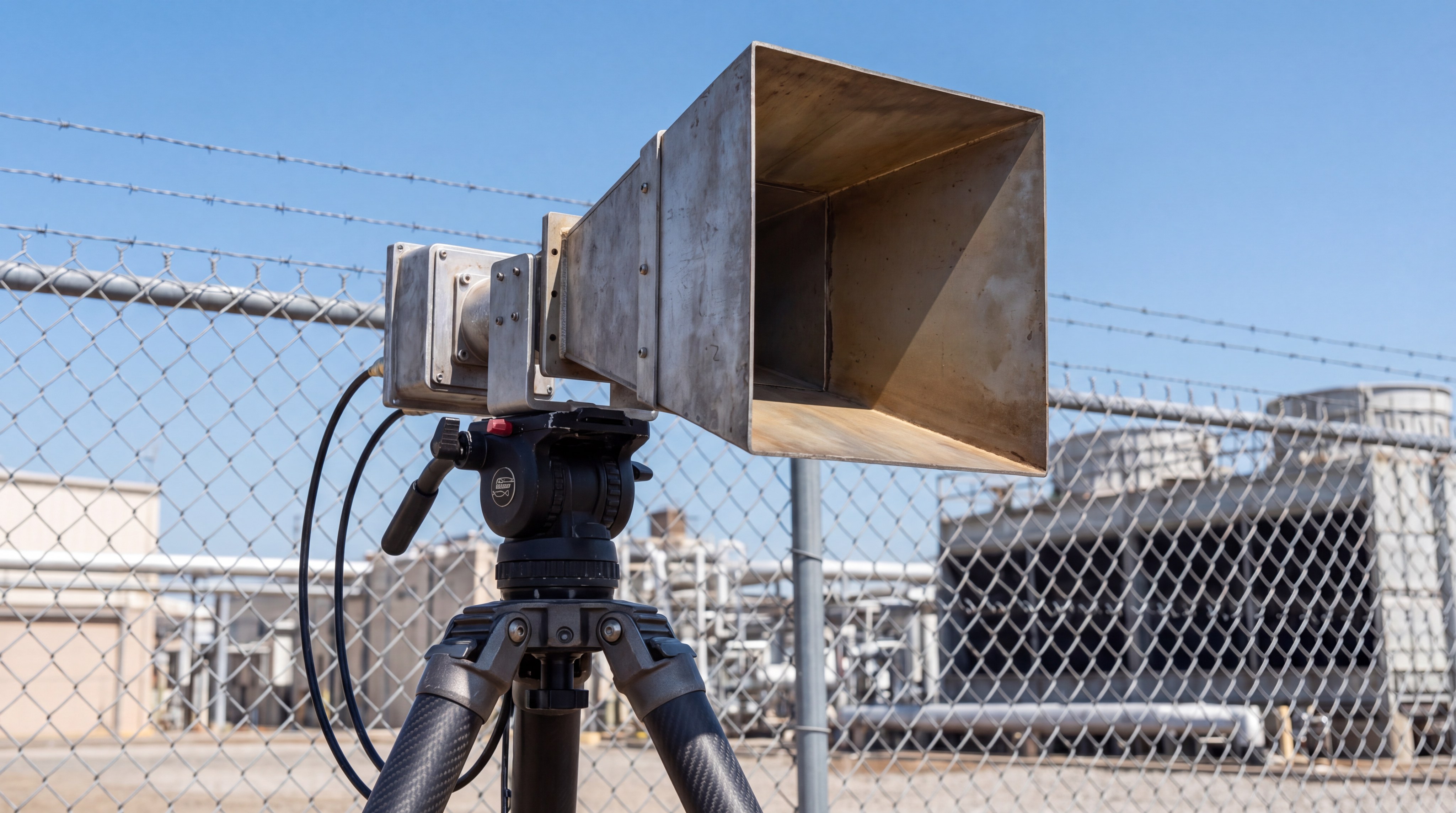
Using a directional horn antenna allows you to sectorize your defense, providing high-resolution data on the most likely approach paths.
Adapting to modified or tampered drones
Drones are increasingly being “jailbroken” to remove safety features and change their radio signatures. Your identification system must be able to recognize the underlying hardware traits even if the software has been completely rewritten.
Think of it this way:
- Hardware fingerprints remain even if ID broadcasts are off.
- AI can learn the “shimmer” of specific radio modules.
- Stealth protocols can be unmasked via deep packet inspection.
Key Takeaway: Future-proofing your security requires hardware that can scale in power and intelligence to meet the next generation of aerial threats.
| Future Trend | System Requirement | Necessary Hardware |
|---|---|---|
| Stealth Drones | Higher sensitivity gains | High-gain power amplifiers |
| Swarm Attacks | Multi-target identification | Broadband signal generators |
| High Density | Spatial filtering | Directional antenna systems |
Innovation in drone technology moves fast, but your identification capabilities must move even faster to maintain the upper hand.
How Can You Get Started with Advanced Identification?
Getting started with advanced identification begins with a thorough audit of your current airspace vulnerabilities and frequency environment. Most organizations find that adding an RF-based identification layer to their existing security stack provides the single biggest leap in protection.
You don’t need to replace your entire security infrastructure to see immediate benefits. Many modern identification modules are designed to integrate seamlessly with your existing Command and Control (C2) software.
Assessing your frequency requirements
Every site has a unique RF footprint that determines which frequencies need the most attention. A downtown stadium will have much more background noise in the 2.4 GHz band than a rural power plant, requiring different hardware configurations.
Start here:
- Perform a baseline spectrum analysis of your site.
- Identify the most common drone types used in your region.
- Determine the necessary detection radius for your safety protocols.
This data ensures that you don’t overspend on power you don’t need or leave gaps in your frequency coverage.
Integrating with existing security stacks
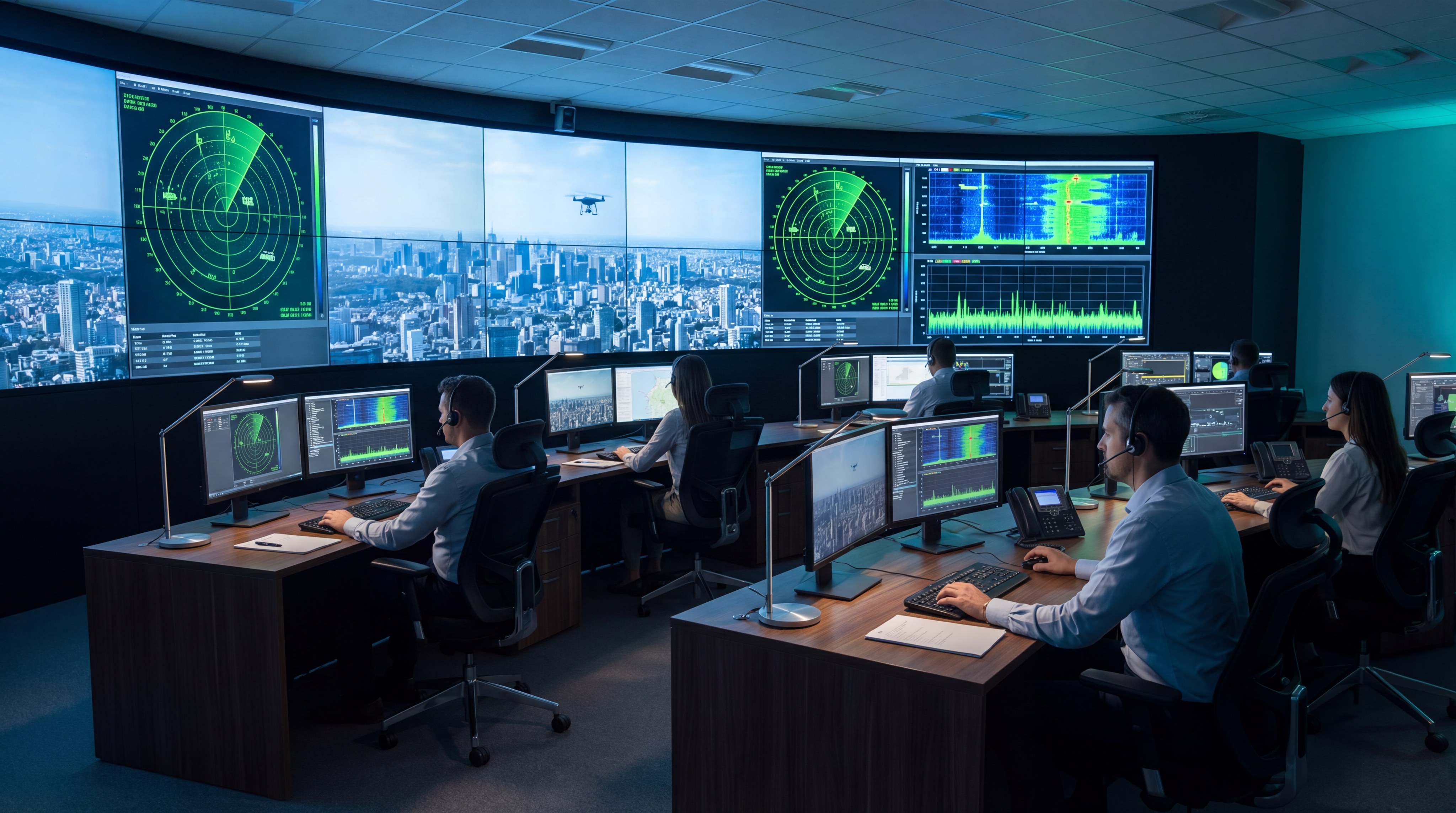
The best identification technology is one that communicates clearly with your human operators. Your identification data should feed directly into your primary monitor, providing clear labels and threat levels for every aerial object.
The goal is simple:
- Automated alerts for unauthorized signatures.
- Direct mapping of drone and pilot locations.
- One-click whitelisting for friendly aircraft.
Key Takeaway: Starting with a data-driven audit and focusing on integration ensures your identification technology provides immediate value with minimal friction.
| Integration Step | Action Item | Expected Result |
|---|---|---|
| Site Survey | Spectrum noise analysis | Optimized frequency selection |
| C2 Sync | API and software link | Unified security dashboard |
| Training | Operator protocol review | Faster, more accurate response |
The path to a secure sky is built on the foundation of accurate data and professional-grade hardware integration.
Conclusion
Airspace security is no longer a luxury; it is a fundamental requirement for protecting critical infrastructure, public events, and sensitive facilities. We have explored how blind detection leads to operational paralysis and why the “digital fingerprint” of a drone is the only way to make informed security decisions. By leveraging RF-based identification, you move beyond guesswork and gain the ability to whitelist friendly assets while pinpointing the exact location of rogue pilots.
Corelix RF is dedicated to providing the high-performance hardware—from broadband SDR generators to directional horn antennas—that makes this level of precision possible. We believe that true security comes from the perfect marriage of sensitive RF components and intelligent identification software. Our vision is a world where authorized drones can fly safely while threats are neutralized with surgical accuracy. If you are ready to transform your airspace defense, you should contact us today to speak with our engineering team about your specific mission requirements.
Frequently Asked Questions
What’s the best way to distinguish between authorized and rogue drones?
The most effective method is “Whitelisting,” which uses unique digital identifiers like MAC addresses to permit known friendly drones while flagging all others as threats. This prevents false alarms and ensures that authorized missions continue without interruption.
Can I identify a drone if it isn’t broadcasting Remote ID?
Yes, you can identify them by using advanced RF cyber solutions that analyze unique communication protocols and signal signatures. This method decodes the raw link between the controller and the drone, finding the identity even if standard broadcast features are disabled.
What is the best frequency range for drone identification systems?
A comprehensive system should cover the range from 30 MHz up to 6 GHz to be effective against all threats. This range captures everything from long-range tactical drones to the most common commercial models using frequency-hopping protocols.
Can I locate the pilot using identification data?
Yes, because RF identification systems can interpret the uplink signal sent from the ground controller to the aircraft. By analyzing these signals, the system can pinpoint the GPS coordinates of the pilot, allowing for rapid ground intervention.
How do I know if my hardware is reliable enough for C-UAS?
You should look for hardware that adheres to military-grade standards like GJB 9001C and undergoes a rigorous quality control process. Reliable hardware ensures that your identification sensors remain sensitive and accurate even in harsh environments or high-interference zones.
Authorized RF engineering and compliance review
For regulated RF systems, this page should be used as an engineering and compliance review path, not as a public deployment checklist. CorelixRF starts with authorization status, operating region, frequency plan, output limit, antenna interface, safety controls, thermal limits and acceptance documents.
- RFQ checklist – send the data buyers usually forget, including band, power, duty cycle, interface and test standard
- delivery documentation – check what documents can support incoming inspection, FAT review and long-term maintenance
- quality and certification review – review the quality and compliance evidence before the project moves into procurement
- RF front-end platform – compare the RF chain as a system instead of selecting one isolated module
- RF configurator – turn frequency, power, thermal and interface requirements into a first configuration brief
- case studies – review similar engineering paths before sending an RFQ
- engineering contact – send the application notes, block diagram or target specification to engineering sales
This keeps the discussion inside lawful, authorized RF programs while still giving procurement teams a clear way to request amplifier, antenna, SDR source, documentation and factory review.