
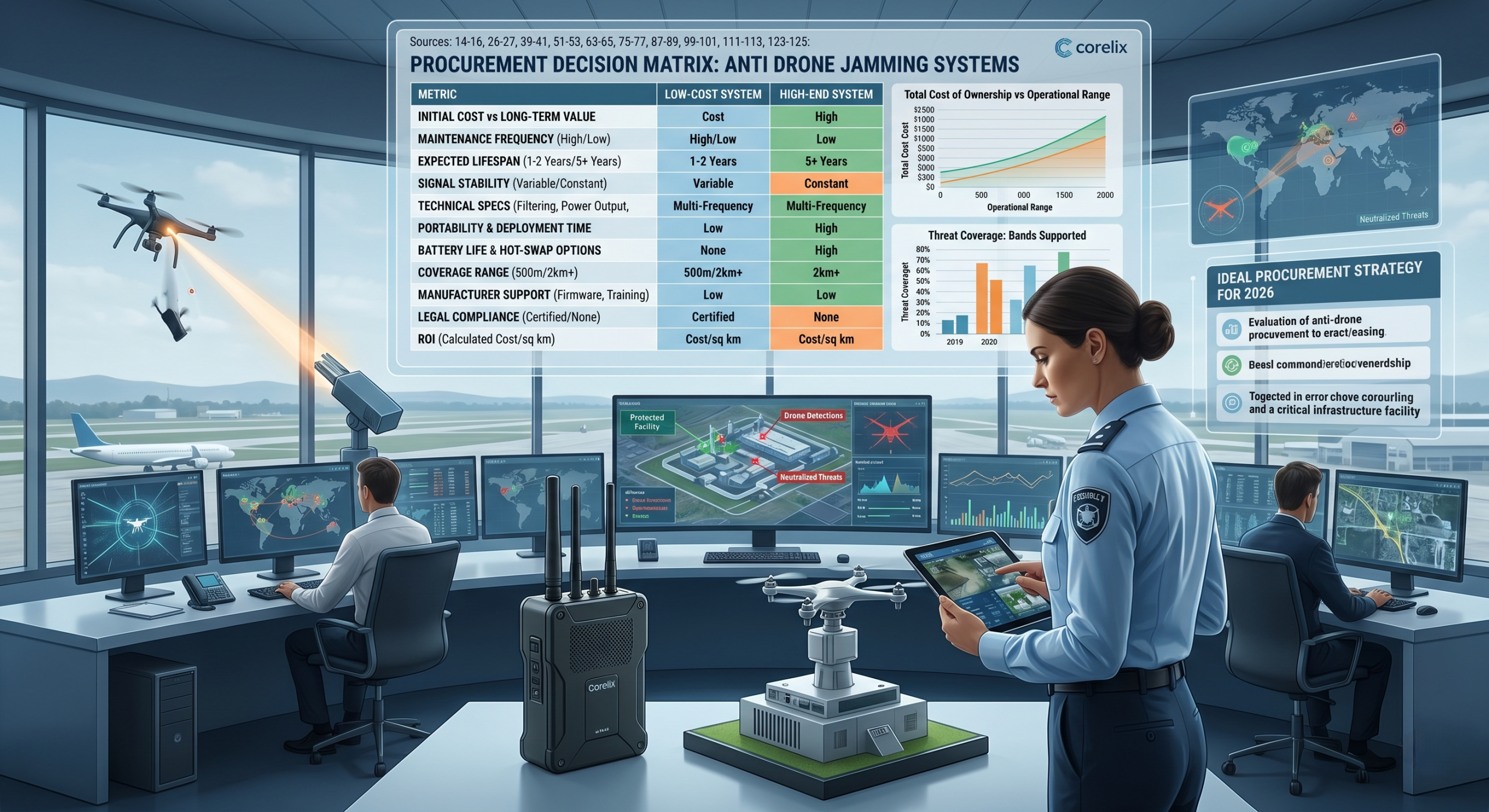
Institutional procurement decisions are primarily driven by the balance between total cost of ownership and the operational range of an Anti Drone Jamming System. You likely face the challenge of securing sensitive infrastructure against increasingly sophisticated aerial threats without overextending restricted budgets. When unauthorized drones enter your restricted airspace, the resulting security breach can lead to catastrophic data loss or physical damage. Implementing a professional jamming solution provides the necessary signal disruption to neutralize these threats effectively and maintain facility integrity.
Why does price dictate anti drone system acquisition?
Price dictates acquisition because it directly reflects the quality of RF components and the reliability of signal denial across critical mission parameters. Investing in a professional Anti Drone Jamming System requires you to evaluate how initial costs translate into long-term facility protection. Higher-priced units typically offer better heat dissipation and signal stability during prolonged engagements. You must view these costs as an insurance policy against the escalating risks of drone-based espionage.
Assessing long-term value over initial cost
Here is the deal: cheap systems often fail when you need them most due to frequency drift. High-quality systems maintain their calibration over years of service, reducing the need for frequent hardware replacements.
- Reduced maintenance intervals
- Higher component durability
- Better weatherproofing for outdoor use
Choosing a premium system ensures that your security personnel can rely on the device during high-pressure scenarios. Reliability in the field is often worth the extra upfront investment for institutional buyers.
Key Takeaway: You should prioritize hardware durability and signal stability to ensure the system remains operational throughout its intended lifecycle.
| Metric | Low-Cost Impact | High-End Impact |
|---|---|---|
| Maintenance Frequency | High | Low |
| Signal Stability | Variable | Constant |
| Expected Lifespan | 1-2 Years | 5+ Years |
Evaluating the hardware longevity is the first step toward a sustainable security posture.
How do technical specs influence the total cost?
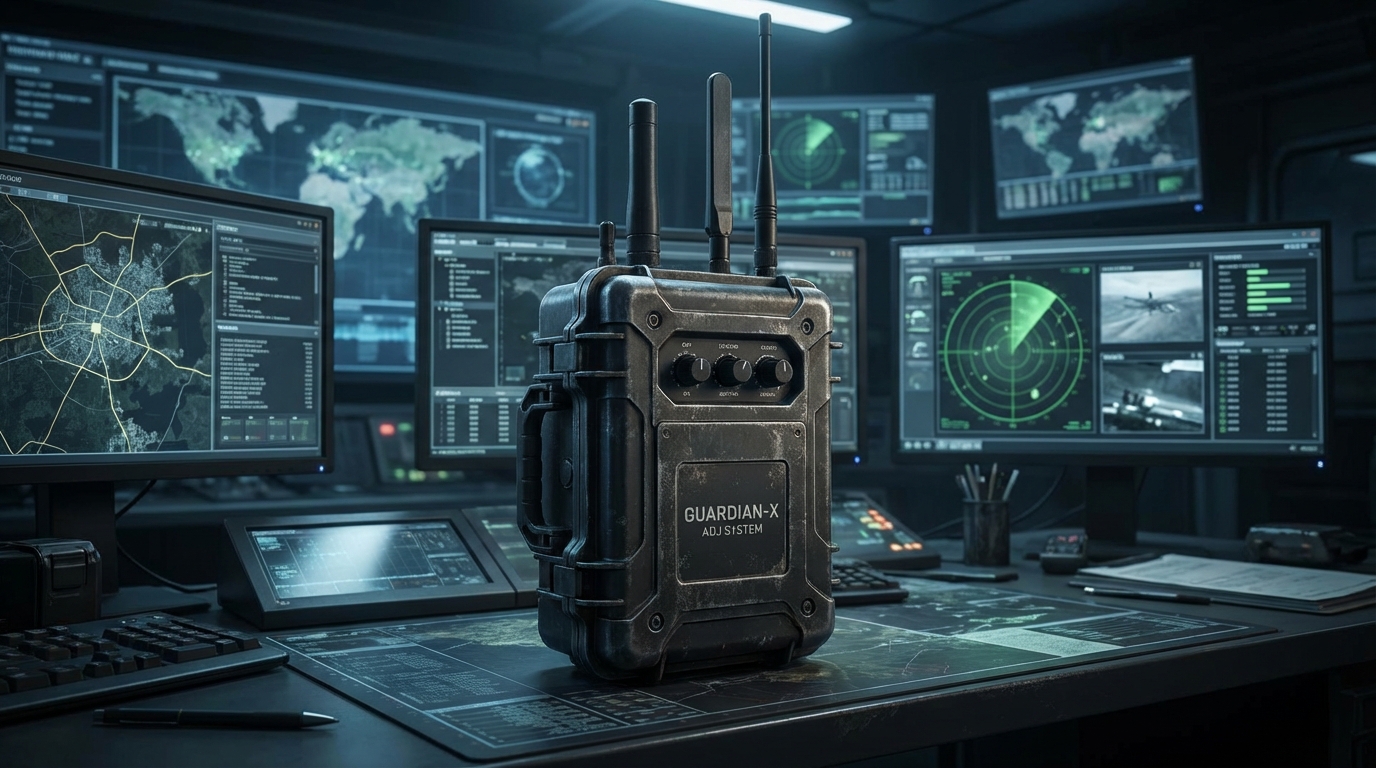
Technical specifications influence total cost by requiring advanced engineering to handle wide-band signal disruption without interfering with authorized communications. Every Anti Drone Jamming System must balance power output with frequency precision to meet institutional safety standards. Higher power levels require more robust cooling systems and larger batteries, which naturally increase the manufacturing price. Precision engineering ensures that you only jam the target drone rather than disrupting local Wi-Fi or emergency radio bands.
The cost of multi-band precision
But wait, there is more: precision filtering is one of the most expensive aspects of RF design. Without it, your system might cause collateral electronic interference that disrupts your own facility operations.
- Narrow-band SAW filters
- High-linearity power amplifiers
- Advanced digital signal processing
These components ensure that the jamming energy is focused exactly where it is needed. This level of control is essential for urban or industrial environments where signal congestion is a daily reality.
Key Takeaway: You should look for systems with high-quality filtering to prevent operational downtime caused by unintended signal interference.
| Specification | Procurement Weight | Cost Influence |
|---|---|---|
| Frequency Range | 30% | Moderate |
| Filtering Quality | 40% | High |
| Power Output | 30% | High |
Technical excellence remains the primary differentiator in the competitive security market.
Is portability a major factor in B2B price points?
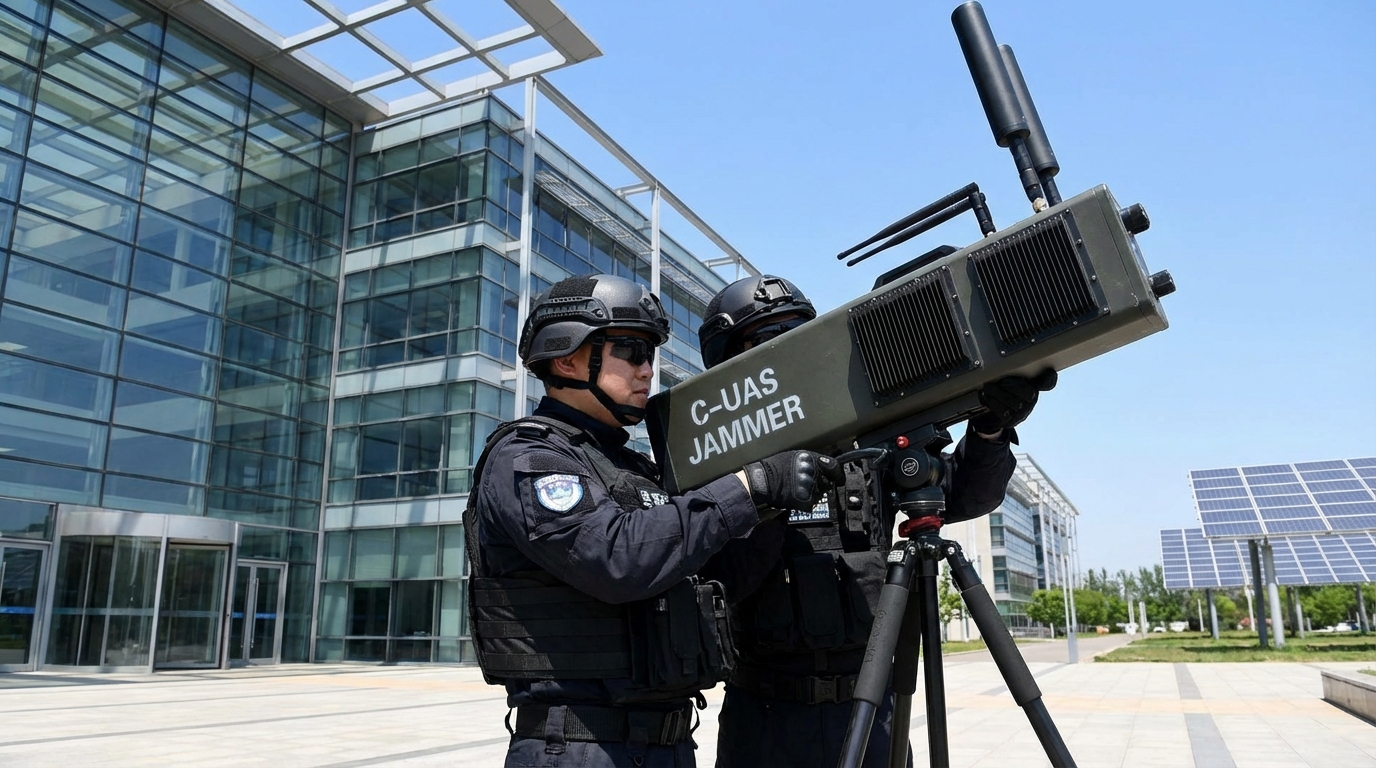
Portability is a major factor because it necessitates the miniaturization of high-power RF modules without sacrificing the effectiveness of the Anti Drone Jamming System. You will find that handheld units often command a premium due to the specialized engineering required for ergonomic weight distribution. Integrated cooling in a compact frame is a significant technical hurdle that drives up the final price for B2B clients. Mobile security teams require devices that can be deployed instantly, which adds value to portable designs.
Engineering for mobile deployment
Think about it: carrying a 10kg device for four hours is not feasible for most patrol units. Manufacturers invest heavily in lightweight materials like carbon fiber or aircraft-grade aluminum to keep the weight manageable.
- Ergonomic grip designs
- Lightweight composite housing
- Quick-release battery mounts
These features allow your team to respond to threats with agility and speed. Portability ensures that your defense is as mobile as the drones you are attempting to neutralize.
Key Takeaway: You should select portable units for rapid-response teams to ensure they can maintain coverage across large or shifting perimeters.
| Feature | Portable Units | Fixed Systems |
|---|---|---|
| Deployment Time | < 1 Minute | Permanent |
| Mobility | High | Zero |
| Power Source | Internal Battery | Grid Power |
Assessing the movement requirements of your staff will define the hardware form factor you need.
What role does battery life play in system value?
Battery life plays a critical role in system value by determining the operational window for security patrols during extended drone threat scenarios. A high-performance Anti Drone Jamming System consumes significant power, making high-capacity lithium-ion cells a mandatory and costly inclusion. You must ensure that the battery can handle multiple jamming cycles without needing a recharge in the middle of a shift. Advanced power management software can extend this life, but it requires sophisticated development that adds to the procurement cost.
Maximizing operational uptime
The bottom line is: a dead jammer is just an expensive paperweight. Institutions frequently opt for systems that support hot-swappable batteries to ensure 24/7 readiness.
- Smart battery monitoring
- Fast-charging capabilities
- High-cycle life cells
These elements provide the peace of mind that your defense will not fail during a prolonged security event. Reliability starts with a stable and long-lasting power source.
Key Takeaway: You should invest in systems with hot-swappable battery options to maintain continuous protection during long-duration security operations.
| Battery Metric | Standard Grade | Institutional Grade |
|---|---|---|
| Active Jamming Time | 30 Minutes | 60-90 Minutes |
| Charge Cycles | 300 | 1000+ |
| Charging Speed | 4 Hours | 1.5 Hours |
Effective power management is the backbone of any mobile electronic defense strategy.
Do multi-frequency capabilities justify higher costs?
Multi-frequency capabilities justify higher costs because they allow an Anti Drone Jamming System to neutralize drones that use non-standard or hopping frequencies. Modern drones no longer rely solely on 2.4GHz or 5.8GHz; many now utilize specialized bands for long-range telemetry. You need a system that covers the entire spectrum, including GPS, GLONASS, and various RC bands, to be truly effective. Adding more frequency modules requires more antennas and more power amplification, which scales the cost linearly.
Defending against frequency-hopping drones
Make no mistake: a single-band jammer is easily bypassed by any semi-professional drone operator. Multi-frequency systems provide a “blanket” of protection that covers all likely communication channels.
- Support for 433MHz and 915MHz
- GNSS L1 and L2 coverage
- Custom band expansion slots
This versatility ensures that your investment remains relevant as drone technology evolves. Future-proofing your defense requires the ability to target multiple signals simultaneously.
Key Takeaway: You should prioritize multi-band systems to ensure that your facility is protected against a wide variety of drone communication protocols.
| Band Count | Threat Coverage | Cost Bracket |
|---|---|---|
| 2-3 Bands | Basic / Hobbyist | Low |
| 5-6 Bands | Professional / Commercial | Medium |
| 8+ Bands | Military / State-Level | High |
Understanding the threat landscape is essential for selecting the correct frequency density.
How does range efficiency impact institutional ROI?
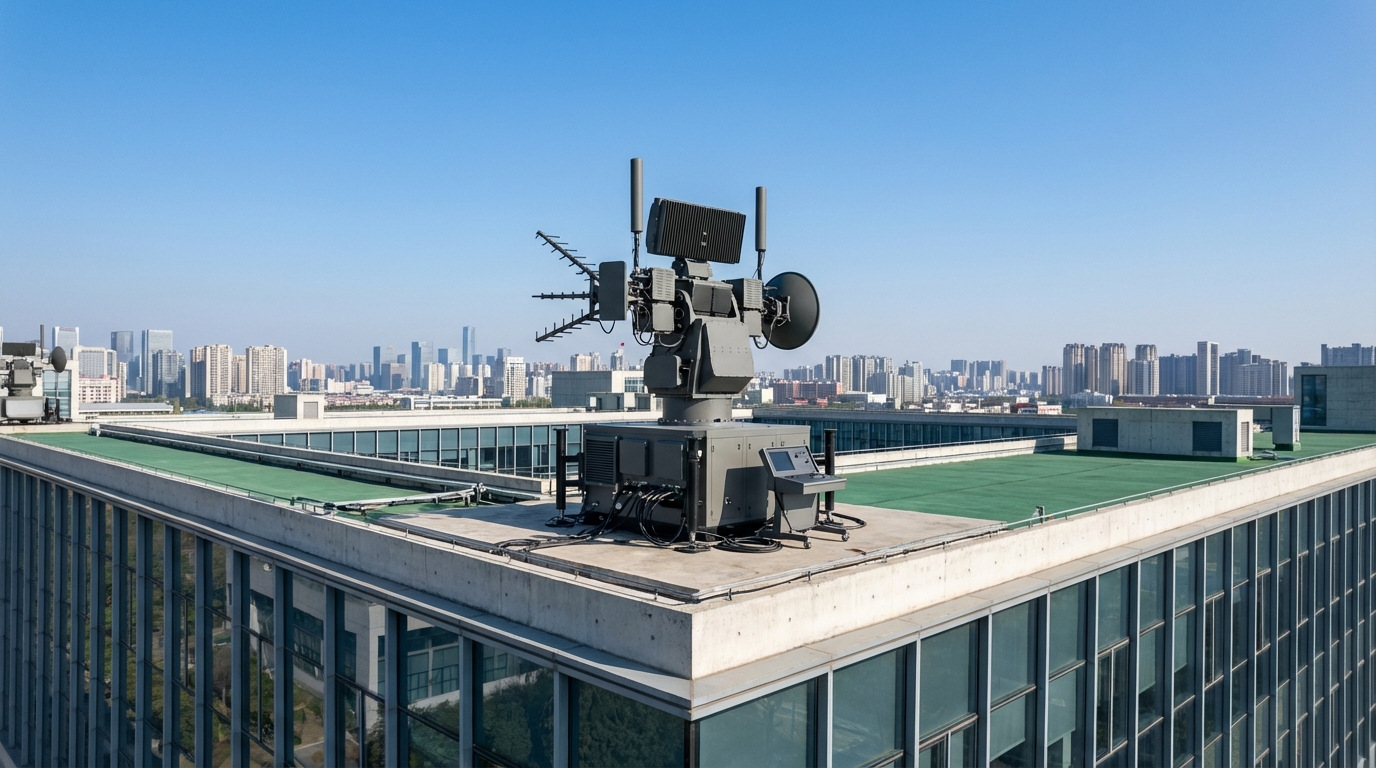
Range efficiency impacts institutional ROI by reducing the number of units and personnel required to cover a specific geographic area or facility perimeter. An Anti Drone Jamming System with a 2km range can protect a much larger zone than a 500m unit, offering better value per square meter. While long-range systems are more expensive, they allow you to consolidate your security infrastructure into fewer, more powerful nodes. This reduction in hardware quantity simplifies logistics and lowers the total manpower cost over time.
Calculating the cost per protected acre
Here is the kicker: doubling the range quadruples the protected area. This geometric advantage means that high-power systems are often more cost-effective for large stadiums or industrial sites.
- Greater reaction time for operators
- Fewer security checkpoints needed
- Centralized command and control
By stopping drones further away, you also reduce the risk of the drone falling onto people or sensitive equipment upon signal loss. Range is not just about power; it is about creating a safer buffer zone.
Key Takeaway: You should calculate the “cost per kilometer of coverage” to determine the true value of high-power jamming equipment for large facilities.
| Range | Coverage Area (Approx) | Deployment Need |
|---|---|---|
| 500 Meters | 0.78 sq km | Localized |
| 1 Kilometer | 3.14 sq km | Perimeters |
| 2 Kilometers | 12.56 sq km | Large Facilities |
Optimizing range ensures that your security budget covers the maximum possible ground.
Why is manufacturer support critical for procurement?
Manufacturer support is critical because the RF environment is constantly changing, requiring your Anti Drone Jamming System to receive regular firmware updates. When you buy a system, you are entering into a long-term partnership that includes technical training and after-sales maintenance. Procurement officers often value a solid warranty and local service centers more than the lowest initial price. Without expert support, a minor hardware malfunction could leave your facility vulnerable for weeks while waiting for international repairs.
The value of technical training and updates
Let’s be clear: an untrained operator is a liability to your security protocols. Professional manufacturers provide comprehensive training to ensure your team knows how to target threats without causing interference.
- Monthly firmware updates
- On-site operator certification
- 24/7 technical help desks
These services ensure that your system remains effective against the latest drone firmware and frequency-hopping techniques. Support is the “hidden” feature that determines real-world success.
Key Takeaway: You should factor in the cost of support contracts to ensure your jamming technology stays current and your staff remains proficient.
| Support Service | Impact on Uptime | Value Rating |
|---|---|---|
| Firmware Updates | High | Essential |
| Operator Training | Medium | Critical |
| Spare Part Logistics | High | Essential |
Choosing a reputable partner ensures that your security infrastructure never becomes obsolete.
What are the hidden costs of low-budget jammers?
Hidden costs of low-budget jammers include rapid battery degradation, frequent hardware failures, and the lack of regulatory compliance for institutional use. A cheap Anti Drone Jamming System often uses sub-par shielding, which can leak radiation and interfere with your facility’s own sensitive electronics. You may also find that budget systems lack the necessary safety certifications, potentially opening your organization to legal liabilities. Over time, the cost of repairing or replacing inferior equipment far exceeds the price of a high-quality professional unit.
Risks of non-compliant hardware
The catch is: if a budget jammer disrupts emergency frequencies, you are responsible. Professional systems are tested to ensure they meet strict emission standards and spectral purity.
- Heat-related component failure
- Poor antenna gain and efficiency
- Legal risks from spectral leakage
These issues can lead to “dead zones” in your defense where drones can slip through undetected. Reliability is the most expensive thing you can buy, but it is also the most necessary.
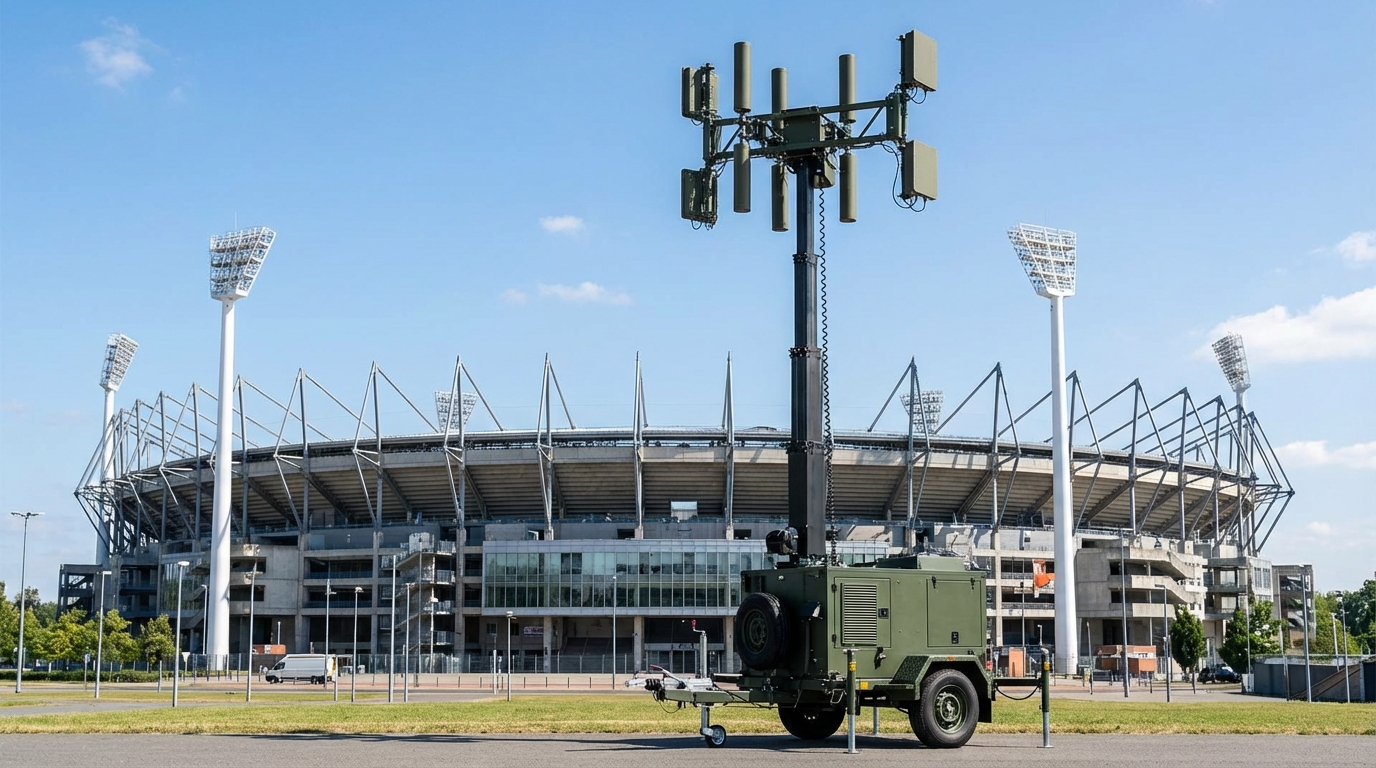
Key Takeaway: You should avoid “off-the-shelf” budget solutions to protect your organization from legal liability and operational failure.
| Risk Factor | Budget System | Professional System |
|---|---|---|
| Legal Compliance | Low / None | Certified |
| Signal Leakage | High | Minimal |
| Repair Costs | Frequent | Rare |
High-quality engineering is the only way to mitigate the complex risks of RF interference.
How do regulatory shifts affect long-term pricing?
Regulatory shifts affect pricing by forcing manufacturers to update the Anti Drone Jamming System hardware to comply with new spectral laws and safety standards. As governments refine the rules for counter-UAV operations, systems must become more precise and controllable to avoid legal repercussions. You might see price increases as manufacturers invest in the R&D required to meet these stringent new institutional requirements. However, compliant systems offer better protection against future legal challenges and equipment bans.
Navigating the evolving legal landscape
To put it simply: the rules of the game are changing every year. Investing in a system that is built to exceed current standards protects you from future compliance costs.
- Dynamic frequency allocation
- Remote identification integration
- Geographic locking features
These advanced features ensure that your system only operates within legal parameters. Compliance is a feature that pays for itself by preventing fines and equipment seizures.
Key Takeaway: You should prioritize systems that offer modular firmware to ensure you can adapt to future regulatory changes without replacing hardware.
| Regulatory Factor | Procurement Impact | Long-term Benefit |
|---|---|---|
| Spectrum Licensing | High | Legal Security |
| Safety Standards | Moderate | Personnel Safety |
| Export Controls | High | Supply Stability |
Staying ahead of the regulatory curve is a strategic necessity for institutional buyers.
What is the ideal procurement strategy for 2026?
The ideal procurement strategy for 2026 involves a multi-layered approach that combines portable handheld units with fixed detection and an Anti Drone Jamming System. You should look for integrated solutions where detectors automatically cue jammers to the correct frequency and direction. This automation reduces human error and ensures a faster response time against high-speed drone incursions. Prioritize vendors that offer a “platform” approach, allowing you to add more modules as your facility grows or the threat landscape changes.
Building a comprehensive defense layer
The truth is: no single device can solve every drone problem. A hybrid strategy ensures that you have the right tool for both routine patrols and emergency interceptions.
- Integrated detection and jamming
- Scalable mesh networks
- Centralized data logging
This data-driven approach allows you to analyze threat patterns and optimize your security staffing. Procurement should be viewed as a long-term infrastructure project rather than a one-time purchase.
Key Takeaway: You should seek integrated platforms that allow for future expansion and automated threat response to maximize your security ROI.
| Strategy Component | Purpose | Recommended Priority |
|---|---|---|
| Detection Integration | Awareness | High |
| Automated Jamming | Response Speed | Medium |
| Scalable Architecture | Future Proofing | High |
A holistic view of the security ecosystem is the only way to achieve true airspace denial.
If you are ready to secure your facility with industry-leading technology, contact us today for a professional consultation tailored to your institutional needs. We have explored how price impacts every facet of your defense, from technical range and battery life to the critical nature of manufacturer support. Our mission is to provide you with the most reliable countermeasures to protect your sensitive assets from unauthorized drone activity. Trust in our expertise to deliver a system that balances operational excellence with strategic cost management.
FAQ
Can I use these systems in a high-density urban environment?
Yes, but you must select a system with high-precision filtering. Professional systems are designed to minimize collateral interference with local Wi-Fi and mobile networks.
What’s the best way to determine the number of units I need?
You should conduct a thorough site survey to map your facility perimeters and potential line-of-sight obstructions. Range efficiency determines the total number of units required to maintain a seamless defense.
How do I know if a system is future-proof?
You must check if the manufacturer offers modular hardware and frequent firmware updates. Systems that can be updated to include new frequency bands are the most resilient against evolving drone threats.
Can I integrate a handheld jammer with existing radar systems?
Yes, high-end portable jammers often feature data ports for integration with external detection sensors. This allows your mobile teams to receive real-time cues on the location and frequency of incoming drones.
What’s the best approach for managing the legal aspects of jamming?
You should ensure that your procurement includes a review of local spectral regulations and manufacturer certifications. Working with an established provider ensures that your hardware meets all necessary institutional standards.
Authorized RF engineering and compliance review
For regulated RF systems, this page should be used as an engineering and compliance review path, not as a public deployment checklist. CorelixRF starts with authorization status, operating region, frequency plan, output limit, antenna interface, safety controls, thermal limits and acceptance documents.
- RFQ checklist – send the data buyers usually forget, including band, power, duty cycle, interface and test standard
- delivery documentation – check what documents can support incoming inspection, FAT review and long-term maintenance
- quality and certification review – review the quality and compliance evidence before the project moves into procurement
- RF front-end platform – compare the RF chain as a system instead of selecting one isolated module
- RF configurator – turn frequency, power, thermal and interface requirements into a first configuration brief
- case studies – review similar engineering paths before sending an RFQ
- engineering contact – send the application notes, block diagram or target specification to engineering sales
This keeps the discussion inside lawful, authorized RF programs while still giving procurement teams a clear way to request amplifier, antenna, SDR source, documentation and factory review.
B2B RF Procurement Review Path
For authorized B2B RF procurement, align the buying checklist with RF amplifier options, custom RF front-end design, antenna/load requirements and acceptance records. Use the RF inquiry form to submit band coverage, output power, waveform/control notes, cooling limits and delivery-document expectations.