
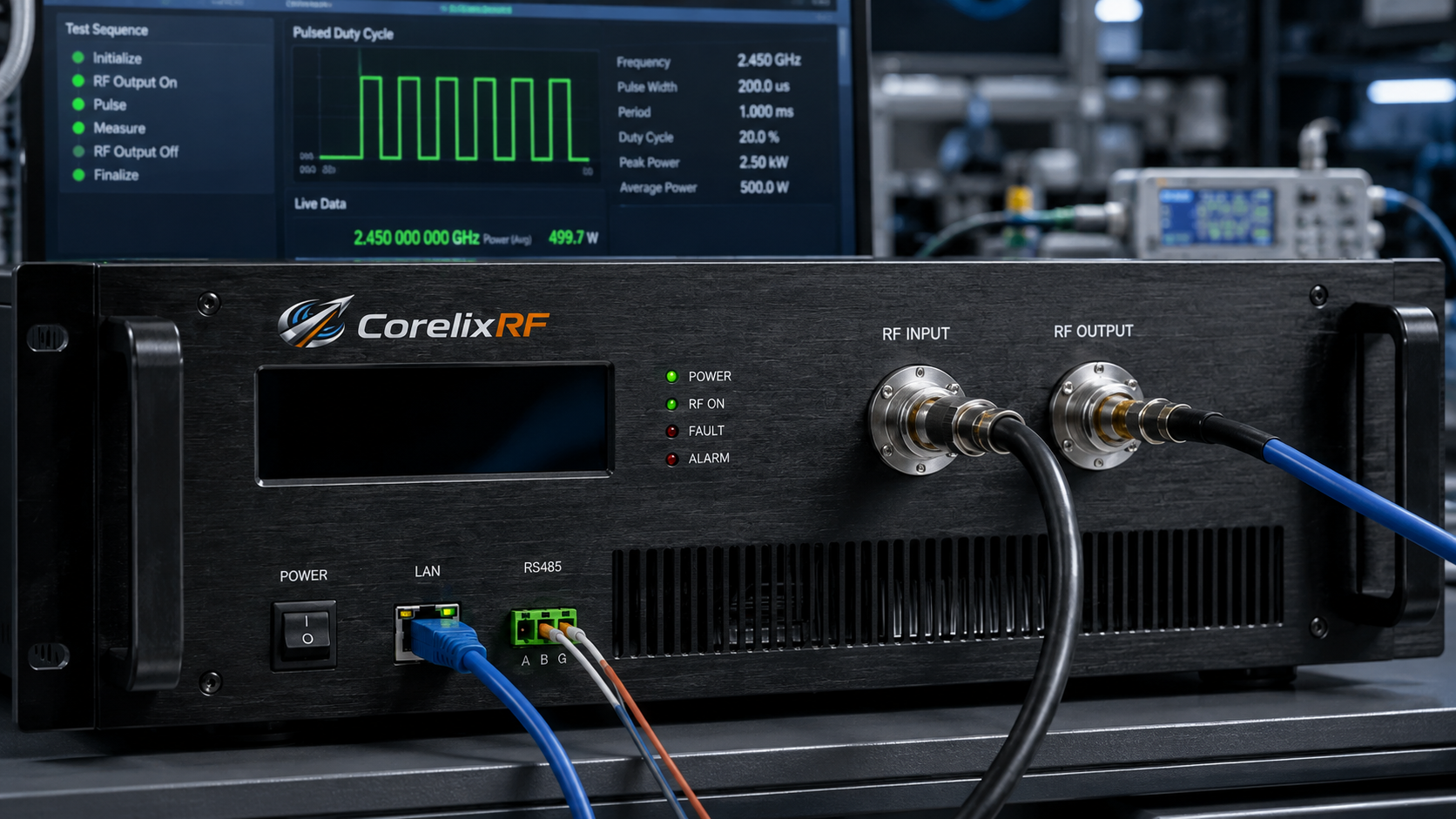
A 2700-3100 MHz S-band pulsed RF amplifier is typically reviewed for RF sensing development, radar front-end validation, communication testing and custom RF system integration. It is not selected the same way as a general-purpose broadband laboratory amplifier. Pulse width, duty cycle, output power, rack format, control interface, cooling and load condition determine whether the amplifier is suitable for the system.
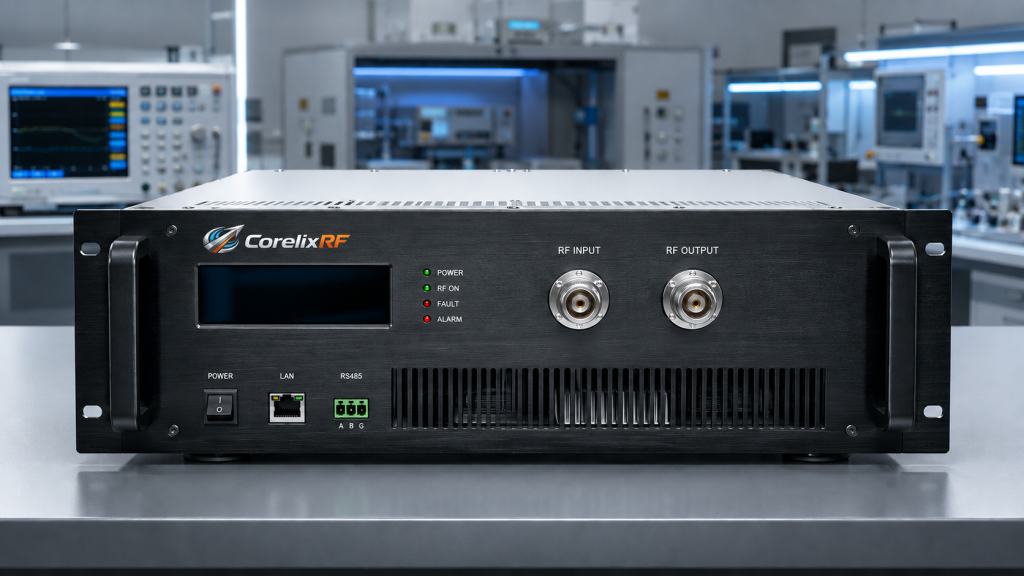
CorelixRF lists CRF-PA-2700M3100M-500W as a representative S-band pulsed RF amplifier platform. Public information shows 2700-3100 MHz frequency coverage, 500 W rated output, 57 dB gain, 50 microsecond pulse condition at 10 percent duty cycle, RS485/LAN control and a 19-inch 3U structure around 18 kg. That makes it a focused platform for S-band projects that need high pulsed output with rack-level integration.
Start With S-Band Use Case, Not Just Wattage
A 500 W number can mean different things depending on pulse behavior. For S-band test systems, the RFQ should describe whether the amplifier supports a development bench, front-end validation system, chamber path, load test or production-style rack. Each scenario changes the control plan, measurement path and thermal assumptions.
The most relevant CorelixRF internal page is the pulsed RF amplifier platform page. If your requirement is continuous-wave broadband testing across 2-6 GHz instead of pulsed S-band output, compare the 2-6 GHz RF power amplifier family. If the amplifier must become part of a wider source-plus-front-end chain, the RF front-end platform route is also useful.
Pulse Condition and Timing Review
CorelixRF publicly lists 50 microseconds at 10 percent duty cycle for the CRF-PA-2700M3100M-500W representative model. The buyer should confirm whether that condition matches the system or whether a custom pulse configuration is needed. Repetition frequency, burst length, trigger timing, source rise time and enable sequence should be included in the inquiry.
Timing details matter because pulsed systems are often automated. The amplifier may need to sequence with a signal source, switch matrix, antenna path, DUT protection system and measurement instrument. Leaving timing out of the RFQ usually creates follow-up delays.
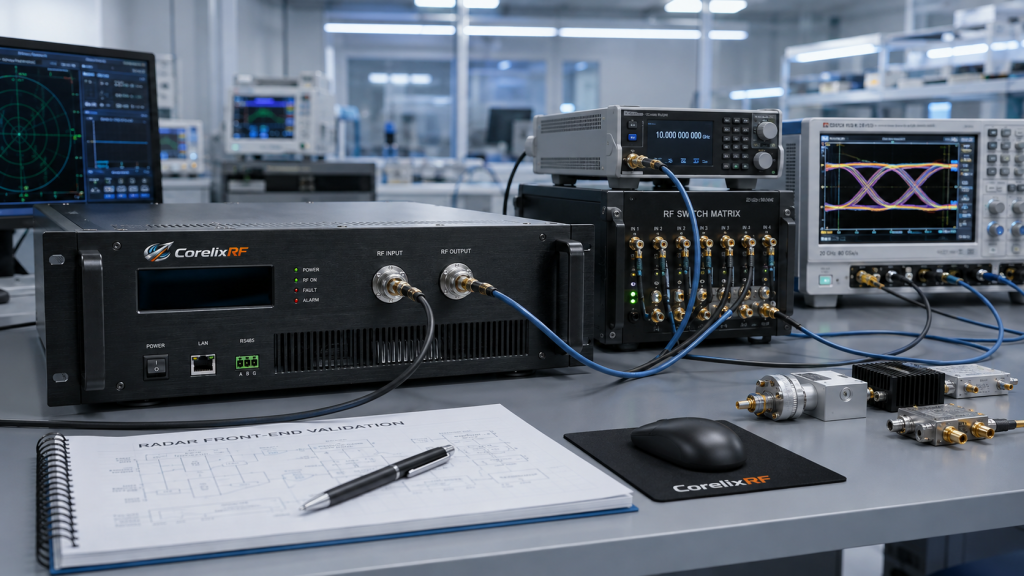
Rack Integration and Cooling
A 19-inch 3U, 18 kg structure can be integrated into many RF test racks, but it still requires mechanical review. Confirm rack depth, rail support, airflow direction, inlet temperature and service clearance. If multiple high-power RF units are installed in one cabinet, airflow planning becomes part of the RF specification.
Cooling should be reviewed against the actual pulse condition. If the duty cycle is higher than the public baseline, or if the system runs long test sequences, include that information early. A standard rack format does not guarantee fit in every cabinet or every thermal environment.
Output Path and Load Match
S-band pulsed RF systems may drive matched loads, antennas, couplers, filters, front-end modules or chamber paths. Each output path can introduce mismatch, loss or power-handling limitations. The RFQ should identify connector expectations, cable assemblies, load rating and whether the amplifier may see high reflected power.
For higher-risk paths, request protection behavior and available test data. If the project needs a non-standard connector, monitoring function or enclosure, send that as a custom RF amplifier requirement rather than assuming it is a minor option.
Control Interface for Test Engineers
The public table lists RS485/LAN control. Test engineers should define what control means in the actual system: remote enable, status polling, fault alarm, reset behavior, interlock logic, logging or operator supervision. A simple manual setup may need less integration. An automated validation rack may need more explicit control documentation.
If software will control the amplifier, include command interface expectations with the RFQ. This helps CorelixRF review whether the standard control path fits or whether the project requires custom command/control work.
Documentation to Request
Ask for datasheet, mechanical outline, rack dimensions, RF input and output connector details, pulse condition confirmation, gain reference, output power data, thermal requirements, control interface notes and available factory validation records. Documentation needs should be listed before purchase, especially for projects with internal qualification or customer acceptance requirements.
FAQ
What is the listed frequency range for CRF-PA-2700M3100M-500W?
CorelixRF lists 2700-3100 MHz for this representative S-band pulsed platform.
What output power is listed?
The public table lists 500 W rated output.
What pulse condition should buyers reference?
The table lists 50 microseconds at 10 percent duty cycle. Buyers should confirm their actual pulse timing during engineering review.
When should I choose the 2-6 GHz CW platform instead?
Choose the 2-6 GHz RF power amplifier family when the requirement is broadband CW or SDR output chain work rather than focused S-band pulsed operation.