
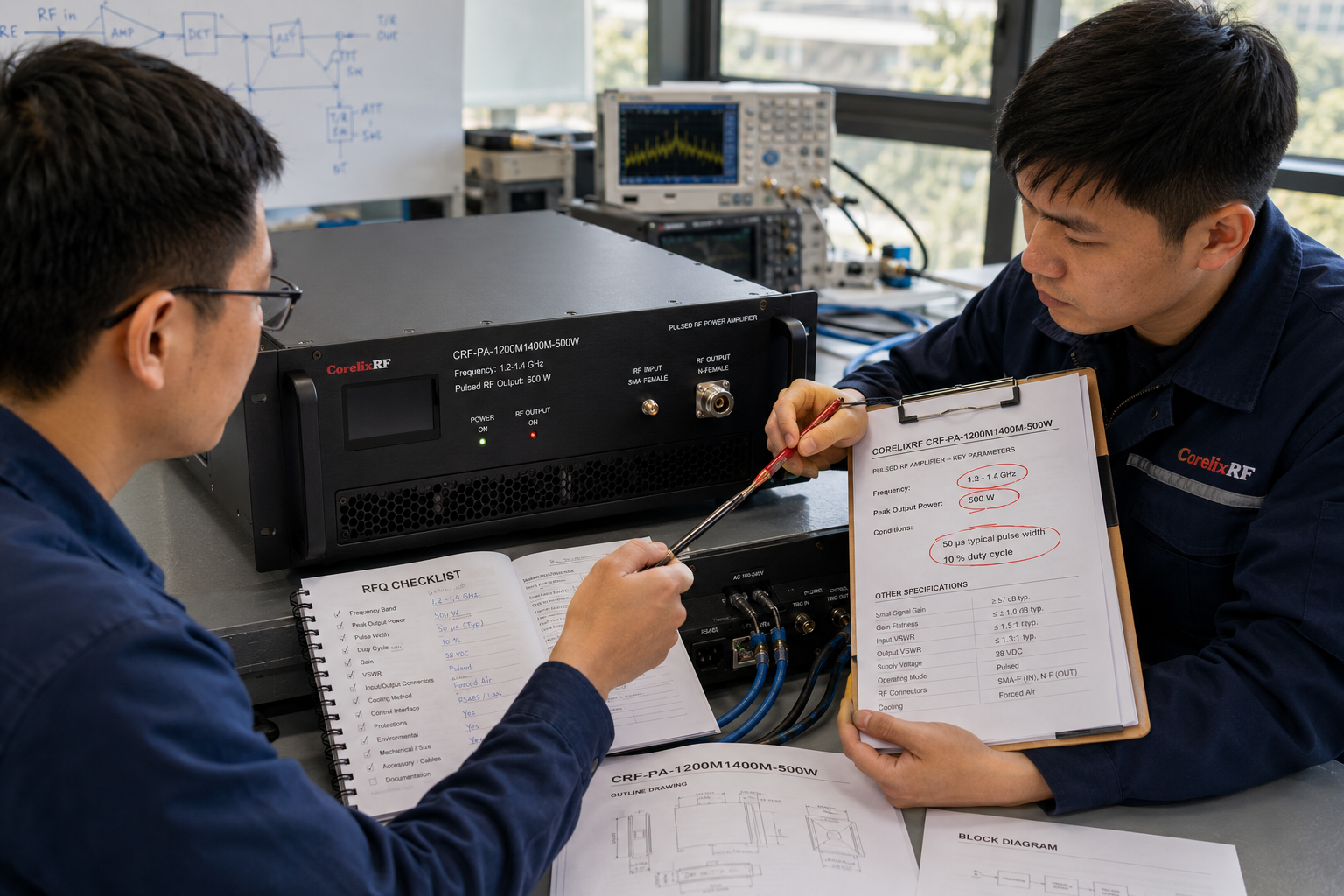
CorelixRF CRF-PA-1200M1400M-500W is a pulsed RF amplifier for projects that need focused 1.2-1.4 GHz coverage rather than a wider L-band range. The local datasheet lists 500 W rated pulsed RF output, 50 us typical pulse width, 10% duty cycle, 57 dB minimum gain, SMA-Female input, N-Female output, RS485 / LAN control, and a 3U rack-mount air-cooled format.
For buyers comparing narrowband L-band platforms, this model is best reviewed around pulse timing, gain control, connector path, rack installation, and acceptance test data.
Why Pulse Conditions Define the Amplifier Choice
A narrower amplifier can be easier to align with a specific system than a wider platform, but it still requires a complete pulse specification. The 50 us / 10% duty condition should be checked against the planned pulse repetition behavior and thermal margin.
The public CorelixRF pulsed RF amplifier page describes this model class as a 1.2-1.4 GHz / 500 W platform for test, communication verification, and OEM rack integration. That makes it a natural internal link for this article.
How Engineers Should Review This Pulsed RF Amplifier
Start with the exact 1.2-1.4 GHz operating points and the reason the project needs 500 W pulsed output. If the system only uses a few fixed frequencies, request acceptance data around those points instead of relying on a broad line item.
The datasheet lists 57 dB minimum gain, ±3 dB flatness, 2 dBm maximum input power, -20 dBc harmonic reference, and -60 dBc spurious maximum. Those details should be reviewed against the measurement equipment and load path.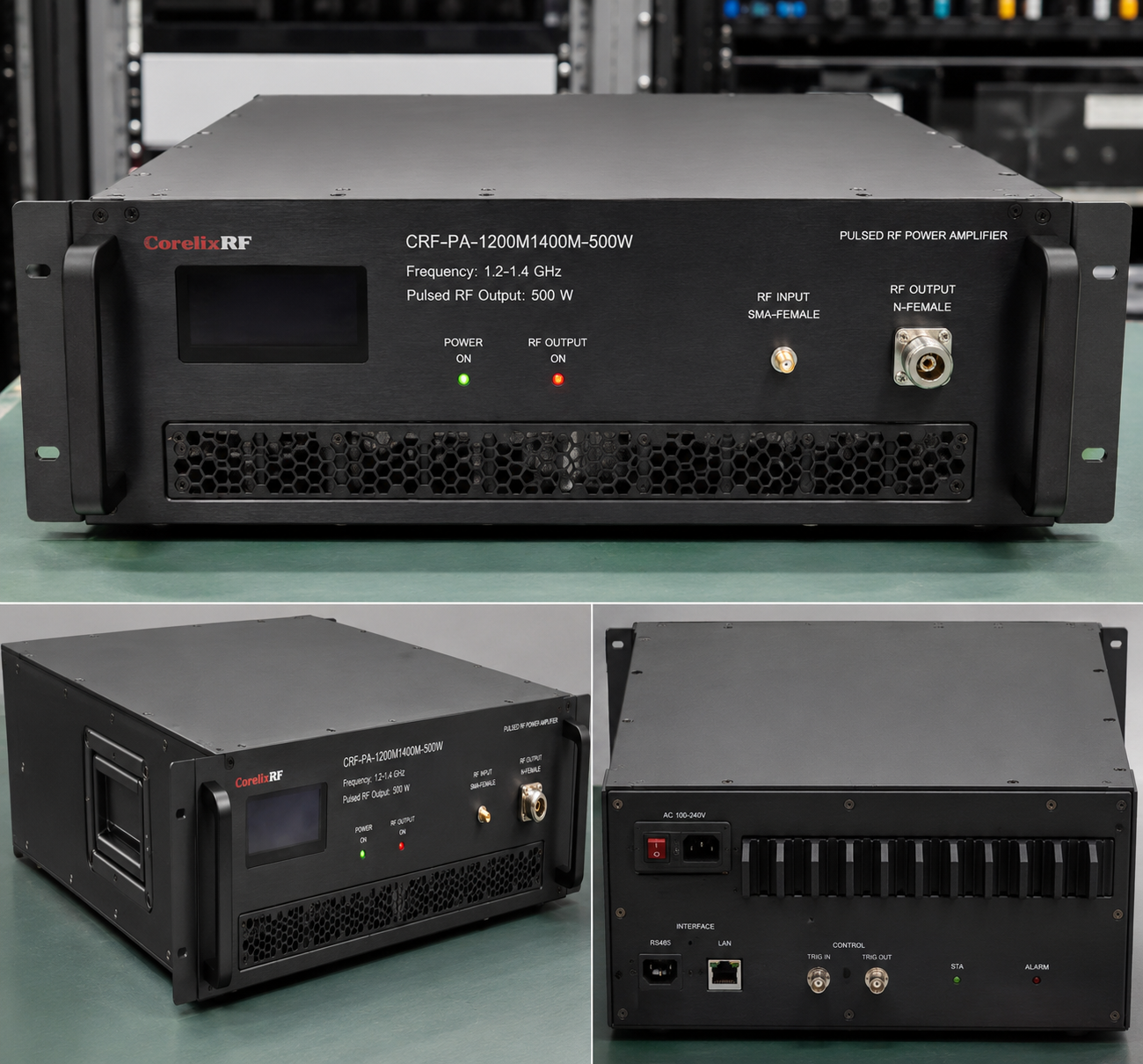
Confirm peak power, pulse width, and duty cycle together
The pulse width and duty cycle are part of the model definition. If a project needs longer pulses, higher duty cycle, or timing changes, CorelixRF should review thermal and protection limits before quotation.
Review the RF interface and load path early
SMA-Female input and N-Female output support a practical rack setup, but the transition from low-level source to high-power output must be controlled. Include cable loss, attenuator values, coupler rating, and load VSWR in the RFQ.
Treat cooling and facility requirements as RF requirements
The 3U air-cooled structure is compact compared with larger high-power pulse systems. Even so, airflow clearance, AC inlet access, and ambient temperature should be planned before the rack is built.
Integration Notes for Test, Radar Simulation, and RF System Validation
This model can be considered for narrowband L-band RF test, communication verification, and authorized radar simulation or pulsed RF testing environments. The article should keep the focus on validation and integration, not operational claims.
If the project expands outside 1.2-1.4 GHz, use CorelixRF’s UHF amplifier and pulsed platform pages to compare related model paths.
Control, monitoring, and protection planning
RS485 / LAN control and optional monitoring should be reviewed before software integration. If fault response or automated logging is needed, include it in the first inquiry.
RFQ details to prepare before requesting a recommendation
Before asking for a quote, provide frequency range, target peak output power, pulse width, duty cycle, pulse repetition behavior, input drive level, connector preference, load VSWR, cooling method, control interface, monitoring requirements, mechanical envelope, and required acceptance documents. CorelixRF’s RF amplifier RFQ checklist is the practical place to turn these points into a review package.
Where This Model Fits in CorelixRF’s Pulsed Platform Path
CRF-PA-1200M1400M-500W sits between lower L-band high-power pulse platforms and S-band pulse models. It is a focused choice when the band is known and the buyer wants a rack-level 500 W pulse amplifier.
For a confirmed recommendation, send pulse width, duty cycle, output power, frequency points, control preference, and rack constraints through Contact CorelixRF.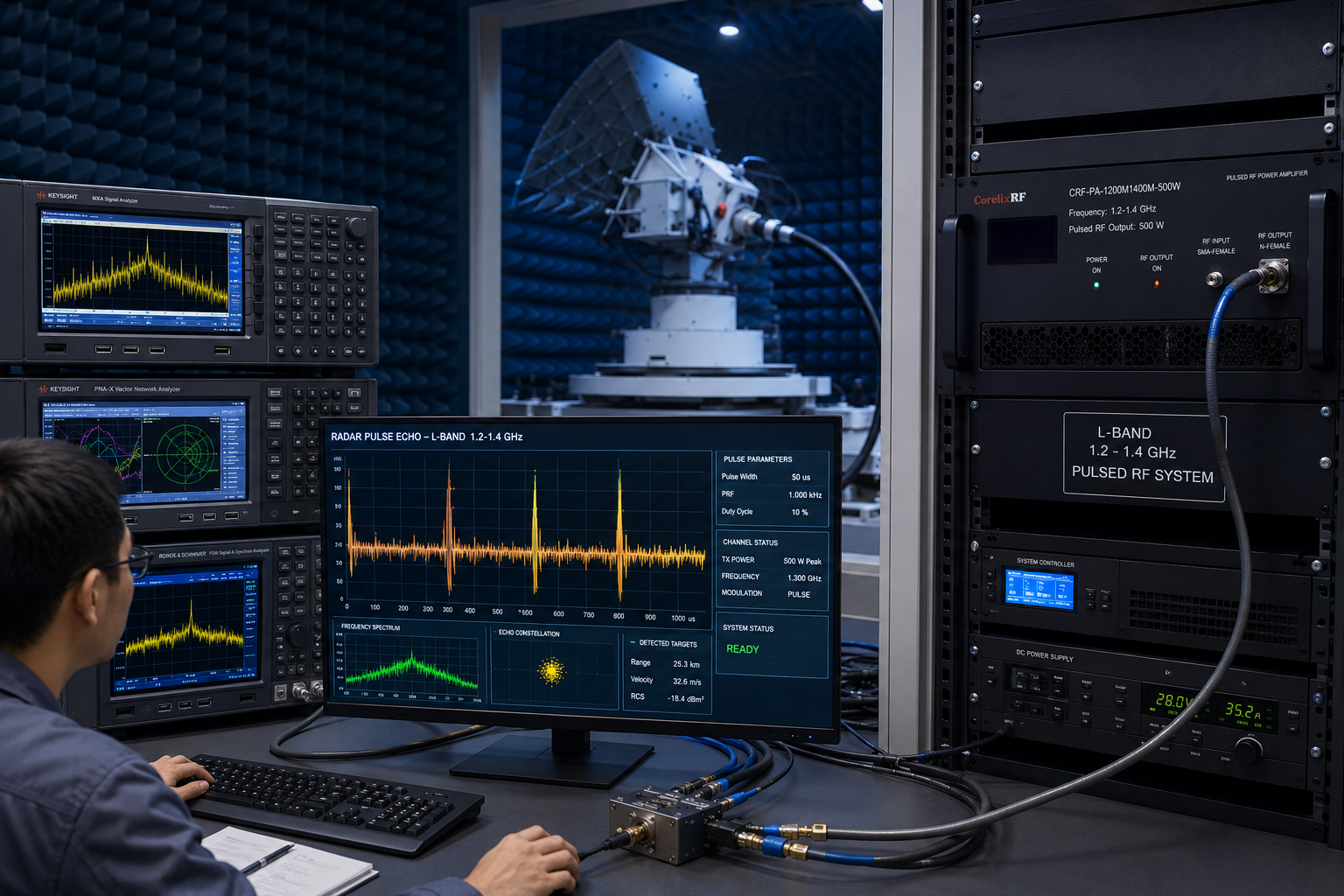
FAQ
Is CRF-PA-1200M1400M-500W a pulsed RF power amplifier?
Yes. The local datasheet identifies it as a solid-state pulsed RF power amplifier and lists model-specific pulse width and duty cycle conditions.
Can the pulse width or duty cycle be changed?
Pulse conditions are project-sensitive. The datasheet values should be treated as the supplied configuration baseline; any different pulse width, duty cycle, timing behavior, or thermal margin should be reviewed with CorelixRF before quotation.
What information matters most for a pulsed amplifier RFQ?
Frequency, peak output power, pulse width, duty cycle, pulse repetition behavior, source drive level, load VSWR, cooling method, control interface, and acceptance test points matter more than a single wattage number.
Does this article claim stock, certification, or customer results?
No. It only uses the local CorelixRF datasheet and public CorelixRF platform direction. Stock, lead time, compliance documentation, and project test data must be confirmed directly by CorelixRF.
Where should buyers send requirements?
Use the CorelixRF Contact page and include frequency, pulse condition, power, cooling, interface, mechanical, and documentation requirements.