
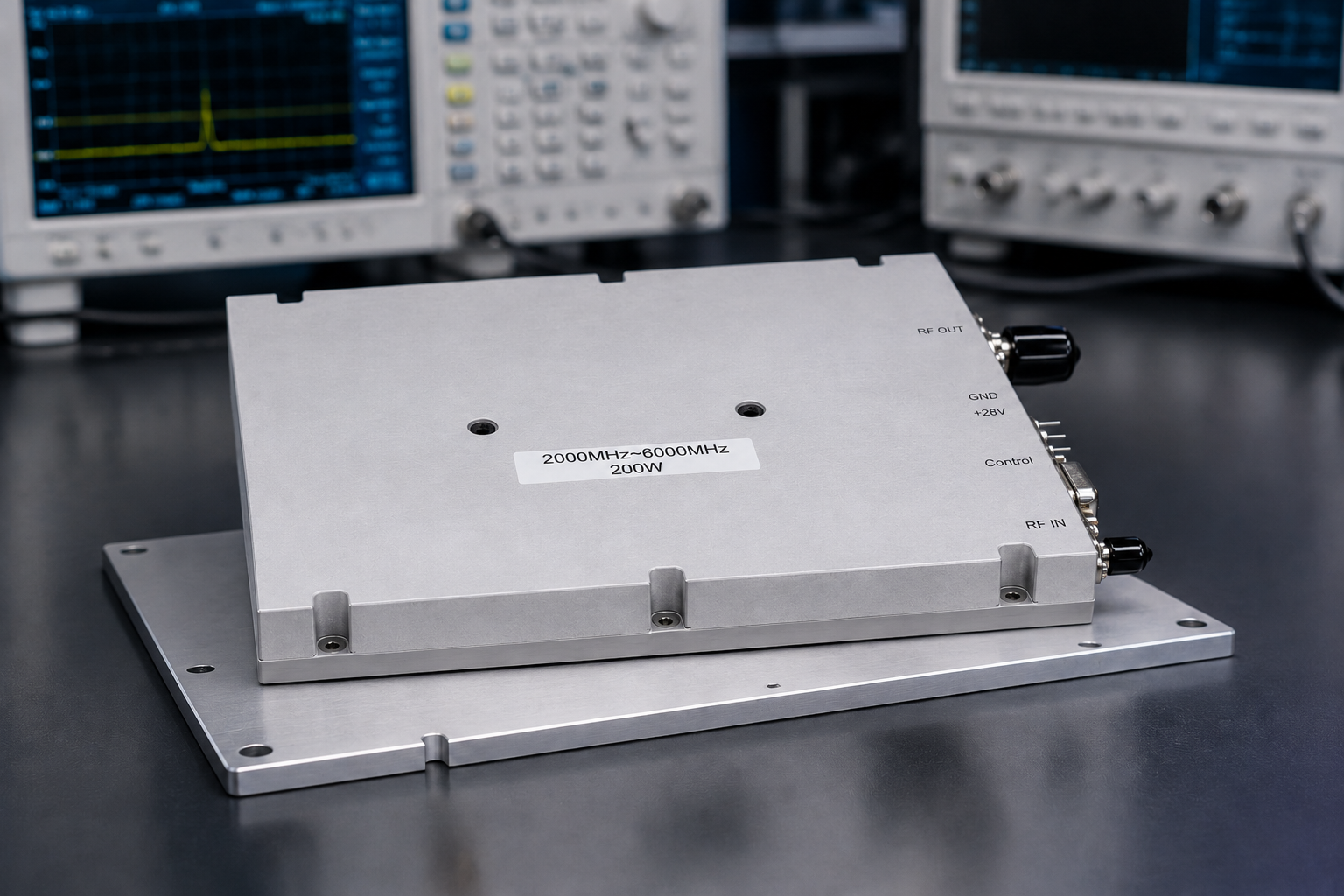
A 2-6 GHz RF power amplifier is a common candidate when engineers need broadband power across S-band, C-band-related test ranges, and microwave front-end development work. It can support RF testing platforms, communication systems, and system integration projects where stable gain, compact packaging, and known interfaces matter before procurement approval.
CorelixRF’s public 2-6 GHz page lists standard 30 W, 50 W, 100 W, 150 W, and 200 W output options. In article copy, model references should follow the CorelixRF naming style CRF-PA-2000M6000M-30W, CRF-PA-2000M6000M-50W, CRF-PA-2000M6000M-100W, CRF-PA-2000M6000M-150W, and CRF-PA-2000M6000M-200W. It also describes gain classes from about 45 dB to 53 dB depending on model, gain flatness of <=1.8 dB across the series, SMA input, N-female output, DB9 control, and air-cooled mechanical formats. These are useful selection anchors, but final choice should still be based on the operating mode, drive level, cooling condition, and documentation needs of the project.
Why 2-6 GHz coverage is useful
The 2-6 GHz range gives engineering teams one broadband platform for many S/C-band-related requirements. Instead of switching between several narrower amplifiers, a project can use one family for bench validation, signal-chain evaluation, communication testing, and RF subsystem development. That can simplify mechanical planning and procurement, especially when the team needs a repeatable amplifier platform across several test cases.
For buyers comparing adjacent bands, CorelixRF’s 300-2700 MHz RF power amplifier page is relevant for lower-frequency UHF/L-band coverage, while the 6-18 GHz microwave amplifier page extends the review into higher microwave frequencies.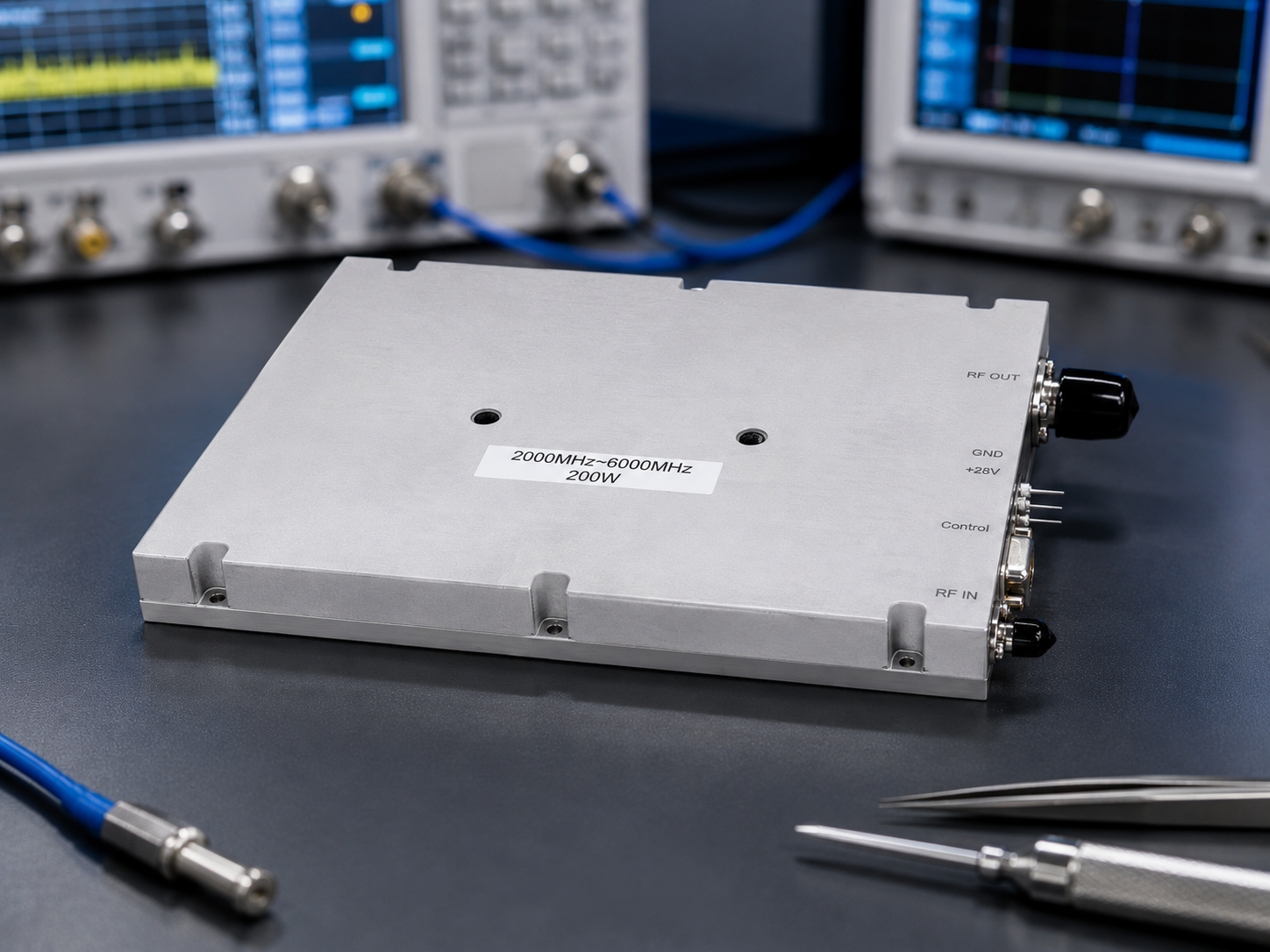
Key selection factors
Output power and gain
CorelixRF lists 30 W through 200 W standard models. Use the CRF-PA-2000M6000M-power format when referring to a specific model, for example CRF-PA-2000M6000M-100W. Public performance references show gain ranges of 44-46 dB for the 30 W class, 46-48 dB for 50 W, 49-51 dB for 100 W, 51-53 dB for 150 W, and 52-54 dB for 200 W. Engineers should compare this gain with source output level and required output at the load. If source drive is limited, the gain budget may matter more than the power class alone.
Gain flatness across the band
The product page references <=1.8 dB flatness across the entire 2-6 GHz series. For swept testing, calibration, and multi-frequency evaluation, flatness helps maintain predictable output. If the application has strict power accuracy requirements, ask for full curve files, S-parameter data, or project-specific validation data during the RFQ stage.
Interfaces and mechanical format
CorelixRF lists SMA at RF input, N-female at RF output, DB9 control, and air cooling. The compact 30 W format is identified around 125 x 59 x 21.5 mm, while 50 W to 200 W models use a larger 200 x 158 x 25 mm platform. The buyer should review connector clearance, cable routing, mounting surface, airflow, and supply wiring before freezing the system layout.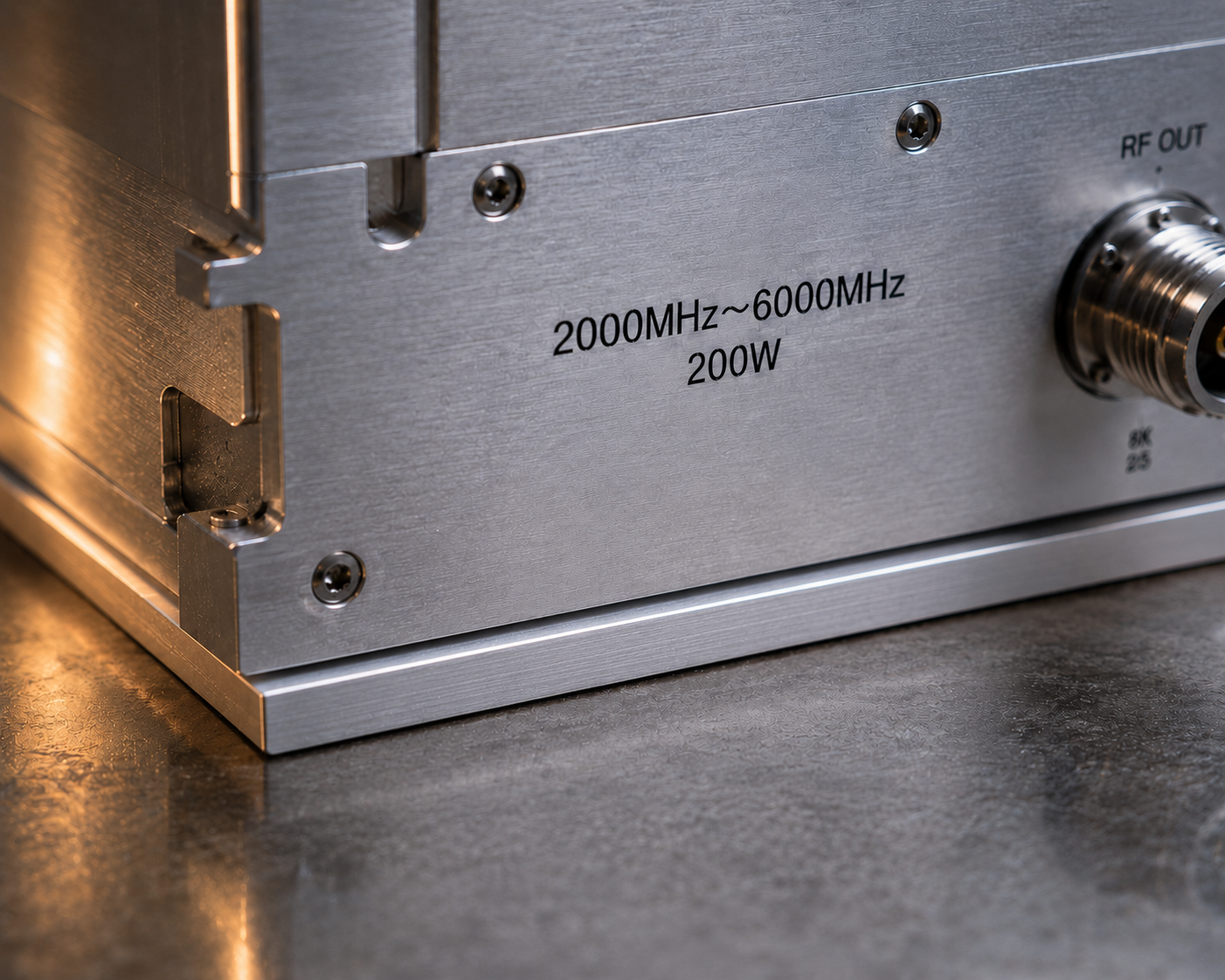
Supply and cooling
The public page references 36-46 VDC and current details for the compact 30 W format, with 40-58 VDC varying by model for higher-power formats. Because supply voltage and current change by output class, the power architecture should be checked with the final model. All listed models use air cooling, so the enclosure must support adequate airflow under the intended duty cycle.
Application fit
The 2-6 GHz platform fits RF testing platforms, communication-related RF projects, broadband signal-chain evaluation, and integration-led development where mechanical drawings and connector references are needed before purchase. It can also be part of a larger amplifier and antenna system when the buyer needs RF chain compatibility review rather than a standalone module.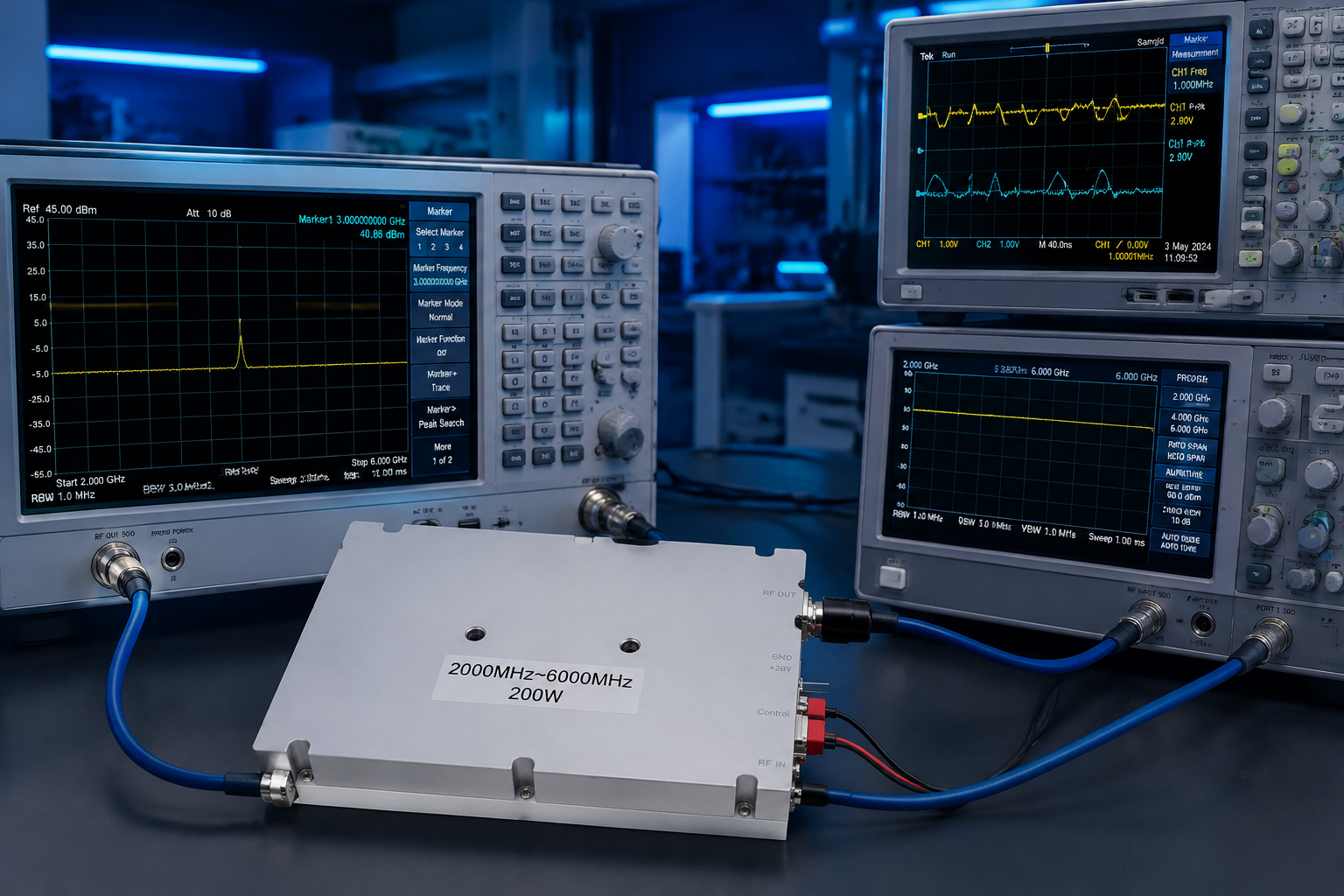
Suggested AIOSEO configuration
Set the focus keyword to “2-6 GHz RF power amplifier.” Use the SEO title and meta description from the front matter. Additional keywords should include “S band RF amplifier,” “C band RF amplifier,” “broadband RF power amplifier,” and “air cooled RF amplifier.” Use Article or BlogPosting schema plus FAQ schema.
FAQ
What output power options are available for CorelixRF 2-6 GHz amplifiers?
CorelixRF’s public page lists 30 W, 50 W, 100 W, 150 W, and 200 W standard output options for the 2-6 GHz series.
What RF interfaces are used on the 2-6 GHz amplifier series?
The public page lists SMA at RF input, N-female at RF output, DB9 for control, and air-cooled mechanical formats. Custom interfaces can be reviewed by project.
Why does gain flatness matter for 2-6 GHz testing?
Gain flatness affects repeatability across frequency. For swept tests and broadband communication evaluation, predictable gain reduces the correction burden and helps maintain stable output planning.
Can this platform support custom integration?
Yes. CorelixRF can review mechanical fit, connector preference, control interface, supply conditions, cooling requirements, and custom RF project needs during engineering intake.