

Radio frequency interference stops rogue unmanned aerial vehicles quickly by severing remote operator communication linkages directly. Malicious airborne payloads create severe localized security vulnerabilities around critical industrial manufacturing sites continuously. Ignoring these modern threats leaves your expensive proprietary hardware exposed against devastating remote sabotage operations. Deploying advanced drone jamming hardware neutralizes hostile flights instantly without requiring physical kinetic projectiles. CorelixRF designs military grade transmission platforms resolving complex airspace defense challenges completely.
What Exactly Is RF Drone Jamming Technology?
Radio frequency interference technology stops unmanned aerial vehicles by severing their operator communication links. Utilizing specialized hardware generates localized noise across targeted spectrums neutralizing threats instantly. This specific drone jamming approach effectively neutralizes airborne threats rapidly. Security personnel deploy these countermeasures during active airspace incursions.
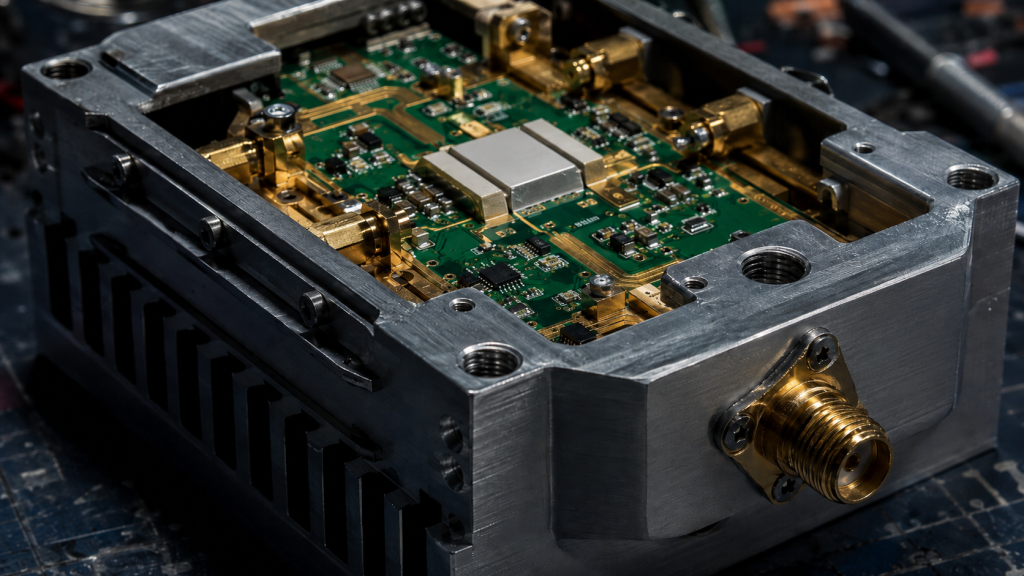
How Does Intentional Interference Function?
Adversaries intentionally broadcast overpowering radio waves across identical bands utilized by targeted systems. Overwhelming targeted receivers prevents any incoming command data from registering successfully. Operators lose complete administrative authority over their remote airborne assets entirely. Here is the deal: compromised units frequently crash or return home immediately.
- Transmitters broadcast continuous localized static.
- Receivers fail at decoding legitimate instructions.
- Threats neutralize without requiring physical projectiles.
- Defenders maintain secure localized perimeters seamlessly.
Why Does Unintentional Disruption Happen?
Accidental signal overlap happens whenever civilian infrastructure clutters heavily utilized local spectrums. Industrial environments generate massive electromagnetic output causing temporary localized navigational failures. You might encounter sporadic connectivity drops near heavy manufacturing centers. What does this mean for you? Proper site surveying prevents accidental operational failures.
Key Takeaway: Distinguishing between intentional attacks and accidental interference dictates your defensive response.
| Interference Source | Typical Outcome | Resolution Method |
| Intentional Attack | Complete link failure | Countermeasure deployment |
| Environmental Noise | Sporadic connectivity loss | Frequency switching |
| Industrial Equipment | Range reduction | Physical relocation |
Analyzing local spectrum data allows teams rapidly identifying active attack vectors.
How Does Radio Frequency Jamming Actually Work?
Overpowering incoming signals breaks remote communication between controllers and airborne receivers. Operators face immediate telemetry loss when noise floors rise abruptly. Analyzing drone jamming mechanics reveals specific vulnerabilities within civilian radio protocols. These systems rely heavily upon continuous uninterrupted data streams.
What Characterizes Broadband Methods?
Transmitters push raw power across massive spectrum ranges simultaneously. Broadcasting immense noise blankets entire frequency bands preventing any local communication. This brute force tactic requires substantial electrical input supporting sustained operations. Let us dig deeper: military units utilize this method during wide area denial operations.
- Affects multiple channels concurrently.
- Consumes vast electrical reserves.
- Requires robust thermal management.
- Neutralizes diverse threat profiles.
When Should You Deploy Spot Targeting?
Targeting solitary narrow channels concentrates available broadcast power highly efficiently. Defenders monitor airspace continuously waiting for specific threat signatures before engaging. Pinpointing exact frequencies requires sophisticated detection equipment acting alongside mitigation hardware. Why does this matter? Focused attacks drain fewer resources while remaining highly effective against solitary targets.
Key Takeaway: Matching your defense strategy directly against incoming threat types conserves valuable power resources.
| Strategy Category | Power Draw | Target Scope |
| Broadband Sweep | Very High | Full Spectrum |
| Spot Targeting | Very Low | Single Channel |
| Barrage Matrix | Moderate | Mixed Channels |
Deploying mixed mitigation strategies maximizes local airspace defense efficiency.
What Are The Common Types Of Mitigation Equipment?
Portable backpacks and large stationary radar systems represent primary defense hardware categories. Infantry units carry mobile transmitters providing localized personal squad defense. Advanced drone jamming installations protect national infrastructure constantly. Engineers design distinct platforms serving vastly different tactical necessities.
Are Portable Systems Effective Outdoors?
Mobile backpacks deliver immediate localized security during high mobility field operations. Ground troops activate directional antennas targeting visible airborne threats directly. Battery capacity strictly limits operational longevity during extended field engagements. Consider this fact: modern designs incorporate lightweight materials enhancing operator mobility drastically.
- Weighs under fifteen kilograms typically.
- Runs off rechargeable lithium packs.
- Utilizes highly directional antenna arrays.
- Protects moving infantry effectively.
Why Install Fixed Radar Networks?
Permanent installations monitor massive perimeters around sensitive industrial facilities relentlessly. Huge stationary antennas project overpowering fields extending several kilometers outward. High voltage power supplies guarantee continuous uninterrupted defense capabilities year round. But here is the kicker: these massive arrays require intense thermal cooling architectures.
Key Takeaway: Combining mobile units alongside permanent infrastructure creates an impenetrable layered defense matrix.
| Hardware Format | Mobility Rating | Coverage Radius |
| Portable Unit | High | Short Range |
| Fixed Array | Zero | Multi-Kilometer |
| Vehicle Mount | Moderate | Convoy Perimeter |
Integrating diverse hardware profiles secures complete protection against varied aerial incursions.
How Can You Effectively Counter Jamming Attacks?
Detecting interference rapidly triggers automatic software responses avoiding total system failures. Modern transceivers monitor local noise floors searching for sudden localized spikes. Encountering drone jamming prompts immediate evasive communication maneuvers automatically. Intelligent radios survive hostile environments utilizing rapid adaptive algorithms.
How Does Frequency Hopping Help?
Transmitters rapidly switch channels randomly preventing adversaries from predicting broadcast patterns. Senders and receivers follow synchronized cryptographic sequences jumping across spectrums continuously. Spot jammers fail entirely because targets vanish before interference takes hold. This is where it gets interesting: advanced protocols execute thousands of jumps per second.
- Prevents localized channel locking.
- Bypasses concentrated spot interference.
- Requires precise clock synchronization.
- Enhances overall transmission security.
Can Alternative Band Switching Save Missions?
Losing entire frequency ranges forces equipment onto completely different operational bands. Severe localized noise might ruin standard civilian spectrums entirely. Switching toward proprietary military frequencies bypasses common commercial interference easily. Ready for the good part? Dual band radios perform these transitions without dropping data links.
Key Takeaway: Utilizing adaptive communication hardware prevents mission failure during heavy electromagnetic assaults.
| Evasion Tactic | Implementation Difficulty | Success Rate |
| Rapid Hopping | Extremely High | Excellent |
| Band Switching | Moderate | Good |
| Power Boosting | Low | Marginal |
Implementing automated evasion protocols maintains continuous telemetry despite active hostile countermeasures.
Why Do Modern Security Systems Need Counter UAV?
Unregulated aerial vehicles pose severe safety risks above critical infrastructure assets. Commercial quadcopters easily bypass traditional physical perimeter fences undetected. Deploying drone jamming networks neutralizes these modern threats effortlessly. Security directors must adapt standard protocols addressing three dimensional incursions.

How Are Critical Assets Protected?
Power plants face massive operational risks from unauthorized airborne payloads. Hostile actors utilize cheap civilian technology executing devastating localized sabotage. Establishing invisible electromagnetic domes prevents unauthorized hardware from breaching sensitive perimeters. Here is the bottom line: proactive airspace denial prevents catastrophic industrial incidents.
- Creates invisible defensive boundaries.
- Neutralizes remote payload triggers.
- Protects high voltage transformers.
- Secures massive fuel depots.
Can We Mitigate Unauthorized Surveillance?
Corporate espionage increasingly utilizes cheap aerial cameras capturing sensitive manufacturing secrets. Competitors fly silent vehicles above open air testing facilities gathering proprietary data. Active mitigation hardware forces these spies into immediate emergency landing modes. Think about this: protecting intellectual property requires securing vertical airspace completely.
Key Takeaway: Complete site security mandates integrating advanced electromagnetic countermeasures seamlessly into existing infrastructure.
| Threat Origin | Target Environment | Primary Defense |
| Kinetic Strike | Energy Grids | Barrage Sweep |
| Espionage | Testing Labs | Spot Target |
| Smuggling | Prison Yards | Broadband Noise |
Analyzing historical incursion logs helps security teams deploy appropriate countermeasures effectively.
What Frequency Bands Are Most Targeted By Jammers?
Commercial manufacturers utilize standardized unlicensed bands maintaining default remote control linkages. These predictable parameters make civilian hardware exceptionally easy targets. Defeating drone jamming attacks requires understanding exactly which spectrums adversaries target primarily. Hardware designers must anticipate hostile actions across varied bandwidths.
Are Civilian Frequencies Vulnerable?
Most consumer units rely upon standard 2.4GHz or 5.8GHz channels. These heavily congested bands lack sophisticated encryption or robust evasion protocols. Simple cheap transmitters easily overpower weak civilian telemetry links locally. Do not ignore this: relying solely upon commercial hardware guarantees failure during hostile encounters.
- Operates within crowded spectrums.
- Lacks advanced hopping capabilities.
- Utilizes weak transmission power.
- Fails under minimal interference.
Why Target Specialized Military Bands?
Advanced defense forces utilize proprietary frequencies bypassing common commercial noise floors. Attacking these secure channels requires massively powerful bespoke mitigation hardware. State sponsored adversaries invest heavily into disrupting specialized encrypted communications. Here is a different perspective: defeating military links demands extreme engineering sophistication.
Key Takeaway: Operating outside standard consumer bandwidths increases your operational resilience against amateur hostile interference.
| Spectrum Range | Typical User Base | Vulnerability Status |
| 2.4 Gigahertz | Civilian | Extremely High |
| 5.8 Gigahertz | Commercial | High |
| Custom UHF | Tactical | Low |
Monitoring local spectral utilization provides early warning regarding potential hostile communications.
How Do High Power Amplifiers Boost Mitigation Range?
Amplifying baseband signals determines your maximum effective defensive perimeter radius entirely. Weak transmitters fail at neutralizing threats operating beyond visual line of sight. Incorporating advanced drone jamming hardware expands your protective envelope drastically. Engineering robust amplification stages secures continuous reliable localized safety.
What Role Does GaN Technology Play?
Gallium Nitride transistors revolutionized modern radio frequency manufacturing completely. These advanced semiconductors handle massive thermal loads without suffering performance degradation. Engineers build compact modules delivering unprecedented continuous output power. This changes everything: legacy silicon hardware simply cannot match modern thermal efficiency metrics.
- Delivers superior thermal dissipation.
- Supports massive power outputs.
- Enables compact module designs.
- Operates continuously without failing.
Why Does Power Redundancy Matter?
Running amplifiers near absolute maximum capacity guarantees premature catastrophic hardware failure. Professional manufacturers design systems utilizing at least fifteen percent redundant overhead. This safety margin prevents thermal runaway during extended intense defensive operations. Keep this in mind: sustained combat requires equipment performing flawlessly without overheating.
Key Takeaway: Investing into superior amplification technology guarantees reliable sustained defense against persistent aerial threats.
| Base Material | Thermal Handling | Output Density |
| Silicon LDMOS | Moderate | Average |
| Gallium Arsenide | Good | Low |
| Gallium Nitride | Exceptional | Extremely High |
Upgrading legacy transmission systems utilizing advanced semiconductor platforms drastically improves overall reliability.
Can SDR Technology Improve Interference Precision?
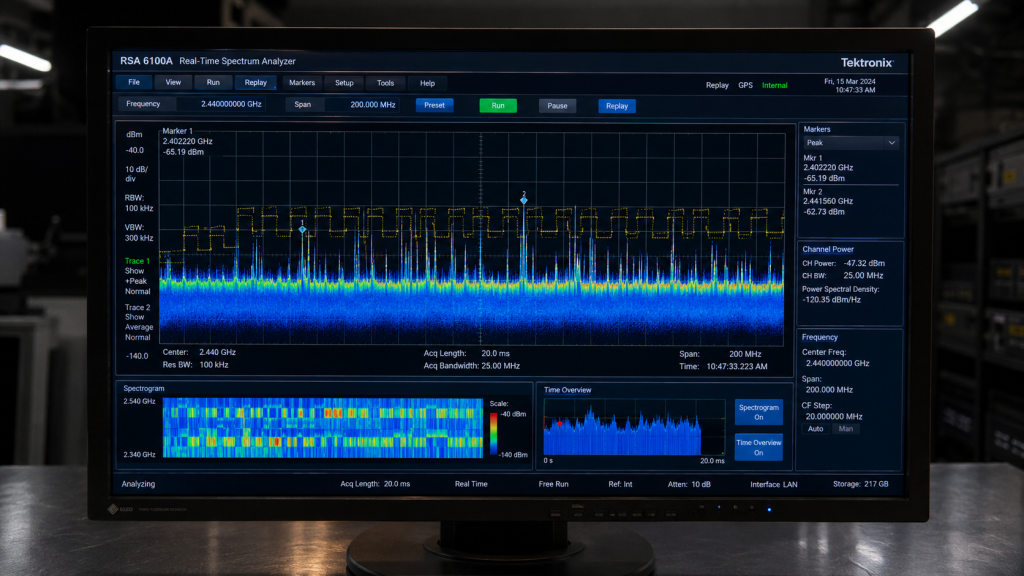
Software defined radios replace rigid hardware circuits utilizing flexible programmed logic. Operators update transmission characteristics instantly via simple interface modifications. Combating drone jamming requires agile platforms capable of rapid adaptation. Digital architectures dominate modern electronic warfare landscapes completely.
How Does Intelligent Signal Control Help?
Digital processors analyze incoming threat signatures deploying precise targeted countermeasures instantly. Software dynamically allocates transmission power directly toward active hostile frequencies. This surgical approach minimizes collateral damage against friendly local communications. Here is the secret: rigid analog systems simply cannot react fast enough.
- Adapts toward new threats instantly.
- Preserves friendly local communications.
- Maximizes available transmission power.
- Receives remote firmware updates.
What Is Adaptive Waveform Generation?
Engineers write code creating highly complex specific disruption patterns dynamically. These custom waveforms penetrate advanced threat encryption protocols far more effectively. Simulating legitimate control packets causes targeted units into executing automatic landing procedures. The real value here: deceiving targets proves more efficient than overpowering them.
Key Takeaway: Software defined architectures future proof your defensive installations against evolving hostile methodologies.
| System Design | Adaptation Speed | Upgrade Path |
| Analog Circuit | Zero | Hardware Swap |
| Basic Digital | Slow | Flash Memory |
| Software Defined | Instant | Network Push |
Deploying programmable transceivers allows security directors unparalleled control over local electromagnetic environments.
What Are The Real World Applications Of Jamming?
Deploying tactical interference systems protects high value civilian targets daily globally. Government agencies rely upon these tools preventing catastrophic security breaches. Advanced drone jamming platforms serve critical roles beyond traditional military battlefields. Urban security requires sophisticated invisible perimeter defense mechanisms.
How Does Border Protection Utilize Interference?
Smugglers frequently fly contraband across international boundaries using remote controlled copters. Customs agents deploy stationary radar networks detecting these nocturnal incursions rapidly. Mobile patrol units then intercept targeted vehicles forcing emergency landings. Consider this reality: traditional border walls cannot stop aerial smuggling routes.
- Detects nocturnal low altitude flights.
- Intercepts illegal contraband deliveries.
- Secures porous mountainous terrain.
- Protects remote checkpoint outposts.
Why Do VIP Events Demand Countermeasures?
Massive public gatherings present lucrative targets for malicious airborne attacks. Security details establish temporary electromagnetic domes shielding stadiums against unauthorized flights. These localized barriers guarantee public safety without disrupting television broadcast signals. You must realize: modern event security planning always includes airspace denial strategies.
Key Takeaway: Diverse environments demand adaptable countermeasures capable of securing both permanent infrastructure and temporary events.
| Deployment Area | Threat Severity | Required Hardware |
| Border Crossing | High | Mobile Sweeper |
| Sports Stadium | Moderate | Temporary Array |
| VIP Motorcade | Extreme | Vehicle Mounted |
Tailoring specific hardware deployments toward unique operational requirements maximizes defensive efficacy.
How To Select The Right RF Defense Supplier?
Partnering alongside legitimate original equipment manufacturers guarantees long term system reliability. Trading companies lack deep engineering expertise required for complex integrations. Combating drone jamming mandates utilizing industrial grade specialized hardware exclusively. Procurement directors must vet potential partners thoroughly before signing contracts.
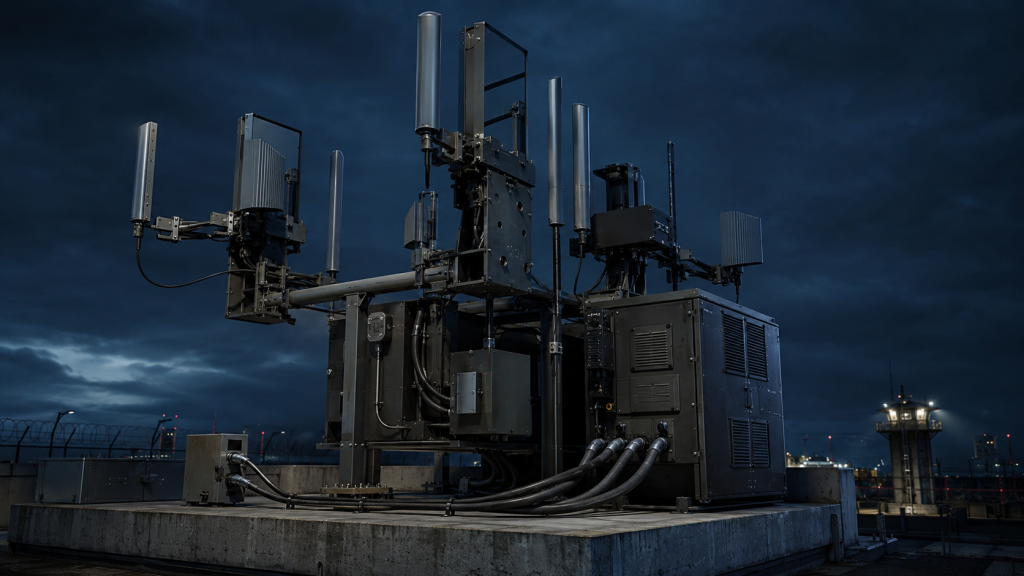
Why Is Verifying Manufacturing Quality Necessary?
True manufacturers control every single production step from bare boards onward. Visiting factory floors reveals exactly how strictly engineers enforce quality control. Genuine industrial suppliers proudly showcase their advanced environmental testing chambers. Here is a pro tip: demand transparent documentation proving rigorous military standard compliance.
- Ensures consistent build quality.
- Guarantees long term reliability.
- Provides direct engineering support.
- Eliminates middleman price markups.
How To Evaluate Testing Capabilities?
Reliable hardware survives brutal temperature extremes without suffering performance degradation. Professional laboratories utilize vector network analyzers proving exact specification metrics. You should request detailed final test reports before accepting any physical delivery. Why is this non-negotiable? Unverified equipment will fail during critical defensive operations.
Key Takeaway: Choosing an engineering driven manufacturing partner guarantees receiving customized solutions perfectly matching your requirements.
| Vendor Class | Technical Depth | Customization Rating |
| Core Manufacturer | Extensive | Unlimited |
| System Reseller | Moderate | Limited |
| General Trader | Zero | None |
Auditing potential vendors rigorously prevents catastrophic hardware failures during active hostile engagements.
Thoroughly understanding interference technologies remains critical for modern infrastructure protection. Proactive airspace denial stops malicious operators from executing devastating local attacks. This guide explained exactly how advanced countermeasure systems defeat remote airborne threats seamlessly. Upgrading legacy security architectures demands sophisticated adaptive electromagnetic countermeasures natively. We engineer military grade components designed specifically for sustained continuous operations. Please contact us today for detailed technical integration assistance. CorelixRF delivers uncompromising full band RF chain solutions engineered for absolute victory.
FAQ
Can I legally deploy interference equipment near civilian airports?
No, unauthorized deployment near airports violates federal aviation regulations strictly. Civilian aviation relies upon uninterrupted communications making unauthorized interference highly illegal.
What’s the best method for defeating frequency hopping threats?
Software defined radios provide exceptional defense against agile hopping threats. These digital systems analyze spectrums rapidly deploying adaptive waveforms instantly.
How do I know if my facility requires permanent countermeasure installations?
Analyze your local threat profile carefully. High risk critical infrastructure facing corporate espionage demands permanent continuous airspace denial rather than temporary mobile defense.
Can I integrate new mitigation modules into existing analog radar systems?
Yes, custom interface protocols allow seamless integration between modern and legacy hardware. Engineering teams design specialized bridging modules connecting disparate technological generations effectively.
What’s the best thermal management strategy for high power transmission?
Gallium Nitride technology remains superior for handling massive thermal loads. Incorporating active liquid cooling alongside GaN transistors guarantees continuous uninterrupted high power broadcasting.
Authorized RF engineering and compliance review
For regulated RF systems, this page should be used as an engineering and compliance review path, not as a public deployment checklist. CorelixRF starts with authorization status, operating region, frequency plan, output limit, antenna interface, safety controls, thermal limits and acceptance documents.
- RFQ checklist – send the data buyers usually forget, including band, power, duty cycle, interface and test standard
- delivery documentation – check what documents can support incoming inspection, FAT review and long-term maintenance
- quality and certification review – review the quality and compliance evidence before the project moves into procurement
- RF front-end platform – compare the RF chain as a system instead of selecting one isolated module
- RF configurator – turn frequency, power, thermal and interface requirements into a first configuration brief
- case studies – review similar engineering paths before sending an RFQ
- engineering contact – send the application notes, block diagram or target specification to engineering sales
This keeps the discussion inside lawful, authorized RF programs while still giving procurement teams a clear way to request amplifier, antenna, SDR source, documentation and factory review.
Facility RF Response Planning Review Path
For authorized security, test or integration programs, use this article as a compliance-first planning reference rather than an operating instruction. The practical next step is to review the RF chain as an engineered system: source, amplifier, antenna, control interface, load condition, thermal margin and acceptance evidence.
- Review RF front-end platform architecture when the project combines signal source, amplifier, antenna and control logic.
- Compare RF power amplifier platforms for band, output power, duty cycle, cooling and protection behavior.
- Match RF antenna platforms to coverage pattern, gain, connector, VSWR and installation limits.
- Prepare an RFQ checklist before requesting datasheets, test data or a factory engineering review.
Send your RF system requirements to CorelixRF engineering for a compliance-aware review path.