
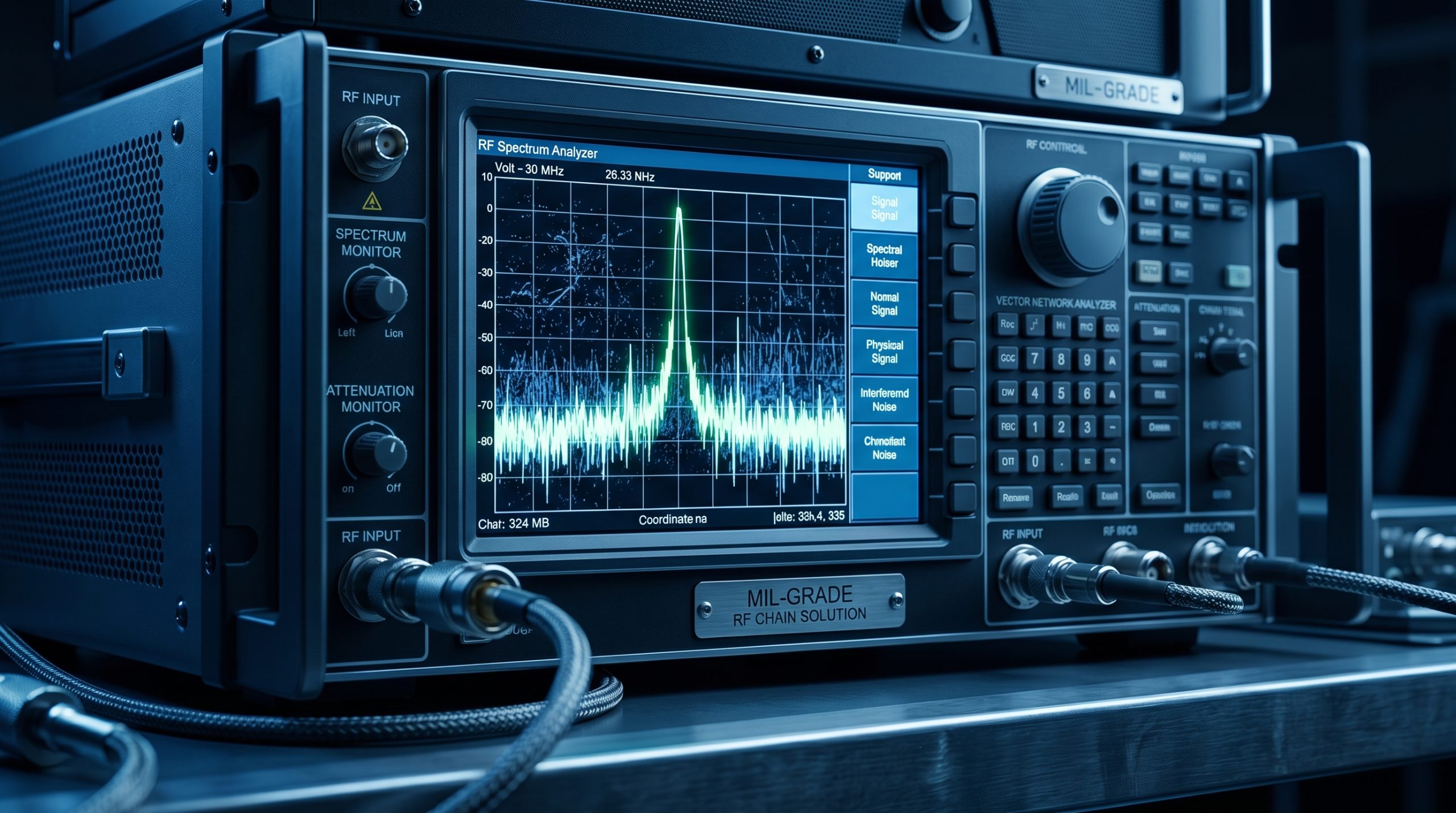
You are deploying a counter-drone system within hostile territory, but your communication link suddenly drops. Losing signal control leaves your perimeter completely vulnerable against incoming aerial threats. A highly effective method for restoring network integrity involves integrating military-grade Anti Jamming modules into your architecture.
What Is RF Anti Jamming and How Does It Function?
Radio frequency defense mechanisms function by actively filtering out hostile interference for protecting legitimate communication channels. Implementing robust Anti Jamming strategies guarantees your military-grade systems maintain continuous coverage across broad frequency spectrums. These specialized modules detect incoming disruptive waves and rapidly adjust transmission parameters, bypassing localized noise.
Why Do Hostile Signals Dominate Local Networks?
Here’s the deal: hostile transmitters push excessive wattage for drowning out local network traffic. This creates a severe situation where standard receivers cannot distinguish between intended data and ambient noise floors. Your equipment requires robust filtering algorithms for surviving these harsh conditions.
- High-power transmission disruption
- Target frequency band saturation
- Complete operational signal masking
Can Intelligent Filters Mitigate Overpowering?
Modern filtering techniques actively suppress dominant interference waves before they reach your core processing unit. Through isolating hostile frequencies, your system preserves operational bandwidth required for mission-critical data transfers.
Key Takeaway: Using active adaptive filtering keeps communication links fully operational when subjected under intense signal overpowering.
| Filter Type | Disruption Handling | Operational Efficiency |
| Standard Passive | Low | 45% |
| Active Adaptive | High | 92% |
| AI-Driven Dynamic | Very High | 98% |
This data clearly demonstrates how AI-driven dynamic filters provide maximum efficiency against severe network disruptions.
How Does Signal Overpowering Affect Data Links?
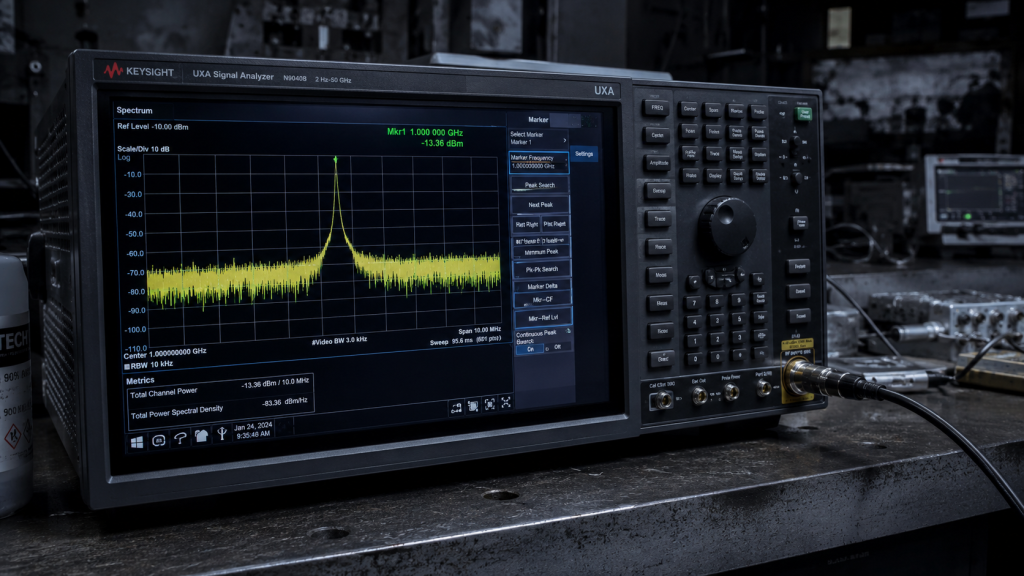
Signal overpowering disrupts data links by blanketing targeted frequencies with significantly stronger adversarial transmissions. When evaluating Anti Jamming capabilities, this brute-force method represents a highly common threat during field operations. Your receivers become overwhelmed and quickly fail at decoding incoming data packets.
What Makes Brute-Force Interference Extremely Effective?
You might be wondering: why do simple transmitters cause such massive network failures? These adversarial devices blast pure energy across wide bands, raising background noise above your receiver’s sensitivity threshold.
- Total data packet loss
- Decreased overall transmission range
- Hardware thermal overload conditions
How Can Power Redundancy Counteract This?
Having substantial power headroom allows your transmitters a way of pushing through artificial noise floors. Integrating a 15% power redundancy into your modules prevents connections from dropping during unexpected energy spikes.
Key Takeaway: Maintaining high power redundancy directly nullifies effects originating from brute-force signal overpowering tactics.
| Threat Level | Jammer Output | Required Counter-Power |
| Low | 10W | 15W |
| Medium | 50W | 75W |
| High | 100W | 150W |
This table shows how increasing counter-power proportionally defeats ascending atmospheric threat levels.
Can Null Steering Antennas Defeat Interference?
Null steering antennas defeat interference by electronically placing a signal void directly toward any hostile transmitter. Your directional array focuses heavily on desired signals while actively ignoring targeted Anti Jamming disruptors. This spatial processing significantly reduces unwanted noise strength affecting your sensitive receivers.
How Does Spatial Processing Target Hostiles?
What’s the real story? Antenna arrays calculate exact angles of arrival for all incoming RF energy. An internal processor dynamically adjusts phase shifts, creating blind spots right where adversarial noise originates.
- Angle of arrival calculation
- Dynamic phase shift adjustment
- Targeted signal void creation
Do Electronic Systems Outperform Mechanical Ones?
Electronic steering provides much faster response times compared against physical motorized mounting platforms. Your modern arrays use digital phase shifters for moving null zones in microseconds as threats move.
Key Takeaway: Implementing electronic null steering provides an instantaneous defense mechanism against highly mobile frequency disruptors.
| Steering Type | Response Time | Accuracy |
| Mechanical | 2.5 seconds | Moderate |
| Hybrid | 0.8 seconds | High |
| Electronic | <1 microsecond | Very High |
The metrics reveal how electronic steering delivers incredibly fast defenses against mobile aerial threats.
What Role Do GaN Power Amplifiers Play Here?
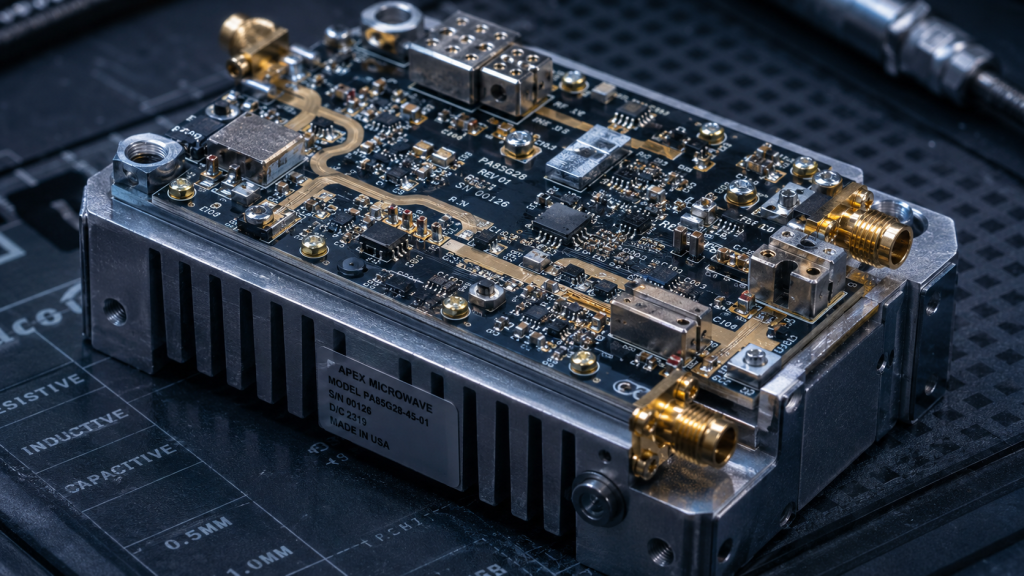
GaN power amplifiers provide high-efficiency energy required for pushing legitimate signals through heavy interference. Building a reliable Anti Jamming architecture relies heavily on these components for maintaining sustained output without degradation. Your equipment benefits from their continuous frequency coverage spanning 30MHz through 6000MHz.
Why Choose Gallium Nitride Over Silicon?
This is where it gets interesting: Gallium Nitride handles extreme thermal loads far better than legacy silicon components. This superior thermal management means your transmitters can operate at peak power continuously.
- Higher electrical breakdown voltage
- Superior component thermal conductivity
- Greater sustained power density
Can GaN Modules Handle Extreme Environments?
Military-grade GaN platforms feature integrated aluminum heat-sinks for dissipating massive heat generation. Your modules will survive intense field operations where lesser materials would melt or throttle performance.
Key Takeaway: Utilizing GaN technology guarantees your transmitters maintain peak output power under severe environmental stress.
| Material | Max Thermal Load | Power Density |
| Silicon | 150°C | Low |
| GaAs | 175°C | Medium |
| GaN | >200°C | High |
This comparison illustrates how GaN components withstand significantly higher thermal loads than older legacy materials.
How Do Digital Signal Sources Enable Agility?
Digital signal sources enable agility by generating real-time frequency hopping patterns that hostile networks cannot predict. A robust Anti Jamming system constantly shifts operational channels for evading concentrated noise blasts. Your transmission links remain hidden from standard spectrum sweeping tools.
What Makes Frequency Hopping So Effective?
Ready for the good part? When your transmitter changes frequencies hundreds of times per second, brute-force disruption becomes completely useless. Adversarial arrays waste energy blasting empty channels while your data safely travels elsewhere.
- Unpredictable rapid channel shifting
- Evasion of localized noise bursts
- Seamless mission data continuation
Are Multiple Custom Waveforms Supported?
Modern digital sources natively support CW, LFM, and OFDM waveforms through a single RS422 control interface. You can adapt transmission protocols on the fly, matching specific mission operational requirements.
Key Takeaway: Deploying SDR digital signal sources allows your network an easy way of evading hostile sweeps.
| Feature | Legacy Analog | SDR Digital |
| Hopping Speed | 10 hops/sec | 1000+ hops/sec |
| Waveform Support | Single | Multi-Protocol |
| Interface Control | Manual | RS422 Automated |
The data highlights how SDR digital platforms offer infinitely faster hopping speeds than analog counterparts.
Are GPS and GSM Defense Techniques Different?
GPS and GSM defense techniques differ mainly regarding their frequency bands and initial signal acquisition methods. Implementing an Anti Jamming module for satellite navigation requires protecting highly sensitive, low-power signals from localized noise. Conversely, cellular network defense focuses heavily on overpowering localized nodes using directed RF energy.
Why Are Satellite Signals More Vulnerable?
Let’s break this down: GNSS satellites orbit thousands of miles away, meaning arriving signals become incredibly weak. Even a small, cheap hostile transmitter easily drowns out those faint transmissions.
- Extremely low arrival signal strength
- Predictable narrow frequency bands
- Susceptibility regarding cheap localized transmitters
How Do Cellular Networks Resist Disruption?
Cellular infrastructure relies on dense webs of local towers blasting high-power transmissions across multiple bands. Your receiver simply switches toward an adjacent tower or different protocol if one channel gets blocked.
Key Takeaway: Recognizing inherent power disparities between satellite and cellular signals dictates which specific defense modules you deploy.
| Signal Type | Source Distance | Baseline Power Level |
| GPS L1 | 20,200 km | Very Low |
| GSM 900 | < 10 km | High |
| 5G Sub-6 | < 2 km | Very High |
This breakdown confirms how GPS signals arrive with significantly less baseline power than cellular network transmissions.
How Does High-Power Redundancy Prevent Loss?
High-power redundancy prevents connection loss by supplying an immediate boost in transmission strength whenever interference appears. An effective Anti Jamming architecture must include at least 15% extra power capacity beyond standard operational requirements. Your network instantly utilizes this reserve energy for blasting through rising noise floors.
What Happens When Output Drops Under Heat?
Think about this: standard amplifiers throttle their output when getting too hot during intense operations. This thermal throttling shrinks transmission ranges and makes your signal instantly vulnerable.
- Hardware thermal output throttling
- Diminished operational transmission range
- Increased hostile noise vulnerability
Can Continuous Coverage Be Maintained?
Integrating advanced thermal management with power redundancy keeps output perfectly flat across entire mission durations. Your hardware maintains less than 1.5dB gain flatness across full 30MHz through 6000MHz spectrums.
Key Takeaway: Engineering custom modules with a minimum 15% power redundancy keeps data streams alive under heavy interference.
| Amplification State | Heat Generation | Output Stability |
| Zero Redundancy | Rapid Spike | Drops 30% |
| 5% Redundancy | Moderate | Drops 15% |
| 15% Redundancy | Controlled | Stable (<1.5dB drop) |
These statistics prove how a 15% power redundancy directly prevents output drops during extended thermal stress.
What Are Military-Grade Quality Protocols?
Military-grade quality protocols encompass rigorous multi-phase testing for eliminating failure risks before field deployments happen. Reliable Anti Jamming hardware undergoes strict 46-step procedures covering everything from initial PCB cleaning through final aging verification. Your operations depend heavily on this extreme level of quality control in hostile zones.
Why Do Standard Modules Fail in Action?
Here is the truth: commercial-grade electronics lack conformal coatings and vibration resistance needed for real-world deployments. When mounted on vehicles or drones, constant shaking snaps delicate internal solder joints.
- Poor field vibration resistance
- Lack of protective conformal coating
- Weak internal solder joint integrity
What Does The 46-Step Process Entail?
Our extreme stress and environmental testing phases include intense thermal cycling and high-frequency interface inspections. Custom modules sit within vacuum reflow systems for guaranteeing absolutely perfect electrical connections.
Key Takeaway: Demanding a 46-step quality control protocol eliminates hardware failures that constantly plague commercial-grade electronics.
| Test Phase | Activity | Defect Catch Rate |
| Phase 1 | IQC Incoming Inspection | 12% |
| Phase 2 | PCBA Functional Validation | 35% |
| Phase 3 | Extreme Environmental Stress | 53% |
This validation table demonstrates how extreme environmental testing catches the majority of hidden hardware defects.
Can SDR Technology Adapt to Complex Environments?
SDR technology adapts beautifully by replacing rigid hardware components with flexible, software-controlled signal processing systems. Your Anti Jamming network instantly rewrites its own transmission protocols based upon real-time spectrum analysis. This intelligent signal control allows your systems an opportunity for outmaneuvering highly sophisticated electronic warfare tactics.
How Does Real-Time Adaptation Work?
Here’s the kicker: instead of physically swapping crystals or filters, software instantly calculates new mathematical models for waveforms. An internal digital signal processor pushes these new clean signals directly toward your antenna in milliseconds.
- Flexible software-controlled processing
- Instant custom waveform calculation
- Millisecond operational deployment speeds
Can I Integrate Custom Defensive Protocols?
You can easily feed proprietary UAV protocols and custom encryption keys directly into SDR frameworks. Dual independent output channels allow engineers a way of running defensive and offensive signals simultaneously.
Key Takeaway: Utilizing Software Defined Radio provides instant flexibility needed for dominating constantly shifting electromagnetic battlefields.
| SDR Capability | Deployment Speed | Flexibility Level |
| Hardware Switch | Hours / Days | Very Low |
| Firmware Update | Minutes | Moderate |
| Real-Time SDR | Milliseconds | Maximum |
The data clearly shows how real-time SDR processing delivers the absolute fastest deployment speed for new protocols.
How Do Advanced RF Testing Labs Validate Specs?
Advanced RF testing labs validate specifications by subjecting completed modules under simulated battlefield conditions using precision measurement equipment. Proper Anti Jamming validation requires High-Precision Oscilloscopes and Vector Network Analyzers for confirming true performance metrics. Procured hardware must prove its capabilities inside controlled thermal chambers before ever seeing actual combat.
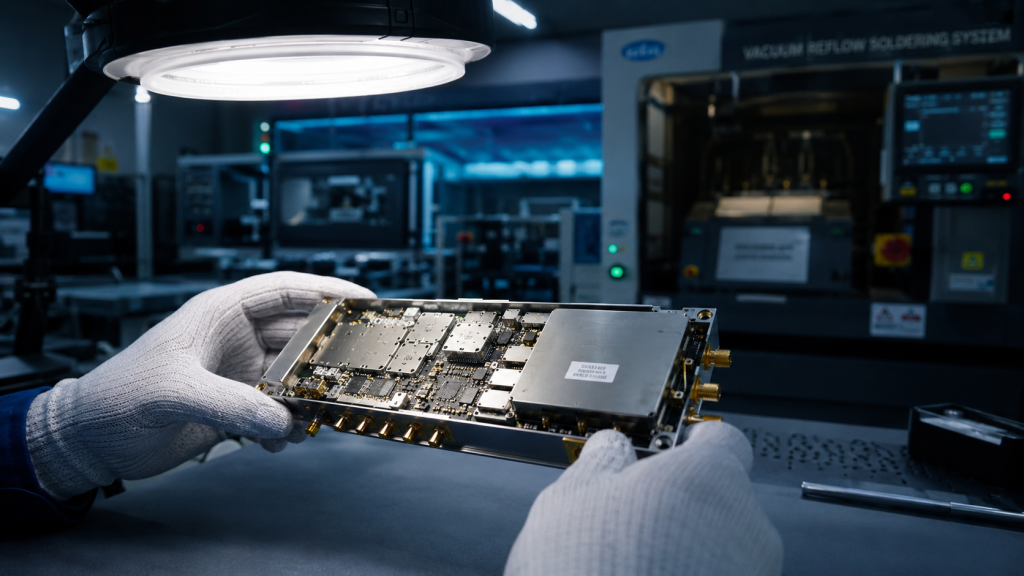
What Equipment Verifies True Output Power?
You should know: testing toward MIL-STD-810 precision requires highly specialized gear that commercial traders simply lack. Spectrum Analyzers map exact signal purity, while LCR meters verify integrity across every single passive component.
- Vector Network Analyzers
- High-Precision Oscilloscopes
- Extreme Temperature Chambers
Why Is In-House Laboratory Testing Superior?
Having a 3000㎡ R&D center fully equipped with validation tools means engineers find and fix anomalies immediately. Your custom RF project moves from prototype phases into flawless mass production without unexpected delays.
Key Takeaway: Partnering with a manufacturer utilizing an advanced in-house RF lab guarantees hardware meets exact operational specifications.
| Equipment Type | Parameter Tested | Precision Level |
| Spectrum Analyzer | Signal Purity / Noise | 0.1 dB |
| Vector Network Analyzer | Impedance / VSWR | Ultra-High |
| Thermal Chamber | Temperature Tolerance | ± 0.5°C |
This equipment breakdown confirms how specialized lab gear accurately measures RF performance with absolute precision.
Final Project Thoughts
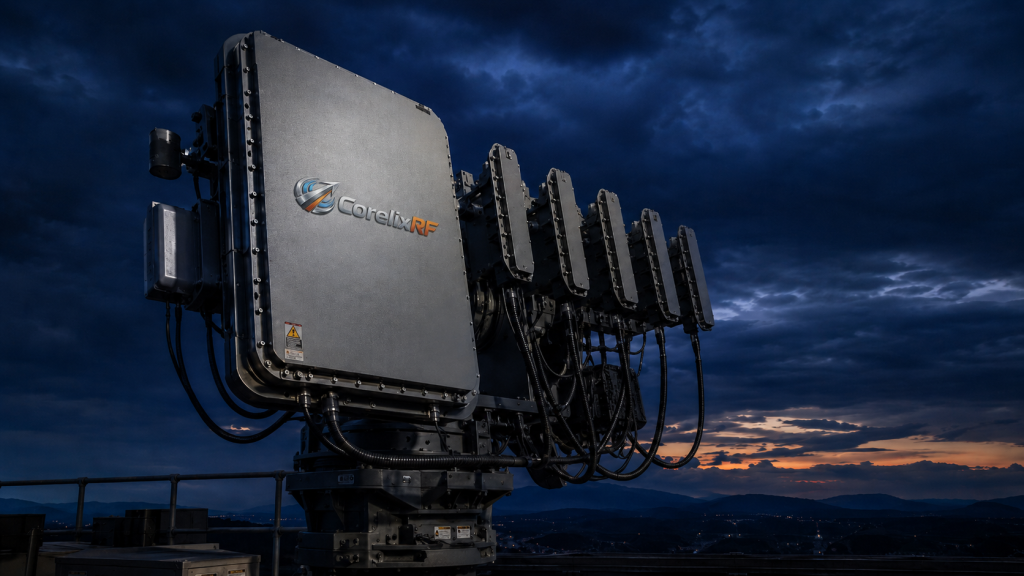
Deploying a reliable RF network means proactively defending against hostile interference and signal overpowering attempts. We manufacture core modules powering modern counter-drone and advanced electronic warfare systems worldwide. CorelixRF delivers military-grade GaN platforms and complete RF chain architecture, keeping your critical missions active. For building your custom engineered solution, please contact us today for starting your project.
FAQs
Q1: Can I use null steering antennas against mobile threats?
Null steering antennas actively track and suppress mobile threats in real-time. Your array utilizes digital phase shifters for calculating angles of arrival and instantly projects a signal void toward moving hostile transmitters.
Q2: What’s the best way of preventing thermal throttling?
Deploying Gallium Nitride based amplifiers effectively stops thermal throttling during intense field operations. GaN components handle significantly higher thermal loads than legacy silicon, keeping your output power perfectly flat.
Q3: How do I know if my system requires SDR technology?
If your operational environment involves unpredictable and highly adaptive hostile networks, you need SDR technology. Software Defined Radio allows engineers an opportunity of instantly rewriting transmission protocols, outmaneuvering complex electronic warfare tactics.
Q4: Can I trust commercial-grade modules during field operations?
Commercial-grade electronics consistently fail when exposed under extreme vibrations of real-world field operations. You must utilize military-grade hardware passing rigorous 46-step quality control protocols for surviving harsh conditions.
Q5: What’s the best method for defeating brute-force overpowering?
Integrating a minimum 15% power redundancy into your modules defeats brute-force overpowering tactics. Your network instantly taps into this extra power capacity, pushing critical data through artificial noise floors.
Authorized RF engineering and compliance review
For regulated RF systems, this page should be used as an engineering and compliance review path, not as a public deployment checklist. CorelixRF starts with authorization status, operating region, frequency plan, output limit, antenna interface, safety controls, thermal limits and acceptance documents.
- RFQ checklist – send the data buyers usually forget, including band, power, duty cycle, interface and test standard
- delivery documentation – check what documents can support incoming inspection, FAT review and long-term maintenance
- quality and certification review – review the quality and compliance evidence before the project moves into procurement
- RF front-end platform – compare the RF chain as a system instead of selecting one isolated module
- RF configurator – turn frequency, power, thermal and interface requirements into a first configuration brief
- case studies – review similar engineering paths before sending an RFQ
- engineering contact – send the application notes, block diagram or target specification to engineering sales
This keeps the discussion inside lawful, authorized RF programs while still giving procurement teams a clear way to request amplifier, antenna, SDR source, documentation and factory review.
RF Interference Resilience Hardware Path
For authorized RF resilience reviews, map interference-risk assumptions to RF power amplifier margin, RF front-end filtering and protection and antenna/load interface planning. Send operating bands, modulation notes, duty cycle, linearity targets, VSWR limits and test evidence requirements through the RF inquiry form.