
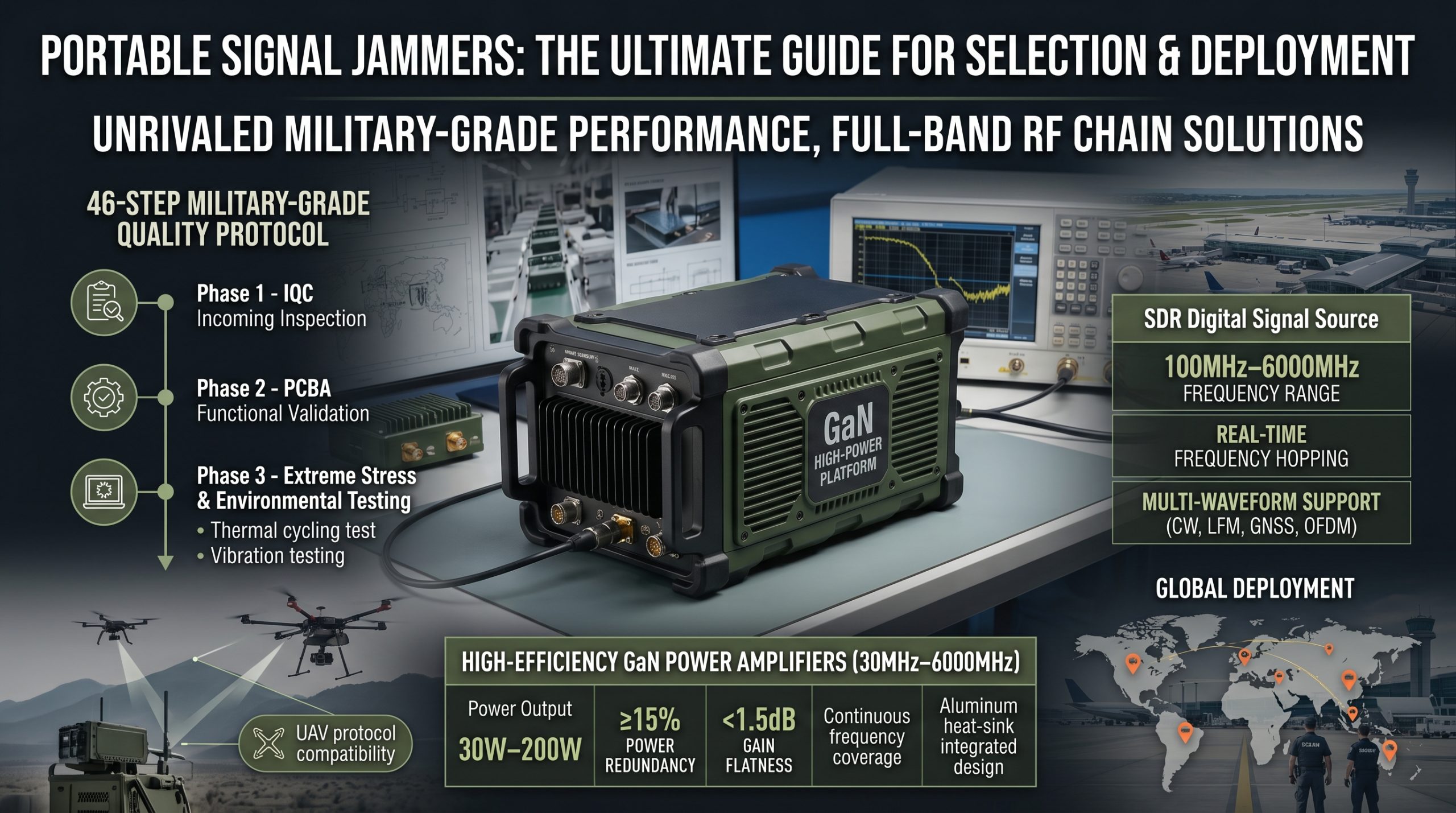
Portable signal jammers are tactical devices designed specifically for disrupting hostile communication frequencies by transmitting targeted RF noise. You often face situations where rogue drones or unauthorized transmissions compromise secure perimeters. Unchecked electromagnetic threats cause severe security breaches almost instantly. Fortunately, deploying professional-grade Signal Jammers provides an immediate, reliable countermeasure neutralizing these airborne risks entirely.
What Defines Reliable Portable Signal Jammers?
Reliable Signal Jammers combine stable output wattage with precise digital frequency control. You require military-grade components capable of withstanding rigorous field conditions. Inferior equipment quickly degrades under continuous operational stress.
Evaluating Internal Component Architecture
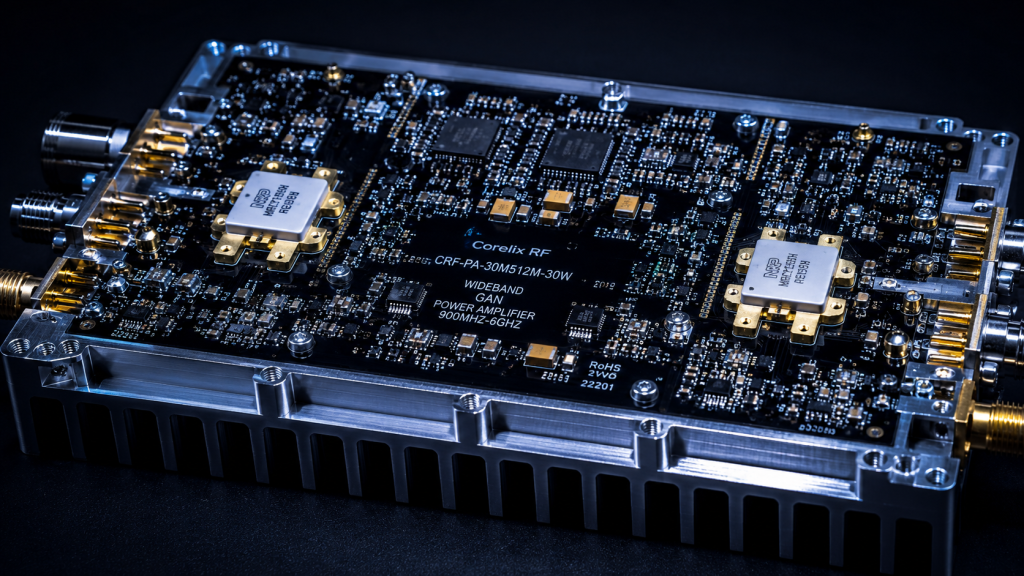
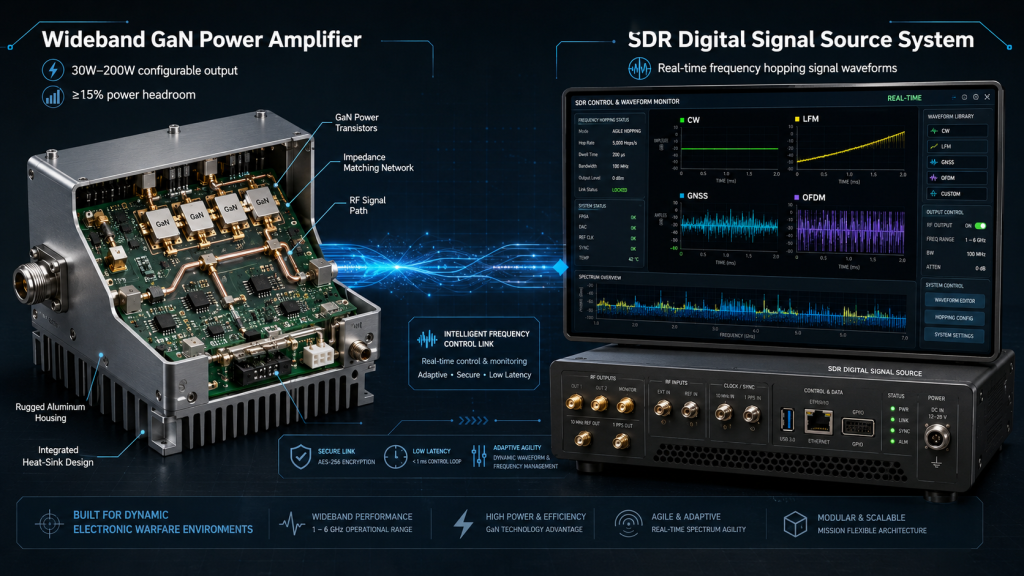
Here is the catch: external ruggedness means nothing without high-performance internal circuitry. Professional manufacturers prioritize GaN power amplifiers guaranteeing consistent wattage delivery.
- GaN transistors provide higher efficiency.
- Aluminum heat-sinks manage severe thermal loads.
- SDR components offer adaptive spectrum disruption.
Think about it: failing hardware jeopardizes critical field missions instantly. Reliable architecture guarantees sustained performance during prolonged tactical deployments. Key Takeaway: Base your purchasing decisions upon internal component quality rather than superficial exterior designs.
| Component | Consumer Grade | Military Grade |
| Amplifier Type | LDMOS | GaN |
| Chassis Material | Plastic | Extruded Aluminum |
| Signal Source | Analog VCO | Digital SDR |
Component selection directly dictates tactical equipment reliability under extreme physical stress.
Which Frequencies Do Portable Signal Jammers Block?
Premium Signal Jammers target specific RF bands like cellular networks and GPS coordinates. You need equipment capable of neutralizing multiple hostile channels simultaneously. Operators demand continuous frequency coverage across designated spectrums.
Analyzing Target Frequency Bands
Truth be told, single-band devices fail completely against modern hopping protocols. Modern adversaries use wideband agile communication methods.
- Cellular networks operate between 800MHz and 2.6GHz.
- Drone control links utilize 2.4GHz and 5.8GHz channels.
- Navigation systems rely upon L1 and L2 bands.
Now consider this: comprehensive spectrum disruption requires true SDR digital architecture. Fixed analog systems lack required flexibility during dynamic combat operations. Key Takeaway: Select devices offering programmable broadband coverage rather than fixed analog channels.
| Target Protocol | Frequency Band | Typical Application |
| Cellular | 800MHz – 2.6GHz | Mobile communications |
| Wi-Fi / UAV | 2.4GHz / 5.8GHz | Drone control |
| GNSS | 1.5GHz | Navigation spoofing |
This frequency matrix highlights necessary target bands required for effective tactical disruption.
How Does Output Power Affect Jammer Performance?
Output power determines how far Signal Jammers can effectively project disruptive noise. You need sufficient wattage penetrating hostile communication zones completely. Low-power units fail against strong localized transmitters.
Calculating Necessary Wattage Levels
Let us be clear: raw wattage alone does not guarantee effective signal disruption. High-power systems demand perfectly matched antenna impedance.
- 30W modules handle localized indoor threats.
- 100W systems provide solid perimeter defense capabilities.
- 200W platforms secure massive outdoor operational areas.
Look at the facts: unmatched impedance causes severe power reflection back into amplifiers. This reflection creates massive heat buildup inside your chassis. Key Takeaway: Match your selected output power strictly against anticipated physical deployment environments.
| Power Output | Effective Range | Deployment Scenario |
| 30 Watts | Short Range | Indoor Security |
| 100 Watts | Medium Range | Perimeter Defense |
| 200 Watts | Long Range | Tactical Field Use |
Output requirements scale exponentially based upon targeted electromagnetic coverage areas.
Why Is Thermal Management Necessary For Jammers?
Active thermal management prevents overheating inside your Signal Jammers. You must disperse heat quickly away from internal GaN amplifiers. Unmanaged temperatures cause rapid output degradation during field operations.
Designing Effective Cooling Systems
What is the real story? Poor heat dissipation destroys expensive RF components rapidly. Professional engineering utilizes integrated aluminum heat-sinks guaranteeing maximum thermal transfer.
- Deep fin designs increase surface area.
- High-CFM fans force cool air across hot surfaces.
- Thermal paste eliminates microscopic air gaps.
You might be wondering: can passive cooling handle high-power output? Passive systems simply fail under continuous 100W transmission loads. Key Takeaway: Demand active cooling mechanisms when selecting high-power tactical interference hardware.
| Cooling Method | Heat Transfer Efficiency | Suitable Power Level |
| Passive Convection | Low | < 20 Watts |
| Active Airflow | High | 50W – 200W |
| Liquid Cooling | Extreme | > 500 Watts |
Thermal design choices strictly limit maximum continuous tactical operational timeframes.
What Battery Specifications Matter For Field Operations?
High-capacity lithium battery packs keep Signal Jammers operational during remote deployments. You require dense energy storage capable of handling massive current draws. Standard consumer batteries drain instantly under continuous RF transmission.
Assessing Tactical Power Storage
Believe it or not: battery failure represents the most common deployment issue. Professional units employ hot-swappable battery modules providing continuous uninterrupted coverage.
- High-discharge cells deliver surge current seamlessly.
- Smart BMS chips prevent dangerous overcharging scenarios.
- Rugged casings protect against severe physical impacts.
Here is the bottom line: field operators need minimum two hours continuous run time. Short battery life severely compromises mission safety protocols. Key Takeaway: Prioritize high-discharge lithium chemistry matched with intelligent power management systems.
| Battery Type | Energy Density | Discharge Capability |
| Lead Acid | Low | Poor |
| Standard Li-ion | Medium | Moderate |
| High-Discharge LiPo | High | Excellent |
Cell chemistry determines both equipment weight and active mission duration capabilities.
How Do Antennas Impact Signal Jammer Range?
Properly matched antennas focus the energy generated by Signal Jammers precisely. You cannot project disruptive noise effectively using mismatched radiating elements. High VSWR ratios destroy internal power amplifiers rapidly.
Selecting Radiating Elements
Let that sink in: bad antennas negate expensive high-power internal amplifiers entirely. System integrators must match antenna impedance perfectly against module outputs.
- Omnidirectional antennas create 360-degree protective bubbles.
- Directional panels focus energy toward specific threats.
- High-gain arrays extend range exponentially.
Truthfully speaking: directional antennas provide longer range using identical wattage levels. They concentrate RF energy directly at hostile targets. Key Takeaway: Choose antenna patterns matching your exact tactical deployment geometry requirements.
| Antenna Type | Radiation Pattern | Ideal Application |
| Omnidirectional | 360 Degrees | Personal Protection |
| Directional Panel | 90 Degrees | Perimeter Fences |
| Yagi | Narrow Beam | Long-Range Targeting |
Antenna selection physically shapes your tactical electromagnetic defense perimeter boundaries.
Can Portable Signal Jammers Defeat Drone Threats?
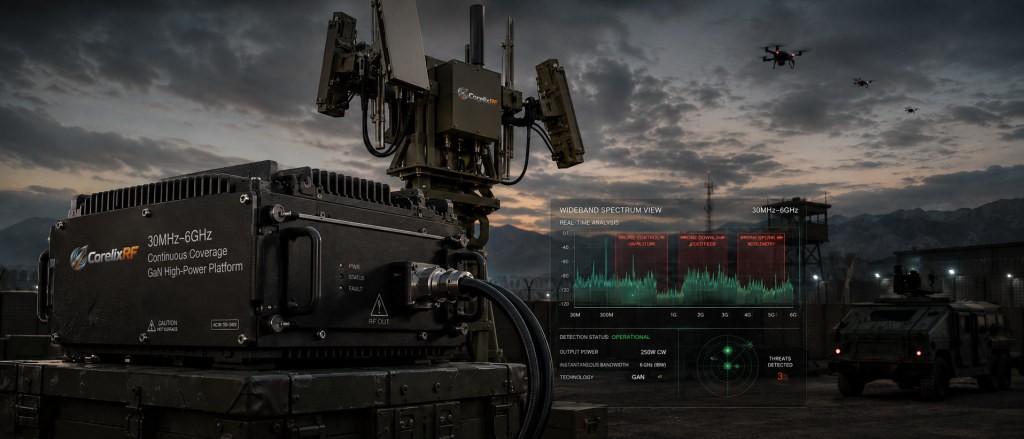
Advanced Signal Jammers easily sever command links between hostile drones and operators. You disrupt both navigation and video telemetry channels simultaneously. This forces rogue UAVs into automated landing protocols.
Neutralizing Airborne Surveillance
Keep this in mind: counter-drone operations require multi-band simultaneous disruption capabilities. Single-band interference fails against drones featuring intelligent frequency-hopping technology.
- 2.4GHz channels block remote control signals.
- 5.8GHz channels eliminate live video feeds.
- GNSS frequencies disrupt GPS navigation completely.
Make no mistake: defeating military-grade drones requires immense RF output power. Handheld units serve perfectly for localized facility defense scenarios. Key Takeaway: Ensure your chosen hardware specifically targets modern UAV communication protocols.
| Target Link | Frequency | Disruption Result |
| Control | 2.4GHz / 900MHz | Loss of operator control |
| Video | 5.8GHz | Blinded telemetry feed |
| Navigation | GNSS L1/L2 | Forced landing / hover |
Multi-band disruption guarantees complete neutralization of hostile unmanned aerial vehicles.
What Quality Standards Apply To Signal Jammers?
Military-grade Signal Jammers undergo extreme environmental stress testing before deployment. You should demand equipment passing rigorous laboratory validation procedures. Unverified hardware presents severe operational risks during tactical missions.
Demanding Manufacturing Excellence
Here is a shocker: many suppliers skip thermal cycling tests entirely. Genuine manufacturers implement strict multi-phase quality control regimens internally.
- Thermal chambers verify extreme temperature survival.
- Vibration tables simulate rough transportation conditions.
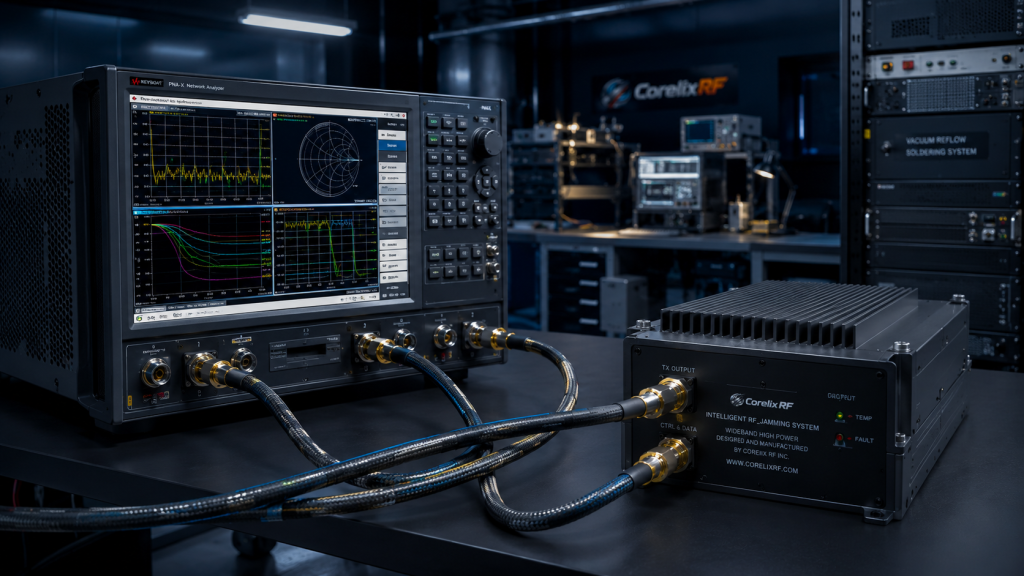
- Vector Network Analyzers ensure perfect impedance matching.
The truth is: documented testing data separates actual factories from mere assemblers. Quality assurance protocols prevent catastrophic failures under real-world pressure. Key Takeaway: Always request comprehensive laboratory test reports before executing major procurements.
| Testing Phase | Simulated Condition | Failure Risk Prevented |
| Thermal Cycle | -40C to +85C | Component cracking |
| Vibration | Vehicle transport | Solder joint failure |
| Aging | Continuous operation | Power degradation |
Strict environmental testing guarantees hardware survival during extreme tactical deployments.
How To Evaluate Signal Jammer Manufacturers?
Genuine Signal Jammers originate from established facilities possessing deep engineering expertise. You must verify factory capabilities before committing large procurement budgets. Sourcing from actual developers ensures direct technical support access.
Identifying True Engineering Partners
Fair warning: white-label traders offer zero post-sale technical integration support. True B2B manufacturers provide direct communication lines with their RF engineers.
- Request detailed GaN amplifier performance datasheets.
- Verify internal laboratory testing equipment lists.
- Ask regarding custom OEM modification capabilities.
By the way: factories demonstrating transparent production lines deliver superior product consistency. They control every single variable from PCB layout onward. Key Takeaway: Partner directly with primary manufacturers for reliable tactical hardware sourcing.
| Supplier Type | Engineering Support | Customization Capability |
| White-Label Trader | None | Superficial |
| Assembly Plant | Minimal | Limited |
| True Manufacturer | Direct RF Engineers | Complete PCB Level |
Direct manufacturer relationships yield superior technical support and prolonged product longevity.
What Are The Legal Considerations For Buyers?
Procuring Signal Jammers requires strict adherence towards international export control regulations. You must ensure full compliance with local telecommunications laws globally. Unauthorized deployment carries severe legal penalties universally.
Navigating Regulatory Frameworks
Pay close attention: civilian deployment remains strictly prohibited across most global jurisdictions. Only authorized government agencies and military branches legally operate these tactical devices.
- Obtain necessary import licenses beforehand.
- Verify military end-user certification requirements.
- Consult local spectrum management authorities actively.
On the flip side: authorized procurement processes run smoothly when properly documented. Professional manufacturers assist legitimate buyers through complex export compliance paperwork. Key Takeaway: Always secure explicit legal authorization before purchasing tactical RF interference equipment.
| Entity Type | Deployment Legality | Typical Requirement |
| Private Citizen | Illegal | None |
| Critical Infrastructure | Restricted | Special Exemption |
| Military / Police | Legal | Official Purchase Order |
Regulatory compliance ensures smooth procurement cycles for authorized governmental agencies worldwide.
Hostile communications and rogue drones compromise secure perimeters daily. You require immediate countermeasures capable of neutralizing these complex aerial threats definitively. Our engineering teams design military-grade RF architectures specifically handling these severe challenges. Partnering directly with actual manufacturers guarantees sustained performance under extreme field conditions. If you need reliable RF solutions, contact us today. CorelixRF engineers “Engineering Truth” into every tactical module we build.
FAQ
Q1: Can I use these devices for civilian property protection?
No, civilian usage remains illegal globally. Local telecommunication laws strictly reserve RF interference equipment exclusively for military and authorized law enforcement operations.
Q2: What’s the best frequency band for stopping modern commercial drones?
Targeting 2.4GHz and 5.8GHz simultaneously works best. Hostile UAVs utilize these specific bands for remote command links and live video telemetry feeds.
Q3: How do I know if a manufacturer provides true military-grade hardware?
Request comprehensive laboratory testing documentation immediately. Genuine factories provide thermal cycling data and Vector Network Analyzer reports proving their performance claims.
Q4: Can I request custom power outputs for specific tactical scenarios?
Yes, primary manufacturers accommodate custom engineering requests. Specialized RF teams adjust GaN amplifier parameters matching your exact perimeter defense requirements perfectly.
Q5: What’s the best cooling system for a 100W portable unit?
Active cooling using aluminum heat-sinks proves best. Passive convection systems fail under heavy thermal loads, causing rapid internal component degradation during field operation.
Authorized RF engineering and compliance review
For regulated RF systems, this page should be used as an engineering and compliance review path, not as a public deployment checklist. CorelixRF starts with authorization status, operating region, frequency plan, output limit, antenna interface, safety controls, thermal limits and acceptance documents.
- RFQ checklist – send the data buyers usually forget, including band, power, duty cycle, interface and test standard
- delivery documentation – check what documents can support incoming inspection, FAT review and long-term maintenance
- quality and certification review – review the quality and compliance evidence before the project moves into procurement
- RF front-end platform – compare the RF chain as a system instead of selecting one isolated module
- RF configurator – turn frequency, power, thermal and interface requirements into a first configuration brief
- case studies – review similar engineering paths before sending an RFQ
- engineering contact – send the application notes, block diagram or target specification to engineering sales
This keeps the discussion inside lawful, authorized RF programs while still giving procurement teams a clear way to request amplifier, antenna, SDR source, documentation and factory review.
Portable RF System Selection Review Path
For authorized portable RF system selection, match power, thermal and antenna constraints to RF amplifier platforms, RF antenna options and RF front-end planning. Submit operating band, output power, duty cycle, load condition, enclosure and acceptance-document needs through the RF inquiry form.