
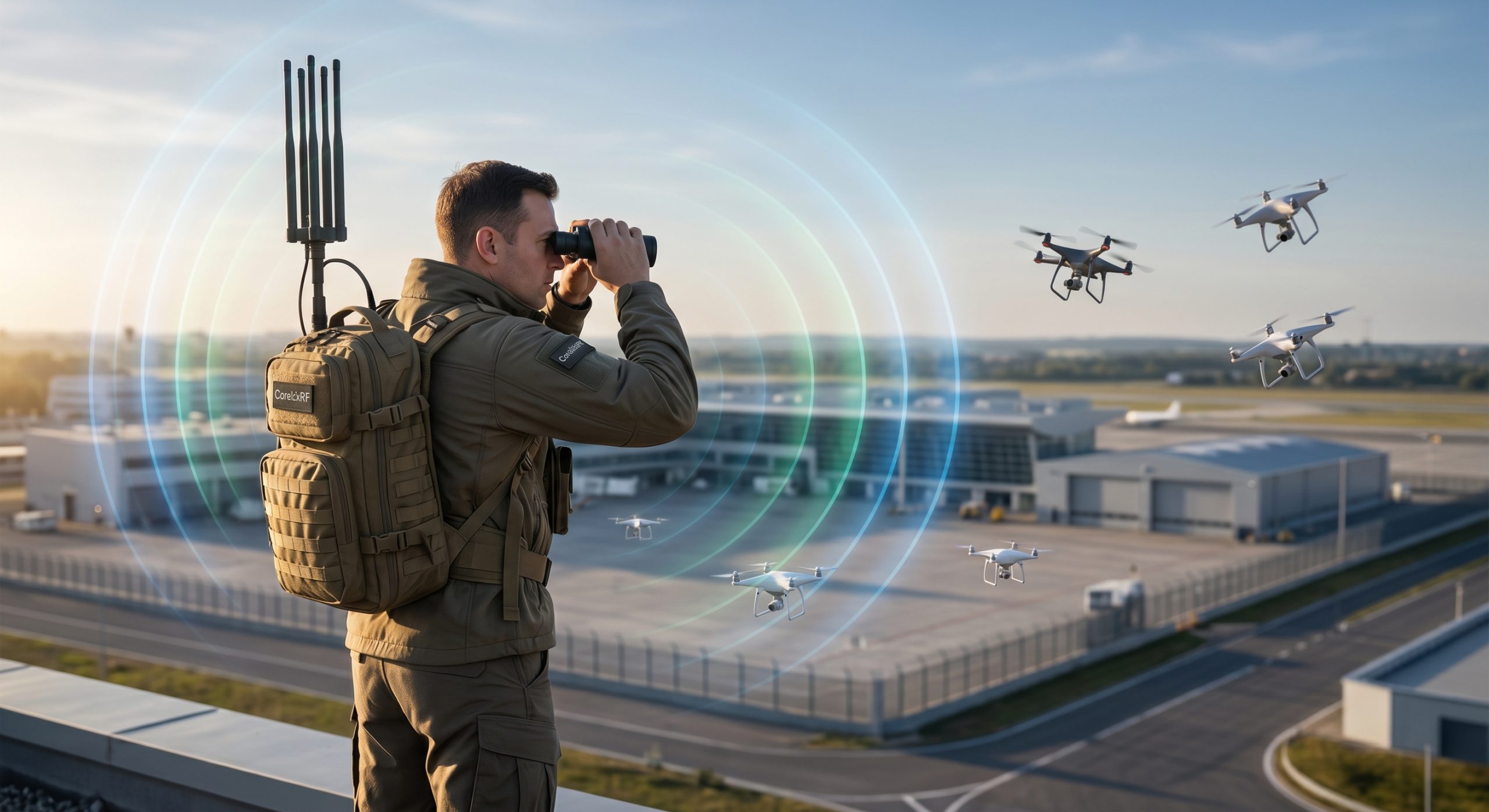
A manpack Drone Jammer functions as a wearable radio frequency disruption device that neutralizes unauthorized unmanned aerial vehicles by severing their communication links. Rogue UAVs constantly threaten sensitive facilities today. A single unauthorized flight compromises security perimeters instantly. Traditional fixed defenses leave blind spots during rapid tactical movements. Wearing a portable disruption unit gives security personnel immediate control over local airspace. This creates an invisible shield against aerial threats wherever operators move. Trusting military-grade RF technology provides reliable defense mechanisms for high-risk zones.
What Exactly Is a Manpack Drone Jammer?
A manpack Drone Jammer serves as a sophisticated portable electronic countermeasure system designed specifically for mobile infantry units. Security teams face highly unpredictable airborne threats requiring rapid tactical responses daily. Carrying this specialized equipment allows immediate defensive deployment across rugged terrain without relying upon vulnerable fixed infrastructure. Operators gain immediate tactical advantages during active intrusions by projecting localized disruption fields.
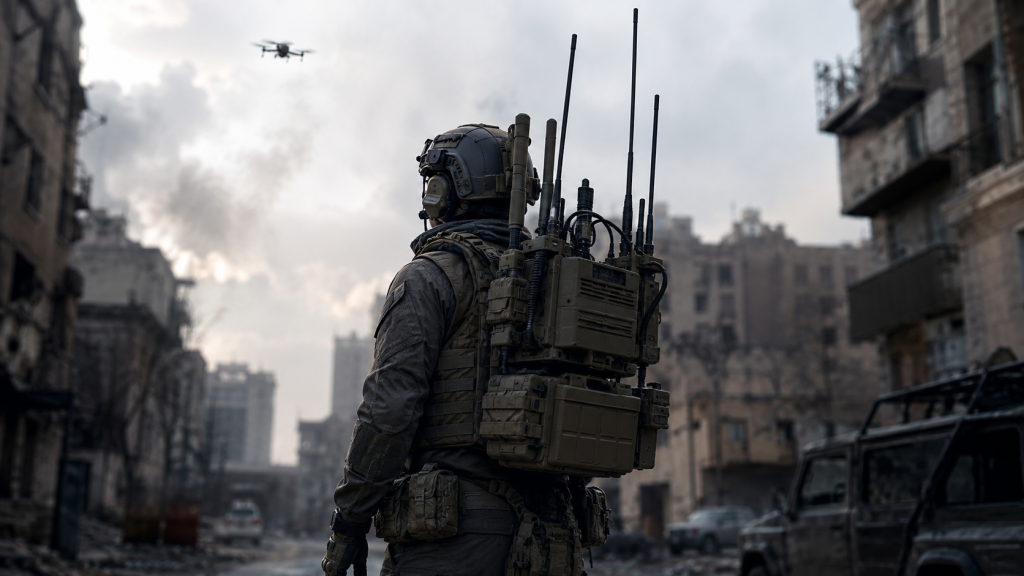
How Does the Core Technology Work?
These devices operate by transmitting high-power radio signals matching target frequencies precisely. Here is the deal… rogue aircraft rely on constant signals from remote controllers. Emitting strong interference waves overwhelms those control frequencies instantly. The targeted aircraft loses its navigation feed immediately upon encountering this barrier. You gain absolute control over local airspace using targeted RF interference. Relying on advanced GaN amplifiers provides sustained power output during extended missions.
- Blocks 2.4GHz remote control links seamlessly.
- Disrupts 5.8GHz video transmission feeds instantly.
- Neutralizes GNSS navigation signals across multiple bands.
Why Choose a Portable Configuration?
Mobility dictates tactical success during unpredictable security events. Fixed systems cannot protect moving targets or temporary perimeters effectively. Backpack configurations distribute weight evenly across an operator’s shoulders. You maintain physical agility while projecting a localized disruption field. What’s the bottom line? Portability translates directly into operational flexibility. Security details adapt instantly to changing threat vectors using wearable technology.
Key Takeaway: Portable RF disruption systems give tactical teams immediate airspace control during mobile operations without infrastructure reliance.
| Component Specifications | Details |
| Form Factor | Wearable backpack setup |
| Power Output | Variable 30W to 200W |
| Cooling System | Integrated aluminum heat sinks |
| Antenna Type | Omni-directional or directional arrays |
Deploying wearable systems balances mobility with high-power RF disruption capabilities perfectly.
How Do Manpack Systems Disrupt Intruding Drones?
These units act as a portable Drone Jammer disrupting intruding UAVs by flooding receiving antennas with overwhelming RF noise. Operating such equipment blocks command signals effectively across designated perimeters. Rogue aircraft enter fail-safe modes immediately after losing operator contact. Security personnel force intruding aircraft down safely without kinetic destruction.
Can They Block GPS Signals?
Operators easily target satellite navigation frequencies using dedicated disruption modules. Think about that for a minute… many autonomous aircraft rely solely on pre-programmed GPS coordinates. Severing this satellite connection leaves the vehicle entirely blind mid-flight. The UAV stops advancing toward your protected zone instantly. You stop automated threats dead in their tracks using targeted GNSS interference. Removing navigation capabilities forces immediate hovering or safe descent.
- Targets L1 navigation frequencies consistently.
- Blocks L2 military bands when configured properly.
- Prevents autonomous waypoint navigation completely.
What Happens to the Drone Afterward?
Aircraft behavior depends heavily on manufacturer programming after losing signal contact. Most consumer models initiate an automatic return-to-home protocol immediately. Sustained jamming prevents this return flight by blinding onboard navigation sensors. The quadcopter eventually lands safely once battery levels drop significantly. Here is the crazy part… you capture the device intact for forensic analysis. Examining an intact chassis provides valuable intelligence regarding threat origins.
Key Takeaway: Flooding command frequencies forces unauthorized aircraft into safe landing protocols without risking kinetic collateral damage.
| Disruption Target | Expected UAV Reaction |
| Control Signal (RC) | Halts forward movement instantly |
| Video Feed (FPV) | Blinds remote operator completely |
| Navigation (GNSS) | Prevents autonomous flight progression |
| Combined Bands | Forces immediate emergency landing |
Targeting multiple frequencies simultaneously guarantees complete neutralization of sophisticated aerial threats.
What Are the Main Advantages of Manpack Drone Jammers?
The main advantage involves projecting a moving protective bubble around mobile targets using a Drone Jammer. An operator carries this hardware anywhere without needing external power supplies. Tactical teams maneuver through urban environments while maintaining continuous aerial defense. This flexibility remains unmatched by heavy stationary counter-UAS installations.
How Does Mobility Improve Tactical Responses?
Mobility allows rapid repositioning based on real-time threat intelligence. It gets better… fixed installations suffer from terrain masking and structural interference. Operators carry backpack units directly toward elevated positions for better signal propagation. You adapt your defense strategy dynamically as scenarios unfold. Security details cover blind spots actively by moving disruption units around. Active patrols deter aerial surveillance attempts effectively.
- Bypasses urban signal obstruction easily.
- Protects moving motorcades during transit.
- Secures temporary outdoor event venues.
Why Is Rapid Deployment Necessary?
Threats materialize within seconds during modern aerial intrusions. Assembling stationary systems wastes precious time during active emergencies. Operators activate backpack units instantly with simple toggle switches. You establish a protective perimeter before an aircraft breaches your airspace. Ready for the good part? Immediate activation neutralizes fast-moving targets before they drop payloads. Milliseconds matter when facing armed aerial vehicles.
Key Takeaway: Unmatched mobility combined with instant activation provides tactical superiority during unpredictable airborne security incidents.
| Operational Feature | Tactical Advantage |
| Battery Powered | Independent field operation |
| Lightweight Chassis | Reduces operator physical fatigue |
| Toggle Switches | Instant activation under stress |
| Modular Antennas | Adapts for specific threat vectors |
Portable form factors eliminate setup delays during time-sensitive security operations.
Which Critical Areas Require Portable RF Defense?
Border patrol routes and temporary tactical command centers require portable RF defense like a Drone Jammer extensively. Using wearable units along rugged frontiers prevents smugglers from flying surveillance missions. Fixed radars fail across uneven terrain where smugglers operate frequently. Security personnel secure these remote blind spots manually using wearable tech.
Do VIP Security Teams Need Them?
Protecting high-profile individuals demands continuous mobile airspace security. Truth be told… assassins use cheap quadcopters for targeted attacks today. Close protection details carry wearable disruption units during public appearances constantly. You shield politicians from explosive payloads using these invisible RF barriers. Motorcades remain vulnerable during slow transit through crowded city streets. Backpack units provide an umbrella against aerial ambush attempts.
- Secures open-air public speaking events.
- Protects vulnerable transit choke points.
- Defends temporary VIP holding areas.
Are They Used for Border Protection?
Cartels deploy advanced UAVs for smuggling contraband across national boundaries daily. Static towers cannot cover every inch of rugged border terrain. Agents patrolling on foot utilize portable systems for localized threat neutralization. You intercept drug deliveries effectively by cutting control signals mid-flight. Let’s dig a little deeper… remote areas lack reliable electrical grids. Battery-operated equipment remains absolutely necessary for sustained wilderness patrols.
Key Takeaway: High-risk dynamic environments demand wearable disruption technology for continuous protection against asymmetric airborne threats.
| Deployment Area | Primary Threat Prevented |
| Border Zones | Contraband smuggling deliveries |
| VIP Motorcades | Targeted explosive attacks |
| Military Camps | Enemy reconnaissance flights |
| Public Events | Panic-inducing rogue flights |
Matching deployment environments with specific operational hazards maximizes overall defensive effectiveness.
How Does GaN Technology Improve Jamming Performance?
Gallium Nitride technology increases power output efficiency significantly within compact device footprints. A modern Drone Jammer utilizes GaN amplifiers for generating massive RF energy. Older silicon-based amplifiers generated excessive heat during prolonged operation cycles. Next-generation materials sustain high-power transmission without thermal degradation.

What Makes GaN Amplifiers Superior?
GaN transistors handle higher voltages than traditional semiconductor materials. Here is the kicker… this efficiency means more power reaches target aircraft. Backpack units stay lighter because they require fewer heavy battery cells. You project stronger disruption signals covering much wider protective radii. High-efficiency components convert electrical energy into RF waves brilliantly. Operators experience less equipment failure during critical mission phases.
- Delivers 15% more power headroom naturally.
- Maintains flat gain across wide frequencies.
- Resists voltage spikes during field operation.
How Does Heat Dissipation Affect Operations?
Continuous RF transmission generates massive internal thermal loads quickly. Poor thermal management causes immediate power degradation or complete system failure. Aluminum heat sinks integrated tightly with GaN modules dissipate heat rapidly. You maintain peak disruption power even under harsh desert suns. Look at it this way… reliable cooling extends operational lifespans dramatically. Military-grade quality protocols guarantee performance across extreme temperature variations.
Key Takeaway: Gallium Nitride components provide sustained high-power RF disruption while maintaining manageable weights for human operators.
| Amplifier Material | Output Efficiency | Thermal Tolerance |
| Legacy Silicon | Low | Moderate |
| Gallium Arsenide | Medium | Low |
| Gallium Nitride | Maximum | Exceptional |
| Vacuum Tubes | High | Extremely Poor |
Upgrading internal RF chains with GaN components transforms wearable devices into formidable defensive weapons.
What Frequency Bands Do These Devices Typically Target?
These systems typically target standard commercial control links and satellite navigation frequencies simultaneously. Activating a Drone Jammer floods the 2.4GHz spectrum immediately. Most civilian aircraft rely entirely upon this specific band for navigation. Disrupting targeted bands neutralizes ninety percent of available commercial threat models.
Why Target 2.4GHz and 5.8GHz?
Manufacturers use these ISM bands for remote controllers universally. You might be wondering… why not target every single frequency available? Focusing energy specifically on these two bands maximizes effective disruption ranges. You neutralize most off-the-shelf commercial quadcopters instantly using this focused approach. Video transmission feeds operate primarily across higher 5.8GHz spectrums. Blinding an operator’s camera feed causes immediate mission aborts usually.
- Interrupts standard Wi-Fi based control protocols.
- Blocks high-definition video downlink feeds.
- Prevents remote steering by hostile operators.
Can They Block Non-Standard Frequencies?
Advanced military models incorporate Software Defined Radio technology for custom frequency hopping. Standard units focus primarily on commercial bands for general security applications. Programmable modules allow operators to target custom UHF or VHF ranges. You adapt your defensive posture against highly modified rogue aircraft easily. Now consider this… custom RF manufacturing allows precise band configuration prior to deployment. Engineering teams adjust output parameters matching specific regional threat intelligence.
Key Takeaway: Targeting widely adopted commercial frequencies neutralizes most threats while SDR technology addresses specialized rogue aircraft.
| Frequency Band | Targeted Function |
| 900 MHz | Long-range telemetry data |
| 1.5 GHz | Global navigation systems |
| 2.4 GHz | Primary remote control link |
| 5.8 GHz | Live video feed transmission |
Calibrating disruption frequencies accurately ensures maximum effectiveness against varying classes of aerial threats.
How Do You Operate a Manpack Jammer Effectively?
Operating these systems requires aiming directional antennas toward incoming aerial threats directly. An active Drone Jammer projects an invisible cone of interference forward. Operators sweep this cone across the sky for intercepting fast-moving targets. Proper physical positioning maximizes the effective range of RF disruption significantly.
Is Extensive Training Required?
Basic operation involves flipping power switches and aiming correctly. Truthfully… modern interfaces reduce complex technical hurdles for field agents. Training focuses heavily on threat identification rather than complex equipment calibration. You deploy personnel rapidly without requiring advanced RF engineering degrees. Clear visual indicators show active transmission status continuously. Intuitive controls prevent accidental friendly-fire interference during chaotic security incidents.
- Features simple push-button activation mechanisms.
- Includes clear LED status indicator panels.
- Requires minimal technical RF background knowledge.
How Long Does the Battery Last?
Power consumption spikes dramatically during active transmission phases. Standby modes conserve energy while operators scan local airspace visually. High-capacity lithium batteries provide several hours of continuous active disruption. You swap depleted power cells quickly during extended tactical field operations. But wait, there is more… intelligent power management systems optimize energy distribution automatically. This guarantees maximum disruption capability exactly when threats appear overhead.
Key Takeaway: Intuitive controls combined with intelligent power management allow security personnel to maintain continuous aerial defense effortlessly.
| Operation Mode | Expected Battery Life |
| Full Continuous Jamming | 1 to 2 Hours |
| Standby / Monitoring | 8 to 12 Hours |
| Pulsed Disruption | 3 to 4 Hours |
| Low Power Output | 4 to 6 Hours |
Managing battery resources properly extends field deployment capabilities during prolonged high-risk security operations.
What Environmental Conditions Can These Jammers Withstand?
Military-grade wearable jammers withstand extreme temperatures and heavy precipitation during field deployments. Using a Drone Jammer in hostile environments demands ruggedized structural engineering. Engineers seal internal components completely against corrosive dust ingress. Rain or snow cannot penetrate properly treated exterior aluminum chassis designs.
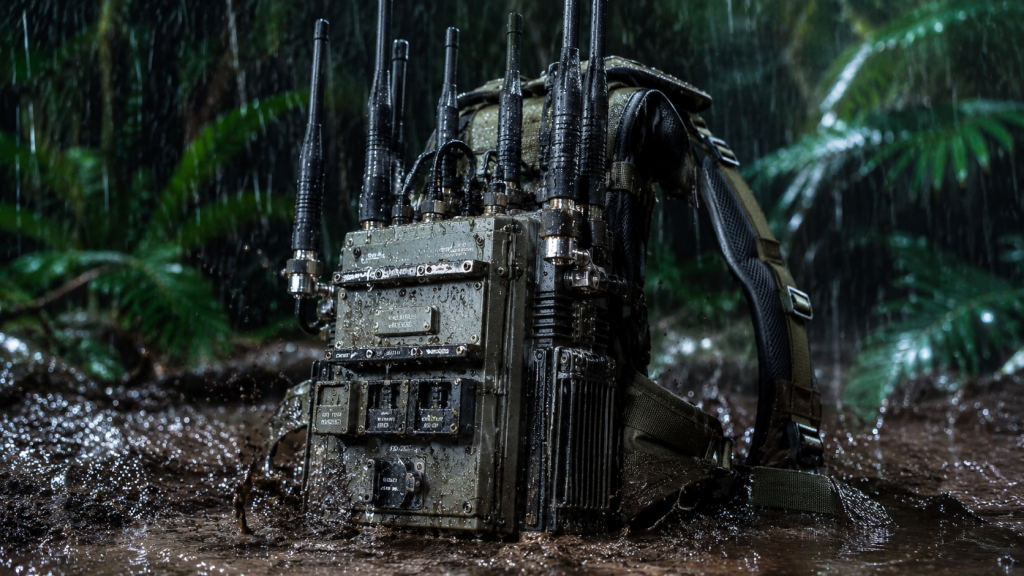
Can They Function in Extreme Heat?
Desert deployments subject electronic equipment to punishing thermal stress daily. Here is the secret… advanced thermal chambers test these units beyond standard limits. Vacuum reflow systems ensure circuit boards survive massive temperature fluctuations. You operate confidently knowing your defense mechanism will not melt down. Integrated cooling fans activate automatically when internal temperatures rise dangerously. Heat sinks dissipate energy away from sensitive GaN amplifiers efficiently.
- Survives ambient temperatures exceeding fifty Celsius.
- Utilizes aerospace-grade thermal paste compounds.
- Features passive aluminum cooling fins externally.
Are They Waterproof for Field Use?
Tactical teams cross rivers and endure torrential downpours regularly. Exposed RF connectors utilize specialized waterproof sealing gaskets universally. Conformal coating protects internal PCBA boards from microscopic moisture accumulation. You execute marine boarding operations while carrying reliable anti-drone protection. Think about this… surviving salt fog environments requires specialized military-grade paint finishes. Strict 46-step quality protocols guarantee survival across punishing operational theaters.
Key Takeaway: Ruggedized manufacturing processes ensure wearable disruption devices operate flawlessly despite severe weather or extreme temperature variations.
| ## Environmental Hazard | ## Engineering Solution |
| Heavy Rainfall | IP67 rated chassis sealing |
| Desert Heat | Aluminum heat sinks |
| Saltwater Fog | Corrosion-resistant coatings |
| Physical Shock | Vibration-dampened internal mounts |
Deploying environmentally hardened equipment guarantees reliable aerial security regardless of localized weather conditions.
How Do Manpack Models Compare to Fixed Counter-Drone Systems?
Backpack configurations prioritize tactical agility while fixed systems prioritize extreme disruption range. Carrying a Drone Jammer provides localized defense for moving human assets. Fixed installations require heavy power grids for protecting massive infrastructure facilities. Both platforms serve completely different yet complementary security defense objectives.
When Should You Choose a Portable Option?
Dynamic missions demand equipment moving alongside human operators constantly. To be entirely honest… stationary towers cannot protect a moving presidential motorcade. Infantry patrols require lightweight protection against dropping enemy payloads mid-mission. You select wearable tech for flexibility rather than absolute maximum range. Cost factors also influence procurement decisions significantly. Outfitting multiple patrol units costs less than installing massive radar networks.
- Protects mobile assets during rapid transit.
- Bypasses complex installation procedures entirely.
- Reduces overall security procurement budgets significantly.
Can They Work Together in an Ecosystem?
Thorough security architectures layer multiple defense mechanisms together seamlessly. Fixed radars detect incoming threats miles away from protected perimeters. Ground operators receive these alerts for intercepting targets using wearable jammers. You create an impenetrable shield combining early warning with agile response. This is where it gets interesting… network-integrated backpacks share telemetry data with central command instantly. Digital signal sources synchronize disruption efforts across multiple deployed teams.
Key Takeaway: Layering portable RF disruption units alongside fixed detection networks creates absolute tactical superiority against airborne threats.
| System Type | Primary Use Case | Mobility Level |
| Fixed Tower | Airport perimeter defense | Zero |
| Vehicle Mount | Convoy protection | High |
| Manpack Unit | Infantry patrol defense | Maximum |
| Handheld Gun | Short-range interception | Maximum |
Selecting appropriate platform types depends entirely upon specific tactical requirements and mobility constraints.
How Can You Integrate Jammers into Security Protocols?
Integration requires establishing clear rules regarding when personnel activate disruption devices. A deployed Drone Jammer affects friendly communications if operated without proper coordination. Security directors must map safe frequency zones before initiating active patrols. Strategic planning prevents unintended interference with standard radio communication networks.
What Steps Guarantee Seamless Deployment?
Teams must conduct thorough localized RF spectrum surveys initially. Let me explain… understanding ambient signal noise helps calibrate equipment perfectly. Operators practice engaging simulated targets during complex live-fire training exercises. You build muscle memory for handling stressful aerial intrusion events smoothly. Standard operating procedures dictate exact engagement distances clearly. Clear protocols prevent hesitation when unidentified aircraft breach restricted airspace perimeters.
- Maps local frequency usage comprehensively.
- Establishes clear threat identification criteria.
- Defines friendly-fire prevention protocols strictly.
How Do Custom RF Solutions Help?
Off-the-shelf equipment rarely satisfies complex military or government security requirements. Engineering teams customize power levels for specific regional threat landscapes. Custom interface protocols allow backpack units to communicate with legacy systems. You receive tailored defense mechanisms matching your precise operational needs. The best part? Rapid prototyping turns conceptual defensive strategies into deployable hardware quickly. A massive R&D center guarantees your defense evolves alongside emerging threats.
Key Takeaway: Successful deployment requires rigorous procedural planning combined with specialized custom engineering support for maximum effectiveness.
| Integration Phase | Key Action Required |
| Assessment | Survey local RF environment |
| Customization | Adjust output frequency bands |
| Training | Conduct simulated target practice |
| Deployment | Establish strict engagement rules |
Proper strategic integration transforms raw RF disruption power into an organized tactical defensive advantage.
Securing critical airspace demands reliable, agile, and overwhelmingly powerful RF disruption technology. Wearable counter-UAS systems resolve the mobility limitations plaguing traditional stationary defense networks perfectly. We manufacture military-grade RF chains giving your tactical teams absolute control over hostile environments. Defend your perimeter with unyielding engineering precision; contact us today to build your customized defensive architecture.
FAQ
Q1: What exactly is a manpack drone jammer?
It serves as a wearable RF disruption device. This portable system blocks command signals between rogue aircraft and operators.
Q2: How do I know if my team needs a portable model?
Assess your operational mobility requirements first. Stationary towers cannot protect moving targets or personnel patrolling remote areas effectively.
Q3: Can I operate this jammer in heavy rain?
Yes, absolutely. Military-grade sealing protects internal components from severe weather hazards reliably.
Q4: What is the best way to integrate these units?
Layering them alongside fixed detection systems works best. This combination provides early warning alerts followed by rapid mobile interception.
Q5: How does a manpack system stop autonomous flights?
It disrupts satellite navigation signals directly. Severing GPS connections forces autonomous vehicles into immediate hovering or emergency landing protocols.
Authorized RF engineering and compliance review
For regulated RF systems, this page should be used as an engineering and compliance review path, not as a public deployment checklist. CorelixRF starts with authorization status, operating region, frequency plan, output limit, antenna interface, safety controls, thermal limits and acceptance documents.
- RFQ checklist – send the data buyers usually forget, including band, power, duty cycle, interface and test standard
- delivery documentation – check what documents can support incoming inspection, FAT review and long-term maintenance
- quality and certification review – review the quality and compliance evidence before the project moves into procurement
- RF front-end platform – compare the RF chain as a system instead of selecting one isolated module
- RF configurator – turn frequency, power, thermal and interface requirements into a first configuration brief
- case studies – review similar engineering paths before sending an RFQ
- engineering contact – send the application notes, block diagram or target specification to engineering sales
This keeps the discussion inside lawful, authorized RF programs while still giving procurement teams a clear way to request amplifier, antenna, SDR source, documentation and factory review.
Manpack RF Pack Review Path
For authorized mobile VIP-security RF packs, translate carry-weight, power and cooling constraints into RF power amplifier sizing, RF front-end protection and antenna/load planning. Send bands, duty cycle, output targets, thermal margin, enclosure limits, VSWR exposure and documentation requirements through the RF inquiry form.