
Professional Anti Drone Systems are a necessity because they provide the only reliable defense against the rapidly evolving threats posed by unauthorized aerial surveillance and physical incursions. Unauthorized drones are penetrating private airspace with alarming frequency, exposing sensitive corporate data and physical assets to unprecedented risks. You might not realize a drone is hovering above your facility until your proprietary blueprints are leaked or a high-profile event is disrupted, causing irreparable brand damage and legal liability. Implementing professional Anti Drone Systems via Corelix ensures you maintain absolute control over your environment, effectively neutralizing threats before they manifest into crises.
What defines modern Anti Drone Systems?
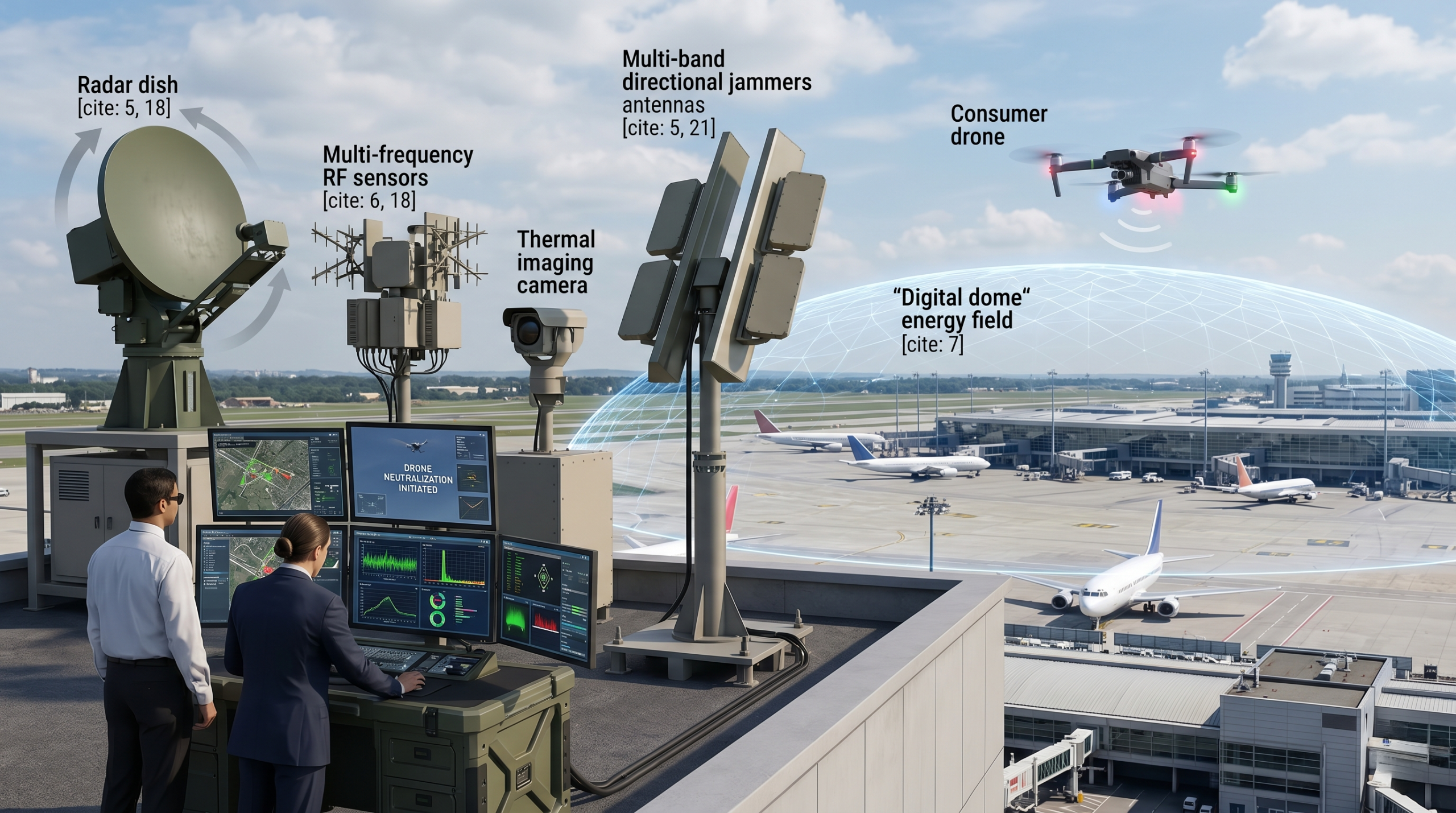
Modern Anti Drone Systems are integrated platforms that combine multi-layered detection sensors with precise mitigation hardware to secure sensitive airspace against unmanned threats. These setups move beyond simple visual monitoring, utilizing radio frequency (RF) scanning, radar, and thermal imaging to identify intruders. By combining these inputs, the system creates a comprehensive “digital dome” around your facility.
How does signal interference work?
Think about it.
When an unauthorized craft enters your zone, the system initiates signal interference to sever the link between the drone and its operator. This process involves broadcasting “noise” on the same frequencies the drone uses for control and navigation. Without this link, the drone loses its ability to transmit video or receive movement commands.
What is the primary goal of a signal jammer?
The primary goal of a signal jammer is to disrupt the drone’s operational capabilities without causing physical damage to the aircraft or surroundings. By targeting the 2.4 GHz and 5.8 GHz bands, the jammer forces the drone into a failsafe mode. This usually results in:
- An immediate, controlled vertical landing.
- A “Return to Home” (RTH) command execution.
- Hovering in place until the battery depletes.
How is a secure perimeter established?
Establishing a secure perimeter requires a blend of fixed sensors and automated response protocols that act long before a drone is visible to the naked eye. This proactive layering ensures that security teams have ample time to verify the threat and initiate mitigation.
Key Takeaway: Modern defense relies on early detection and non-destructive signal disruption to maintain airspace integrity.
| Component | Function | Benefit |
|---|---|---|
| RF Sensors | Detects control signals | Long-range early warning |
| Radar | Tracks physical movement | Works in low visibility |
| Jammers | Neutralizes the link | Stops the threat immediately |
Effective systems integrate these components into a single interface for rapid decision-making.
Why are consumer drones a growing threat?
Consumer drones have transitioned from simple hobbyist toys into sophisticated machines equipped with high-resolution cameras and long-range flight capabilities. Because these devices are affordable and easy to operate, they have become the primary tool for bad actors looking to bypass traditional ground-based security. Your Anti Drone Systems must account for the fact that a $500 drone can now bypass a million-dollar fence.

How do drones impact corporate privacy?
Drones impact corporate privacy by providing a “eye in the sky” that can capture sensitive documents, monitor executive movements, or record trade secrets through office windows. Traditional security guards cannot stop a camera floating 200 feet in the air.
What are the risks of aerial espionage?
The risks of aerial espionage include the theft of intellectual property and the scouting of secure facility layouts for future physical breaches.
- Unauthorized photography of prototypes.
- Signal interception of unsecured Wi-Fi.
- Tracking of logistics and delivery schedules.
Why is physical security at risk?
The truth is, physical security is compromised when drones are used to drop contraband or even kinetic payloads into restricted areas. Professional Anti Drone Systems are the only way to prevent these small objects from crossing your boundaries.
Key Takeaway: The accessibility of high-tech consumer drones has turned the sky into a primary vulnerability for modern enterprises.
| Threat Type | Potential Impact | Defense Requirement |
|---|---|---|
| Surveillance | Data theft/Leaked IP | Signal Jamming |
| Contraband | Facility compromise | Physical Interception |
| Harassment | Operational downtime | Perimeter Detection |
This table illustrates how specific drone threats necessitate a professional-grade response.
How do professional and DIY systems differ?
Professional Anti Drone Systems offer enterprise-grade reliability, extended range, and multi-frequency coverage that consumer-grade DIY solutions simply cannot match. While a hobbyist might try to build a basic jammer, these often lack the precision needed to avoid interfering with authorized communications like Wi-Fi. You can find more robust industrial solutions at Corelix Industrial.
Is range a critical differentiator?
Range is the most critical differentiator because professional systems can detect and neutralize drones kilometers away, whereas DIY units often fail within a few hundred meters.
Wait, there’s more.
Advanced systems use high-gain antennas to maintain a solid “jamming” link even if the drone is flying at high speeds or using frequency-hopping technology.
What frequency coverage is required?
Comprehensive defense requires coverage across all possible control and navigation bands, including GPS, GLONASS, and custom industrial frequencies.
- Standard 2.4/5.8 GHz ISM bands.
- Satellite navigation (GNSS) frequencies.
- 900 MHz long-range telemetry bands.
Why is hardware reliability essential?
Hardware reliability is essential because security breaches don’t happen on a schedule, requiring systems to be active 24/7 in harsh outdoor environments. Professional units are ruggedized to withstand extreme heat, rain, and wind without losing calibration.
Key Takeaway: Only professional-grade hardware provides the range and frequency depth necessary for true enterprise security.
| Feature | DIY/Consumer | Professional Grade |
|---|---|---|
| Detection Range | < 500 meters | 5km+ |
| Frequency Bands | 2-3 bands | 10+ bands |
| Durability | Plastic/Fragile | Military-grade alloy |
Investing in quality hardware ensures your defense doesn’t fail when you need it most.
Where are these systems most essential?
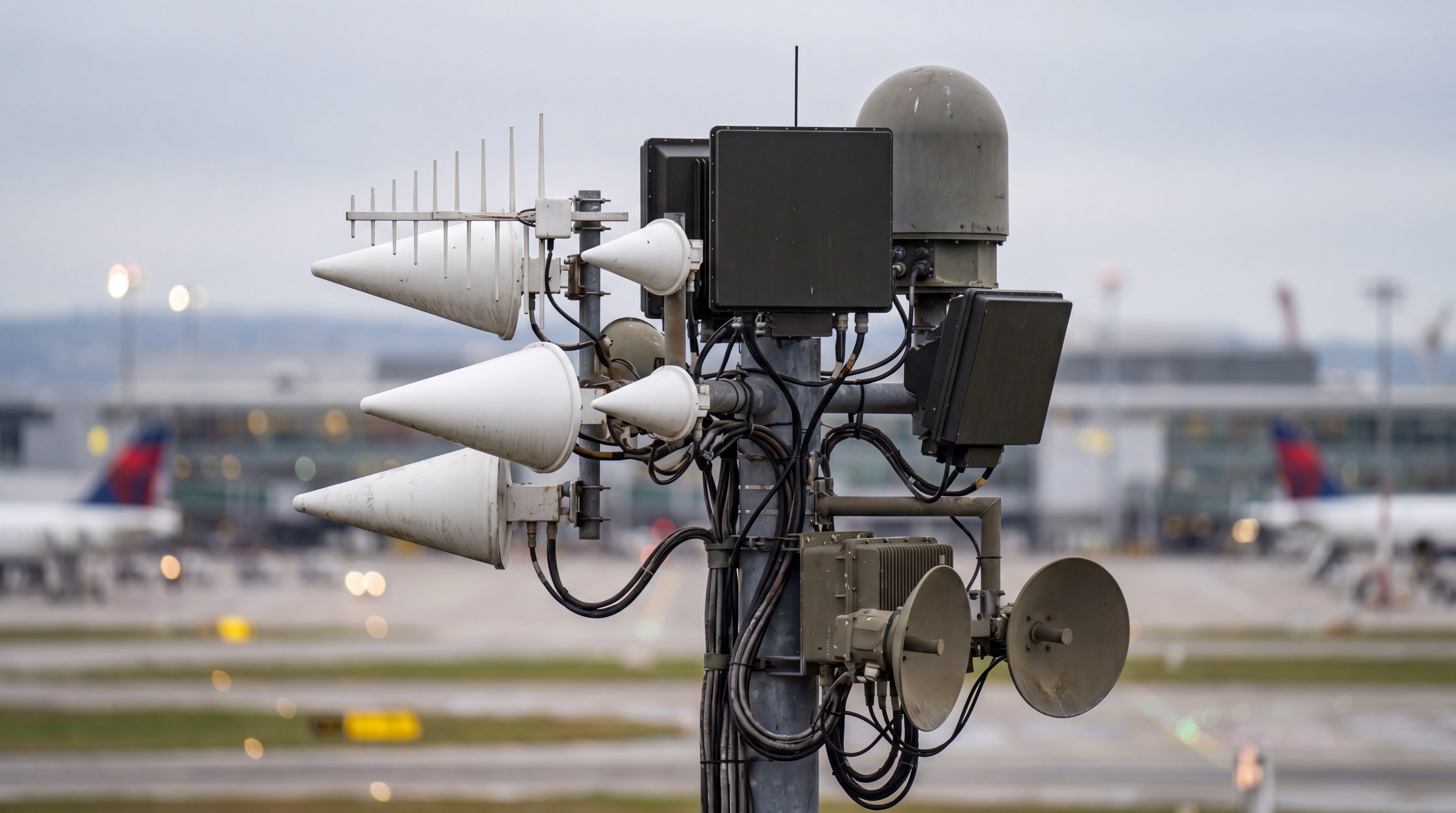
These systems are most essential in high-stakes environments where a single drone incursion could lead to safety hazards, data loss, or significant financial penalties. Facilities like airports and nuclear plants have recognized that traditional security is no longer sufficient in the age of unmanned flight. Professional Anti Drone Systems provide the necessary layer of protection for these critical zones.
Can they protect critical infrastructure?
Yes, they protect critical infrastructure by ensuring that drones cannot scout vulnerabilities or drop objects that might damage essential equipment.
- Power grids and substations.
- Water treatment facilities.
- Oil and gas refineries.
How do they secure high-profile events?
Securing high-profile events involves creating a temporary no-fly zone to protect VIPs and large crowds from potential drone-borne threats.
The bottom line?
A drone flying over a stadium can cause mass panic, even if its intent is harmless.
Why are they necessary for correctional facilities?
Correctional facilities use these systems to prevent the delivery of drugs, weapons, and cell phones to inmates via the air. Drones have become the preferred method for smuggling because they can drop packages directly into recreation yards with high precision.
Key Takeaway: Any facility with a high risk of smuggling or sabotage requires a dedicated aerial defense strategy.
| Sector | Primary Risk | Solution Focus |
|---|---|---|
| Aviation | Collision/Grounding | Long-range detection |
| Energy | Sabotage/Spying | 24/7 monitoring |
| Prison | Smuggling | Mitigation/Jamming |
Airspace security has become a standard requirement for critical infrastructure protection.
What is the technical basis of drone jamming?
The technical basis of drone jamming involves the targeted emission of radio frequency signals that overpower the drone’s legitimate control link. By flooding the receiver on the drone with “noise,” professional Anti Drone Systems effectively blind the aircraft. Detailed technical insights can be found at Corelix Technology.
Which radio frequencies are targeted?
The most common targets are the 2.4 GHz and 5.8 GHz bands used by almost all commercial and consumer remote-controlled aircraft.
Here’s the kicker.
Targeting these bands disrupts both the live video feed and the manual control signals sent by the pilot.
How is multi-band interference achieved?
Multi-band interference is achieved through sophisticated software-defined radios (SDR) that can broadcast on multiple frequencies simultaneously.
- Simultaneous 2.4 GHz and 5.8 GHz jamming.
- Disruption of 433 MHz and 915 MHz links.
- Interference with proprietary vendor frequencies.
What role does satellite navigation blocking play?
Satellite navigation blocking prevents a drone from using GPS to stabilize its flight or execute a pre-programmed autonomous path. When a drone loses its satellite lock, it often drifts with the wind or is forced to land, making it much easier to neutralize.
Key Takeaway: Jamming works by overwhelming the drone’s communication and navigation sensors with targeted radio noise.
| Tech Layer | Targeted Signal | Result |
|---|---|---|
| RF Jammer | Remote Control | Loss of pilot command |
| GNSS Jammer | GPS/Satellites | Navigation failure |
| Video Link | 5.8 GHz Feed | Loss of aerial view |
Modern systems utilize all three layers to ensure total neutralization of the threat.
What is a soft kill approach in drone defense?
A “soft kill” refers to non-kinetic mitigation that neutralizes a drone by disrupting its electronics rather than shooting it down. This is the preferred method for professional Anti Drone Systems because it minimizes the risk of the aircraft falling uncontrollably and causing injury.

Why prioritize safe drone landings?
Safe landings are prioritized because a falling drone can become a dangerous projectile in populated urban areas or near sensitive equipment.
Don’t ignore this.
A 2kg drone falling from 400 feet carries enough force to be lethal upon impact.
How is property damage avoided?
Property damage is avoided by using electronic means to guide the drone to a safe landing spot or forcing it to return to its takeoff point.
- Reduced risk of fire from battery puncture.
- No falling debris or shrapnel.
- Protection of surrounding building glass.
What happens to the drone upon signal loss?
When the signal is lost, most modern drones enter a “Failsafe” state where they either hover in place or slowly descend to the ground. This predictable behavior allows security teams to retrieve the drone intact for forensic analysis of the SD card and flight logs.
Key Takeaway: Soft kill methods are the safest way to handle drones in populated or industrial environments.
| Method | Physical Impact | Risk Level |
|---|---|---|
| Soft Kill | None (Electronic) | Low |
| Kinetic (Net) | Potential fall | Moderate |
| Kinetic (Projectile) | High (Destruction) | Very High |
Electronic mitigation remains the gold standard for corporate and urban drone defense.
How do these systems integrate into security?
Integration involves connecting specialized drone detection sensors and mitigation tools into your existing security management software. This allows your team to view aerial threats on the same dashboard used for CCTV and access control. Learn more about business integration at Corelix Business. Anti Drone Systems are most effective when they are part of a unified security posture.
Are portable units more effective?
Portable units are effective for rapid deployment during mobile operations or at temporary event sites where fixed infrastructure isn’t available.
Think about it.
A handheld “jammer gun” allows a security officer to respond to a drone sighting anywhere on the property immediately.
What are the benefits of fixed systems?
Fixed systems offer the benefit of continuous, 360-degree autonomous protection that requires no manual intervention to detect a threat.
- Automated 24/7 monitoring.
- Higher power output for longer range.
- Integration with building alarm systems.
How do systems scale for large perimeters?
Scaling for large perimeters is achieved by networking multiple sensor nodes and jammers together to cover vast areas like pipelines or sprawling industrial parks. This “mesh” approach ensures there are no blind spots where a drone could slip through your defenses unnoticed.
Key Takeaway: A mix of fixed and portable hardware provides the most comprehensive defense for complex facilities.
| Unit Type | Best Use Case | Mobility |
|---|---|---|
| Stationary | Perimeter Defense | None |
| Handheld | Tactical Response | High |
| Vehicle-Mount | Large Patrols | Moderate |
Unified integration ensures that every drone detection triggers an immediate and coordinated response.
What legal factors must be considered?
Legal factors involve navigating complex regulations from aviation authorities and telecommunications boards regarding the use of radio frequency jamming. While the threat is real, your use of Anti Drone Systems must be compliant with national and local laws to avoid heavy fines.

How do local regulations apply?
Local regulations often restrict who can operate jamming equipment, usually reserving these powers for government entities or specifically licensed private security firms.
Make no mistake.
Operating a jammer without proper authorization can lead to criminal charges for interfering with public airwaves.
Is professional oversight necessary?
Yes, professional oversight is necessary to ensure the system is tuned to avoid interfering with authorized communications like emergency services and cellular networks.
- Frequency coordination with local authorities.
- Authorized user training and certification.
- Maintaining audit logs of system activations.
What are the rules for private deployment?
Private deployment rules vary significantly by country, but generally focus on “detection-only” for private citizens while limiting “mitigation” to high-value critical assets. You should always consult with a legal expert before activating any signal-disrupting technology on your property.
Key Takeaway: Legal compliance is as important as technical capability when deploying an aerial defense system.
| Regulatory Body | Concern | Requirement |
|---|---|---|
| FAA/CAA | Airspace Safety | Flight path awareness |
| FCC/Ofcom | RF Interference | Licensed equipment |
| Local Police | Public Nuisance | Incident reporting |
Ensuring your system meets these standards protects your organization from both drones and legal liability.
Why is proactive deployment necessary now?
Proactive deployment is necessary now because the “wait-and-see” approach leaves your organization vulnerable to irreversible data breaches and physical damage. Every day you operate without Anti Drone Systems, you are essentially leaving your roof and windows open to any intruder with a remote control. Find out how to secure your future at Corelix.
Can waiting lead to permanent data loss?
Yes, waiting can lead to permanent data loss because once a drone streams high-definition video of your secure site to a cloud server, that information cannot be retrieved.
The time is now.
Preventing the flight is the only way to protect the visual data of your facility.
How do you prevent active scouting?
Active scouting is prevented by using detection sensors to identify drones as they approach your perimeter, allowing you to activate jammers before they reach sensitive areas.
- Early warning at the 1km mark.
- Automated alerts to security staff.
- Immediate deployment of mitigation.
Why is readiness better than reaction?
Readiness is better than reaction because a pre-installed system can neutralize a threat in seconds, whereas a reactive approach often results in the drone completing its mission before you can respond. Being proactive means you own the sky; being reactive means you are just a spectator to your own security breach.
Key Takeaway: The cost of a proactive defense is far lower than the potential cost of a major security failure.
| Strategy | Speed of Response | Effectiveness |
|---|---|---|
| Proactive | Instant/Automated | High |
| Reactive | Minutes/Manual | Low |
| None | N/A | Zero |
Early adopters of anti-drone technology are better positioned to handle the next generation of aerial threats.
How do you take back control of your airspace?
Taking back control starts with a professional assessment of your site’s vulnerabilities and the specific types of drones likely to target your industry. By choosing the right combination of detection and mitigation hardware, you can effectively turn your facility into a no-fly zone. Professional Anti Drone Systems are the ultimate tool for reclaiming your privacy and safety.
What features ensure long-term protection?
Long-term protection is ensured by systems that offer modular software updates to keep pace with the latest drone models and communication protocols.
It’s a simple fact.
As drone technology improves, your defense software must evolve to detect new frequency-hopping patterns and autonomous flight modes.
Why is expert consultation vital?
Expert consultation is vital because no two facilities have the same radio frequency environment or physical obstacles that could block sensor signals.
- On-site RF signature analysis.
- Custom antenna placement strategies.
- System integration with existing security.
How is an effective defense strategy maintained?
Maintaining a defense strategy requires regular testing of the hardware and training for security personnel on how to handle captured drones. You must treat airspace security as a living part of your operational protocol, not a “set-and-forget” gadget.
Key Takeaway: Success in drone defense requires a combination of high-tech hardware and a well-trained security team.
| Step | Action | Outcome |
|---|---|---|
| Audit | Site threat assessment | Identified weak spots |
| Deploy | Install sensors/jammers | Active airspace shield |
| Update | Software & Training | Future-proof defense |
Reclaiming your airspace is a multi-step process that pays dividends in safety and peace of mind.
*
Professional Anti Drone Systems provide a comprehensive solution to the modern challenges of privacy invasion, corporate espionage, and physical security. By implementing multi-layered detection and non-kinetic mitigation, organizations can effectively shield themselves from the rising tide of unauthorized aerial incursions. At Corelix, our vision is to empower every high-value enterprise with an invisible, impenetrable shield, ensuring that the sky remains a safe space for everyone. To secure your perimeter and protect your assets from the threats of tomorrow, contact us today.
Frequently Asked Questions
Can I use these systems to secure private property?
Professional systems are primarily intended for high-security environments like airports or plants, but they can be adapted for private estates depending on local regulatory frameworks and the specific threat profile.
What’s the best way to handle an unauthorized drone?
The most effective method is utilizing a professional anti-drone system that employs a “soft kill” approach, forcing the drone to land safely without causing physical harm or falling debris.
How do I know if my facility is being scouted?
Professional detection sensors can identify radio frequency signatures or radar returns long before a drone is visible, allowing security teams to respond to potential surveillance in real-time.
Can I integrate drone defense with existing sensors?
Yes, advanced systems are built for integration, allowing them to work alongside CCTV, thermal imaging, and motion sensors to provide a comprehensive, multi-layered security shield.
What’s the best defense for large-scale venues?
For large venues, a fixed, multi-kilometer system with 360-degree coverage is the gold standard, as it provides continuous, hands-off protection against multiple simultaneous aerial threats.
Authorized RF engineering and compliance review
For regulated RF systems, this page should be used as an engineering and compliance review path, not as a public deployment checklist. CorelixRF starts with authorization status, operating region, frequency plan, output limit, antenna interface, safety controls, thermal limits and acceptance documents.
- RFQ checklist – send the data buyers usually forget, including band, power, duty cycle, interface and test standard
- delivery documentation – check what documents can support incoming inspection, FAT review and long-term maintenance
- quality and certification review – review the quality and compliance evidence before the project moves into procurement
- RF front-end platform – compare the RF chain as a system instead of selecting one isolated module
- RF configurator – turn frequency, power, thermal and interface requirements into a first configuration brief
- case studies – review similar engineering paths before sending an RFQ
- engineering contact – send the application notes, block diagram or target specification to engineering sales
This keeps the discussion inside lawful, authorized RF programs while still giving procurement teams a clear way to request amplifier, antenna, SDR source, documentation and factory review.
Professional Facility RF Deployment Path
For authorized facility-security RF deployments, align site coverage assumptions with RF front-end integration, RF power amplifier platform selection and antenna/load planning. Share sensor interfaces, frequency bands, output targets, cooling, enclosure constraints, VSWR limits and factory validation requirements through the RF inquiry form.