
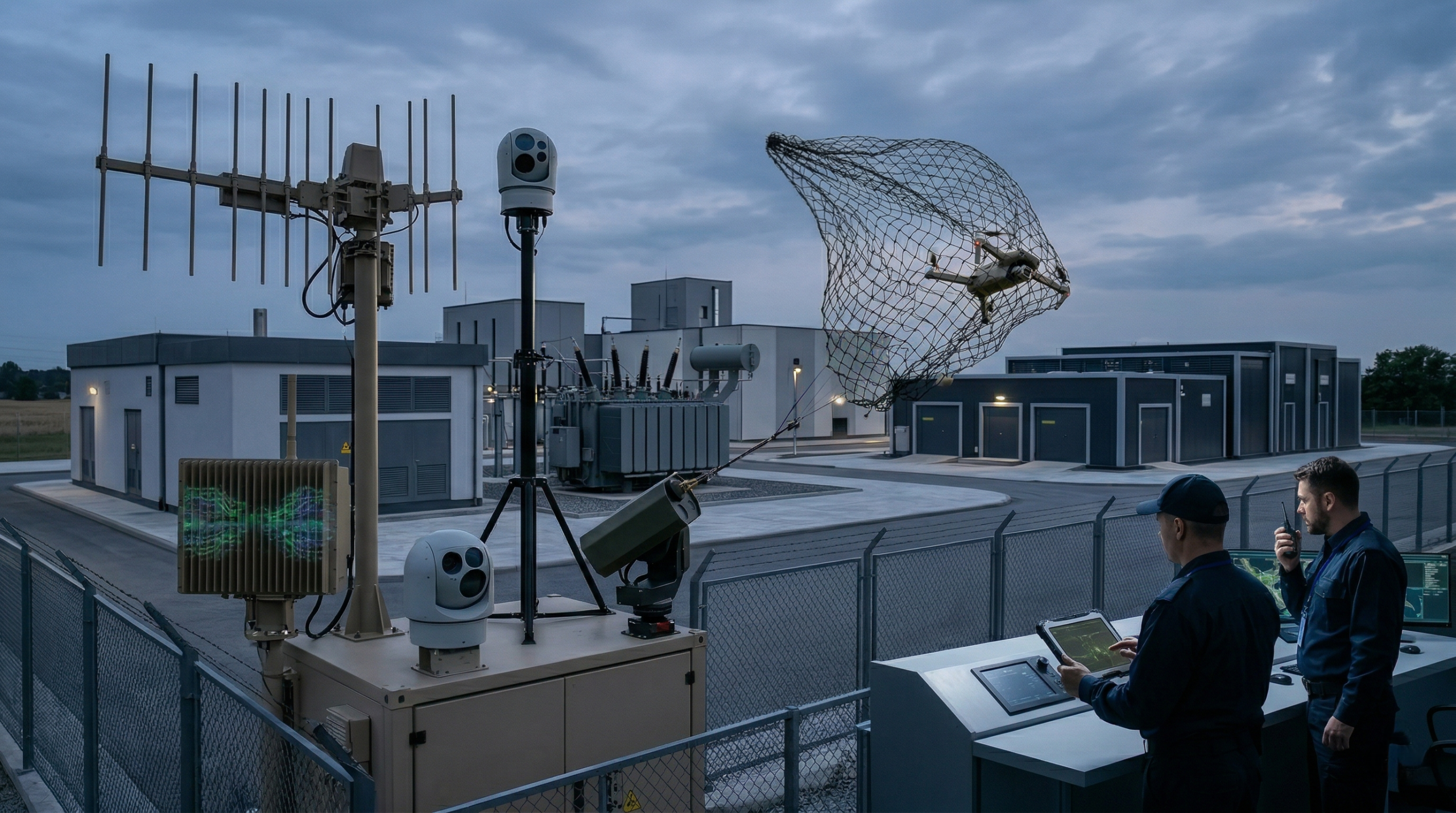
Authorized RF Review Boundary
Facility Counter-UAS RF Technology Review is maintained as a compliance-first engineering page. CorelixRF discusses regulated counter-UAS RF topics only for authorized programs with documented scope, lawful operating boundaries and buyer-side approval.
- RF front-end platform review for amplifier, antenna, source and control interfaces.
- Custom RF system review for enclosure, thermal, control and documentation needs.
- RFQ checklist for band, power, duty cycle, load, interface and acceptance inputs.
- Delivery documentation for inspection records, test curves and FAT-style evidence.
- Contact CorelixRF engineering sales with authorized project documents.
This page does not provide public deployment, evasion, interference, power-setting or bypass instructions. If a project cannot document legal authority, the correct next step is compliance review.
Primary Topic Hub and RFQ Path
This primary guide now consolidates related authorized C-UAS and RF safety review topics. Use it for lawful scope definition, RF interface review, documentation and factory RFQ preparation.
- How to Protect Your Airspace with Advanced Anti-Drone Technology? – consolidated reference
- How to Choose the Right Anti-Drone Technology for Airspace Security – consolidated reference
- How to Secure Your Perimeter with Modern Anti Drone Technology – consolidated reference
- Anti Drone Technology For Infrastructure – consolidated reference
- How to Secure Your Airspace with Anti-Drone Technology – consolidated reference
- How to Secure Your Airspace with Advanced Drone Detectors? – consolidated reference
- How to Secure Your Airspace Using Drone Jammers? – consolidated reference
- How to Secure Your Airspace Using Advanced Anti Drone Technology? – consolidated reference
- How to Secure Your Airspace Using Advanced Drone Identification Technology? – consolidated reference
- How to Protect Your Airspace with Advanced Anti Drone Technology? – consolidated reference
For regulated counter-UAS or interference-adjacent topics, CorelixRF keeps the discussion at authorized RF engineering review, documentation, test evidence and procurement boundaries. This page does not provide public deployment, evasion or unlawful interference instructions.
- RFQ checklist – prepare band, power, duty cycle, interface, cooling and acceptance inputs.
- RF configurator – turn project requirements into a first engineering brief.
- Delivery documentation – align test curves, inspection records and FAT-style evidence.
- Case studies – review how CorelixRF frames RF problems for buyer decisions.
- Contact engineering sales – submit the documented scope for review.
Why Is Anti-Drone Technology Crucial Now?
An anti-drone system is essential today because the rapid proliferation of low-cost, capable drones has significantly increased security risks for critical infrastructure and public safety. This technology, what is anti drone technology, is the only way to proactively defend against modern aerial threats. With malicious actors using drones for industrial espionage, contraband delivery, and even kinetic attacks, your traditional security measures are often insufficient against this vertical threat vector.
- Drones are readily available to anyone with a modest budget.
- They can easily bypass ground-based security fences and cameras.
- The payloads they carry can be customized for nefarious purposes.
- Detection by human eyes or standard security radar is often impossible.
You must accept that this new reality requires specialized countermeasures. The risk of inaction is simply too great, with potential consequences ranging from multi-million dollar operational shutdowns to significant safety compromises. By integrating counter-UAS systems, you close this critical security gap.
How Do Counter-UAS Systems Function as a Multi-Layered Defense?
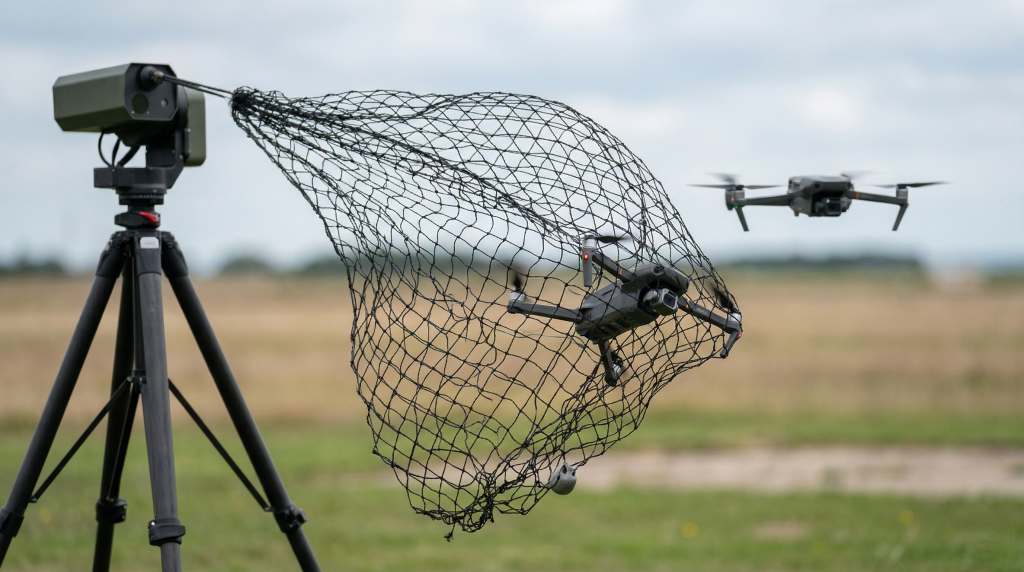
Counter-UAS systems function as a multi-layered defense because they combine various sensors and countermeasures, ensuring no single point of failure and maximizing situational awareness. What is anti drone technology provides a complete solution that first detects, then mitigates. This comprehensive approach is necessary because different drones, varied environments, and distinct threat scenarios demand flexible, adaptive responses, ensuring you are always one step ahead.
You cannot rely on a single detection method; combining radar, RF scanning, and EO/IR cameras is crucial. Likewise, you must deploy the appropriate mitigation, whether that means safe jamming or a physical capture, depending on the rules of engagement.
This layered architecture ensures that if one sensor type is degraded, others can maintain the defensive bubble. This is how you achieve resilient airspace security.
| Tier | Function | Description | Examples |
| 1 | Detection | Initial discovery of potential threats. | Radar, RF Sensors, EO/IR Cameras |
| 2 | Tracking | Continuous monitoring of the threat’s path. | Integrated Sensor Fusion & Slew-to-Cue |
| 3 | Identification | Classification of the specific drone type/threat level. | Signal Analysis & Optical Confirmation |
| 4 | Mitigation | Safe neutralization of the identified threat. | Jamming, Spoofing, Physical Capture, HEW |
This tiered structure is fundamental to modern security operations. Analyzing this data flow reveals that a rapid, automated progression from detection to identification is crucial for effective mitigation, minimizing response time and potential impact. This integrated approach ensures you are prepared for any drone-related scenario.
Key Takeaway
Understanding the critical need for a tiered, multi-layered anti-drone architecture allows you to design a defense strategy that is both comprehensive and resilient, ensuring you can address the full spectrum of modern drone threats, and this knowledge helps you protect your assets more effectively.
What Are the Key Methods to Detect and Track Drones?
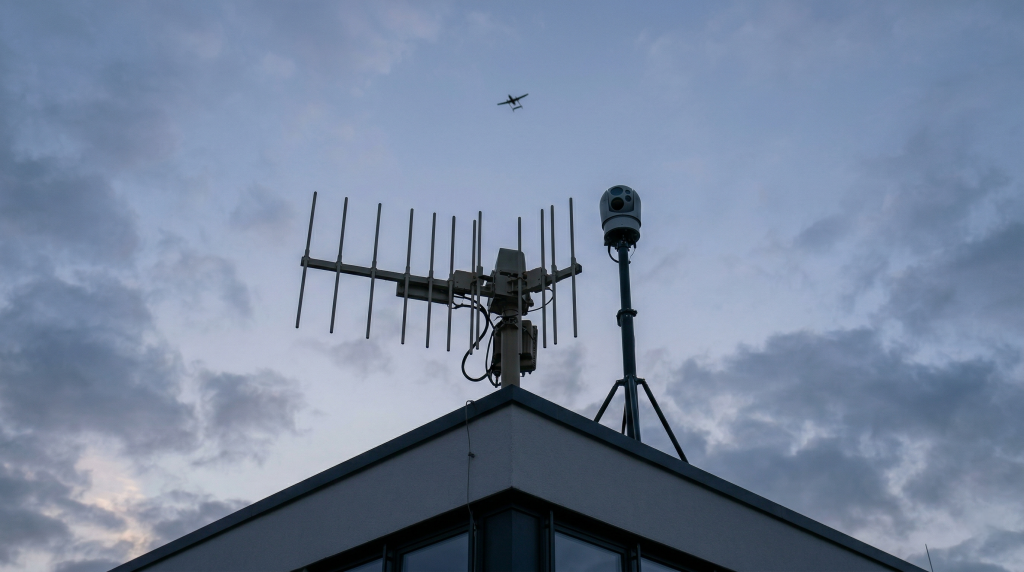
The primary methods to detect and track drones involve a combination of active and passive sensors, including radar, Radio Frequency (RF) scanners, and Electro-Optical/Infrared (EO/IR) cameras. This complex task, defining what is anti drone technology in its operational context, is the first critical step in any counter-UAS strategy. A successful system must operate around the clock in all weather conditions, ensuring you never miss a threat.
- Radar: Actively emits radio waves and detects reflections, ideal for long-range tracking.
- RF Scanners: Passively listen for the communication signals between a drone and its operator.
- EO/IR Cameras: Visually confirm the threat and provide high-definition tracking data day or night.
You cannot rely on human observers, as modern drones are designed to be small and quiet. Integrating these varied sensors into a single operating picture allows you to overcome the limitations of any single technology, providing a complete situational awareness solution.
How Does Radar Provide Long-Range Aerial Surveillance?
Radar provides long-range aerial surveillance by emitting radio waves and analyzing the return signals, allowing it to detect the physical presence of a drone even without any active RF communication from the drone itself. What is anti drone technology uses specialized, high-resolution radars optimized for small targets. These systems offer significant detection ranges, giving you the necessary time to respond to an incoming threat before it can complete its mission.
You will benefit from radar’s ability to operate effectively in low visibility, fog, or complete darkness. While other sensors might be compromised, radar maintains a consistent defensive perimeter, ensuring your facility is never left vulnerable to unseen aerial approach.
You must be careful to select a radar system specifically designed to filter out birds and other clutter. Failure to do so will result in excessive false alarms, which can degrade your security team’s responsiveness.
How Do RF Sensors Identify and Locate Drone Signals?
RF sensors identify and locate drone signals by passively scanning the electromagnetic spectrum for the specific frequencies used by commercial drones for control, telemetry, and video transmission. What is anti drone technology includes sophisticated RF libraries that can match a detected signal to a known drone model. This method not only detects the drone but often identifies its make and model, and even the location of the operator.
You will find this method highly effective against the majority of off-the-shelf commercial drones. Because it is a passive technology, it does not interfere with other sensitive systems and can be deployed in a wide range of environments without complex licensing, providing a seamless layer of detection.
But wait, there’s more: RF sensors can often provide early warning, detecting a drone operator’s controller before the drone even takes flight. This allows your security team to proactively address the potential threat before it materializes.
RF detection is the cornerstone of intelligence-driven drone defense, as it provides critical data on the drone and its origin.
| System Type | Advantages | Disadvantages | Best For |
| Passive RF | Silent, detects operator, low power, identifies model | Limited range, can be jammed, fails against autonomous | Wide-area, urban, regulatory constraints |
| Active Radar | Long range, weather independent, detects autonomous drones | Emits radiation, high power, complexity, false alarms | Large perimeters, critical infrastructure, low clutter |
| Acoustic | Low cost, passive, works in NLoS | Short range, fails in noise, can be spoofed | Complementary sensor, very close-in defense |
This comparison highlights that integrating both RF and radar sensors provides the most robust detection coverage. RF is excellent for intelligence and urban environments, while radar excels in range and detecting silent, pre-programmed threats. A blended sensor approach ensures you are covered in all scenarios.
Key Takeaway
A successful detection strategy must include a mixture of radar and passive RF scanning to ensure you have complete situational awareness, and this integrated data allows you to proactively identify threats and prepare a rapid and appropriate response.
How Is Electro-Optical and Infrared Technology Used to Identify Threats?
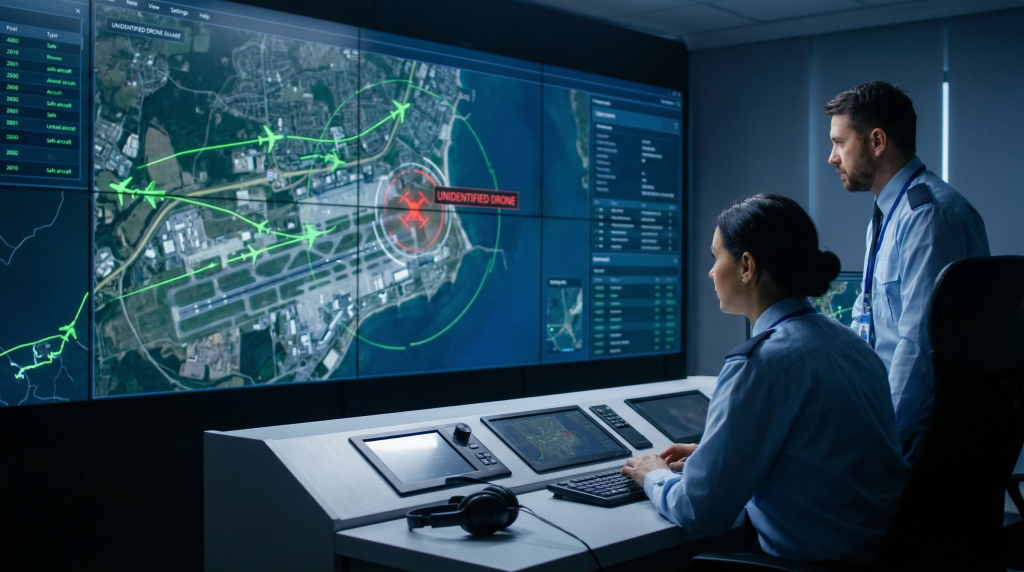
Electro-Optical (EO) and Infrared (IR) technology is used to identify threats by providing visually verifiable images of a drone, both in visible and thermal wavelengths. While RF and radar detect and locate a target, what is anti drone technology requires a distinct visual confirmation step to classify the drone and assess its threat level. A security operator can then determine if the object is a drone, a bird, a balloon, or a friendly aircraft.
- EO Cameras: Excellent resolution, providing high-definition imagery during daylight.
- IR/Thermal Cameras: Detect the heat signature from the drone’s motors, making them effective day or night and in low visibility.
You can’t go wrong by implementing a robust EO/IR tracking system. The optical data it provides is essential for making a fast, accurate decision on whether to neutralize the threat or let it pass, reducing the risk of a false alarm.
How Do Thermal Imagers Detect Drones in All Light Conditions?
Thermal imagers detect drones in all light conditions by sensing the heat emitted from their batteries, motors, and electronic components, which is always present regardless of external lighting. While visual cameras may fail in darkness or smoke, what is anti drone technology in its IR sensor form maintains a distinct advantage. You will be able to see a drone even if its operator has turned off all its lights.
You will appreciate this robust capability. Thermal imagers are crucial for round-the-clock protection, ensuring your perimeter is never truly vulnerable simply because the sun has gone down.
You must be careful to select a high-sensitivity IR sensor with sufficient resolution. A low-quality image may still leave you guessing if the object is a drone or just a large bird, and a single mistake can be costly.
How Do EO/IR Cameras Provide Slew-to-Cue Functionality for Tracking?
EO/IR cameras provide slew-to-cue functionality by automatically aiming at the precise coordinates provided by other sensors, such as radar or RF, enabling rapid visual acquisition and continuous tracking. While a radar system is excellent at broad surveillance, what is anti drone technology in its optical implementation provides the necessary detail for identification. You’ll instantly see what the other sensors have detected, streamlining the decision process.
You will benefit from this automated response. Slew-to-cue reduces the need for manual camera control, allowing your security team to focus on threat assessment rather than camera manipulation.
Guess what? High-end EO/IR systems can maintain a precise track even as the drone attempts to maneuver, ensuring you always know exactly where it is.
Optical tracking is the final confirmation step, giving you the critical visual evidence to authorize a decisive mitigation action.
| Component | Resolution | Sensitivity | Cost | Environmental Limit |
| High-End Thermal | High | Extreme | High | Atmospheric conditions (rain, fog) |
| Standard HD EO | Extreme | Moderate | Low | Light required, cannot see thermal |
| B blended EO/IR | Excellent | Extreme | Moderate | Partial dependence on light, weather |
This analysis makes it clear that combining the visual detail of EO with the low-light superiority of IR provides the most complete identification capability. Blended systems offer the best balance of cost and performance. This integrated optical suite is your final validation of a drone threat.
Key Takeaway
Understanding the critical role of EO/IR technology for visual threat identification enables you to build a system that can not only detect drones but also classify them, providing your security team with the actionable intelligence they need to respond effectively and ensuring you never make a costly identification error.
What Are the Most Effective Methods to Neutralize Drone Threats?
The most effective methods to neutralize drone threats include Radio Frequency (RF) jamming, GPS/GNSS spoofing, and physical capture systems like nets or high-energy weapons. After detection and identification, what is anti drone technology provides a spectrum of mitigation options, allowing you to choose the safest and most legally compliant approach for your specific scenario and location.
- RF Jamming: Creates a “bubble” of interference, forcing the drone to land or return to its launch point.
- Physical Capture: Uses physical barriers or projectile nets to disable the drone mid-flight.
- High-Energy Weapons: Employs directed energy like lasers to physically disable the drone’s electronics.
You must accept that mitigation is not a one-size-fits-all solution. Factors such as the proximity of bystanders, the density of electronic signals, and the local regulations must always be a primary consideration.
How Does RF Jamming Disrupt the Drone’s Control and Communication?
RF jamming disrupts the drone’s control and communication by transmitting a powerful signal on the same frequencies the drone uses for command and video telemetry, essentially overpowering the operator’s legitimate control signals. You must be aware what is anti drone technology in its jamming form: it is a potent but broad-spectrum countermeasure. This forces the drone’s pre-programmed safety protocols to activate, which usually results in the drone landing or attempting to return home.
You will find this method highly effective against the vast majority of off-the-shelf commercial drones, making it a common choice for security forces. RF jamming can be deployed from static or portable systems, providing flexible defense across various scenarios and environments.
But wait, there’s more: Jamming is relatively low-cost and can be deployed rapidly, making it a critical first line of defense for a security team.
How Do GPS and GNSS Spoofing Override Drone Navigation?
GPS and GNSS spoofing override drone navigation by transmitting a falsified signal that mimics legitimate global navigation satellite signals, tricking the drone into “believing” it is at a different location or moving in a different direction. What is anti drone technology in its spoofing implementation is a highly precise and effective technique, but it requires a sophisticated system. By manipulating this data, you can redirect the drone to a safer area, forcing it to land, or even taking control of its return flight path.
You will benefit from this targeted, non-destructive mitigation. Spoofing is a superior approach in environments where you need to avoid physically damaging the drone or creating kinetic hazards.
Guess what? It is possible to combine spoofing and jamming for a multi-layered response, ensuring you have the maximum defensive flexibility against all types of drones.
GPS/GNSS spoofing is a specialized technique that allows for a controlled and non-destructive neutralization of the threat.
| System | Best Scenario | Safety Range | Legality (Civil) | Ease of Deployment |
| RF Jammer | Urban, critical assets, low density | Good (>1km) | Generally prohibited (requires authorization) | High |
| Physical Net | Indoor, very close range, high value, no NLoS | Extreme (<50m) | Legal (requires safety plan) | Moderate |
| Directed Energy (DEW) | Long range, multiple targets, high priority | Long (up to 5km) | Restricted (typically military/defense) | Moderate |
This analysis makes it clear that while RF jamming is often the primary mitigation choice due to its range and ease of deployment, its regulatory hurdles make it complex for civil applications. Physically capturing drones is safer in terms of interference but has a very limited operational range. Selecting the right mitigation system is crucial for achieving your security objectives.
Key Takeaway
Understanding the different mitigation techniques—jamming, spoofing, and physical capture—allows you to select the appropriate countermeasure for your environment, ensuring you can neutralize drone threats effectively while minimizing collateral damage and regulatory risks.
What is a High-Energy Laser or Microwave Counter-UAS System?
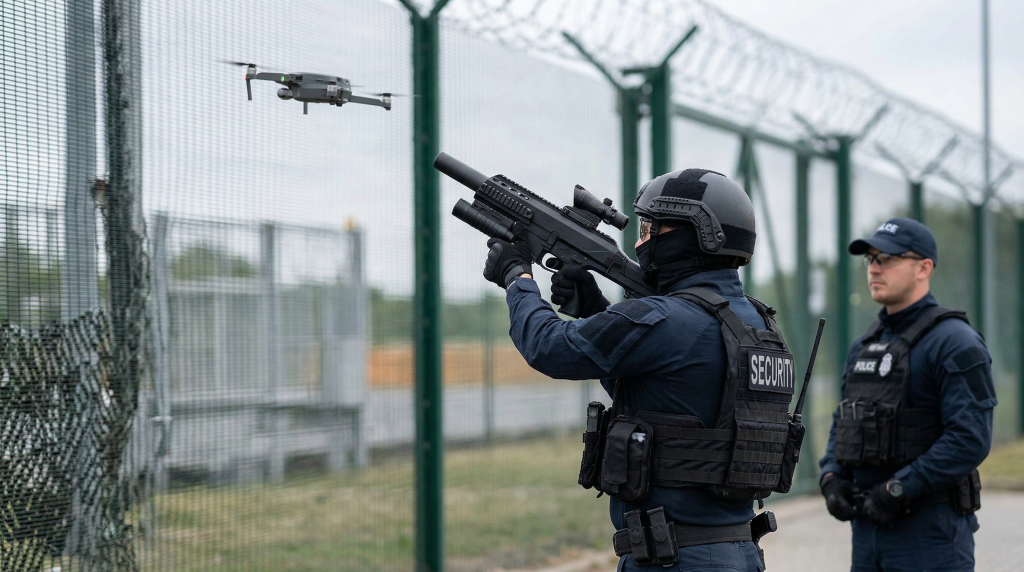
A High-Energy Laser or Microwave Counter-UAS system is a directed-energy weapon designed to physically damage or disable a drone’s structural components or sensitive electronics using concentrated beams of light or microwave radiation. This is a highly advanced method, representing what is anti drone technology in its most potent and specialized form, primarily used in military or critical national defense applications. You must realize that this technology is not yet widespread for typical commercial security.
- High-Energy Lasers (HEL): Burns through key components like motors or optical sensors, physically disabling the drone.
- High-Power Microwave (HPM): Overloads the drone’s electronic circuitry, causing it to fail completely.
You can’t go wrong by implementing these advanced systems if you have a budget and regulatory environment that supports them. The effectiveness is extreme, providing you with a very robust, rapid, and often cost-per-shot efficient solution.
How Do High-Energy Lasers Achieve Precise Targeted Neutralization?
High-Energy Lasers (HEL) achieve precise targeted neutralization by concentrating a powerful beam of light onto a small, critical component of the drone, such as a motor, a battery pack, or its main control board. While other methods may be less focused, what is anti drone technology in its HEL form is about extreme accuracy. The intense heat generated by the laser causes rapid structural or electronic failure, neutralizing the drone with minimal risk of collateral damage.
You will appreciate this targeted approach. High-energy lasers can engage multiple threats in rapid succession, making them highly effective against drone swarms or multiple independent attackers.
You will find it indispensable for long-range engagements. A powerful HEL system can neutralize a drone at significant distances, ensuring it never gets close to your critical infrastructure or high-value targets.
How Do High-Power Microwave Systems Disable Drone Swarms?
High-Power Microwave (HPM) systems disable drone swarms by emitting a wide beam of electromagnetic energy that blankets a large area, simultaneously overloading and damaging the sensitive electronic circuitry of multiple drones within the targeted zone. You must understand what is anti drone technology in its HPM form: it is a powerful area-effect weapon. This method is particularly effective against autonomous or pre-programmed drones that do not rely on a standard RF control signal, providing a broad defensive capability.
You will benefit from this rapid neutralization, as a single HPM burst can disable dozens of drones at once, providing you with a complete defense against an organized swarm attack.
But wait, there’s more: HPM systems are non-destructive in a kinetic sense, meaning you avoid the risk of falling debris or physical damage to surrounding infrastructure.
High-Power Microwaves are a unique solution, offering a robust area-defense capability to counter the emerging threat of large, synchronized drone swarms.
| Parameter | HEL (Laser) | HPM (Microwave) | Target Type | Optimal Range |
| Kill Mechanism | Thermal (Burns) | Electronic (Overloads) | Single Target (HEL) / Swarm (HPM) | Variable (1-3km+) |
| Neutralization Time | Fast (seconds) | Very Fast (milliseconds) | N/A | Variable (1-3km+) |
| Target Accuracy | Precision | Broad (Area-effect) | N/A | Variable (1-3km+) |
| Environmental Effects | Limited (rain, dust) | Minimal | N/A | Variable (1-3km+) |
This analysis makes it clear that while HEL provides extreme precision against a single high-priority target, HPM offers a superior area-effect solution for rapid swarm neutralization. The optimal choice depends heavily on the specific threat scenario and required kill mechanism. Integrating both directed-energy solutions creates the ultimate counter-UAS arsenal.
Key Takeaway
Understanding the capabilities of High-Energy Lasers and High-Power Microwaves gives you a glimpse into the future of drone defense, allowing you to prepare for advanced threats like organized swarms and physically resilient drones.
What physical capture methods are used to disable drones safely?
The physical capture methods used to disable drones safely involve techniques that do not rely on electronic disruption or physical destruction, such as net guns, automated net launchers, and even trained birds of prey. These approaches represent what is anti drone technology in its safest form, minimizing the risk of a drone falling and causing damage on the ground. You will find that these methods are often preferred in environments where safety is paramount.
- Net Guns: A handheld device that launches a weighted net to physically entangle the drone.
- Automated Net Launchers: A larger, turret-mounted system that can detect and capture a drone at greater range.
- Net-Launching Drones: A specialized interceptor drone that deploys a net to capture a threat drone mid-flight.
You cannot rely on any other method when the absolute highest safety is required. These kinetic captures ensure the drone is brought to the ground in a controlled manner, preventing it from inflicting harm or causing property damage.
How do handheld net guns provide a close-range physical countermeasure?
Handheld net guns provide a close-range physical countermeasure by enabling a security officer to manually launch a weighted net that entangles the drone’s rotors, causing it to lose flight stability and fall to the ground. While other methods may be less portable, what is anti drone technology in its handheld net form is about ease of use and rapid deployment. This requires a precise and timely physical interception, typically at very close range.
You will find this method ideal for close-quarters security. A simple net gun can be deployed instantly, providing a final layer of defense for a specific area or high-profile event.
Guess what? High-quality nets can even include a parachute to ensure the drone lands safely, minimizing any potential risk to bystanders.
How do net-launching drones provide a dynamic and mobile capture method?
Net-launching drones provide a dynamic and mobile capture method by utilizing a specialized interceptor drone that can chase and physically capture a threat drone mid-flight, even at greater distances than a handheld system. While other methods may be less versatile, what is anti drone technology in its drone-based form is about a truly active defense. This autonomous interceptor will locate and neutralize the target, providing you with a highly mobile and effective anti-drone solution.
You will benefit from this superior approach. Net-launching drones can engage a drone that is maneuvering aggressively, ensuring you have the maximum defensive flexibility and range of interception.
But wait, there’s more: a sophisticated interceptor can also perform a safe, automated retrieval of the captured drone, minimizing the risk to ground personnel.
Net-launching drones are the future of mobile drone defense, as they provide a flexible, long-range, and non-destructive solution to neutralize aerial threats.
| System | Deployment | Effective Range | Cost | Target Types |
| Handheld Net Gun | Manual, immediate | Short (<50m) | Low | Single target, close-range |
| Net-Launching Drone | Semi-autonomous, rapid | Short (<200m) | Moderate | Mobile target, dynamic threat |
| Fixed Net Turret | Fixed, automated slew-to-cue | Moderate (<500m) | High | Static, long-range protection |
This analysis makes it clear that while handheld net guns provide a basic and affordable option, net-launching drones offer a more versatile and capable mobile solution for dynamic scenarios. The fixed turret provides a robust long-range defense. Combining these capture methods will optimize your overall anti-drone strategy.
Key Takeaway
Understanding the different physical capture methods, from net guns to net-launching drones, allows you to choose the appropriate close-range countermeasure for your environment, ensuring you can neutralize drone threats effectively while minimizing the risk of a dangerous falling drone or unintended collateral damage.
Conclusion
The growing drone threat is real, and the traditional methods of security are no longer sufficient to protect your critical assets and operations. But by now you understand what is anti drone technology and how it provides a vital multi-layered defense to proactively address this challenge. CorelixRF is your trusted partner for designing and deploying a custom-tailored anti-drone system that perfectly meets your unique needs. We are here to help you: and you can begin this process by scheduling a consultation with one of our security experts to discuss your specific security concerns.
FAQ
Can I legally operate an anti-drone system at my commercial facility?
While you must consider the legal implications, it is a complicated and often regulated field. It is a common misconception that all counter-UAS activities are prohibited; in reality, many passive detection systems are legal, while specific active mitigation methods like jamming require careful consideration and are usually limited to government or authorized security entities. You should consult with legal counsel to understand your local regulations and constraints.
What is the best type of anti-drone technology for an urban environment?
What is the best type of anti-drone technology for an urban environment? A passive detection approach is generally the best starting point, with sophisticated RF sensors and high-definition EO/IR cameras providing robust situational awareness without creating electronic interference. The use of active jamming or kinetic weapons is highly restricted and should only be deployed as part of an authorized and tightly controlled security plan.
How do I know if my anti-drone system will be effective against advanced or military-grade drones?
How do I know if my anti-drone system will be effective against advanced or military-grade drones? You will benefit from a thorough threat assessment, with our experts analyzing your potential risks and designing a system that can counter a wide range of drones, including sophisticated, multi-rotor, and even high-speed autonomous drones. We work to ensure you are prepared for both common commercial threats and more advanced adversarial capabilities.
Can I integrate an anti-drone system into my existing security network?
Can I integrate an anti-drone system into my existing security network? Absolutely, most modern anti-drone platforms are designed with open architectures and standard communication protocols, making seamless integration possible with your existing video management systems (VMS) and physical security information management (PSIM) software, providing a unified operating picture.
How much does a complete anti-drone system typically cost to implement?
How much does a complete anti-drone system typically cost to implement? The total cost varies widely depending on the scale, complexity, and specific capabilities required. We will develop a customized solution that fits your budget and meets your security objectives, providing a transparent breakdown of the components, installation, and ongoing support costs. We are committed to delivering exceptional value while maximizing your return on investment.
Authorized RF engineering and compliance review
For regulated RF systems, this page should be used as an engineering and compliance review path, not as a public deployment checklist. CorelixRF starts with authorization status, operating region, frequency plan, output limit, antenna interface, safety controls, thermal limits and acceptance documents.
- RFQ checklist – send the data buyers usually forget, including band, power, duty cycle, interface and test standard
- delivery documentation – check what documents can support incoming inspection, FAT review and long-term maintenance
- quality and certification review – review the quality and compliance evidence before the project moves into procurement
- RF front-end platform – compare the RF chain as a system instead of selecting one isolated module
- RF configurator – turn frequency, power, thermal and interface requirements into a first configuration brief
- case studies – review similar engineering paths before sending an RFQ
- engineering contact – send the application notes, block diagram or target specification to engineering sales
This keeps the discussion inside lawful, authorized RF programs while still giving procurement teams a clear way to request amplifier, antenna, SDR source, documentation and factory review.
Facility RF Technology Review Path
For authorized facility C-UAS or RF security reviews, connect technology choices to RF power amplifier platforms, RF front-end integration and antenna/load planning. Submit band plan, output power, duty cycle, cooling, enclosure, control and documentation requirements through the RF inquiry form.