
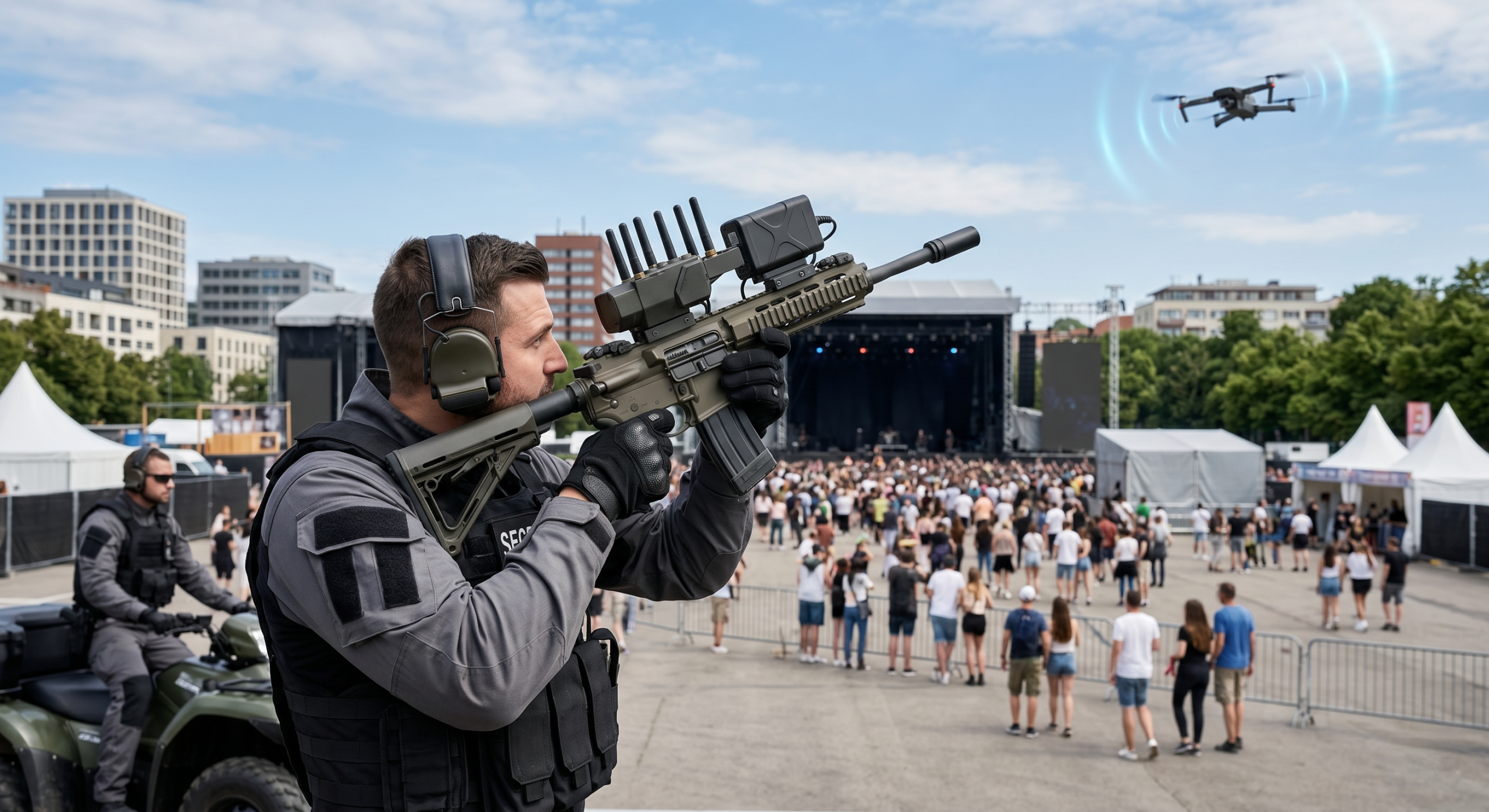
Deploying mobile signal disruption technology provides the most effective way to neutralize unauthorized aerial threats at temporary events where fixed infrastructure is unavailable. As rogue drone incidents increase, security managers face the constant risk of unauthorized surveillance or physical disruption during high-profile gatherings. You cannot rely on traditional fences when the threat arrives from the sky, leaving your attendees and assets vulnerable to unseen risks. Utilizing professional Anti Drone Jammers solves this by establishing a flexible, invisible perimeter that grounds unauthorized aircraft instantly.
Why are drones a growing threat to public events?
Drones represent a significant security gap because they can bypass traditional ground-level checkpoints to deliver payloads or conduct unauthorized surveillance. The accessibility of high-speed consumer drones means that almost anyone can launch a flight over a crowded festival or political rally. Anti Drone Jammers are now essential components for modern risk management at these sensitive sites.
Identifying vulnerabilities at crowded venues
Crowded venues are inherently difficult to secure due to the high density of people and the open-air nature of most temporary sites.
The truth is:
Most security perimeters only consider two dimensions, leaving the vertical axis completely exposed.
- Unauthorized data skimming via Wi-Fi.
- Direct physical threats to VIPs.
- Broadcast interference for media teams.
The shift in modern aerial security risks
Security teams must recognize that a drone is no longer just a toy but a sophisticated tool for industrial espionage.
Think about it:
An attacker can remain miles away while their drone captures sensitive site layouts or interrupts a private performance.
- High-definition camera payloads.
- Signal interception hardware.
- Agile flight paths that evade visual detection.
Key Takeaway: Understanding the vertical threat profile is the first step in moving from reactive to proactive venue security.
| Threat Type | Risk Level | Primary Impact |
|---|---|---|
| Surveillance | High | Privacy/Data Theft |
| Payload Delivery | Critical | Physical Safety |
| Signal Jamming | Moderate | Operational Delay |
The following data provides a deeper look into the specific operational requirements for site protection.
How do portable jammers enhance venue security?
Portable jammers enhance security by allowing your team to move the defensive perimeter in real-time as the crowd or VIP assets change location. Anti Drone Jammers provide the agility needed for dynamic environments like convoys or pop-up festivals.
Flexibility in temporary site protection
Temporary sites require defense systems that can be packed, moved, and redeployed within minutes.
Here is the kicker:
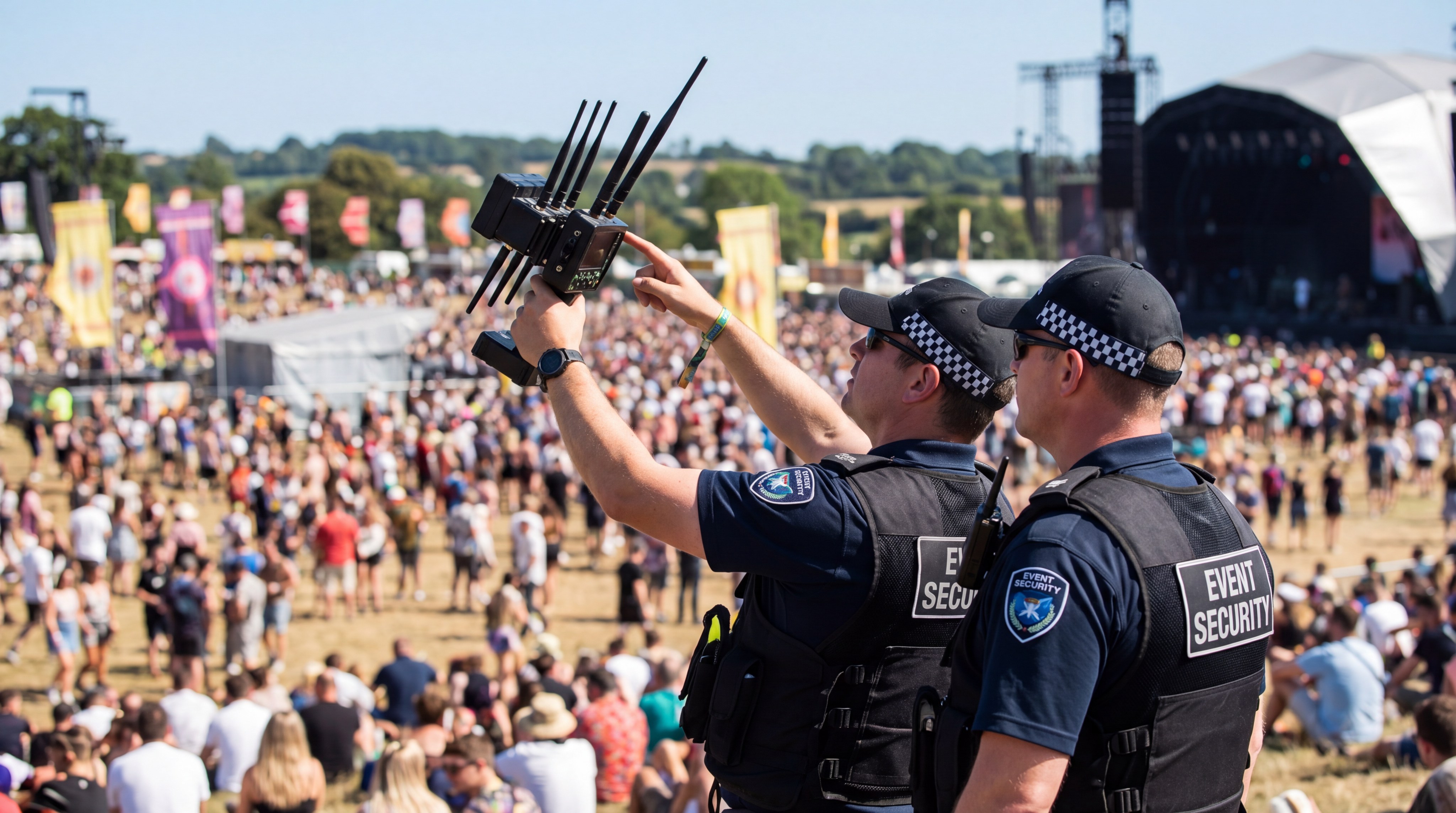
A handheld unit allows a single guard to cover a 2 km radius without needing a power grid or permanent mounting.
- Rapid transit between security zones.
- Immediate adjustment for wind and terrain.
- Low visual profile for discrete operations.
Rapid deployment for immediate response
When an unauthorized drone is spotted, you don’t have time for a complex setup or calibration process.
Believe it or not:
Professional units can reach full operational power in less than three seconds from a cold start.
- Trigger-based signal activation.
- Pre-configured frequency presets.
- Intuitive aiming for untrained personnel.
Key Takeaway: Mobility transforms a static defense into a responsive shield that follows the flow of the event.
| Deployment Phase | Timeframe | Action Required |
|---|---|---|
| Identification | 1-5 Seconds | Visual or Sensor Flag |
| Activation | < 3 Seconds | Device Power On |
| Neutralization | 10-30 Seconds | Targeted Frequency Emission |
We must now evaluate how these systems interact with the complex RF environment of a modern city.
Can jammers operate without hitting local signals?
Modern jammers utilize highly directional antennas to focus disruption energy solely on the target, sparing local mobile and emergency networks from interference. This precision is vital for events where staff depend on clear radio and cellular communication to manage the crowd. Anti Drone Jammers ensure that the “no-fly zone” does not become a “no-communication zone.”
Precision targeting and directional antennas
The use of high-gain directional antennas allows operators to “paint” the drone with a signal beam rather than flooding the entire area.
Look at it this way:
It is the difference between a flashlight that lights a path and a floodlight that blinds everyone in the room.
- Beam widths typically restricted to 30 degrees.
- Minimal side-lobe interference.
- Increased range via focused power.
Managing interference in high-density areas
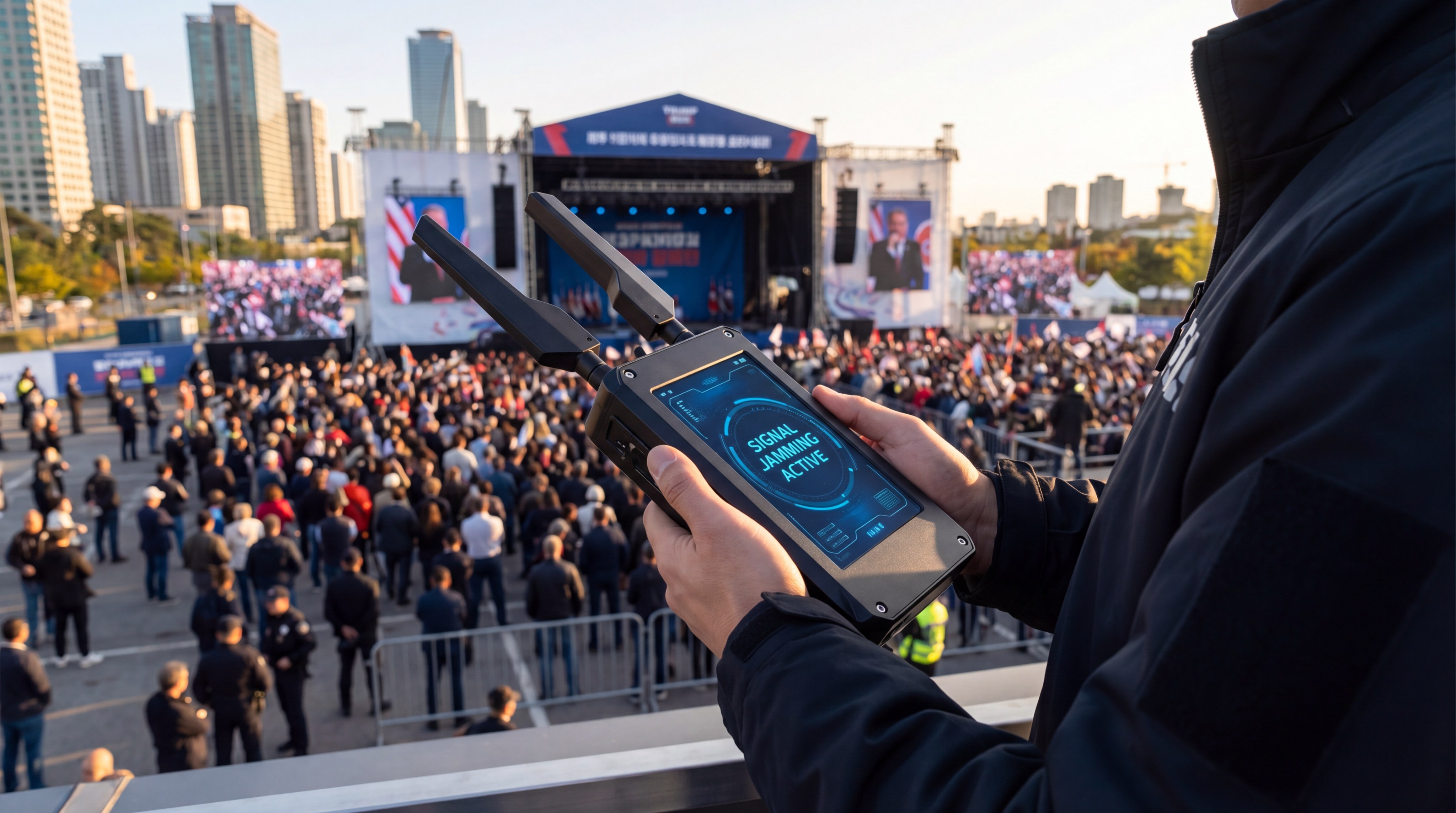
Operating in a city center or a stadium requires surgical frequency management to avoid FCC or local regulatory violations.
Wait, there’s more:
Advanced units allow you to select individual bands, such as GPS or 2.4GHz, depending on the specific threat.
- Selective band disruption capability.
- Power output modulation for close-range targets.
- Shielded internal components to prevent local leaks.
Key Takeaway: Directional technology ensures that your security measures don’t disrupt the very event you are trying to protect.
| Antenna Type | Effective Angle | Local Impact |
|---|---|---|
| Directional | 15° – 35° | Low |
| Sectoral | 60° – 120° | Moderate |
| Omni-directional | 360° | High |
This leads us to the physical requirements for hardware used in demanding field conditions.
What features ensure reliable field operations?
Reliability in the field depends on a combination of ruggedized housing, long-lasting battery power, and clear status indicators for the operator. Professional-grade Anti Drone Jammers are built to survive the elements while providing real-time telemetry on signal strength and remaining charge.
Effective battery management for long shifts
A security tool is only useful if it remains powered during the entire window of a high-risk operation.
The best part?
Modern lithium-ion cells now support over 45 minutes of continuous jamming, which is enough to handle dozens of separate incursions.
- Hot-swappable battery compartments.
- Low-power standby modes for standby.
- Fast-charging capabilities for multi-day events.
Monitoring power levels during active use
Operators need to know exactly how much “fight” is left in their device during an active threat engagement.
Here’s the deal:
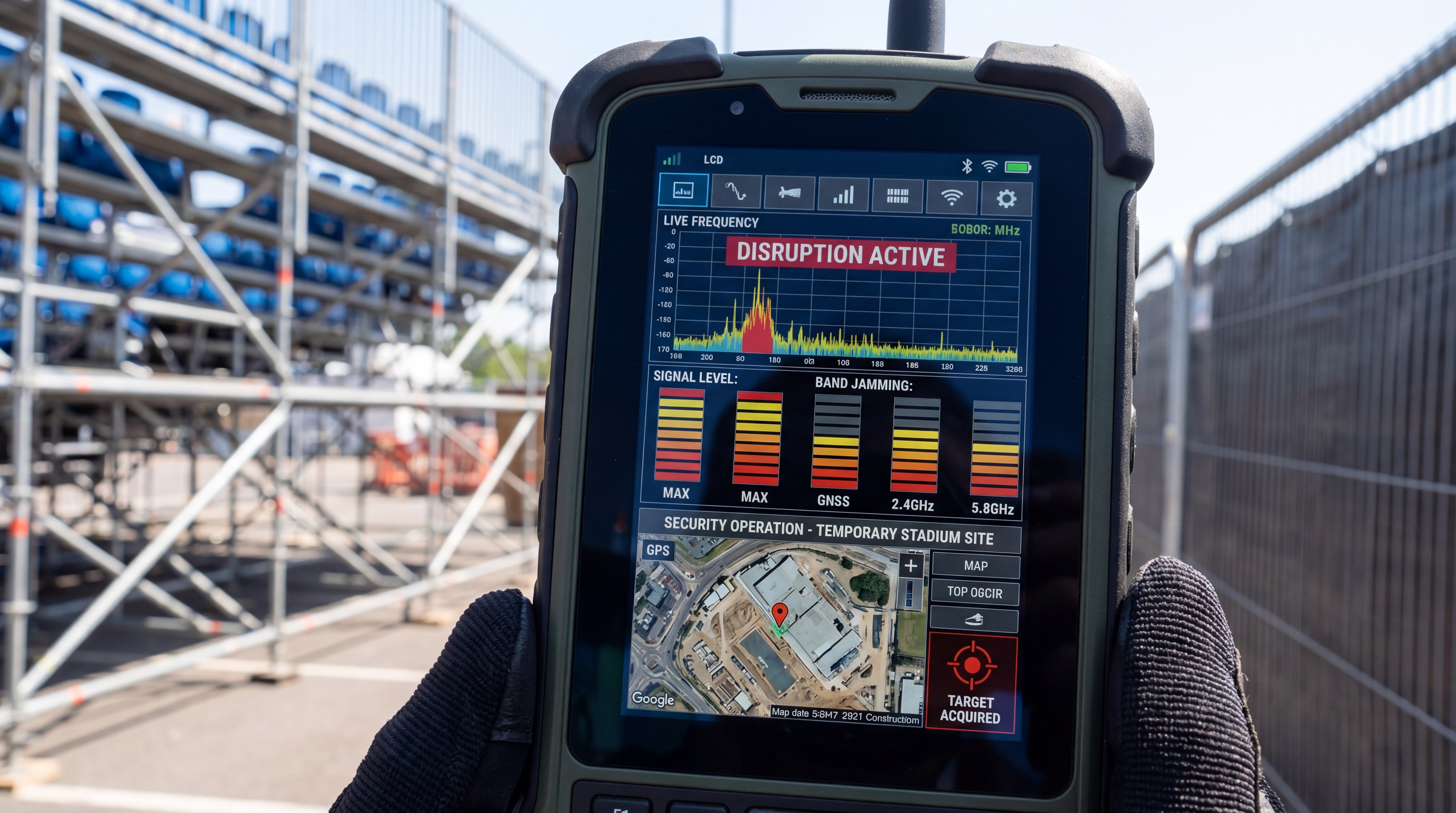
LCD screens provide real-time voltage and power data, ensuring you never run out of juice mid-interception.
- Backlit displays for night operations.
- Audible low-battery alerts.
- Individual band power indicators.
Key Takeaway: Operational uptime is a product of efficient power management and intuitive user feedback systems.
| Battery Stat | Metric | Benefit |
|---|---|---|
| Active Time | 45-60 Minutes | Sustained Defense |
| Charge Time | 2 Hours | Quick Turnaround |
| Cycle Life | 500+ Charges | Long-term ROI |
Frequency coverage remains the primary factor in whether a jammer will actually ground a drone.
Why is frequency range critical for jammer success?
Frequency range determines which types of drones can be blocked, as different manufacturers utilize various bands for control, video transmission, and navigation. Most commercial drones are rendered useless when their 2.4GHz and 5.8GHz links are severed. Anti Drone Jammers must offer multi-band coverage to be considered a viable defense solution.
Disruption of GPS and Wi-Fi control links
When a drone loses its GPS or control link, it typically enters a “fail-safe” mode, either landing or returning to its takeoff point.
Keep in mind:
Blocking the navigation signal prevents the drone from following pre-programmed waypoints even if the remote link is strong.
- Disrupting GLONASS and Galileo bands.
- Severing the 2.4GHz control uplink.
- Forcing an immediate landing protocol.
Multi-band capabilities for diverse threats
A single-band jammer is easily bypassed by drones that use frequency-hopping or non-standard industrial bands.
But wait, there’s more:
Professional units cover up to 10 distinct bands, ensuring that even custom-built or modified drones are neutralized.
- 900 MHz for long-range industrial units.
- 5.2 GHz and 5.8 GHz for video downlinks.
- Custom bands for specialized military threats.
Key Takeaway: Total frequency dominance is the only way to ensure 100% airspace denial across different drone models.
| Frequency Band | Target Function | Result of Jamming |
|---|---|---|
| 1.5 GHz (L1) | GPS/Navigation | Loss of Position |
| 2.4 GHz | Remote Control | Return to Home |
| 5.8 GHz | Video Feed | Operator “Blindness” |
We should also consider how these handheld tools work alongside larger, permanent security grids.
How do handheld jammers fit into layered defense?
Handheld units act as the “mobile response” layer, filling the gaps and blind spots inherent in stationary sensor and jamming arrays. By integrating Anti Drone Jammers into a broader security network, you create a redundant system that is much harder to penetrate.
Closing gaps in stationary defense systems
Buildings, trees, and stadium geometry often create “shadows” where fixed radar or jammers cannot see or reach.
Think about this:
A guard on a rooftop can manually target a drone that is hiding behind a grandstand or under a bridge.
- Eliminating RF shadows in urban areas.
- Providing 360-degree coverage on the move.
- Serving as a backup during power outages.

Coordinated response with detection sensors
When a fixed detection system flags a threat, the mobile team is dispatched to the precise GPS coordinates to engage visually.
The truth is:
Detection tells you where the threat is, but the mobile jammer is what actually stops it.
- Radio-linked coordination with HQ.
- Visual confirmation of neutralized targets.
- Tactical positioning based on flight paths.
Key Takeaway: Layered defense combines the constant vigilance of fixed systems with the tactical precision of mobile units.
| Defense Layer | Component | Role |
|---|---|---|
| Detection | Radar/RF Sensors | Early Warning |
| Deterrence | Fixed Jammers | Area Denial |
| Neutralization | Handheld Jammers | Precision Kill |
Personnel comfort and ease of use are often overlooked factors in long-term security success.
Is ergonomics vital for security personnel?
Ergonomics ensure that security staff can carry and operate the equipment for hours without fatigue, which is critical for maintaining high alertness levels. Anti Drone Jammers designed for the user’s body allow for faster reaction times when a drone suddenly appears.
Lightweight designs for mobility and speed
Traditional military jammers were often too heavy for single-person use, requiring a tripod or a vehicle mount.
Here is the kicker:
Modern carbon-fiber and alloy housings reduce weight to under 5kg, making them as portable as a standard rifle.
- Shoulder-mount options for stability.
- Balanced center of gravity to reduce wrist strain.
- Integrated carrying straps for hands-free patrol.
One-handed operation for better awareness
The ability to operate the device with one hand allows the guard to use their other hand for communication or crowd management.
You see:
Simple trigger mechanisms and thumb-toggled switches prevent the operator from having to look away from the target.
- Tactile buttons for glove-friendly use.
- Integrated handles for firm grip.
- Quick-release battery latches.
Key Takeaway: User-centric design directly impacts the speed and accuracy of a threat engagement.
| Design Element | Traditional Jammer | Modern Ergonomic Jammer |
|---|---|---|
| Weight | > 15 kg | < 5 kg |
| Grip | Two-handed/Fixed | One-handed/Adjustable |
| Carry Mode | Backpack/Case | Tactical Sling |
This ease of use is particularly important when trying to track a drone moving at high speeds.
Can jammers handle high-speed moving targets?
High-speed targets require a jammer that can be panned and tilted instantly to maintain the signal link between the device and the aircraft. Handheld Anti Drone Jammers allow operators to visually track and follow erratic flight paths that would confuse automated systems.
Tracking drone incursions in real-time
FPV (First Person View) racing drones can travel at speeds exceeding 100 mph, making them extremely difficult to hit with a fixed beam.
It’s a simple fact:
A human operator can anticipate turns and dips far better than a simple automated motor-mount.
- Visual tracking of LED lights at night.
- Following tree-line flight paths.
- Leading the target to maintain signal lock.
Sustaining signal disruption during flight
Consistent signal output is required because even a momentary “break” in the jam can allow the drone to regain control and escape.
Don’t forget:
The signal beam must remain active and focused even as the operator moves through a crowded area.
- Continuous wave emission technology.
- Wide-beam H-plane for lateral tracking.
- Automatic power scaling for moving targets.
Key Takeaway: Real-time human tracking is the most reliable method for stopping high-velocity aerial threats.
| Target Speed | Tracking Method | Success Likelihood |
|---|---|---|
| Hover (0 mph) | Static Lock | 99% |
| Casual (25 mph) | Visual Panning | 95% |
| Racing (100+ mph) | Predictive Tracking | 75% |
Distance is the final technical hurdle that determines the effectiveness of your security buffer.
How does distance impact jammer effectiveness?
Distance is the primary factor in providing a “reaction buffer,” as you want to ground a drone long before it is close enough to capture sensitive footage or drop a payload. A 2 km range allows your security team to establish a massive exclusion zone around the venue.
Reaching threats at a 2 km range
A 2 km reach ensures that the drone operator’s video feed is cut while they are still far from the crowd’s center.
Keep this in mind:
The goal is to make the drone pilot feel like they hit an invisible wall before they ever see the stage.
- High-gain Yagi or Log-periodic antennas.
- Multi-watt output per frequency band.
- Signal penetration through urban foliage.
Optimizing output for maximum coverage
As the distance increases, the signal naturally spreads out, requiring intelligent power management to maintain effectiveness.
The secret is:
Professional jammers use specialized amplifiers that prevent signal “drop-off” at the edge of the range.
- Adjustable power stages for different ranges.
- Minimized signal dispersion at long distances.
- Consistent interference density.
Key Takeaway: Long-range capability provides the time and space needed to manage a threat safely without causing a panic.
| Distance | Security Strategy | Outcome |
|---|---|---|
| 100m – 500m | Last-resort Jam | Grounding over Crowd |
| 500m – 1.5km | Standard Intercept | Forced Return to Home |
| 1.5km – 2km | Perimeter Denial | Early Warning/Deterrence |
Looking ahead, we must prepare for the next generation of aerial challenges.
What is the future of mobile drone defense?
The future of mobile defense involves the integration of detection and jamming into a single handheld unit, creating a fully self-contained security tool. As technology matures, Anti Drone Jammers will become smarter, lighter, and more capable of handling mass incursions.
Advancements in portable jammer tech
Integrated RF sensors will soon allow jammers to “sniff” the air for drone signals before the guard even sees the aircraft.
You won’t believe it:
Future units will vibrate or beep to point the operator toward a threat hiding behind a cloud or building.
- AI-assisted signal identification.
- Integrated thermal or optical sights.
- Automated frequency matching.
Future-proofing sites against drone swarms
As drone swarms become a reality, jammers will need to emit wider, higher-power “walls” of interference to handle dozens of targets at once.
This is the future:
One operator will be able to disrupt an entire formation of drones with a single broad-spectrum sweep.
- Symmetrical multi-target jamming.
- Increased energy density for swarm disruption.
- Cloud-linked coordination between multiple units.
Key Takeaway: Staying ahead of the drone “arms race” requires investing in hardware that can be updated for future signal protocols.
| Future Feature | Estimated Arrival | Impact on Security |
|---|---|---|
| Integrated Detection | 2026-2027 | Self-contained Response |
| Swarm Defense | 2028 | Multi-target Capability |
| AI Signal Matching | 2027 | Automated Band Selection |
Security challenges at dynamic venues are solved by merging portability with high-precision RF technology. By addressing the invisible threat of rogue drones, we empower event organizers to focus on the experience rather than the risk. At Corelix, we are committed to providing the insights and equipment needed to maintain total airspace control. Whether you are managing a moving convoy or a temporary stadium site, our goal is to ensure your perimeter is impenetrable from every angle. Please contact us to learn more about our strategic security solutions and custom hardware configurations.
Frequently Asked Questions
Can I use a jammer at any public event?
Typically, yes, but only if you are an authorized security entity or law enforcement officer following local airspace regulations. Unauthorized use by private citizens is often restricted due to the risk of interfering with public communication networks.
What’s the best way to handle a drone that won’t land?
The best way is to maintain a constant jam on the GPS and 2.4/5.8GHz bands simultaneously until the drone’s battery is depleted. This forces the unit to either hover in place or enter a slow, controlled descent.
How do I know if the jammer is actually working?
You will see the drone stop moving, begin to drift with the wind, or start a “Return to Home” flight path. Most professional units also have indicator lights on the display to confirm signal transmission.
Can I damage the drone by jamming it?
No, jamming is a non-destructive method of defense that only interrupts the signal link. The drone’s hardware remains intact, it simply loses the ability to receive commands or transmit video.
What’s the best maintenance schedule for these devices?
The best schedule involves checking the battery health every 30 days and performing a signal test in a controlled environment every quarter. Keeping the antenna ports clean and the firmware updated is also crucial for performance.
Authorized RF engineering and compliance review
For regulated RF systems, this page should be used as an engineering and compliance review path, not as a public deployment checklist. CorelixRF starts with authorization status, operating region, frequency plan, output limit, antenna interface, safety controls, thermal limits and acceptance documents.
- RFQ checklist – send the data buyers usually forget, including band, power, duty cycle, interface and test standard
- delivery documentation – check what documents can support incoming inspection, FAT review and long-term maintenance
- quality and certification review – review the quality and compliance evidence before the project moves into procurement
- RF front-end platform – compare the RF chain as a system instead of selecting one isolated module
- RF configurator – turn frequency, power, thermal and interface requirements into a first configuration brief
- case studies – review similar engineering paths before sending an RFQ
- engineering contact – send the application notes, block diagram or target specification to engineering sales
This keeps the discussion inside lawful, authorized RF programs while still giving procurement teams a clear way to request amplifier, antenna, SDR source, documentation and factory review.
Temporary Event RF Compliance Review Path
For authorized temporary-event C-UAS programs, align site constraints and response boundaries with RF front-end integration, RF power amplifier platform selection and antenna/load planning. Share frequency bands, power targets, duty cycle, cooling, enclosure limits, deployment window and documentation requirements through the RF inquiry form.