
Engineering Decision and RFQ Checklist
This page is now treated as a primary RF engineering guide for reliability evidence, derating, environmental limits and documentation. Use the checklist below to turn the article into a buyer-ready RFQ and factory review package.
Map reliability requirements to RF modules and factory evidence
When reliability depends on amplifier derating, antenna matching, thermal design or delivery documentation, CorelixRF can align RF modules with test evidence and production review.
| Decision Area | What to Confirm | Evidence to Request |
|---|---|---|
| Operating condition | Band, output power, duty cycle, waveform or sweep condition. | Rated operating table and test setup notes. |
| Interface | RF connector, load or antenna condition, control interface and power supply. | Interface drawing, control table and connector limits. |
| Reliability | Thermal path, protection behavior, enclosure airflow and environmental margin. | Thermal data, protection event notes and inspection records. |
| Acceptance | Gain, flatness, power, mismatch behavior, stability or repeatability limits. | FAT checklist, calibration state and final test curves. |
- RFQ checklist – convert requirements into buyer-ready fields.
- RF configurator – summarize band, power, interface and duty-cycle requirements.
- Delivery documentation – align test curves and FAT-style evidence.
- Case studies – compare how engineering issues become procurement decisions.
- Contact CorelixRF – send the requirement package for review.
Primary Topic Hub and RFQ Path
This primary guide now consolidates related RF engineering references. Use it for the current technical explanation, RFQ preparation, factory review and delivery documentation path.
- How to Ensure Reliability in High-Performance Electronic Systems? – consolidated reference
The purpose is to reduce duplicate SEO pages while keeping buyers on one stronger engineering guide with clearer RFQ and documentation paths.
- RFQ checklist – prepare band, power, duty cycle, interface, cooling and acceptance inputs.
- RF configurator – turn project requirements into a first engineering brief.
- Delivery documentation – align test curves, inspection records and FAT-style evidence.
- Case studies – review how CorelixRF frames RF problems for buyer decisions.
- Contact engineering sales – submit the documented scope for review.
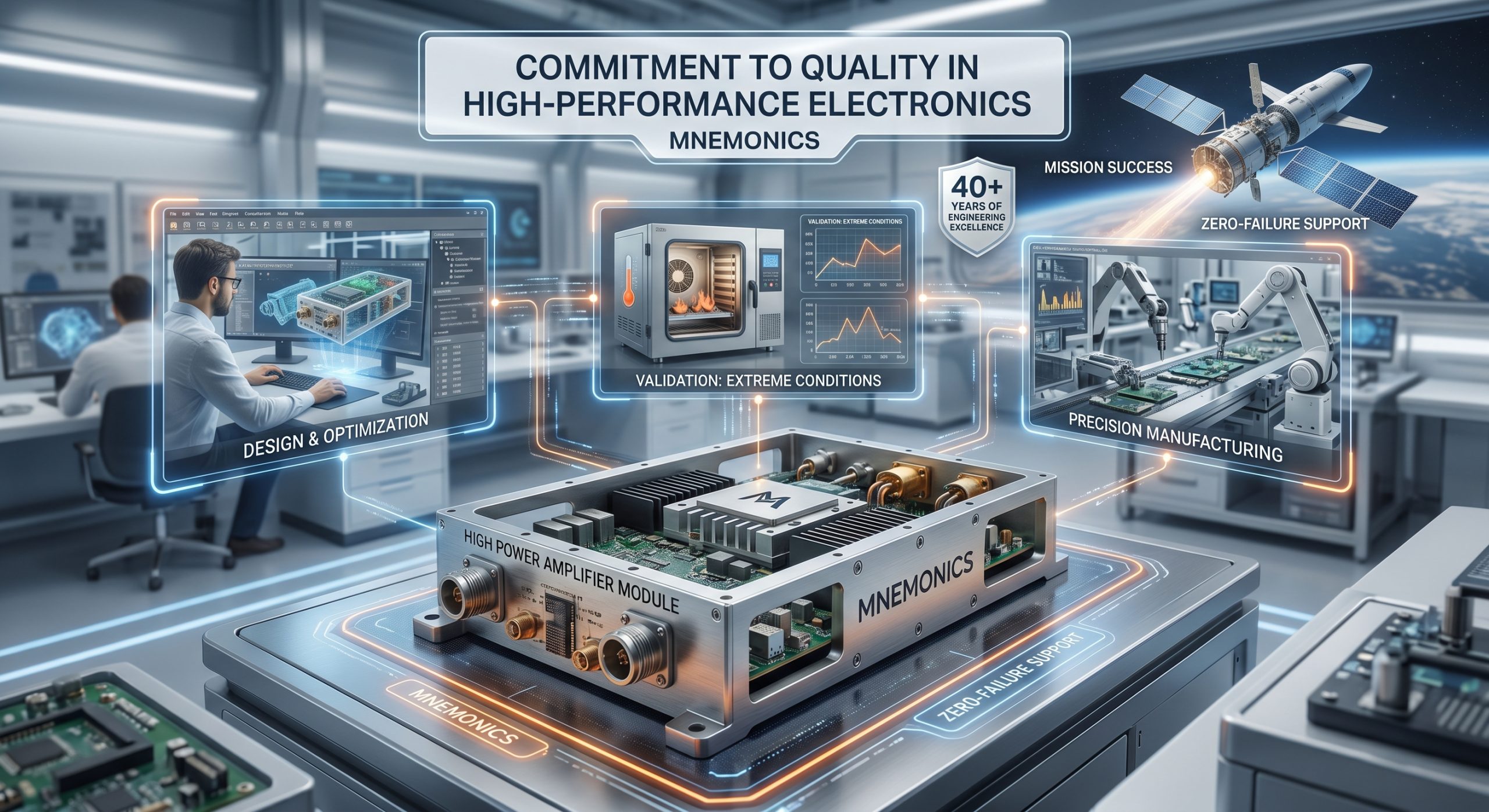
The commitment to quality standards ensures that every high-performance electronic system meets the rigorous reliability demands of aerospace and defense missions. In mission-critical operations, you cannot afford equipment failure, as even a minor malfunction can lead to catastrophic mission outcomes. This reality creates a high-pressure environment where unverified hardware results in lost data, operational delays, and significant financial risks. Addressing these challenges requires a deep understanding of what is high power amplifier technology and a strict adherence to international quality protocols that guarantee performance from the laboratory to the field.
How is a legacy of trust built in electronic systems?
Building a legacy of trust requires a consistent record of field-proven reliability and rigorous adherence to technical specifications over several decades. When you evaluate a technology partner, you must look for an engineering-driven approach that defines what is high power amplifier stability in contested environments. This foundation of trust is established by aligning manufacturing processes with the precise needs of military and aerospace agencies.
Defining technical trust in modern defense
You must recognize that trust is earned through transparent documentation and repeatable results across multiple project lifecycles. Maintaining long-term partnerships with major defense contractors requires a focus on precision and safety.
Think about it:
- Decades of engineering experience reduce integration risks.
- Proven performance in rugged environments validates hardware.
- Consistency in output power ensures mission success.
Key Takeaway: Engineering Excellence
| Trust Factor | Strategic Impact |
|---|---|
| Historical Data | Predictable system behavior in the field |
| Agency Alignment | Streamlined compliance for defense projects |
Historical reliability data serves as a critical baseline for predicting how complex electronic systems will perform under extreme operational stress.
Why does end-to-end quality start at the design phase?
End-to-end quality starts at the design phase because identifying potential failure points early in the schematic process prevents costly modifications and field malfunctions later. Engineering teams must have a clear vision of what is high power amplifier architecture to ensure every component integrates seamlessly within a larger system. By embedding quality into the initial design lab workflows, you minimize the risk of structural weaknesses during mass production.
How integrated design reduces operational risk
You gain a significant advantage when engineering design and manufacturing are handled under one roof to maintain tight control over variables. This integrated approach ensures that every thermal and mechanical constraint is addressed before the first prototype is built.
Here is the deal:
- In-house design coordination eliminates third-party errors.
- Early-stage modeling identifies thermal bottlenecks.
- Risk mitigation is woven into the initial circuit review.
Key Takeaway: Design-First Quality
| Design Element | Quality Benefit |
|---|---|
| Schematic Review | Identification of early failure points |
| Thermal Modeling | Prevention of overheating in tight spaces |
Proactive design reviews significantly lower the probability of encountering unexpected hardware issues during the final stages of system deployment.

How do advanced testing and validation ensure reliability?
Advanced testing and validation ensure reliability by simulating real-world stressors to verify that hardware can survive and thrive in the harshest atmospheric conditions. These rigorous procedures are essential for defining what is high power amplifier capability under extreme thermal cycling and mechanical vibration. You need to know that every unit has been individually validated against its performance baseline before it ever reaches your integration bench.
Validation methods for extreme environments
You should expect every component to undergo exhaustive stress testing that mimics launch environments and high-altitude transitions. This commitment to validation ensures that functionality remains precise even when the system is subjected to intense electromagnetic interference.
The best part is:
- Thermal cycling verifies component stability across temperature shifts.
- Vibration testing simulates the rigors of aerospace transport.
- EMI checks prevent interference with neighboring electronics.
Key Takeaway: Rigorous Validation
| Test Protocol | Operational Result |
|---|---|
| Shock Testing | Hardware durability during physical impact |
| Signal Analysis | Verified spectral purity and gain flatness |
Individual unit testing provides the necessary performance data to give you total confidence during the system-level integration of mission-critical hardware.
Can continuous innovation drive better system performance?
Continuous innovation drives better system performance by constantly refining engineering methods and investing in new technologies that improve hardware efficiency and precision. An agile mindset allows you to stay ahead of the curve by understanding what is high power amplifier efficiency in the context of modern electronic warfare. By iterating early and often, technical teams can deliver cutting-edge solutions that are both field-proven and ready for future upgrades.
Why agile iteration matters in high-tech systems
You benefit from an innovation-focused culture that seeks to reduce lead times without sacrificing the integrity of the final product. Investing in advanced testing equipment and automated assembly methods ensures that your systems remain competitive in a rapidly evolving landscape.
The bottom line is:
- Refined manufacturing methods accelerate project timelines.
- New equipment investments enhance production precision.
- Agile prototyping keeps hardware future-ready.
Key Takeaway: Iterative Growth
| Innovation Focus | Strategic Outcome |
|---|---|
| Equipment Upgrades | Increased repeatability in manufacturing |
| Lean Methods | Optimized turnaround for custom orders |
A commitment to continuous process improvement ensures that high-performance systems consistently meet or exceed the evolving standards of the aerospace industry.

What role does scalable production play in global support?
Scalable production allows for a seamless transition from rapid prototyping to high-volume manufacturing while maintaining the strict quality standards required for global technical support. When you move into multi-year production runs, the manufacturer must have a stable definition of what is high power amplifier production consistency. This scalability ensures that both commercial and militarized systems are delivered with equal precision, regardless of the order volume.
Building flexibility into high-volume fabrication
You need a partner that can adapt workflows to meet shifting project demands and provide on-site field support across global locations. Flexibility in manufacturing ensures that your hardware can be customized for specific mission footprints without compromising delivery schedules.
Think about this for a moment:
- Customizable workflows support diverse project scopes.
- Global logistics ensure field maintenance is always available.
- Scalable assembly lines maintain unit-level quality.
Key Takeaway: Scalable Execution
| Production Stage | Quality Characteristic |
|---|---|
| Prototyping | High flexibility for technical iteration |
| Full-Scale | Rigid process control and repeatability |
Controlled scaling from the lab to the factory floor ensures that every unit in a high-volume run meets the same exacting specifications as the original prototype.
Which industry certifications guarantee excellence?
Industry certifications guarantee excellence by providing an external validation of a manufacturer’s quality management systems and technical assembly standards. Adhering to recognized protocols like ISO 9001 and AS9100 helps define what is high power amplifier development integrity in a way that procurement teams can trust. These certifications are not merely badges but are the foundation of daily operations, ensuring that every assembly process follows a repeatable and audited path.
Why aerospace standards are non-negotiable
You must rely on hardware that is built to specific defense-grade standards to ensure safety and long-term performance in high-stakes environments. External audits and verification procedures provide the necessary transparency to guarantee that documentation practices are flawless.
But that’s not all:
- ISO 9001 ensures a repeatable management system.
- AS9100 compliance aligns with aerospace requirements.
- IPC standards guarantee high-quality soldering and assembly.
Key Takeaway: Certified Integrity
| Certification | Industry Application |
|---|---|
| AS9100 | Aerospace and Defense quality management |
| MIL-STD-810 | Environmental engineering and testing |
Strict adherence to international certifications provides a verified framework that eliminates manufacturing risks and supports consistent delivery of high-performance electronics.
Why are high-standard supplier partnerships essential?
High-standard supplier partnerships are essential because the integrity of a complex electronic system is directly dependent on the quality of its individual components. Vetting partners based on their technical grasp of what is high power amplifier component requirements is the first step in securing a reliable supply chain. By holding vendors to the same rigorous standards followed internally, you protect your projects from the risks associated with unverified materials or counterfeit parts.
Maintaining material traceability across the chain
You gain peace of mind through a zero-tolerance policy for substandard materials and a commitment to full documentation for every raw component sourced. Performance evaluations for tier-one vendors ensure that every part of the system meets your mission-critical benchmarks.
In other words:
- Rigorous documentation tracks every raw material.
- Vendor evaluations protect the supply chain’s integrity.
- Counterfeit prevention measures ensure hardware safety.
Key Takeaway: Secure Sourcing
| Partner Metric | Operational Outcome |
|---|---|
| Traceability | Verified origin of every system component |
| Compliance | Alignment with internal quality benchmarks |
A secure and transparent supply chain is fundamental to maintaining the long-term reliability and safety of electronic systems deployed in defense applications.

How is precision achieved through custom engineering?
Precision is achieved through custom engineering by tailoring every technical specification to meet the unique demands and mechanical constraints of a specific mission. You must start with a clear understanding of what is high power amplifier performance for the exact frequency bands and power levels your project requires. Working closely with an engineering team from kickoff to final delivery ensures that the tailored hardware aligns perfectly with your regulatory guidelines and budget.
Factors that influence tailored system solutions
You should look for a collaborative approach that considers everything from mechanical housing to signal path clarity during the development phase. Customization allows you to optimize systems for tight enclosure spaces while maintaining high levels of output stability.
Now, consider this:
- Specific frequency needs dictate hardware architecture.
- Mechanical constraints influence the final form factor.
- Integration with legacy systems requires custom interfaces.
Key Takeaway: Precision Tailoring
| Customization Type | Impact on Project |
|---|---|
| Mechanical Fit | Optimized for space-constrained platforms |
| Signal Path | Enhanced clarity for specialized analysis |
Tailored engineering solutions ensure that you receive hardware specifically optimized for your operational environment rather than a generic, off-the-shelf alternative.
How can streamlined production power mission success?
Streamlined production powers mission success by coordinating design and assembly in-house to eliminate the bottlenecks typically associated with third-party vendors. You move faster from concept to hardware when the team mastering what is high power amplifier delivery is the same team that engineered the system. This coordination allows for rapid prototyping, which significantly lowers development risks through early testing and iterative feedback loops.
Does rapid prototyping impact project turnaround?
You benefit from moving through the development cycle in record time without sacrificing the performance or reliability of the final system. Better coordination between engineering and fabrication teams ensures that the transition to production is smooth and error-free.
The result is simple:
- Faster hardware delivery supports urgent mission needs.
- Early testing reduces the risk of late-stage failures.
- Integrated teams communicate more effectively.
Key Takeaway: Streamlined Delivery
| Strategic Benefit | Value to the Mission |
|---|---|
| Speed | Reduced time-to-market for critical systems |
| Coordination | Minimized errors between design and factory |
Efficient internal workflows allow you to deploy advanced electronic systems with greater speed and higher confidence in their technical execution.
Why is a mission-ready partnership critical for the future?
A mission-ready partnership is critical for the future because the complexity of modern electronic warfare requires a shared commitment to long-term reliability and advanced support. You need to know that your systems are built to meet the most demanding requirements of the next decade, focusing on what is high power amplifier stability in contested zones. Ruggedized hardware that can evolve with your needs ensures that your investment remains relevant as mission parameters change over time.
How rugged systems empower critical missions
You gain a strategic advantage when you rely on hardware designed for survival in the most challenging electromagnetic environments. Reducing long-term maintenance costs and field failures allows you to focus resources on achieving your primary operational objectives.
What does this mean for you?
- Confidence in signal transmission remains stable.
- Field failure costs are significantly reduced.
- Scalable hardware adapts to future mission shifts.
Key Takeaway: Long-Term Support
| Reliability Factor | Strategic Advantage |
|---|---|
| Ruggedization | Survival in harsh, contested environments |
| Support Lifecycle | Continuous performance through field service |
Partnering with an expert team ensures that your high-performance systems are built, tested, and delivered to empower your success for years to come.
FAQ
Can I request unit-level test data for my high-performance system?
Yes, you should expect every applicable unit to be tested individually with a full record of its performance parameters included in the delivery package. Providing verified data ensures that your integration starts with a clear baseline of gain, power, and spectral purity.
What’s the best way to ensure a custom system meets aerospace standards?
The most effective method is to choose a manufacturing partner with recognized certifications like ISO 9001 and AS9100. These frameworks ensure that every step of the engineering and assembly process is documented and audited for quality.
How do I know if a system is rugged enough for my environment?
You should verify that the hardware has undergone environmental stress testing, including thermal cycling and vibration simulation, to match your specific operational conditions. This validation proves that the system can maintain precision under intense physical and atmospheric pressure.
Can I modify the mechanical interface for a standard amplifier platform?
Yes, custom engineering support allows you to adjust housing, connector types, and cooling methods to fit the constraints of your target platform. Tailoring these mechanical details ensures a seamless integration into existing mission-critical enclosures.
What’s the best approach for securing a reliable supply chain for electronics?
The best strategy involves vetting suppliers through a rigorous requirement process that emphasizes material traceability and compliance with defense standards. Maintaining a transparent supply chain protects the final system from the risks of substandard or counterfeit components.
To ensure the highest standards in your high-performance electronic systems, it is essential to work with a partner who understands the complexities of mission-ready hardware. Experience precision, speed, and absolute reliability by reaching out to our engineering team. Contact us today to elevate your next mission with expert RF and electronic solutions.
Turn this RF requirement into a quotable specification
Use this article as a starting point for a buildable RF specification. Before quoting, CorelixRF normally checks frequency range, output power, gain flatness, duty cycle, load mismatch, thermal path, control interface, enclosure limits and acceptance data.
- RFQ checklist – send the data buyers usually forget, including band, power, duty cycle, interface and test standard
- delivery documentation – check what documents can support incoming inspection, FAT review and long-term maintenance
- quality and certification review – review the quality and compliance evidence before the project moves into procurement
- testing documentation – define curves, burn-in evidence and acceptance records before shipment
- case studies – review similar engineering paths before sending an RFQ
- RF configurator – turn frequency, power, thermal and interface requirements into a first configuration brief
- engineering contact – send the application notes, block diagram or target specification to engineering sales
For a faster review, send operating band, power target, modulation or waveform, antenna/load condition, cooling limit, mechanical envelope and target test standard through the RFQ or contact path.