

The primary application of a drone jamming device in airports is neutralizing unauthorized UAVs to protect airspace security and prevent catastrophic flight disruptions. Unauthorized drones entering restricted flight paths cause millions in delayed operations and severe safety hazards. This happens when hobbyists or malicious actors fly drones too close to active runways, triggering immediate ground stops. You need an easy way to mitigate these threats instantly. We engineer high-power Drone Jamming modules designed specifically for aviation security, allowing you to regain control of your airspace quickly.
How Does Drone Jamming Secure Airport Runways?
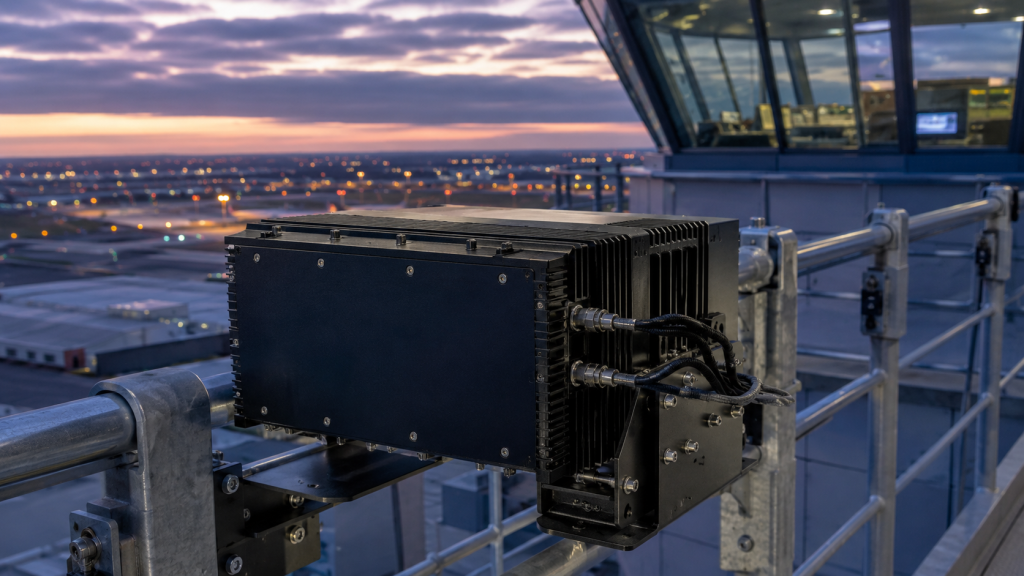
Drone jamming secures airport runways by instantly severing the communication link between a rogue drone and its operator. This rapid intervention forces the UAV to land or return to its origin, clearing the airspace. Your security teams need reliable tools to stop incursions within seconds.
What makes runway protection difficult?
Covering vast open spaces demands extreme power and precision from your RF equipment. Standard commercial gear often fails at these distances.
- Vast physical distances require high output wattage.
- Multiple frequency bands must be saturated simultaneously.
- Systems must run continuously without performance drops.
Here’s the deal: continuous operation is non-negotiable for aviation safety.
Key Takeaway: Implementing targeted signal disruption protects active flight paths from unauthorized aerial vehicles.
| Parameter | Application Requirement | RF Capability |
| Reaction Time | Sub-second | Instant SDR activation |
| Range | > 5 Kilometers | High-power GaN amplification |
| Frequencies | 2.4GHz, 5.8GHz, GNSS | Full-band coverage |
The data above indicates that high-power amplification directly correlates to maintaining an effective defensive range.
What Frequencies Do Drone Jamming Systems Target?
Effective Drone Jamming systems target a wide spectrum of frequencies ranging from 30MHz to 6GHz. Commercial UAVs typically operate on 2.4GHz and 5.8GHz bands, while custom builds might use lower frequencies. Your defensive grid must cover all possible communication channels to be truly secure. Relying on narrow-band equipment leaves vulnerabilities in your airspace.
Do you need full-band coverage?
Threats evolve rapidly, and attackers frequently modify their equipment to bypass standard defenses. You must deploy flexible signal sources.
- Blocks standard Wi-Fi and Bluetooth control links.
- Disrupts GNSS navigation signals.
- Addresses custom frequency hopping protocols.
You might be wondering, how do we manage all these bands? Wideband GaN technology allows continuous coverage across the entire spectrum.
Key Takeaway: Full-band capabilities prevent customized aerial threats from bypassing your security perimeters.
| Frequency Band | Target Communication | Threat Level |
| 433 MHz / 900 MHz | Long-range custom telemetry | High |
| 1.5 GHz | GNSS / GPS navigation | Severe |
| 2.4 GHz / 5.8 GHz | Standard commercial video | Medium |
Targeting the 1.5 GHz band effectively neutralizes automated waypoint navigation programmed by malicious actors.
Can Drone Jamming Operate Under Extreme Heat?
Continuous drone jamming operations generate significant thermal loads that degrade performance if not managed properly. When systems overheat, their power output drops, reducing the effective defensive radius of the airport. Your security infrastructure cannot afford these fluctuations during a prolonged incursion. Industrial-grade solutions utilize advanced aluminum heat-sink integrated designs to maintain stability.
How do cooling systems protect performance?
Excessive heat destroys internal circuitry and causes gain flatness issues across the frequency band. You need robust thermal management.
- Maintains consistent output wattage over long periods.
- Prevents sudden component failure during critical events.
- Extends the operational lifespan of the RF module.
Look no further, relying on hardware with integrated thermal management prevents catastrophic system failure.
Key Takeaway: Integrated thermal dissipation sustains maximum power output during continuous high-stress operations.
| Thermal Mechanism | Benefit | Operational Impact |
| Aluminum Heat-Sinks | Rapid heat dissipation | Prevents thermal throttling |
| Conformal Coating | Moisture protection | Outdoor reliability |
| Thermal Cycling | Stress verification | Prevents field failures |
Effective heat dissipation maintains the <1.5dB gain flatness required for reliable signal generation.
Why Are GaN Amplifiers Used in Drone Jamming?
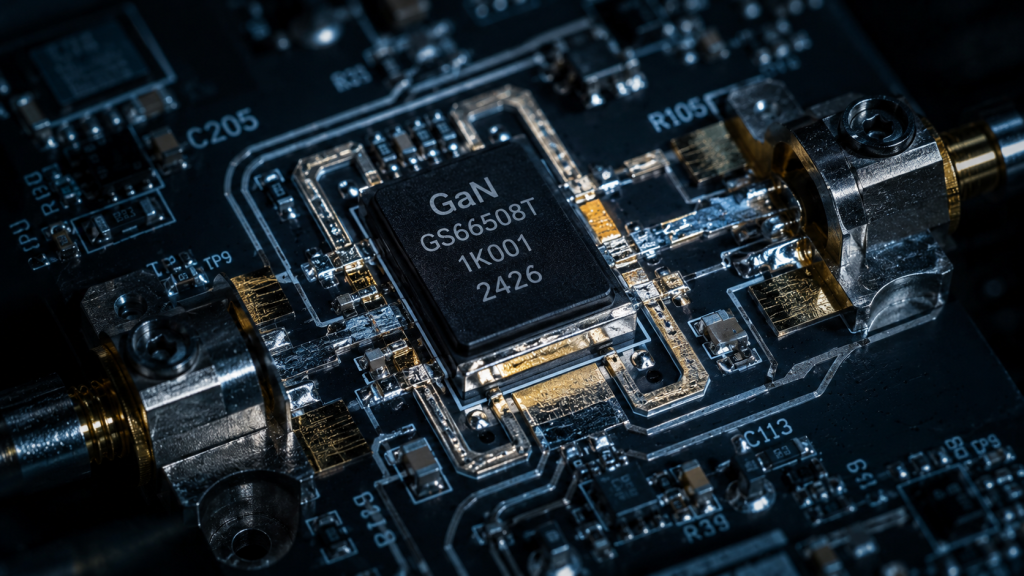
Gallium Nitride (GaN) technology provides the high-efficiency power required for modern Drone Jamming platforms. These amplifiers deliver greater power density and superior thermal conductivity compared to legacy silicon models. You gain more output from a smaller, lighter footprint. This allows for more compact and powerful defensive installations at your facility.
What makes GaN superior for RF applications?
GaN transistors can handle higher voltages, translating directly into stronger signal disruption. You can reach further and hit harder.
- Offers greater than 15% power headroom.
- Operates efficiently across a massive continuous frequency range.
- Withstands severe impedance mismatches without damage.
What’s the real story? GaN has become the absolute standard for military-grade RF operations due to its unmatched efficiency.
Key Takeaway: Transitioning to GaN-based amplification drastically increases your effective defensive perimeter.
| Technology | Power Density | High-Frequency Performance |
| LDMOS | Moderate | Degrades above 3GHz |
| GaAs | Low | Good |
| GaN | Maximum | Exceptional up to 40GHz |
Gallium Nitride clearly dominates high-frequency applications required for modern airspace security.
How Fast Can Drone Jamming React to Threats?
A rapid drone jamming response is necessary to stop fast-moving aerial vehicles before they reach restricted flight paths. When a target is traveling at high speeds, every single second of delay shrinks your safe zone. Your automated systems must recognize and engage the target almost instantly. Software Defined Radio (SDR) digital signal sources provide this immediate reaction time.
Can automated systems react faster than humans?
Manual engagement is often too slow for modern airspace defense. You must rely on integrated, automated triggers.
- Activates within milliseconds of detection.
- Instantly adapts to frequency hopping.
- Deploys specific waveforms based on the threat profile.
Ready for the good part? SDR modules allow for real-time adjustments without requiring any physical hardware changes.
Key Takeaway: Instantaneous digital signal generation neutralizes fast-moving targets before they cross critical boundaries.
| Reaction Phase | Timeframe | System Component |
| Detection | < 1 second | Radar / RF Sensors |
| Processing | Milliseconds | SDR Controller |
| Output | Instantaneous | GaN Power Amplifier |
Minimizing processing time guarantees the maximum possible distance between the threat and the runway.
What Are the Drone Jamming Testing Standards?
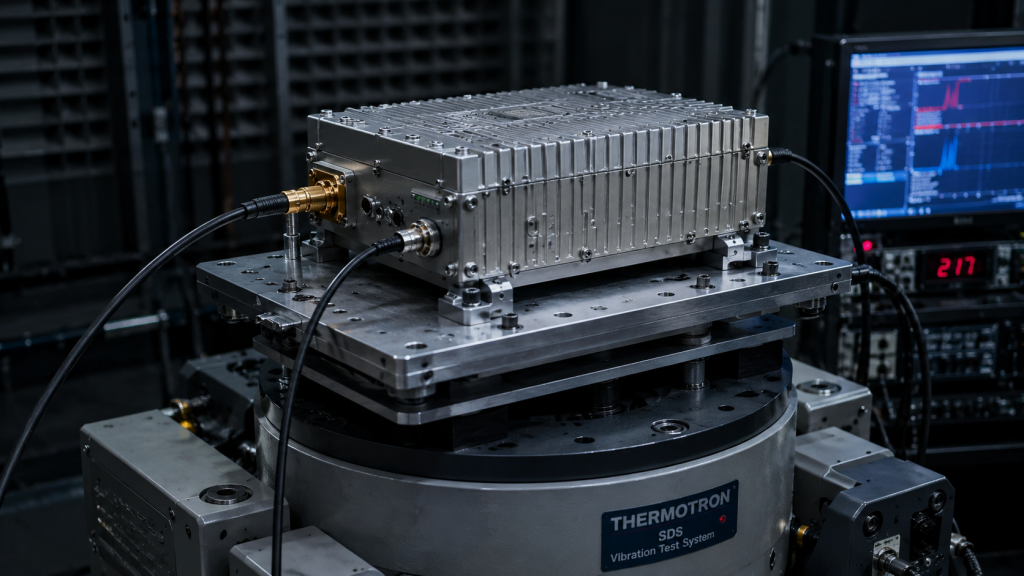
Military-grade Drone Jamming systems undergo rigorous 46-step quality control protocols to verify their reliability in extreme conditions. These tests mimic the harsh environments found at busy international aviation hubs. Your equipment will face extreme temperatures, heavy vibrations, and relentless usage. You cannot risk deploying untested hardware in life-or-death scenarios.
What tests validate RF equipment?
Strict laboratory verification separates professional hardware from unreliable consumer devices. You should demand full transparency.
- Thermal chamber testing simulates extreme weather.
- Vibration testing mimics heavy industrial environments.
- Vector Network Analyzers confirm impedance matching.
The bottom line is, true reliability is proven through relentless physical stress testing.
Key Takeaway: Comprehensive quality control protocols prevent unexpected equipment failures during critical security events.
| Test Phase | Simulated Condition | Objective |
| Thermal Cycling | Desert to Arctic shifts | Verify solder joint stability |
| RF Sweeping | Full spectrum usage | Confirm gain flatness |
| Aging Verification | 24/7 continuous operation | Prove long-term reliability |
Rigorous environmental testing confirms the physical resilience required for outdoor perimeter installations.
Can Drone Jamming Integrate With Radar Systems?
Advanced drone jamming infrastructure integrates directly with your existing radar and optical tracking systems. This creates a unified defensive ecosystem rather than a collection of isolated tools. When radar detects an anomaly, it feeds coordinates directly to the RF modules. You achieve a synchronized, automated defense network.
How do connected systems improve security?
Isolated jammers require manual aiming and activation, which is slow and prone to human error. You need seamless communication between devices.
- Automates the firing sequence upon detection.
- Directs power only where it is needed.
- Reduces collateral interference with legitimate airport signals.
Truth be told, system-level integration is what truly secures massive perimeters efficiently.
Key Takeaway: Synchronizing your RF output with advanced tracking sensors maximizes defensive accuracy and reduces reaction time.
| Integration Protocol | Data Shared | Operational Result |
| RS422 | Command signals | Instant activation |
| Ethernet | System diagnostics | Real-time monitoring |
| API | Targeting coordinates | Automated tracking |
Using standard communication protocols allows for seamless pairing with legacy optical and radar trackers.
How Do SDR Sources Improve Drone Jamming?

Software Defined Radio (SDR) replaces rigid analog circuits with flexible, programmable Drone Jamming architectures. Instead of being locked into a single frequency, the system can change its output dynamically. Attackers constantly alter their control signals to evade security forces. You stay ahead of the threat by adapting your output in real-time.
Why is programmable output necessary?
Analog systems become obsolete the moment a new communication protocol is released. You need hardware that evolves through software updates.
- Supports multiple waveforms like CW, LFM, and OFDM.
- Executes complex frequency hopping algorithms.
- Allows remote updates to counter new UAV models.
Want to know a secret? SDR is the backbone of all modern electronic warfare applications.
Key Takeaway: Programmable signal generation provides a future-proof defense against rapidly evolving aerial technologies.
| Waveform Type | Primary Application | Disruption Effect |
| Continuous Wave (CW) | Standard telemetry | Blocks simple remote controls |
| Linear FM (LFM) | Broadband sweeping | Covers wide target areas |
| Orthogonal (OFDM) | Advanced digital links | Breaks high-def video feeds |
Deploying multiple waveforms simultaneously creates an impenetrable barrier against sophisticated targets.
Why Do Airports Need Custom Drone Jamming?
Off-the-shelf drone jamming equipment rarely fits the unique electromagnetic profile of a major aviation hub. Airports are saturated with critical communication signals, ILS, and ground control radar. A generic system might accidentally knock out these vital services while trying to stop a threat. You require engineering-driven customization to fit your specific operational parameters.
How does customization prevent interference?
Deploying blind, high-power RF energy in an airport is incredibly dangerous. You must tailor the output.
- Customizes frequency bands to avoid friendly signals.
- Adjusts power levels for specific sector coverage.
- Designs specialized interfaces for legacy control rooms.
Now consider this, working with an actual manufacturer gives you complete control over the final product.
Key Takeaway: Engineered RF solutions protect your airspace without disrupting your daily aviation operations.
| Customization Area | Operational Need | Engineering Solution |
| Form Factor | Limited installation space | Custom aluminum enclosures |
| Output Power | Specific range requirements | Tailored GaN amplification |
| Protocols | Proprietary control software | Custom API development |
Adapting the physical form factor guarantees proper installation on existing control tower infrastructure.
How to Maintain Drone Jamming Effectiveness?
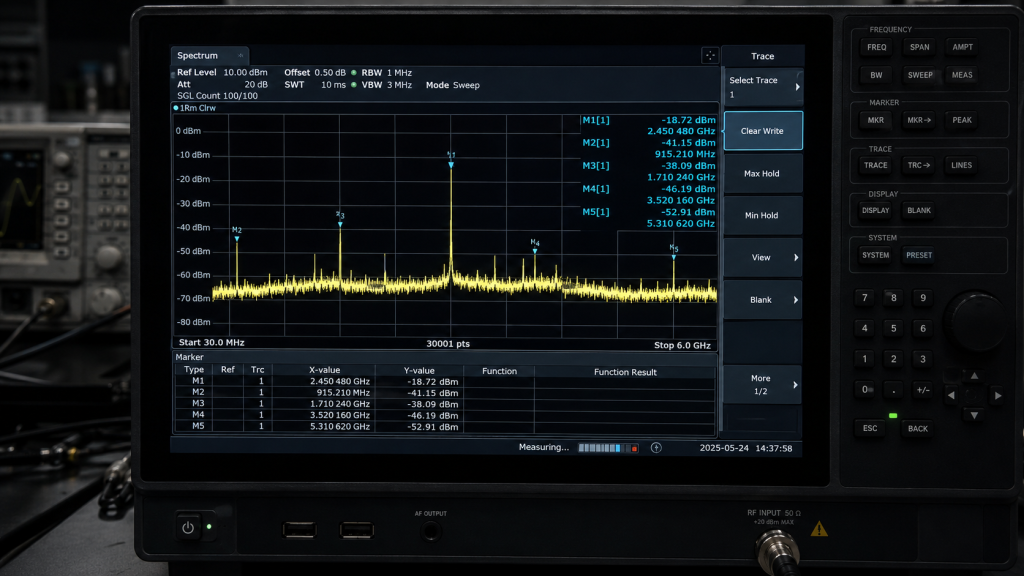
Sustaining drone jamming effectiveness requires routine verification of the entire RF chain, from the signal source to the antenna. Physical degradation, moisture ingress, or thermal stress can slowly reduce system performance over time. You cannot wait for a live incursion to find out your equipment is underperforming. Regular laboratory-grade testing schedules must be implemented.
What maintenance routines are required?
Proactive measurement using professional equipment prevents silent system degradation. You should establish a strict testing regimen.
- Verify output wattage with a power meter.
- Check Voltage Standing Wave Ratio (VSWR) to confirm antenna health.
- Inspect conformal coatings for environmental damage.
Let’s dig a little deeper, maintaining Engineering Truth means relying on hard data rather than assumptions.
Key Takeaway: Routine empirical testing guarantees your defensive hardware is ready to deploy at maximum capacity at a moment’s notice.
| Maintenance Task | Testing Tool | Frequency |
| Output Verification | Spectrum Analyzer | Monthly |
| Impedance Check | Vector Network Analyzer | Bi-Annually |
| Visual Inspection | N/A | Weekly |
Using a Vector Network Analyzer correctly identifies hidden antenna cable degradation before complete failure occurs.
Securing critical airspace requires high-power, reliable, and continuous RF signal generation. We manufacture the military-grade GaN platforms and SDR sources needed to neutralize modern aerial threats effectively. By deploying engineered systems designed for extreme environments, you regain total control over your defensive perimeter. For engineering-driven manufacturing solutions that prioritize technical reality over marketing claims, contact us today to start your custom RF project. CorelixRF stands as your dedicated one-stop manufacturer for the entire RF chain.
Q1: Can I integrate these modules into my existing tracking radar?
Yes, you can easily integrate them. Our SDR sources and power amplifiers use standard RS422 and digital interfaces to communicate directly with your existing tracking sensors.
Q2: What’s the best frequency band to target for maximum security?
Targeting the full 30MHz to 6GHz spectrum provides the best security. Single-band units leave you vulnerable to modified UAVs that utilize uncommon communication channels.
Q3: How do I know if the amplifier will survive outdoor temperatures?
You can review our 46-step quality control data. We utilize extensive thermal cycling and integrated aluminum heat-sinks to prevent high-temperature failures.
Q4: Can I specify the exact output wattage I need for my facility?
Yes, custom power levels are available. Our engineering team works with you to configure GaN modules anywhere from 30W to 200W based on your exact range requirements.
Q5: What’s the best way to verify the performance of the system over time?
Using a Spectrum Analyzer is the best method. This tool gives you empirical data on the exact output wattage and frequency accuracy to confirm the system is fully operational.
Authorized RF engineering and compliance review
For regulated RF systems, this page should be used as an engineering and compliance review path, not as a public deployment checklist. CorelixRF starts with authorization status, operating region, frequency plan, output limit, antenna interface, safety controls, thermal limits and acceptance documents.
- RFQ checklist – send the data buyers usually forget, including band, power, duty cycle, interface and test standard
- delivery documentation – check what documents can support incoming inspection, FAT review and long-term maintenance
- quality and certification review – review the quality and compliance evidence before the project moves into procurement
- RF front-end platform – compare the RF chain as a system instead of selecting one isolated module
- RF configurator – turn frequency, power, thermal and interface requirements into a first configuration brief
- case studies – review similar engineering paths before sending an RFQ
- engineering contact – send the application notes, block diagram or target specification to engineering sales
This keeps the discussion inside lawful, authorized RF programs while still giving procurement teams a clear way to request amplifier, antenna, SDR source, documentation and factory review.
Airport RF Compliance Review Path
For authorized airport C-UAS planning, connect compliance boundaries and interference-risk controls to RF front-end integration, RF power amplifier platform selection and antenna/load planning. Share operating bands, power limits, duty cycle, filtering needs, enclosure constraints and validation evidence requirements through the RF inquiry form.