
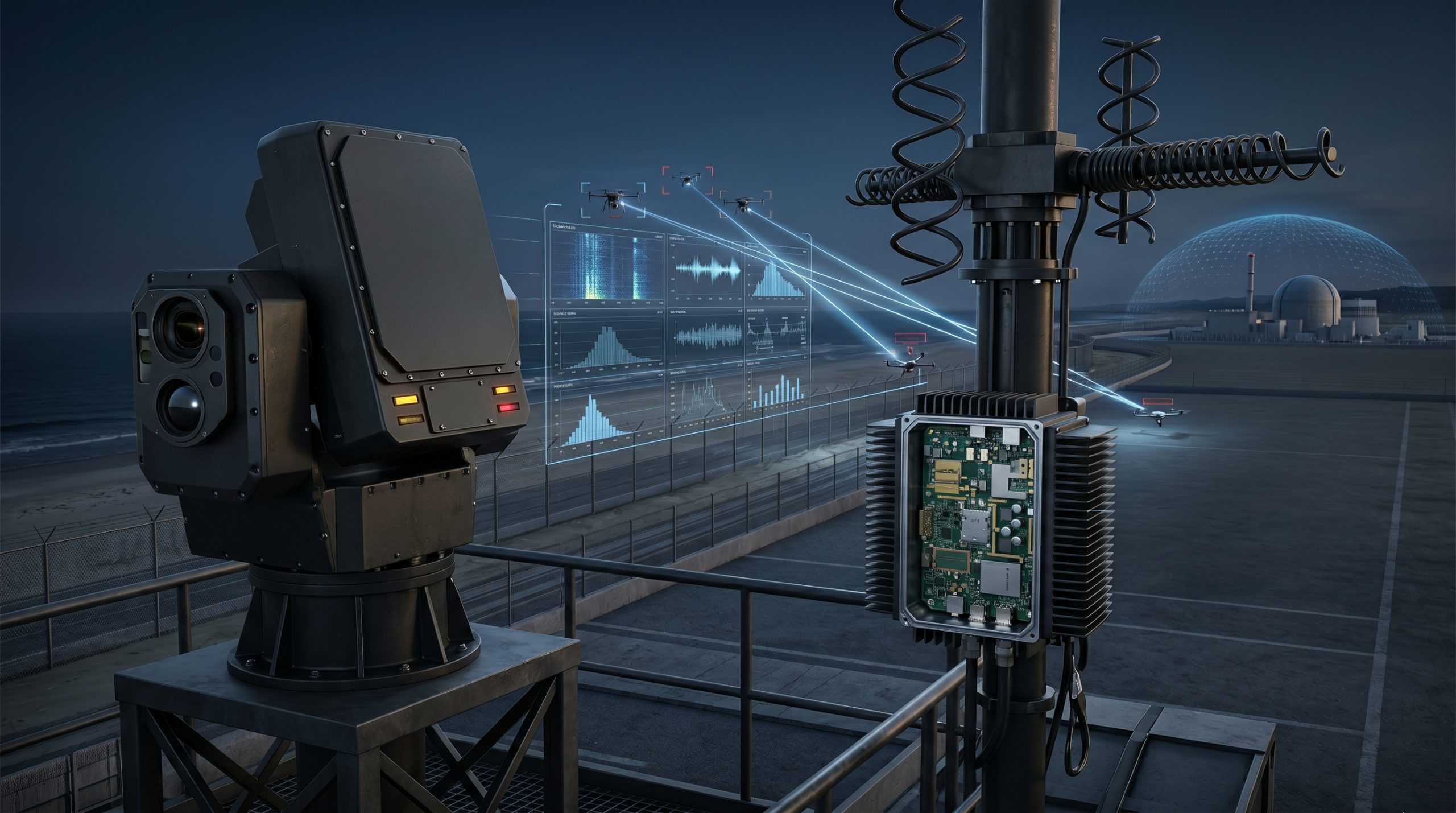
How Do Anti-Drone Systems Secure National Defense?
Strategic airborne neutralization technology actively shields sovereign territories from unauthorized aerial incursions. Unmanned vehicles routinely bypass traditional perimeter fences effortlessly. Just thirty seconds of delayed reaction invites catastrophic infrastructural damage. Deploying advanced Anti-Drone Systems actively neutralizes airborne hazards instantly. Our engineering teams deliver reliable RF chain architectures.
1. Why Are Anti-Drone Systems Vital Now?
These protective arrays secure sensitive airspace against modern tactical intrusions efficiently. Anti-Drone Systems actively intercept rogue communication frequencies before threats materialize. Unprecedented aerial incursions demand immediate defensive upgrades globally. Security teams require robust signal jamming capabilities daily.
What Drives Defense Innovations Today?
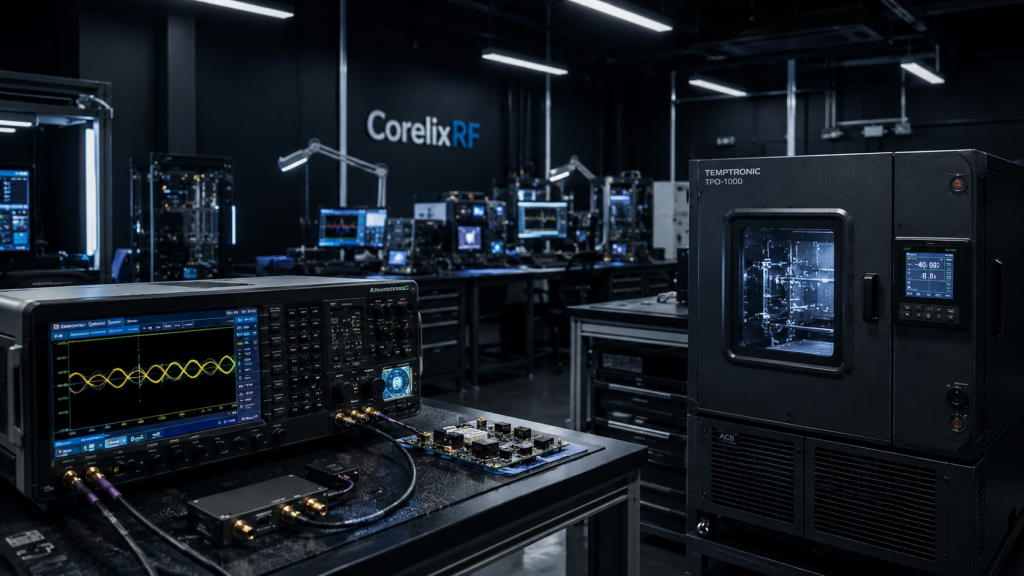
Here is the kicker, adversaries deploy increasingly sophisticated UAVs constantly. Military organizations must adapt their strategies rapidly. Engineers continuously optimize CorelixRF power amplifiers for maximum efficiency. This ensures stable broadband output under extreme operational stress.
- Adversaries utilize complex frequency-hopping protocols.
- Commercial drones carry significant unauthorized payloads.
- Urban environments complicate traditional kinetic interception methods.
Key Takeaway: Modernizing your RF framework prevents unauthorized surveillance effectively.
| Threat Category | Preferred RF Response | Required Power |
| Commercial Quadcopter | 2.4GHz Targeted Jam | 50W |
| Fixed-Wing Surveillance | 5.8GHz Blockade | 100W |
| Custom Military UAV | Full-Band Disruption | 200W |
This data highlights specific power requirements necessary for effective airborne neutralization.
2. How Do Drones Threaten Border Security?
Unauthorized unmanned vehicles bypass traditional physical barriers effortlessly during covert operations. Modern Anti-Drone Systems detect these low-altitude border incursions swiftly. Cartels utilize modified commercial quadcopters for illicit smuggling runs. Border patrols need continuous 30MHz–6GHz frequency coverage.
Can Smugglers Evade Standard Radar?
You might be wondering, standard civilian radar struggles with small radar cross-sections. Low-flying plastic composites reflect minimal electromagnetic waves back. Specialized RF sensors detect control signals instead. You gain an asymmetrical advantage over hidden operators.
- Traditional radar ignores objects moving slowly.
- RF scanners pinpoint remote controller locations accurately.
- Continuous spectrum monitoring catches intermittent transmissions.
Key Takeaway: Upgrading detection hardware stops sophisticated border smuggling tactics entirely.
| Detection Method | Range | Effectiveness |
| Standard Radar | 5km | Low |
| Optical Camera | 2km | Medium |
| RF Spectrum Analysis | 15km | High |
Comparing detection ranges proves RF analysis outperforms legacy visual tracking.
3. What Protects Critical National Infrastructure?
Layered electromagnetic defense grids shield power grids and airports reliably. Anti-Drone Systems establish an invisible dome over sensitive government installations. Terrorists increasingly target unguarded energy substations with cheap explosives. Facility managers demand absolute zero-downtime protection protocols.
Do Facilities Need Wideband Coverage?
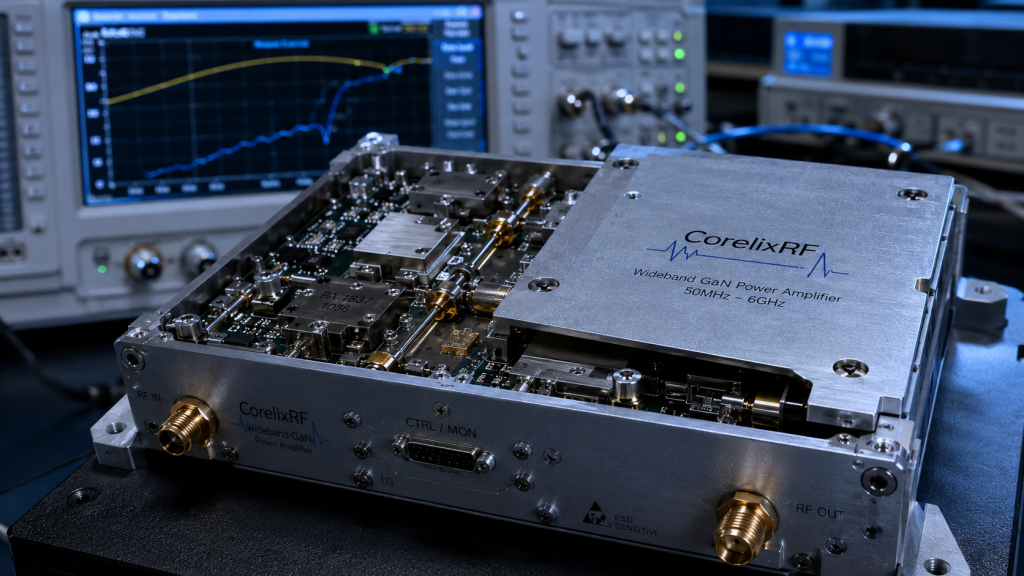
What is the real story? Single-frequency jammers fail against modern modified transmitters. Attackers frequently switch operating bands mid-flight seamlessly. You must deploy comprehensive full-band RF chain architectures. CorelixRF equipment ensures unbroken continuous coverage natively.
- Attackers use 433MHz for long-range commands.
- Video feeds typically run on 5.8GHz channels.
- Navigation relies heavily on GNSS satellite signals.
Key Takeaway: Comprehensive wideband coverage prevents clever adversaries from finding unprotected communication gaps.
| Frequency Band | Common Usage | Jamming Priority |
| 433MHz | Telemetry | High |
| 1.5GHz | GNSS | Critical |
| 5.8GHz | Video Feed | Medium |
Analyzing frequency priorities helps operators configure their signal sources correctly.
4. How Do Anti-Drone Systems Detect UAVs?
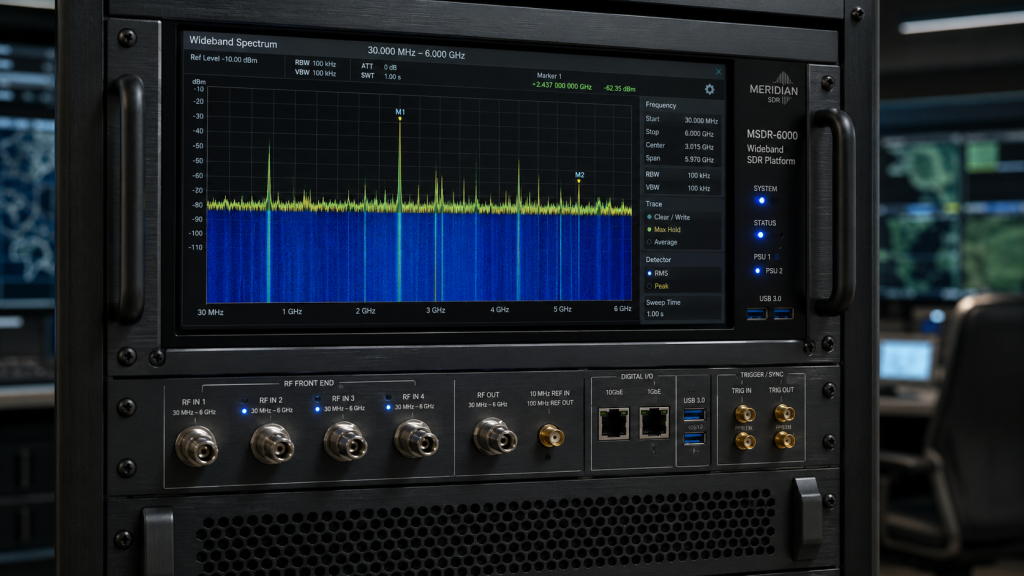
Passive spectrum analyzers identify unique telemetry signatures miles away. Integrated Anti-Drone Systems scan the entire electromagnetic environment continuously. Digital libraries compare incoming signals against known UAV protocols instantly. Early warning algorithms trigger automated defensive responses.
What Makes SDR Technology Superior?
Ready for the good part? Software-defined radio adapts instantly without hardware changes. Digital signal processors decode encrypted transmissions flawlessly. You easily update threat libraries via simple software patches. This guarantees long-term viability against future threats.
- SDR isolates drone signals from background noise.
- Operators track multiple targets simultaneously.
- System updates require zero physical maintenance downtime.
Key Takeaway: Adopting software-defined radio future-proofs your entire security perimeter infrastructure.
| Component | Function | Benefit |
| RF Tuner | Captures raw signals | Broad compatibility |
| FPGA | Processes data fast | Real-time alerts |
| Threat Database | Identifies models | Reduces false alarms |
Understanding component roles clarifies why modern signal processing works so flawlessly.
5. Why Is RF Jamming Highly Effective?
Overpowering a receiver severs the link between pilot and aircraft completely. Anti-Drone Systems flood specific frequencies with high-power disruptive noise. Drones lose navigation data and automatically initiate emergency landing procedures. This non-kinetic approach minimizes dangerous collateral damage.
Does High Power Equal Better Results?
This is where it gets interesting, raw wattage alone cannot guarantee mission success. Gain flatness across the spectrum matters significantly more. You need clean signals without unnecessary harmonic distortions. CorelixRF modules maintain less than 1.5dB gain variance.
- Dirty signals interfere with friendly communication networks.
- Excessive heat degrades amplifier performance rapidly.
- Precise impedance matching ensures maximum energy transfer.
Key Takeaway: Quality engineering beats raw power when designing interference modules.
| Amplifier Spec | Standard Module | CorelixRF Module |
| Gain Flatness | 3.0dB | 1.5dB |
| Power Redundancy | None | 15% |
| Harmonic Rejection | -40dBc | -60dBc |
Reviewing amplifier specifications demonstrates superior engineering prevents unexpected field failures.
6. What Role Does SDR Play Today?
Programmable signal sources generate complex spoofing waveforms dynamically on demand. Intelligent Anti-Drone Systems utilize SDR for adaptive frequency control. Static jamming patterns become obsolete against agile hopping targets. Military commanders require real-time waveform manipulation capabilities.
Can Signal Sources Hop Frequencies?
Look at this, advanced SDR modules track and mimic adversary frequency hops perfectly. Dual independent output channels confuse sophisticated enemy receivers easily. You project targeted interference exactly where needed most. Multi-waveform support includes CW, LFM, and OFDM generation.
- Agile tracking nullifies enemy evasion maneuvers.
- Custom waveforms penetrate heavy electronic shielding.
- RS422 interfaces allow seamless remote operation.
Key Takeaway: Dynamic signal generation creates an impenetrable shield against agile airborne targets.
| Waveform Type | Application | Effectiveness |
| CW | Basic blocking | Moderate |
| LFM | Radar spoofing | High |
| OFDM | Protocol disruption | Severe |
Matching specific waveforms with tactical applications maximizes operational disruption success.
7. How Do Military Amplifiers Assist?
Gallium Nitride transistors deliver sustained high-power output under grueling conditions. Anti-Drone Systems rely heavily on these ruggedized hardware components. Standard silicon parts fail quickly during continuous broadcasting operations. Defense contractors demand uncompromising reliability across harsh environments.
Will GaN Modules Survive Extreme Heat?
The truth is, thermal management dictates absolute combat effectiveness. CorelixRF designs incorporate specialized aluminum heat-sink integration natively. You experience zero power degradation during extended operational windows. Our 46-step quality protocol ensures perfect thermal cycling survivability.
- GaN handles higher voltages than legacy silicon.
- Integrated cooling fins dissipate massive heat loads.
- Conformal coating protects delicate PCB traces outdoors.
Key Takeaway: Investing in military-grade GaN technology prevents catastrophic system meltdowns during crises.
| Material | Heat Tolerance | Power Density |
| LDMOS | Medium | Moderate |
| GaAs | Low | Low |
| GaN | Extreme | Maximum |
Evaluating material properties explains why defense industries exclusively specify Gallium Nitride.
8. Can Security Frameworks Track Swarms?
Multi-channel directional antennas isolate and suppress numerous targets concurrently. Networked Anti-Drone Systems share tracking data across decentralized defensive nodes. A coordinated swarm attacks perimeter defenses from multiple unpredictable vectors. Automated RF beams sweep the sky systematically.
How Do Teams Neutralize Multiple Targets?
Here is the secret, phased array antennas steer electromagnetic beams electronically. Mechanical dishes move far too slowly for swarm defense. You target distinct zones without moving any physical hardware. Wideband noise floors disable localized communication mesh networks instantly.
- Electronic steering shifts focus within microseconds.
- Decentralized nodes prevent single points of failure.
- Broadband noise disrupts swarm coordination telemetry.
Key Takeaway: Upgrading to electronically steered arrays defeats coordinated multi-vector aerial assaults.
| Defense Tactic | Swarm Vulnerability | Outcome |
| Kinetic Strike | Low | Ineffective |
| Single Beam | Moderate | Partial kill |
| Wideband Mesh Disruption | Severe | Complete collapse |
Analyzing tactical responses shows wideband disruption stops coordinated group attacks definitively.
9. Are Custom RF Modules Necessary Here?
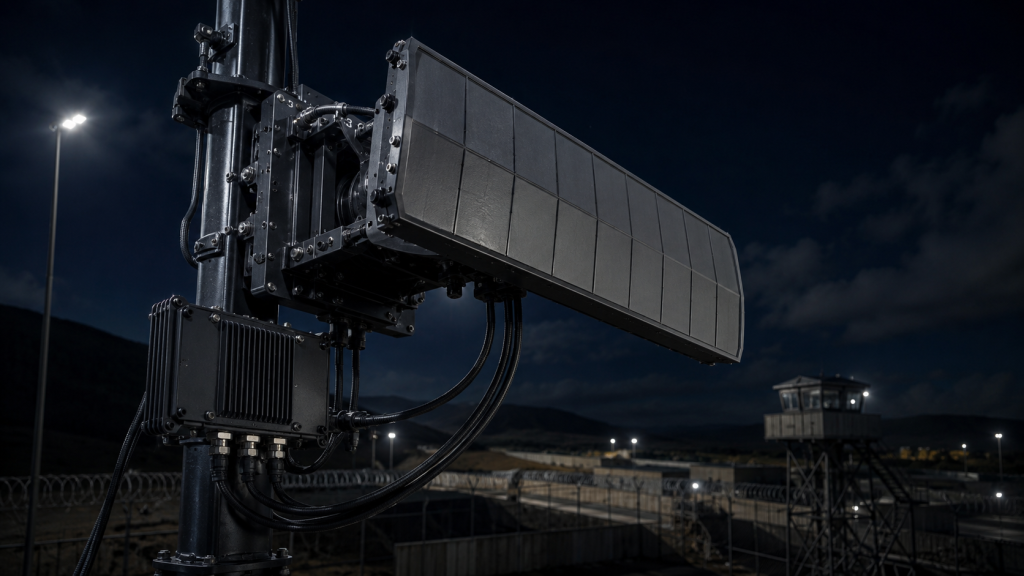
Off-the-shelf electronics rarely meet stringent military integration specifications perfectly. Anti-Drone Systems require bespoke form factors for specialized vehicle mounting. Naval vessels face different environmental challenges than desert border stations. Customizing interface protocols ensures seamless legacy equipment compatibility.
Does One Size Fit All Operations?
Truth be told, generic platforms fail under highly specific tactical requirements. Thermal optimization varies wildly between stationary and mobile deployments. You need engineering-driven manufacturing tailored for your exact application. CorelixRF provides complete prototype to mass production services.
- Custom bands target region-specific smuggler frequencies.
- Specialized enclosures withstand corrosive saltwater environments.
- OEM support allows private labeling for integrators.
Key Takeaway: Bespoke engineering aligns hardware capabilities directly with your unique operational parameters.
| Environment | Primary Challenge | Custom Solution |
| Desert | Extreme heat | Upgraded heat-sinks |
| Naval | Salt corrosion | IP68 sealed housing |
| Mobile | Vibration | Ruggedized PCB mounts |
Customizing modules based on environmental factors guarantees long-term field reliability.
10. What Does Future Drone Defense Involve?
Machine learning algorithms will predict adversary flight paths with astonishing accuracy. Next-generation Anti-Drone Systems integrate artificial intelligence for autonomous threat resolution. Human reaction times fall behind hypersonic low-altitude penetrators. Cognitive electronic warfare platforms adapt their jamming strategies instantaneously.
Will Artificial Intelligence Change Tactics?
Bottom line, AI-driven networks recognize disguised signals instantly. Neural processors classify unknown drones without relying on static databases. You benefit from systems learning from every thwarted incursion. The electromagnetic spectrum becomes a fully automated battlefield.
- AI reduces false positive civilian aircraft alerts.
- Cognitive jammers invent new waveforms mid-battle.
- Automated logging provides perfect post-action intelligence reports.
Key Takeaway: Adopting cognitive electronic warfare keeps your defenses ahead of autonomous threats.
| Tech Generation | Decision Maker | Reaction Time |
| Manual RF | Human Operator | Minutes |
| Automated SDR | Scripted Logic | Seconds |
| Cognitive AI | Neural Network | Milliseconds |
Comparing decision protocols reveals cognitive systems react faster than humanly possible.
Our engineering teams solved the complex challenge of sustained broadband RF output. We provide military-grade manufacturing capabilities tailored for defense integrators worldwide. A secure perimeter demands uncompromising hardware built upon Engineering Truth. Please contact us today to start building your resilient defense architecture.
FAQ
Q1: Can I integrate new RF modules into my existing defense grid?
Yes, you absolutely can. We engineer custom interface protocols ensuring seamless compatibility with legacy command centers.
Q2: What’s the best way to prevent overheating during continuous operation?
Specify GaN power amplifiers natively. Gallium Nitride dissipates massive heat loads efficiently, preventing dangerous thermal shutdowns.
Q3: How do I know if my facility needs full-band coverage?
Attackers regularly switch frequencies mid-flight. Operating wideband equipment ensures adversaries cannot find unprotected communication channels.
Q4: Can I stop multiple targets approaching simultaneously?
Yes, utilizing phased array technology works best. Electronic beam steering disrupts multiple distinct zones without mechanical delay.
Q5: What’s the best method for detecting low-flying plastic UAVs?
Deploy passive RF spectrum analyzers immediately. Standard radar misses small composite materials, whereas RF scanners pinpoint control signals precisely.
Authorized RF engineering and compliance review
For regulated RF systems, this page should be used as an engineering and compliance review path, not as a public deployment checklist. CorelixRF starts with authorization status, operating region, frequency plan, output limit, antenna interface, safety controls, thermal limits and acceptance documents.
- RFQ checklist – send the data buyers usually forget, including band, power, duty cycle, interface and test standard
- delivery documentation – check what documents can support incoming inspection, FAT review and long-term maintenance
- quality and certification review – review the quality and compliance evidence before the project moves into procurement
- RF front-end platform – compare the RF chain as a system instead of selecting one isolated module
- RF configurator – turn frequency, power, thermal and interface requirements into a first configuration brief
- case studies – review similar engineering paths before sending an RFQ
- engineering contact – send the application notes, block diagram or target specification to engineering sales
This keeps the discussion inside lawful, authorized RF programs while still giving procurement teams a clear way to request amplifier, antenna, SDR source, documentation and factory review.
Defense Site RF Architecture Review Path
For authorized defense-site RF architecture, review RF front-end platform planning together with RF amplifier platforms, antenna systems and signal source support. Send interface, synchronization, band, output power, antenna/load and evidence requirements through the RF inquiry form.