
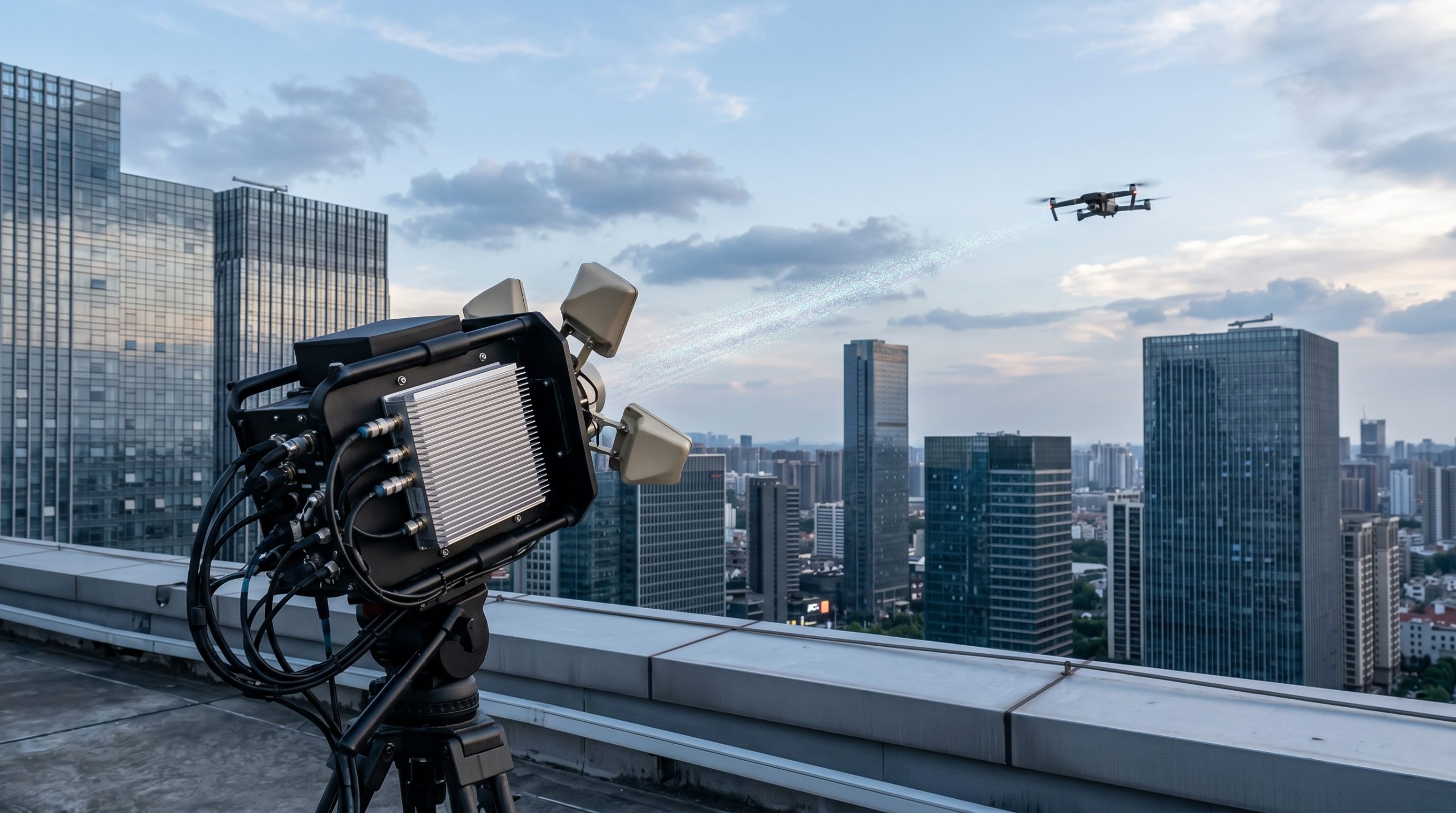
An effective drone signal blocker operates successfully within urban areas by overcoming extreme multipath interference using precise directional antennas. Unidentified aerial incursions near city infrastructure present severe security risks requiring immediate mitigation strategies. Overlooking unauthorized flights causes catastrophic privacy breaches alongside massive operational shutdowns across corporate campuses. Implementing an industrial-grade Anti Drone system neutralizes rogue quadcopters swiftly before they cause damage. Here is the deal, relying upon standard jammers fails consistently within concrete jungles lacking proper hardware. You require engineering truth backing your radio frequency solutions defending vulnerable corporate airspace.
Why Are Urban Environments Challenging?
Urban environments pose massive challenges because dense concrete infrastructure heavily reflects radio frequency energy creating unpredictable wave propagation paths. Deploying a functional Anti Drone array requires overcoming massive overlapping transmissions emanating continuously from millions of civilian electronics. Defense engineers face extraordinary physical obstacles constantly when aiming concentrated blocking signals at fast-moving rogue airborne targets navigating rapidly between skyscrapers. You must utilize incredibly advanced spectrum analyzers alongside precision-engineered power amplification modules establishing proper hardware calibration against severe local interference.
Thick metallic walls block direct line-of-sight pathways rapidly across modern metropolitan landscapes. High-power output becomes absolutely mandatory for penetrating these massive physical barriers effectively without losing signal integrity.
What Causes Signal Reflection?
You might be wondering, how exactly do modern buildings alter radio wave propagation drastically? Tall glass structures act as massive mirrors bouncing electromagnetic waves unpredictably across multiple intersecting street corridors. This physical phenomenon creates multiple scattered paths hitting your receiver hardware at vastly different times.
Our engineering teams observe severe phase shifting during rigorous field tests regularly.
- Glass facades bounce high-frequency waves rapidly
- Steel structural frames absorb specific electromagnetic bands
- Narrow city streets create tunneling effects naturally
Can You Fix Signal Bounce?
What is the real story? Fixing reflection requires utilizing highly directional antenna arrays instead of basic omnidirectional broadcast rods. Standard omnidirectional antennas scatter valuable wattage uselessly across wide geographic areas causing massive performance drops.
Key Takeaway: You must select precision-engineered RF modules capable of maintaining incredibly tight beamwidths always. This guarantees maximum power delivery onto your intended target without generating excessive scattered background radiation.
Table 1: Metropolitan vs Rural RF Metrics
| Metric | City Sector | Open Field |
| Path Loss | Extreme | Minimal |
| Reflection Rate | 85% | 10% |
Analyzing this specific data shows why city deployments demand highly specialized hardware engineering immediately.
How Does Multipath Interference Occur?
Multipath interference occurs whenever transmitted radio waves take multiple intersecting paths before reaching an intended receiving antenna. An effective Anti Drone platform combats this physics problem utilizing specialized digital signal processors filtering corrupted data streams. Reflected waves arrive slightly delayed compared with direct signals causing severe phase cancellation across targeted operational bands. This destructive phenomenon reduces overall signal strength dramatically within densely populated metropolitan zones.

You experience frustrating dead zones where blocking effectiveness drops near zero unexpectedly. Deploying adaptive frequency hopping hardware mitigates these localized dead spots efficiently.
How Do Reflections Affect Jammers?
Truth be told, reflected energy scatters your blocking power away from incoming malicious UAVs continuously. Your expensive equipment wastes valuable wattage heating up concrete walls instead of disrupting malicious navigation links.
Using advanced Gallium Nitride amplifiers maintains sufficient output despite experiencing massive environmental transmission losses.
- Phase cancellation degrades signal integrity quickly
- Overlapping waves create unpredictable power spikes
- Delay spreads confuse standard timing synchronization
Are Phase Shifts Predictable?
Think about this, predicting exact phase shifts within dynamic environments remains nearly impossible for standard computers. Moving vehicles alongside changing weather patterns alter local reflection profiles continuously.
Key Takeaway: Implementing robust RF hardware featuring massive power redundancy handles unpredictable fading margins smoothly. You gain highly reliable performance across constantly shifting physical landscapes without requiring manual recalibration.
Table 2: Common Interference Types
| Interference Type | Primary Cause | Mitigation Strategy |
| Multipath Fading | Physical structures | Spatial diversity |
| Co-channel Noise | Civilian routers | Frequency hopping |
Evaluating these distinct interference types highlights why adaptive hardware outshines basic static solutions completely.
What Frequencies Do Civilian Drones Use?
Civilian drones operate primarily utilizing standard industrial scientific medical bands across 2.4GHz alongside 5.8GHz channels. Blocking any Anti Drone target means overpowering those specific crowded frequency channels completely. Modern commercial quadcopters also utilize standard GPS L1 signals for maintaining stable navigation protocols. Disrupting both control links alongside satellite navigation forces unauthorized aircraft into automated failsafe modes.
Manufacturers constantly upgrade UAV transceivers searching for cleaner spectrum slices avoiding local network congestion. Your facility defense strategy must cover all potential communication pathways comprehensively avoiding any blind spots.
Do Drones Change Frequencies Automatically?
Here is the catch, advanced commercial UAVs scan available channels seeking minimal noise continually during flight. Whenever they detect strong jamming signals they jump rapidly toward clear spectrum sections.
Countering agile hopping mechanisms requires sweeping wideband jammers capable of instant transmission response.
- Agile transceivers avoid static interference peaks
- Broadband noise generators blanket entire operational bands
- Fast sweeping techniques prevent link re-establishment
How Valuable Are GPS Links?
Ready for the good part? Severing satellite connections eliminates autonomous waypoint navigation entirely across targeted rogue devices. Blinded quadcopters usually hover stationary or land slowly preventing further unauthorized perimeter penetration.
Key Takeaway: You must target both remote control frequencies alongside satellite navigation bands simultaneously. This dual operational approach guarantees total neutralization regarding highly sophisticated commercial aerial threats.
Table 3: Typical UAV Frequencies
| Band Range | Primary Function | Typical Threat Level |
| 2.4 GHz | Remote Control | Extremely High |
| 5.8 GHz | Video Transmission | High |
| 1.5 GHz | GNSS Navigation | Medium |
Reviewing standard frequency allocations reveals exactly where your defensive blocking power should concentrate.
Can We Isolate Specific Target Signals?
Isolating specific target signals demands highly sensitive software defined radio receivers processing complex data streams instantly. A premium Anti Drone setup analyzes incoming waveforms separating actual threats from harmless background clutter. You capture distinct protocol signatures identifying rogue aircraft quickly without affecting local hospital communication grids. This advanced capability prevents your defensive equipment from accidentally shutting down legitimate local corporate communications.
Precision tracking allows security operators deploying focused countermeasures selectively against verified targets only. Blanket jamming wastes electrical energy while precision targeting maximizes overall defensive efficiency.
How Does SDR Technology Help?
Let us dive deeper, software defined radios process complex RF environments dynamically using advanced algorithms. They decode proprietary telemetry streams revealing exact flight parameters instantly for security personnel.
Integrating SDR modules transforms brute-force jammers into surgical electronic warfare tools.
- Digital filtering removes unwanted ambient noise
- Real-time processing identifies known protocol signatures
- Adaptive algorithms adjust output parameters automatically
Are Civilian Networks Protected?
This is where it gets interesting, selective engagement protects surrounding Wi-Fi networks from experiencing harmful disruption. Your enterprise avoids angry neighbors complaining about dropped internet connections during active security events.
Key Takeaway: Utilizing intelligent signal recognition guarantees you only attack verified hostile airborne threats. You maintain local operational harmony while properly securing critical airspace overhead against espionage.
Table 4: SDR vs Analog Processing
| Feature | Analog Systems | SDR Platforms |
| Signal Recognition | Poor | Excellent |
| Update Capability | Hardware Replacement | Software Flash |
Comparing digital processing against legacy analog hardware highlights immense advantages regarding threat identification.
Why Is Directional Jamming Necessary?
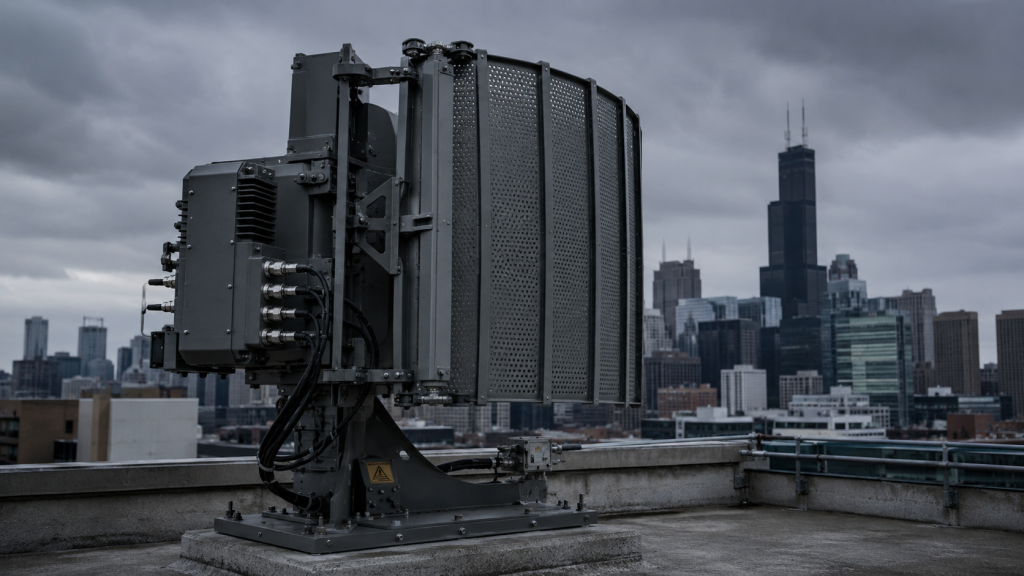
Directional jamming proves necessary because it focuses radio energy precisely toward verified airborne threats. Relying upon any Anti Drone omnidirectional antenna diffuses power uselessly across 360 degrees. High-gain directional arrays multiply effective radiated power dramatically without requiring larger amplification chassis. You achieve extended neutralization ranges easily neutralizing threats kilometers away from sensitive facility borders.
Targeting specific geographic sectors limits collateral damage across adjacent residential city blocks. This incredibly surgical approach minimizes interference regarding nearby emergency service dispatch channels.
How Do High-Gain Antennas Work?
Truth be told, high-gain antennas squeeze RF energy into remarkably narrow physical beams. Concentrating available wattage creates an impenetrable wall blocking unauthorized telemetry completely.
You hit incoming quadcopters with overwhelming electromagnetic force at much greater distances.
- Narrow beamwidths concentrate output power massively
- Sector antennas cover specific vulnerable approach vectors
- Tracking mounts keep beams locked onto moving targets
Can You Automate Antenna Tracking?
Here is the kicker, combining directional antennas alongside radar creates fully automated tracking systems. Motorized pan-tilt units follow fast-moving aircraft flawlessly without requiring manual joystick inputs.
Key Takeaway: Integrating directional transmission hardware maximizes your operational blocking range significantly across large campuses. You defend expansive perimeters using fewer hardware nodes strategically placed along vulnerable approach vectors.
Table 5: Antenna Gain Comparison
| Antenna Type | Typical Gain | Coverage Area |
| Omnidirectional | 3 dBi | 360 Degrees |
| Sector Array | 15 dBi | 90 Degrees |
| Parabolic Dish | 24 dBi | 10 Degrees |
Evaluating antenna gain profiles dictates proper hardware selection depending upon your specific defense perimeter.
What Role Do GaN Power Amplifiers Play?
Gallium Nitride power amplifiers deliver unparalleled operational efficiency handling high-frequency broadband signals continuously. Your Anti Drone hardware demands extreme thermal stability during prolonged hostile engagements. GaN transistors handle massive voltage swings without suffering from catastrophic performance degradation. They provide sustained output power across incredibly wide frequency spectrums effortlessly.
Old silicon technologies melt quickly under heavy continuous wave jamming loads. Modern defense platforms rely entirely upon advanced semiconductor materials delivering reliable raw power.
Why Does Thermal Management Matter?
You might be wondering, why do older amplifiers fail during critical security missions? Generating massive RF power creates substantial waste heat quickly inside closed metal chassis. Poor thermal dissipation causes internal components throttling output dangerously compromising perimeter security.
Our engineers utilize massive aluminum heatsinks keeping core operating temperatures remarkably stable.
- Continuous operation generates extreme internal temperatures
- Thermal throttling reduces blocking range unexpectedly
- Proper heatsinking extends component lifespan drastically
Can GaN Handle Broadband Sweep?
What is the real story? Sweeping across multiple gigahertz stresses amplification stages immensely. GaN modules maintain flat gain curves across entire operational bands seamlessly.
Key Takeaway: Investing in premium Gallium Nitride amplification guarantees your countermeasures remain active during prolonged engagements. You avoid catastrophic hardware failures when defending highly critical corporate infrastructure.
Table 6: Amplifier Material Comparison
| Material | Efficiency | Thermal Tolerance |
| LDMOS | Medium | Moderate |
| GaAs | Low | Low |
| GaN | High | Extreme |
Contrasting semiconductor materials proves why contemporary defense contractors specify Gallium Nitride exclusively.
How Do We Handle High Device Density?
Handling high device density requires raising your transmission power substantially above ambient background noise levels. Urban Anti Drone networks compete constantly against thousands of active electronic gadgets operating nearby. You must deploy incredibly robust amplifiers pushing clean signals through dense electromagnetic smog. Weak jammers fail completely whenever background chatter drowns their intended defensive broadcasts.
Engineers calculate required output margins based upon precise local spectrum analyzer readings. Installing highly redundant power modules guarantees you overpower consumer-grade electronics easily.
What Constitutes The Noise Floor?
Think about this, every active electronic device contributes tiny amounts of background radiation continually. Dense modern cities possess massively elevated noise floors masking faint incoming malicious control signals.
Defeating robust UAV links means your jamming signal must exceed this elevated threshold significantly.
- Millions of active smartphones raise ambient background noise
- Industrial machinery generates broadband electromagnetic interference
- Elevated floors demand higher transmission wattage
Do We Need Custom Modules?
Here is the deal, basic off-the-shelf components rarely survive harsh metropolitan RF environments. Custom engineered modules provide exact frequency targeting alongside massive power reserves.
Key Takeaway: You must partner with dedicated RF manufacturers supplying tested industrial-grade hardware. This partnership guarantees your defensive perimeter remains completely impenetrable despite massive local radio interference.
Table 7: Urban Noise Sources
| Source | Frequency Band | Impact Level |
| Cellular Towers | 700-2600 MHz | Severe |
| Wi-Fi Routers | 2.4/5.8 GHz | High |
| Bluetooth Devices | 2.4 GHz | Moderate |
Identifying primary noise sources allows engineers calibrating defense mechanisms precisely against local conditions.
Is Collateral Interference Preventable?
Preventing collateral interference demands utilizing highly intelligent smart jamming techniques rather than brute force. An effective Anti Drone system shields localized airspace without knocking out vital citywide communications. You employ selective engagement protocols targeting only verified unauthorized frequencies continuously. This careful technological approach prevents disrupting critical emergency responder radios operating nearby.
Smart jammers decode target protocols broadcasting tailored disruption packets instantly upon detection. This advanced technique uses minimal electrical power yielding maximum defensive results reliably.
How Does Smart Jamming Work?
Ready for the good part? Smart systems listen carefully before they transmit anything. Once they identify rogue packets they inject precise digital noise breaking link synchronization.
This surgical strike neutralizes threats while leaving adjacent channels completely pristine.
- Targeted packet injection breaks telemetry links securely
- Listen-before-talk protocols avoid accidental civilian disruption
- Digital synthesis creates optimized disruption waveforms
Can We Define No-Jam Zones?
What is the catch? Advanced software allows security operators mapping physical exclusion zones geographically. Your tracking antennas automatically power down whenever tracking systems point toward protected local hospitals.
Key Takeaway: Implementing highly intelligent control software prevents disastrous accidental radio interference. You maintain public safety strictly while protecting specific high-value corporate assets completely.
Table 8: Jamming Methodology Comparison
| Method | Power Requirement | Collateral Risk |
| Barrage Jamming | Very High | Severe |
| Sweep Jamming | High | Moderate |
| Smart Jamming | Low | Minimal |
Reviewing these unique methodologies highlights why intelligent digital synthesis dominates modern security architectures.
What Makes Power Redundancy Mandatory?
Power redundancy remains mandatory because hardware failures during hostile incursions cause immediate catastrophic security breaches. Deploying any Anti Drone grid demands utilizing strict fail-safe engineering principles constantly. You cannot afford dead amplifier modules while rogue aircraft approach highly sensitive research facilities. Combining multiple independent transistor stages guarantees continuous operation even if one specific component degrades.
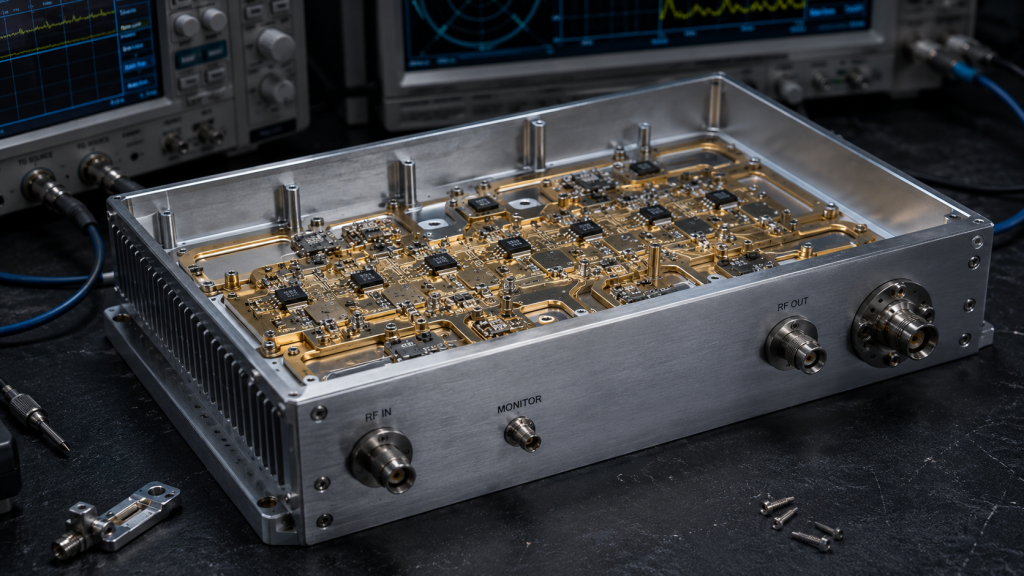
Industrial setups utilize heavy-duty power combiners merging outputs from several independent amplification blocks. This modular architecture provides seamless hardware backup capabilities automatically without operator intervention.
How Do Power Combiners Function?
Let us dive deeper, combiners take multiple RF inputs creating one massive clean output signal. If one internal amplifier dies remaining healthy units carry the defensive load.
You experience slight temporary range reduction instead of suffering total system failure.
- Wilkinson combiners merge signals maintaining phase alignment
- Isolators protect active modules from mismatched impedance reflections
- Modular designs allow hot-swapping defective components
Are Redundant Systems Expensive?
Truth be told, building fail-safe networks requires higher initial capital hardware investment upfront. However replacing stolen corporate secrets costs exponentially more than purchasing premium reliable hardware.
Key Takeaway: You must prioritize architectural redundancy heavily when designing facility defense perimeters. This core engineering philosophy guarantees absolute operational reliability during incredibly critical high-stress engagements.
Table 9: Redundancy Architecture Impacts
| Configuration | Single Point Failure Risk | System Uptime |
| Single Amplifier | Extreme | 95% |
| Parallel Modules | Low | 99.9% |
Analyzing redundancy metrics proves why professional facility integrators demand modular amplifier architectures continuously.
How Fast Can A System React To Threats?
Reactions must occur within mere milliseconds preventing fast-moving targets from crossing established security perimeters. Your Anti Drone sensor array detects incoming threats feeding targeting coordinates toward control software immediately. You need instantaneous frequency generation locking onto hostile control links without any hesitation. Delayed system responses allow unauthorized cameras sufficient time capturing highly sensitive facility layouts.
Automated hardware triggers defensive broadcasts significantly faster than human operators ever could. Processing speed dictates ultimate survival against modern autonomous drone swarms attacking simultaneously.
Why Is Automation Required?
This is where it gets interesting, human reaction times average around three hundred milliseconds typically. Fast drones travel several physical meters during that incredibly brief human hesitation period.
Algorithmic defense platforms initiate countermeasures instantly upon receiving positive radar confirmation.
- Machine speed processing eliminates dangerous human hesitation
- Pre-programmed response protocols execute complex mitigation strategies
- Integrated sensors trigger hardware effectors seamlessly
Does Boot Time Matter?
Here is the kicker, cold-starting amplifiers takes precious seconds allowing drones closer unauthorized access. Professional systems remain fully powered in standby mode drawing minimal electrical current constantly.
Key Takeaway: Deploying fully automated rapid-response hardware secures your facility completely against sudden incursions. You eliminate reaction delays guaranteeing immediate physical neutralization concerning modern airborne espionage attempts.
Table 10: Response Time Benchmarks
| Defense Stage | Manual Operation | Automated System |
| Threat Detection | 10 Seconds | 0.1 Seconds |
| Jammer Activation | 5 Seconds | 0.05 Seconds |
Comparing these reaction times illustrates why manual operation fails against modern aerial threats completely.
We have outlined exactly how massive urban interference challenges modern drone defense protocols today. Defeating multipath reflections alongside high noise floors demands superior GaN amplifiers alongside highly intelligent SDR platforms. Securing your airspace stops corporate espionage completely while preventing catastrophic operational disruptions permanently. Our dedicated engineering team provides military-grade radio frequency chains built for extreme operational reliability. We engineer fundamental industrial truths backing your defense systems completely against evolving threats. Please contact us today initiating your highly customized hardware integration project. CorelixRF envisions a globally secure airspace powered continually by flawless engineering precision.
FAQ
Q1: Can I block drones without affecting local Wi-Fi?
Yes. Utilizing smart jamming techniques allows targeting specific UAV protocol signatures selectively. This prevents broadband interference from knocking out civilian wireless networks operating nearby.
Q2: What’s the best antenna type for city defense?
High-gain directional sector antennas provide superior performance. They punch through elevated urban noise floors concentrating energy precisely where active threats appear.
Q3: How do I know if my system has enough power?
Conducting an extensive professional site survey measuring ambient RF noise floors reveals necessary hardware requirements. Your amplifier output must exceed these local interference levels significantly validating operational effectiveness.
Q4: Can I protect moving vehicles using these modules?
Absolutely. Integrating incredibly compact GaN amplifiers alongside omnidirectional tracking antennas defends mobile convoys effectively. Specialized shock-mounted chassis handle extreme vibrational stress preventing hardware failure.
Q5: What’s the best way to handle multiple simultaneous threats?
Deploying wideband sweeping jammers covers several frequency channels concurrently. This broadband strategy suppresses entire drone swarms attacking across different communication bands successfully.
Authorized RF engineering and compliance review
For regulated RF systems, this page should be used as an engineering and compliance review path, not as a public deployment checklist. CorelixRF starts with authorization status, operating region, frequency plan, output limit, antenna interface, safety controls, thermal limits and acceptance documents.
- RFQ checklist – send the data buyers usually forget, including band, power, duty cycle, interface and test standard
- delivery documentation – check what documents can support incoming inspection, FAT review and long-term maintenance
- quality and certification review – review the quality and compliance evidence before the project moves into procurement
- RF front-end platform – compare the RF chain as a system instead of selecting one isolated module
- RF configurator – turn frequency, power, thermal and interface requirements into a first configuration brief
- case studies – review similar engineering paths before sending an RFQ
- engineering contact – send the application notes, block diagram or target specification to engineering sales
This keeps the discussion inside lawful, authorized RF programs while still giving procurement teams a clear way to request amplifier, antenna, SDR source, documentation and factory review.
Urban RF Front-End Review Path
For authorized urban C-UAS or spectrum-congested sites, map interference conditions to RF front-end platform planning, RF amplifier platform options and antenna placement choices. Send frequency range, power, duty cycle, antenna/load condition and test evidence through the RF inquiry form for engineering review.