
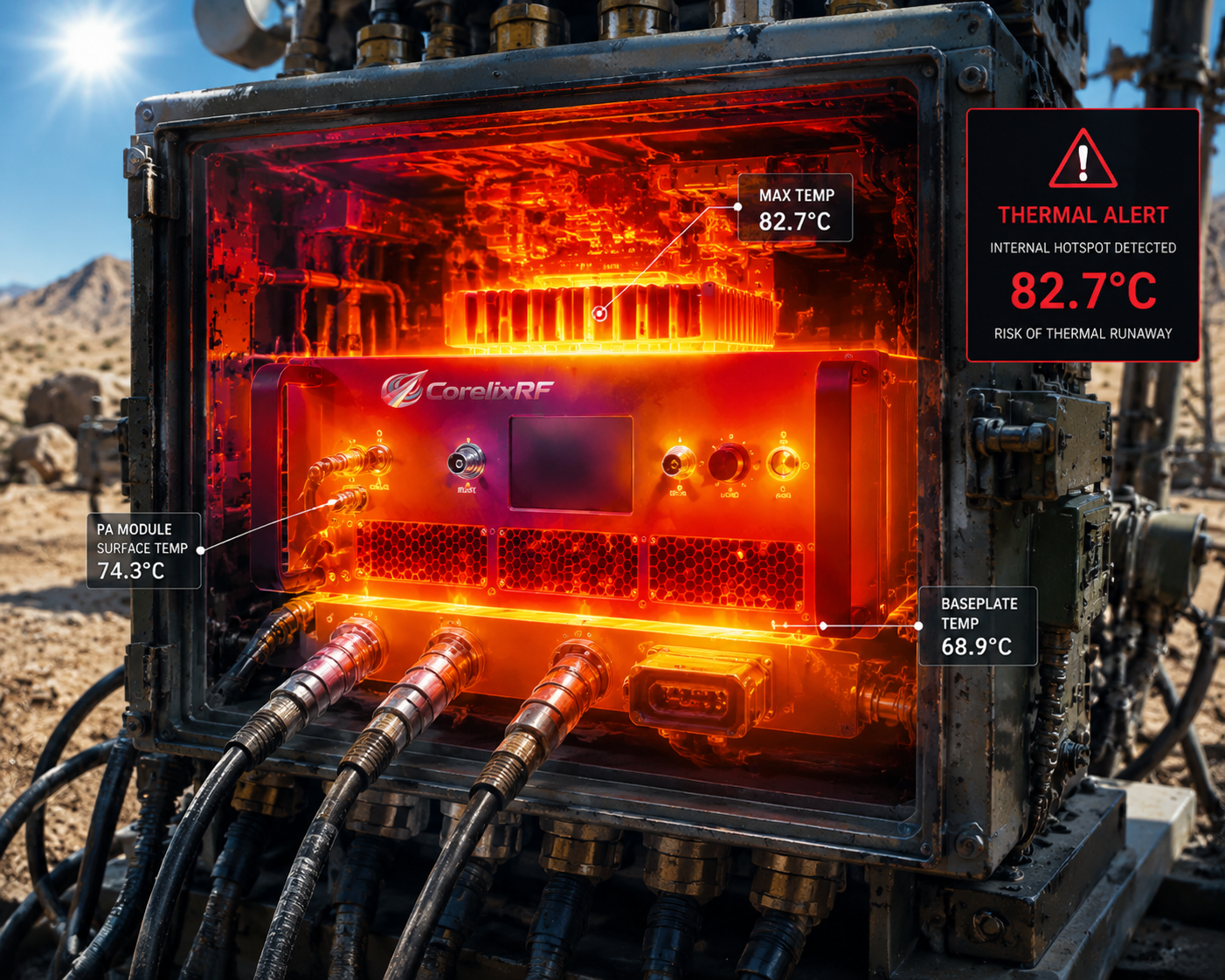
We discuss field troubleshooting regarding gain drift in sealed metal cabinets today. Overheating RF amplifiers cause unexpected system shutdowns inside unventilated enclosures frequently. CorelixRF offers ruggedized GaN amplifiers withstanding extreme ambient temperatures natively. My twenty years handling RF diagnostic work validates this specific design approach entirely. Read further regarding robust component integration techniques benefiting your engineering teams today. Hardware failures inside military setups cost millions during active combat deployments globally. Standard laboratory testing procedures fail capturing these severe thermodynamic realities completely. Engineers constantly underestimate thermal runaway happening inside locked aluminum communication boxes. You must evaluate internal heat dissipation paths before finalizing system schematics entirely. We will examine actual field data proving why rugged hardware matters most. Our engineering truth cuts through standard marketing fluff regarding power amplifier specifications. Trust proven empirical measurements over theoretical datasheets during your next system build.
1. What Causes System Alarms in Sealed Metal Cabinets?
Here is the real deal. Trapped thermal energy creates hostile operating conditions for delicate RF circuitry. Amplifiers generate massive heat during standard continuous wave signal transmission. That thermal load has nowhere viable for rapid atmospheric escape. Ambient air inside a sealed rack heats up exponentially fast. Components exceed their maximum specified operating limits within mere minutes. We frequently see reverse power warnings flash on main control screens. High VSWR triggers protection circuits prematurely due strictly toward thermal expansion. RF connectors shift slightly causing impedance mismatches at higher microwave frequencies. Those exact systems run perfectly fine with enclosure doors left wide open. Closing those heavy steel panels initiates a rapid thermal death spiral inevitably. Field technicians often mistakenly blame software bugs or bad power supplies immediately. They completely miss underlying thermal runaway happening right before their concerned eyes. A standard fifty watt transmitter dissipates massive thermal wattage continuously. Ignoring these basic thermodynamic principles guarantees catastrophic field failures eventually.
Environment Comparisons
| Parameter | Lab Condition | Field Cabinet |
| Ambient Temp | 25 Celsius | 60 Celsius |
| Airflow | High | Zero |
| Failure Rate | Low | High |
2. Why Does Lab 25°C Differ From Field 60°C Environments?
You might be wondering why. Design validation usually occurs on open test benches under heavy air conditioning. An amplifier experiences continuous cooling breezes from surrounding room ceiling fans. Engineers record beautiful gain curves and perfect output power readings happily. Reality hits extremely hard when you bolt that fragile module into a cabinet. A military vehicle bakes under direct midday summer sun for countless hours. Internal ambient temperatures skyrocket far beyond standard room levels quite easily. The semiconductor junctions inside your power amplifier face immense invisible thermal stress. Material properties change drastically when subjected toward constant severe ambient heat. Dielectric constants of PCB substrates drift causing phase shifts rapidly. We constantly measure significant RF performance drops during gruelling outdoor field trials. Lab equipment simply cannot simulate stagnant hot air accurately enough for military specs. You need advanced thermal chambers replicating exact zero-airflow operational states precisely. Engineers must stop trusting pristine laboratory data blindly without environmental context.
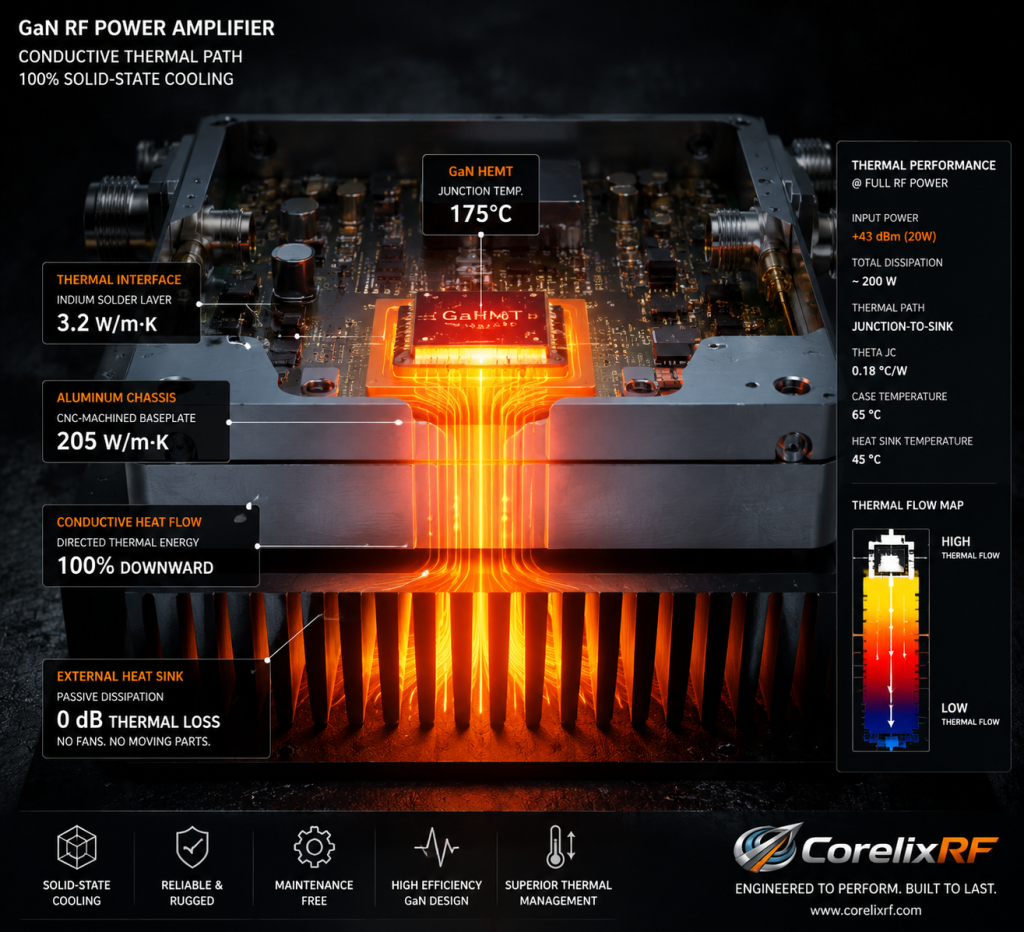
3. How Do Thermal Dynamics Affect High-Frequency RF Performance?
This specific part gets quite interesting. Heat acts as an invisible enemy destroying delicate microwave signal integrity. As temperatures rise rapidly electron mobility within semiconductor materials decreases measurably. This sudden mobility drop directly reduces available gain across your entire operating band. You might lose several critical decibels of amplification at 18,000 MHz. This specific frequency range demands pristine thermal stability for consistent power output. The CRF-PA-6000M18000M-50W maintains a solid 50 dB gain profile remarkably well. However extreme external heat challenges any standard amplifier baseline physical capabilities. Thermal expansion physically alters microscopic transmission lines on sensitive printed circuit boards. These tiny geometric shifts create unexpected parasitic capacitances and annoying random inductances. Your perfectly matched fifty ohm system suddenly sees wild impedance variations globally. VSWR increases causing dangerous reflected energy back into sensitive preliminary driver stages. This reflected power converts directly into even more concentrated localized waste heat.
Thermal Impact on RF Parameters
| RF Parameter | Heat Effect | Consequence |
| Gain | Decreases | Reduced Range |
| VSWR | Increases | Reflected Power |
| Phase | Shifts | Tuning Loss |
4. What Are The Hidden Failure Modes of Gain Drift?
What represents the real story? Gain drift manifests subtly before causing catastrophic total communication system failure. Radar range equations dictate clearly how reduced output shrinks target detection distances. A five decibel power drop might render an entire border installation totally useless. Your surveillance screen shows zero targets while enemy drones fly overhead completely undetected. Operators might not receive obvious digital error messages immediately during active jamming operation. The hardware simply underperforms silently while burning up internally behind locked steel doors. You only discover this fatal flaw after connecting dedicated diagnostic test equipment directly. A directional coupler reveals forward transmission power hovering far below fifty watts. The system power supply delivers twenty eight volts perfectly fine without any voltage sag. Yet that expensive electrical energy converts into useless parasitic waste heat instead. Harmonics might also spike dangerously beyond our specified minus ten decibels limits.
5. How Can Engineers Diagnose These Temperature Issues On-Site?
Listen closely to this fact. You need hard empirical data from reliable test instruments immediately during troubleshooting. Stop guessing wildly and grab a portable vector network analyzer right now. Connect it directly utilizing highly shielded premium coaxial test cables very carefully. Measure that specific transmission coefficient across your entire assigned frequency band rapidly. Watch exactly how that performance curve drops as ambient cabinet heat builds steadily. Use advanced thermal imaging cameras targeting specific metallic component housings directly during operation. You will spot massive red hotspots near active amplification stages almost instantly. Monitor those specific DB9 connector pins for vital realtime diagnostic telemetry data. Pin eight provides direct continuous temperature detection voltage output directly into your logger. Pin six gives you vital forward power monitoring capabilities continuously during active transmission. Pin seven warns you strictly about dangerous reverse power conditions building up.
Diagnostic Pin Functions
| Pin Number | Function | Description |
| DB9 Pin 6 | Forward Power | Monitors output |
| DB9 Pin 7 | Reverse Power | Checks VSWR |
| DB9 Pin 8 | Temperature | Thermal data |
6. Why Do Conventional Cooling Methods Fail Here?
Here stands the final kicker. Standard forced air cooling implies pulling fresh external air inside your rack constantly. Sealed military cabinets explicitly forbid drawing dirty moist outside air inward ever. They require total atmospheric isolation against corrosive moisture, fine sand and heavy salt fog. Internal chassis fans merely circulate identical hot ambient air endlessly without any actual relief. That trapped dense thermal mass just gets significantly hotter with every passing minute. Standard aluminum heat sinks attached onto amplifier modules become saturated thermally very fast indeed. They cannot dump their massive thermal energy load anywhere useful or reasonably cool. The ambient internal environment literally fights aggressively against your primary internal cooling mechanisms. Without active circulating liquid cooling or massive conductive baseplates traditional RF systems fail. Liquid cooling loops add terrible weight and totally unacceptable complexity for rapid field repairs. You simply cannot rely upon basic convective airflow physics inside deeply sealed tactical vaults.
7. What Makes The CRF-PA-6000M18000M-50W A Reliable Solution?
Let me explain this clearly. CorelixRF engineered this highly specific module for punishing frontline operational realities natively. It operates highly efficiently across a massive six to eighteen gigahertz frequency range. This ruggedized unit delivers fifty watts confidently despite incredibly harsh external environmental factors. We utilized advanced Gallium Nitride technology guaranteeing absolutely superior thermal handling capabilities consistently. Gallium Nitride fundamentally operates much hotter without degrading like legacy silicon amplifier devices. The outer casing measures exactly 330 by 200 by 60 millimeters precisely. This specific heavy volume provides highly adequate conductive mass for proper heatsinking action. You bolt this thick aluminum chassis directly against your main external cabinet wall. That tight metal contact transfers internal thermal energy outward highly effectively and continuously. It features strict internal built-in protection against unpredictable over-voltage and over-temperature scenarios automatically. An accidental antenna open circuit will trigger rapid VSWR safeguards preventing complete transistor destruction.
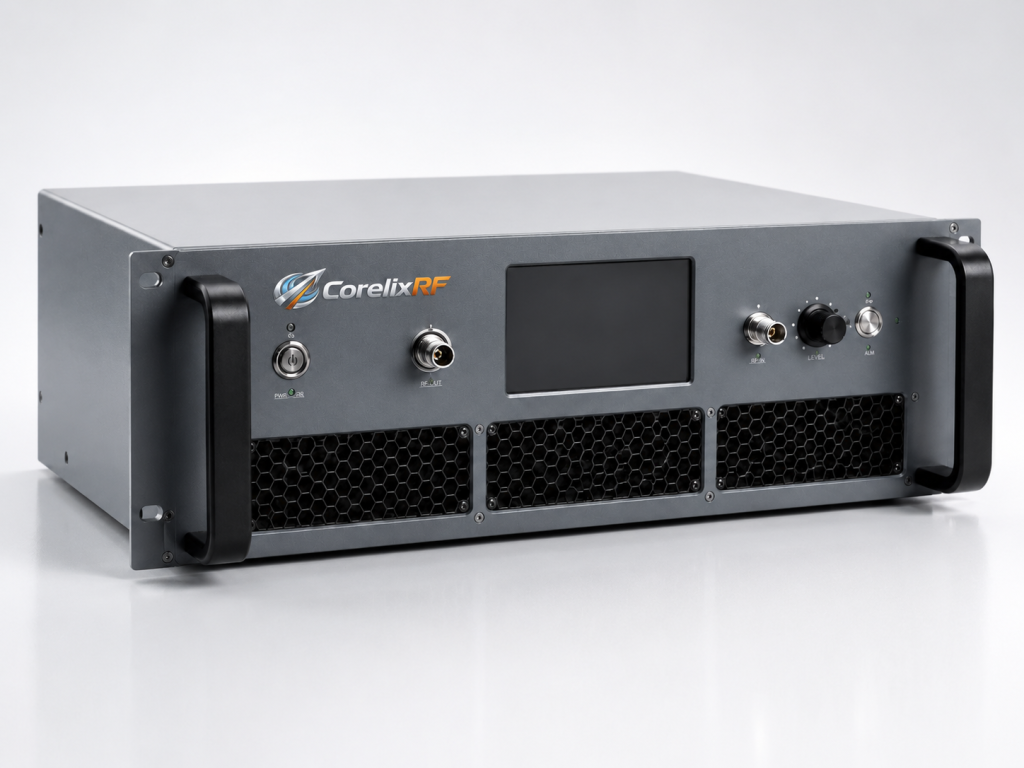
CorelixRF Model Specs
| Feature | Value | Unit |
| Rated Power | 50 | W |
| Gain | 50 | dB |
| Package | 330x200x60 | mm |
8. How Does Advanced GaN Technology Address Thermal Drift?
Are you ready for this? Gallium Nitride represents a massive structural leap forward regarding fundamental semiconductor physics. Its incredibly wide bandgap allows energetic electrons jumping across higher energy states quite easily. This physics trick means GaN transistors handle massive RF power densities natively without melting. They maintain their vital electrical characteristics at highly elevated temperatures remarkably well continuously. Traditional Gallium Arsenide RF components suffer severe gain compression early under moderate thermal heat. GaN simply powers straight through those exactly same stressful thermal conditions totally effortlessly. The CRF power module uses these highly advanced chips specifically for absolute thermal stability. Our verified gain flatness stays strictly within a very tight four decibel measurement window. Even when your locked metal cabinet hits fifty degrees Celsius internally during heavy operation. Your tracking radar maintains highly consistent target tracking signatures without sudden blinding range drops.
9. What Specifications Guarantee Robust Operation At High Heat?
Let us dig much deeper. We must closely examine actual empirical numbers defining this specific rugged RF amplifier. It survives punishing transit storage temperatures ranging from minus twenty up past seventy-five. That metric proves its fundamental deep resilience against brutal logistics transit environments globally. The integrated RS485 interface allows full remote digital control without requiring direct physical access. You can monitor critical device health statistics continuously from a comfortable remote command center. It requires a highly standard twenty-eight volt DC power supply nominally for basic operation. This input parameter matches conventional military vehicle and aerospace power bus architectures absolutely perfectly. We keep dangerous RF spurious emissions incredibly low at minus sixty decibels consistently. The baseline receiver noise floor remains beautifully quiet around minus forty decibels per megahertz. This pristine clean signal purity guarantees flawless data transmission during highly critical jamming operations. Our manufacturing design passes extremely rigorous CE and strict FCC compliance testing protocols globally.
Compliance and Tolerances
| Specification | Rating | Metric |
| Storage Temp | -20 to 75 | Celsius |
| Spurious | -60 | dBc |
| Interface | RS485 | Protocol |
10. How Do We Implement This RF Power Amplifier Successfully?
The bottom line remains clear. System integration demands incredibly careful attention regarding proper mechanical mounting procedures always. Use premium high quality thermal paste tightly between our amplifier and your metal chassis. Torquing those heavy mounting bolts correctly guarantees maximum absolute metal surface contact area. Route your delicate coaxial test cables avoiding sharp physical bends near known active heat sources. Utilize the powerful DB9 interface fully for continuous automated system health monitoring purposes. Program your main master controller software utilizing that realtime RS485 telemetry data actively. Shut down specific secondary tactical subsystems if cabinet temperatures approach designated critical limits temporarily. This incredibly smart automated power management extends operational device lifespan significantly during brutal summer deployments. CorelixRF can easily provide highly specific laboratory test data files for your detailed project review. We build tough electronic equipment meant for surviving actual modern warfare conditions consistently. Stop blindly trusting fragile academic laboratory prototypes with your highly critical frontline field missions.
Final thoughts regarding this complex thermal management matter. We addressed specific thermal failures haunting sealed RF enclosures daily during deployments. The CRF-PA-6000M18000M-50W conquers these brutal realities using brilliant GaN architecture natively. We urge engineers evaluating new electronic designs today towards contacting us directly. Review our detailed datasheets closely for your next major system integration. Your frontline operators deserve reliable communication gear surviving extreme summer desert heat. Stop wasting valuable project budgets replacing melted silicon amplifiers every single month. Invest properly into genuine ruggedized gallium nitride components guaranteeing absolute mission success. Our technical support team remains ready for analyzing your specific cabinet schematics. We provide authentic engineering guidance based purely upon rigorous physical testing data. Send your thermal requirements forward so we can begin collaborative troubleshooting immediately. Hardware reliability starts right at your initial component selection phase always.
Q1: What is gain drift in RF amplifiers?
Gain drift refers specifically regarding unintentional amplification changes caused by temperature fluctuations. Semiconductor materials experience reduced electron mobility whenever ambient heat increases significantly during operation. This physical reaction lowers your total available power output across entire frequency bands. Engineers measure this performance degradation using precise vector network analyzers continuously. A perfectly tuned matching network loses synchronization instantly when dielectric substrates expand thermally. You might see fifty watts drop toward thirty watts almost immediately outdoors. This hidden failure mode causes severe radar range reduction without triggering obvious alarms. Operators simply lose target tracking capabilities while their cooling fans spin uselessly. Fixing this requires implementing temperature compensated bias circuits natively inside your designs. Using advanced gallium nitride materials prevents severe early onset thermal compression entirely.
Q2: How does a sealed cabinet affect RF hardware?
A sealed cabinet traps waste electrical heat internally causing rapid ambient temperature spikes. Tactical military enclosures completely restrict external airflow preventing basic convective cooling completely. These heavy steel boxes bake under direct sunlight acting like massive solar ovens. Any active power amplifier dissipating internal wattage adds extreme localized thermal stress rapidly. The internal atmosphere quickly reaches sixty degrees Celsius destroying sensitive silicon components. Traditional aluminum finned heatsinks become utterly useless without forced fresh air circulation. Heat simply reflects off cabinet walls bouncing right back into your delicate circuitry. Engineers must utilize thick metal baseplates conducting thermal energy directly outward physically. Relying upon standard commercial ventilation theories guarantees catastrophic failure during field deployments. You need components rated specifically for zero airflow environments maintaining stable performance natively.
Q3: Why use GaN technology for RF power?
GaN materials handle high voltages alongside extreme temperatures significantly better than legacy semiconductors. Gallium nitride features a wonderfully wide physical bandgap allowing massive electron energy transfers. This chemical structure prevents early thermal breakdown haunting older gallium arsenide designs continuously. You can push massive RF wattage through GaN dies without melting them instantly. They maintain tight gain flatness parameters even when ambient cabinet heat skyrockets wildly. This inherent ruggedness makes GaN perfect for brutal tactical electronic warfare environments globally. Our CRF series utilizes these exact advanced chips guaranteeing pristine signal integrity always. You get consistent fifty watt outputs without needing heavy liquid cooling loops physically. This saves massive weight while preventing complicated maintenance procedures during active combat missions. GaN represents the absolute best physical material choice regarding modern high power amplification.
Q4: Can I monitor the CRF-PA-6000M18000M-50W remotely? Yes indeed, it provides continuous vital telemetry data utilizing a built-in interface heavily. The RS485 protocol allows seamless digital communication between our amplifier and your controller. You can read forward transmission power levels actively during complex jamming operations continuously. The unit also reports reverse reflected power warning you about damaged antenna cables. A dedicated temperature pin outputs analog voltage correlating directly against internal chassis heat. This remote monitoring capability keeps your maintenance personnel safely far away from danger. They evaluate system health metrics sitting comfortably inside air conditioned command centers globally. Automated software scripts can throttle input drive levels based upon these telemetry readings. This smart remote management prevents catastrophic meltdowns extending total operational hardware lifespans significantly.
Q5: What happens if the amplifier overheats? Built-in protection circuits automatically trigger sophisticated safeguards preventing catastrophic internal component destruction entirely. The CRF module monitors its own internal baseplate temperature continuously without requiring external commands. If thermal runaway begins occurring inside your cabinet the amplifier restricts current flow. This immediate self preservation mechanism stops expensive gallium nitride transistors from burning up. The unit alerts your master controller regarding this thermal crisis via RS485 telemetry. Once ambient temperatures return toward safe operational ranges normal amplification resumes totally automatically. It also features strict over voltage protections blocking dangerous power supply spikes instantly. A sudden disconnected coaxial cable triggers rapid VSWR defensive shutdowns saving sensitive drivers. These physical hardware defenses provide ultimate peace of mind during remote unmonitored deployments.
Turn this RF requirement into a quotable specification
Use this article as a starting point for a buildable RF specification. Before quoting, CorelixRF normally checks frequency range, output power, gain flatness, duty cycle, load mismatch, thermal path, control interface, enclosure limits and acceptance data.
- thermal reliability articles – continue with related thermal drift, cooling and sealed-enclosure reliability notes
- RF power amplifier platforms – match the article topic to available RF power amplifier families
- solid state power amplifier page – review SSPA architecture when reliability and repeatable test data matter
- RFQ checklist – send the data buyers usually forget, including band, power, duty cycle, interface and test standard
- delivery documentation – check what documents can support incoming inspection, FAT review and long-term maintenance
- case studies – review similar engineering paths before sending an RFQ
- engineering contact – send the application notes, block diagram or target specification to engineering sales
For a faster review, send operating band, power target, modulation or waveform, antenna/load condition, cooling limit, mechanical envelope and target test standard through the RFQ or contact path.