
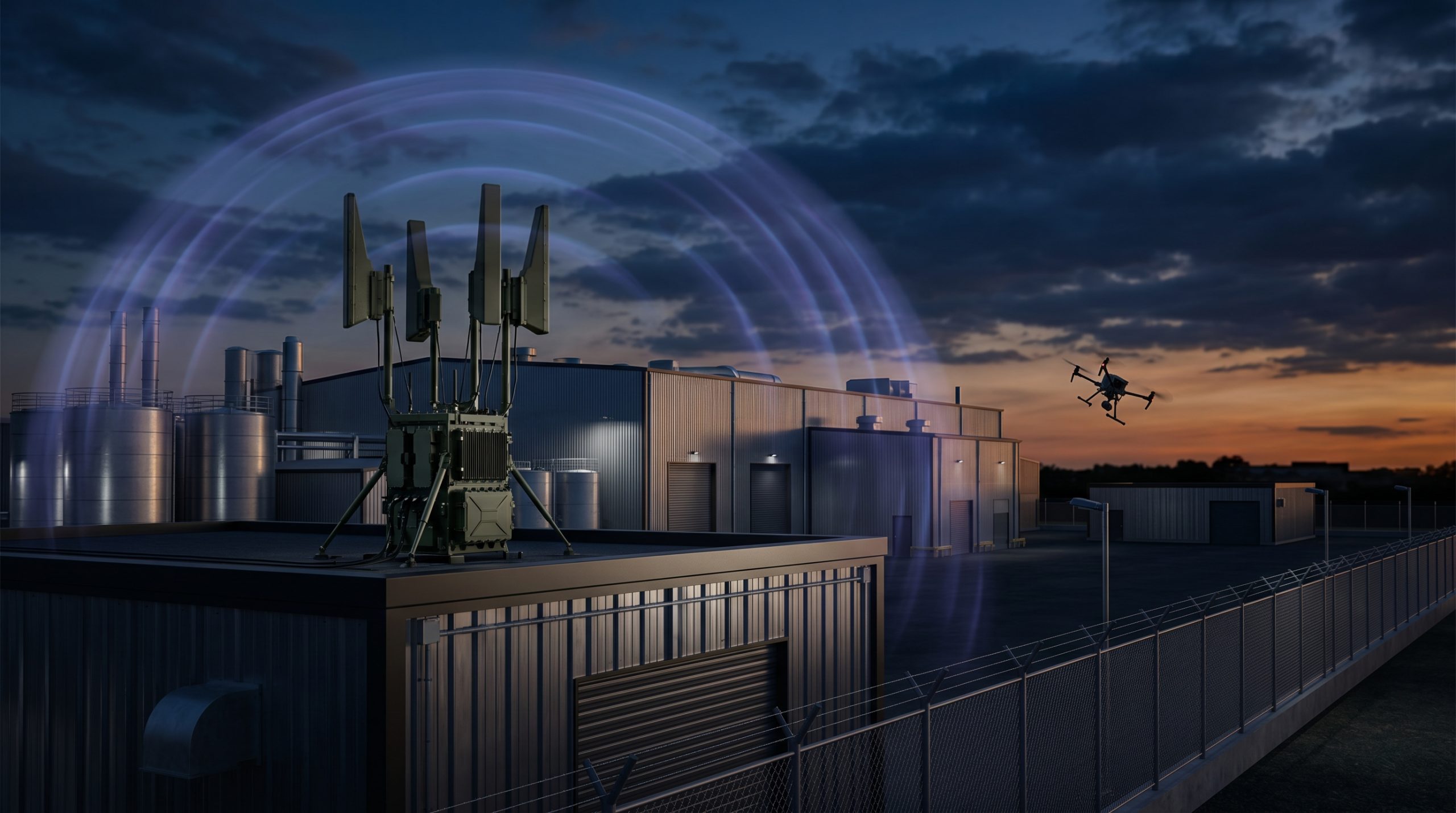
The benefits of using a Drone RF Jammer in industry include preventing unauthorized surveillance, stopping physical threats, and maintaining total control over your facility’s airspace. Unidentified drones constantly fly over private manufacturing plants, capturing sensitive trade secrets. One leaked prototype design can cost millions in lost revenue. You need a reliable defense mechanism to block these flying cameras before they breach your perimeter. Implementing a specialized signal disruption system offers immediate airspace security.
1. What Is A Drone RF Jammer Exactly?
A Drone RF Jammer is a specialized electronic countermeasure device designed to sever the communication link between an unmanned aerial vehicle and its operator. This equipment transmits powerful radio signals on specific frequencies to overpower the original control commands. Here’s the deal: when the drone loses its control signal, it usually returns home or lands immediately. Understanding this core mechanic helps security teams effectively manage modern aerial threats.
How Do These Devices Function?
These systems operate by broadcasting a high-power noise signal across targeted frequency bands. The primary goal involves overwhelming the drone’s receiver completely.
- They emit signals in common 2.4GHz and 5.8GHz bands.
- They can disrupt GPS navigation systems globally.
- Advanced units cover the full 30MHz to 6GHz spectrum. Deploying these systems provides immediate tactical superiority against unidentified aircraft.
Why Do They Target Specific Frequencies?
Most commercial drones rely on standard consumer bands for telemetry and video streaming. Targeting these exact channels makes the disruption highly effective. You might be wondering: what happens to the video feed? It goes completely blank.
Key Takeaway: Understanding the operational mechanics of these devices helps you choose the right configuration to defend your airspace against unauthorized intrusions.
| Feature | Consumer Drone Band | Military Drone Band |
| Target Frequency | 2.4GHz / 5.8GHz | Custom Frequencies |
| Signal Type | Narrowband | Wideband |
| Disruption Method | Noise Injection | Smart Protocol Jamming |
2. Why Do Industrial Sites Need A Drone RF Jammer?
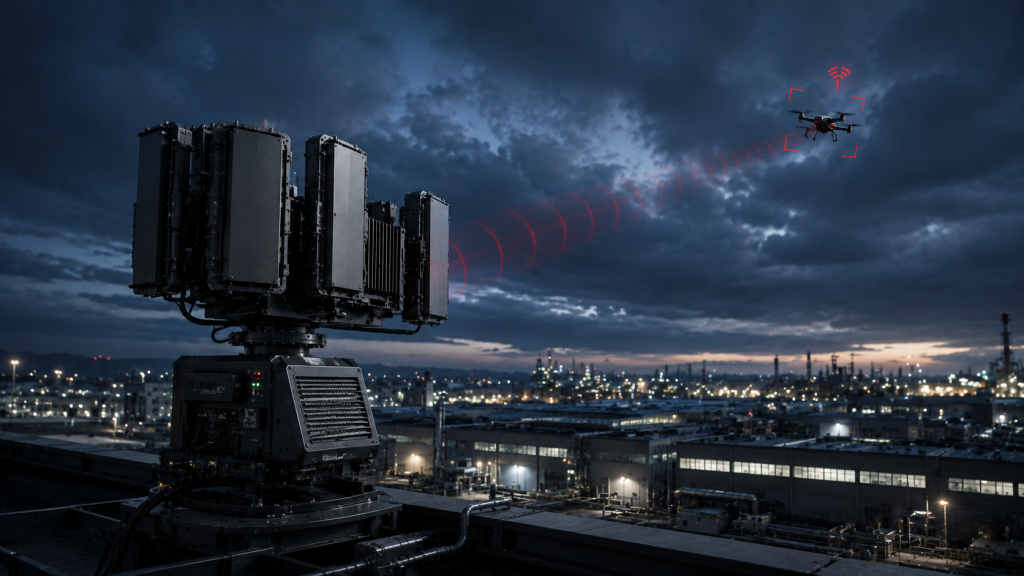
Industrial sites need a Drone RF Jammer to protect intellectual property and prevent physical sabotage from unauthorized aerial vehicles. These facilities often house proprietary machinery and unreleased product prototypes out in the open. Truth be told: standard security cameras cannot stop a drone hovering 500 feet above your yard. Relying on outdated security measures leaves your critical infrastructure totally exposed.
What Threats Do Unauthorized Drones Pose?
Hostile operators use cheap consumer electronics to spy on your daily operations. This exposes your manufacturing schedule and supply chain vulnerabilities instantly.
- Corporate espionage and data theft.
- Smuggling contraband into restricted areas.
- Deliberate collisions with power lines or chemical tanks.These threats require proactive defense mechanisms.
Can They Cause Physical Damage?
Yes, a small quadcopter carrying a payload can cause massive damage to sensitive infrastructure. A targeted strike on a transformer could halt production for days. Ready for the good part? A specialized disruption system creates an invisible shield against these attacks.
Key Takeaway: Deploying countermeasures stops both data theft and physical attacks, keeping your facility running without expensive interruptions.
| Threat Type | Potential Impact | Defense Strategy |
| Surveillance | High (Data Loss) | Continuous Scanning |
| Sabotage | Severe (Downtime) | Immediate Disruption |
| Smuggling | Moderate (Contraband) | Perimeter Sweeping |
3. How Does A Drone RF Jammer Protect Infrastructure?
A Drone RF Jammer protects infrastructure by creating an impenetrable dome of radio frequency interference around your facility. When an airborne vehicle enters this zone, its control signals immediately drop out. What’s the real story? The vehicle simply cannot navigate or transmit data while inside the protected area. Active interference forms a solid barrier.
What Are The Defensive Mechanics?
The system continuously monitors the surrounding airspace for active control signals. Once it detects an anomaly, it activates the necessary suppression modules.
- It isolates the exact frequency band in use.
- It directs concentrated radio waves at the target.
- The high-power output forces the vehicle into fail-safe mode.This rapid response neutralizes threats quickly.
Do They Block Video Transmission?
The interference completely severs the live video feed sent back to the pilot. This prevents the operator from navigating by sight or recording sensitive data. Check this out: without the video feed, the pilot becomes entirely blind.
Key Takeaway: Active radio frequency interference stops the immediate threat and prevents the operator from gathering any actionable intelligence.
| Metric | Active State | Jammed State |
| Video Feed | 1080p / 4K | No Signal |
| Telemetry | Active | Disconnected |
| Control Link | 100% Reliable | 0% Connection |
4. What Are The Advantages Of A Drone RF Jammer?
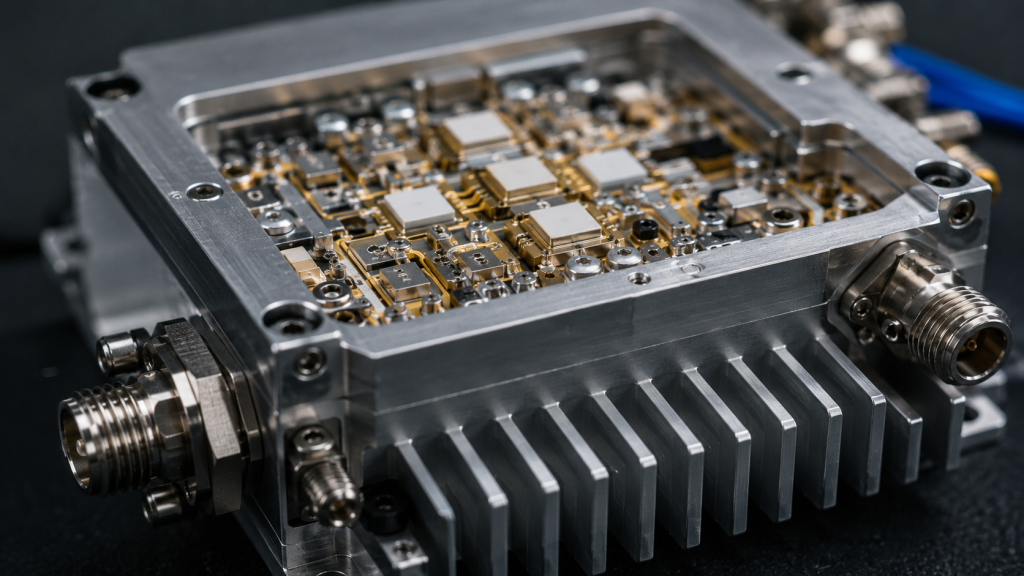
The primary advantage of a Drone RF Jammer built with Gallium Nitride (GaN) technology is extreme heat-resistance and consistent power delivery. These modern amplifiers handle higher power loads without suffering from thermal degradation. Here is the kicker: they maintain output power even during continuous, long-term operation. Better hardware translates directly into better security.
Why Is Wideband Coverage Better?
Older systems only blocked a few specific channels, allowing modified drones to bypass the defense. Modern wideband modules cover everything from 30MHz to 6000MHz continuously.
- No blind spots in the frequency spectrum.
- Capable of defeating custom-built racing drones.
- Adapts to new communication protocols quickly.Complete coverage leaves attackers with zero options.
How Does GaN Technology Help?
GaN allows the internal amplifier to operate at peak efficiency with an extremely small footprint. It provides at least 15% power headroom to handle sudden spikes in demand. Think about it: better thermal management means fewer hardware failures in the field.
Key Takeaway: Upgrading to solid-state GaN components drastically increases your system’s reliability and broadens its defensive capabilities against unknown threats.
| Amplifier Material | Heat Tolerance | Power Efficiency |
| LDMOS | Moderate | Average |
| GaAs | High | Good |
| GaN | Extreme | Outstanding |
5. Can A Drone RF Jammer Stop Espionage?
Yes, a Drone RF Jammer directly stops corporate espionage by blinding the cameras and severing the control links of spying aircraft. Competitors often use cheap quadcopters to monitor your loading docks and reverse-engineer your production flow. Let’s face it: protecting your physical perimeter is useless if the sky remains open. Blocking signals stops the data leak.
How Do Spies Target Manufacturers?
Rival companies want to know what you are building and when it ships. They fly high above fences to record serial numbers and prototype dimensions.
- They track inbound raw material shipments.
- They monitor shift changes to find security gaps.
- They intercept unencrypted radio traffic.Spying happens from above.
What Is The Countermeasure?
Activating your defensive array creates a massive dead zone for commercial telemetry. The spying vehicle loses its connection and drifts away helplessly. It boils down to this: a reliable defense system keeps your trade secrets entirely hidden.
Key Takeaway: Blocking aerial surveillance directly protects your bottom line by keeping your proprietary manufacturing processes strictly confidential.
| Target Area | Spy Objective | Jamming Effect |
| Loading Dock | Track Shipments | Forced Landing |
| R&D Facility | Steal Designs | Video Link Cut |
| Storage Yard | Count Inventory | GPS Lost |
6. How Fast Can The System Deploy?
You can deploy a modular Drone RF Jammer in a matter of hours if the site infrastructure is properly prepared. Mobile versions can be set up in minutes for temporary events or emergency situations. Want to know a secret? Quick deployment is necessary for responding to sudden security alerts. Speed dictates your tactical success.
What Are The Setup Requirements?
Permanent installations require sturdy mounting points and dedicated power supplies. You also need a clear line of sight for the directional antennas.
- High-voltage power connections.
- Heavy-duty mounting brackets.
- Weatherproof Ethernet cabling for control.Preparation saves deployment time.
Are Mobile Units Effective?
Portable units offer incredible flexibility for security teams patrolling large perimeters. They pack the same punch as fixed units but run on high-capacity battery packs. Here’s the catch: they have a slightly shorter operating time before needing a recharge.
Key Takeaway: Choosing the right deployment method allows your security team to respond to aerial threats with maximum speed and effectiveness.
| Unit Type | Deployment Time | Power Source |
| Fixed Mount | 2-4 Hours | Mains Power |
| Vehicle Mount | 30 Minutes | Alternator |
| Manpack | 5 Minutes | Battery |
| Rapid deployment options give security teams the tactical advantage. |
7. Are Full-Band RF Chains Necessary?
A full-band Drone RF Jammer is absolutely necessary because modern threats constantly switch communication channels to avoid interference. If your system only blocks standard Wi-Fi bands, an attacker will simply use a 433MHz or 900MHz radio. This is crazy but true: hobbyists can modify a controller in ten minutes to bypass weak defenses. Broad coverage is a strict necessity.
Why Do Frequencies Hop?
Advanced flight controllers use frequency-hopping spread spectrum (FHSS) technology to maintain a solid link. They jump hundreds of times per second across a wide band.
- It prevents accidental interference from routers.
- It complicates targeted countermeasures.
- It maintains a stable video feed.Hopping makes jamming difficult.
How Do You Defeat FHSS?
You need an SDR digital signal source capable of real-time frequency hopping to match the target. This intelligent control system hunts down the active channel and blasts it with noise. You see: broad coverage leaves the attacker with no alternative channels.
Key Takeaway: Implementing a comprehensive RF architecture ensures that no matter what frequency the attacker chooses, your defense will block it.
| Threat Protocol | Behavior | Defense Requirement |
| Standard Wi-Fi | Fixed Channel | Narrowband Jamming |
| FHSS | Fast Hopping | SDR Digital Source |
| Custom Radio | Unpredictable | Full-Band Coverage |
8. How Do Environmental Factors Affect It?
Heavy rain, dense fog, and physical obstacles can reduce the effective range of a Drone RF Jammer by scattering the radio waves. Radio frequency propagation is heavily dependent on line-of-sight and clear atmospheric conditions. But wait, there’s more: high temperatures can also stress the internal amplifier modules. Proper planning prevents poor performance.
What About Physical Obstructions?
Steel buildings and thick concrete walls reflect radio signals, creating shadows where an airborne vehicle might hide. You must place antennas strategically to avoid these blind spots.
- Mount antennas on the highest roof.
- Use multiple units to cross-cover areas.
- Trim surrounding trees if necessary.Antenna placement matters greatly.
How Do You Manage Heat?
Operating high-power equipment generates massive amounts of thermal energy. Your system must use aluminum heat-sink integrated designs to prevent complete failure. The truth is: poor thermal management will destroy the equipment faster than any physical attack.
Key Takeaway: Proper site surveying and robust hardware selection counteract harsh environmental variables and keep your defense grid online.
| Environmental Factor | Impact on Signal | Mitigation Strategy |
| Heavy Rain | Signal Attenuation | Increase Output Power |
| Buildings | Signal Reflection | Strategic Antenna Placement |
| High Heat | Hardware Stress | Integrated Heat-Sinks |
| Understanding environmental limitations helps you design a more resilient defense perimeter. |
9. What Quality Standards Guarantee Reliability?
A military-grade Drone RF Jammer relies on strict quality control protocols, such as MIL-STD-810, to guarantee operation in extreme conditions. Manufacturing these devices requires rigorous stress testing before they ever leave the factory floor. It gets better: comprehensive testing drastically reduces the failure rate in the field. Reliability keeps your airspace safe.
What Does The Testing Involve?
A proper 46-step quality control protocol involves inspecting every single component. This includes thermal cycling and heavy vibration testing.
- Phase 1 covers incoming component inspection.
- Phase 2 validates the PCBA functionality.
- Phase 3 pushes the unit to extreme environmental limits. Testing proves the design.
Why Does This Matter?
When a hostile vehicle approaches your facility, you cannot afford a hardware glitch. Every module must perform exactly according to its spec sheet. As a matter of fact: cutting corners in the lab leads to disastrous failures during a real attack.
Key Takeaway: Investing in equipment built to rigorous military standards guarantees that your security system will function perfectly when you need it most.
| Testing Phase | Focus Area | Goal |
| IQC Inspection | Raw Materials | Prevent Defective Parts |
| PCBA Validation | Circuit Logic | Validate Functionality |
| Stress Testing | Environmental | Guarantee Ruggedness |
10. How Can You Integrate It Into Existing Systems?
You can integrate a Drone RF Jammer into your existing command center using standard RS422 control interfaces and open API protocols. This allows your current radar and optical tracking cameras to trigger the disruption modules automatically. Here’s the deal: seamless integration turns standalone hardware into an intelligent defense network. Automated responses save precious time.
Do You Need Custom Software?
Most high-end systems come with versatile software suites, but you can request engineering support for custom interface design. Your team can connect the hardware directly to your current dashboard.
- It accepts automated trigger commands.
- It reports system health in real-time.
- It logs all interference events.Software bridges the gap.
What Is The Ultimate Benefit?
Automation removes human hesitation from the equation. The moment the radar detects a threat, the countermeasures activate and neutralize the target instantly. Why does this matter? It reduces response times from minutes down to a fraction of a second.
Key Takeaway: Connecting your disruption hardware directly to your sensory network creates a fully autonomous, highly efficient security perimeter.
| Integration Type | Trigger Method | Response Time |
| Manual | Human Operator | 1-2 Minutes |
| Semi-Auto | Dashboard Alert | 10-30 Seconds |
| Fully Auto | Radar / API | < 1 Second |
Implementing a robust radio frequency countermeasure system remains the only reliable way to defend your airspace against uninvited surveillance and physical threats. By understanding the technology, evaluating environmental factors, and demanding military-grade manufacturing standards, you protect your critical infrastructure from severe disruption. We build the core RF modules that power modern security networks. For dedicated engineering support and custom manufacturing, contact us today to start your project. We stand behind every amplifier we build, pushing the boundaries of engineering truth.
FAQ
Q1: Can I use this equipment near sensitive factory machinery?
Yes, you can operate these devices safely near your machinery. The directional antennas focus the energy entirely upward into the sky, avoiding interference with ground-level manufacturing equipment.
Q2: What’s the best frequency band to target for security? A wideband setup covering 30MHz to 6GHz provides the absolute best defense. This vast range blocks consumer drones, custom racing models, and advanced hopping protocols simultaneously.
Q3: How do I know if the disruption signal is working?
You will see the target immediately stop its forward progression. The vehicle will either hover in place, slowly descend to the ground, or automatically fly back to its origin point.
Q4: Can I integrate these modules with my radar detection software? Yes, you can connect the hardware to your current network. Using standard data interfaces like RS422 allows your radar to trigger the suppression modules automatically upon detection.
Q5: What’s the best way to handle thermal heat generated by the amplifier? Purchasing systems with integrated aluminum heat-sinks is the most effective approach. Proper thermal design prevents power degradation and keeps the unit running during long engagements.
Authorized RF engineering and compliance review
For regulated RF systems, this page should be used as an engineering and compliance review path, not as a public deployment checklist. CorelixRF starts with authorization status, operating region, frequency plan, output limit, antenna interface, safety controls, thermal limits and acceptance documents.
- RFQ checklist – send the data buyers usually forget, including band, power, duty cycle, interface and test standard
- delivery documentation – check what documents can support incoming inspection, FAT review and long-term maintenance
- quality and certification review – review the quality and compliance evidence before the project moves into procurement
- RF front-end platform – compare the RF chain as a system instead of selecting one isolated module
- RF configurator – turn frequency, power, thermal and interface requirements into a first configuration brief
- case studies – review similar engineering paths before sending an RFQ
- engineering contact – send the application notes, block diagram or target specification to engineering sales
This keeps the discussion inside lawful, authorized RF programs while still giving procurement teams a clear way to request amplifier, antenna, SDR source, documentation and factory review.
Industrial Site RF System Review Path
For authorized industrial-site RF security projects, review RF front-end platform planning together with RF amplifier options and antenna placement requirements. Share frequency bands, power level, duty cycle, enclosure, cooling, antenna/load condition and compliance evidence through the RF inquiry form.