
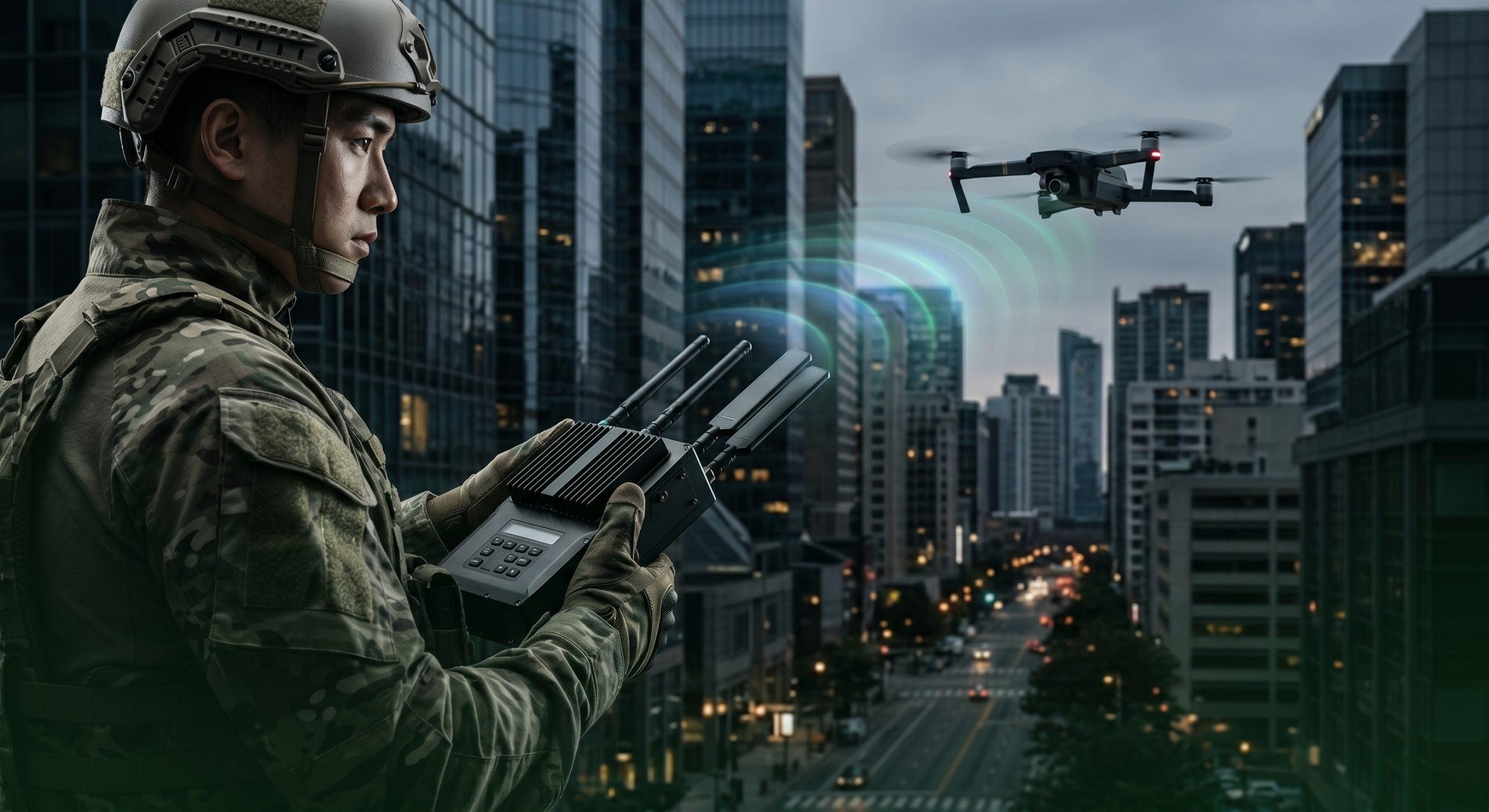
Selecting a reliable system requires matching frequency capabilities with dense city interference patterns. Unauthorized drones frequently compromise sensitive inner-city perimeters. Ignoring aerial threats leaves critical infrastructure dangerously vulnerable. Implementing an advanced Drone Jammer secures overhead spaces instantly. We outline necessary steps for proper equipment procurement.
Why is an Urban Drone Jammer Essential?
An urban Drone Jammer neutralizes unauthorized flights before they breach secure zones. Cities present unique radio frequency challenges. Standard blockers cause unacceptable collateral disruption. Specialized urban units focus radiation precisely.
What specific threats exist?
Commercial quadcopters bypass traditional ground security measures effortlessly. Smuggling and espionage occur daily.
Here is the deal: operators require targeted defense mechanisms.
- Hostile surveillance operations
- Contraband payload drops
- VIP security breaches
How do localized blockers function?
Directional antennas isolate targeted UAV links effectively. They ignore civilian mobile networks.
Key Takeaway: Deploying environment-specific hardware prevents collateral signal disruption while maintaining strict perimeter security.
| Feature | Military Jammer | Urban Jammer |
| Power | Extreme | Moderate |
| Beam | Omni | Directional |
This comparison proves directional systems offer safer operation across populated districts.
Which Frequencies Must a Drone Jammer Cover?
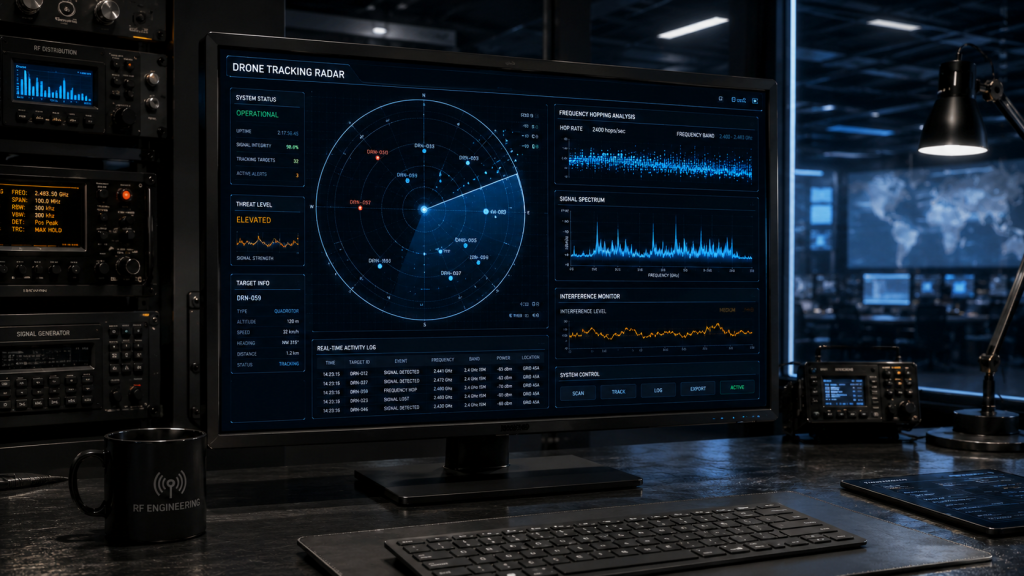
A capable Drone Jammer must disrupt standard 2.4GHz and 5.8GHz control bands. Most commercial quadcopters utilize these specific ranges. Navigation requires GPS L1 disruption simultaneously. Upgraded models also block 900MHz signals.
Are older frequencies still relevant?
Many legacy UAVs operate on lower 433MHz bands. Criminals modify consumer units regularly.
You might be wondering: why track multiple bands?
- Drones hop frequencies automatically
- Custom builds use obscure links
- Redundancy guarantees interception
Should GPS jamming be active?
Blocking satellite navigation forces UAVs into hovering modes. Operators easily capture disabled units.
Key Takeaway: Multi-band coverage ensures complete neutralization across diverse commercial quadcopter models.
| Band | Common Usage | Disruption Effect |
| 2.4GHz | Main Control | Video Loss |
| 5.8GHz | High-Speed Video | Blindness |
| GPS L1 | Navigation | Hover/Land |
Selecting tri-band capability guarantees overwhelming operational superiority against standard threats.
How Does a Drone Jammer Handle Interference?
A premium Drone Jammer utilizes advanced filtering algorithms to penetrate city background noise. High-rise buildings reflect radio waves unpredictably. Dense Wi-Fi traffic creates massive electromagnetic congestion. Quality components maintain clean transmission signals.
Can weather affect operation?
Heavy rain degrades microwave transmission ranges significantly. High humidity absorbs higher frequencies.
Listen to this: proper weatherproofing maintains consistent performance.
- IP67 rated enclosures
- Internal climate control
- Heated antenna elements
Why does urban density matter?
Concrete walls attenuate directional beams quickly. Line-of-sight targeting becomes complicated rapidly.
Key Takeaway: Environmental filtering separates hostile signals from civilian communication networks accurately.
| Environment | Signal Loss | Jammer Setting |
| Clear Sky | Minimal | Standard |
| Heavy Rain | High | Boosted |
| City Block | Extreme | Directional |
Adapting output profiles according to environmental factors maximizes interception success rates.
What Power Output Suits a City Drone Jammer?
Moderate wattage around 30W to 50W provides adequate Drone Jammer coverage for cities. Massive power output disrupts nearby hospitals. Precision overrides sheer brute force. Directional gain amplifies effectiveness safely.
Is more power always better?
Excessive radiation violates local telecommunication laws. You risk facing heavy federal fines.
But here is the kicker: smarter antennas replace raw wattage.
- Focuses energy precisely
- Reduces collateral damage
- Lowers thermal signatures
How do amplifiers manage heat?
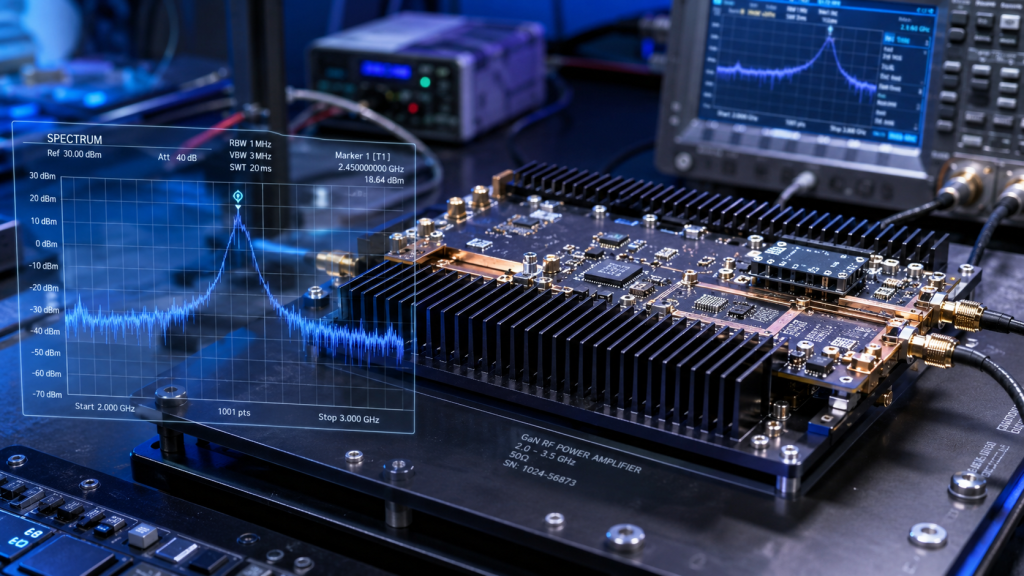
Continuous operation generates substantial internal temperatures. Gallium Nitride components offer superior efficiency.
Key Takeaway: Balancing output wattage with high-gain antennas creates legally compliant defense perimeters.
| Component | Wattage | Effective Range |
| Omni | 100W | 1km |
| Directional | 30W | 1.5km |
Smart amplification techniques achieve longer effective ranges utilizing significantly less electrical energy.
Can a Drone Jammer Defeat UAV Swarms?
A modern Drone Jammer disables swarms by blasting wide-angle electromagnetic cones. Coordinated attacks overwhelm single-target tracking systems. Multiple threats require simultaneous multi-channel disruption. Advanced platforms sweep frequencies rapidly.
How do swarms communicate?
Mesh networks allow individual units to share data. Taking down one leader disrupts them.
What is the real story? Broadband sweeps crush mesh networking protocols.
- Disrupts peer-to-peer links
- Disables collective navigation
- Forces individual safe-landing
Are software updates necessary?
Attackers constantly upgrade swarm coordination algorithms. Defensive software must adapt quickly.
Key Takeaway: Upgradable broadband disruption modules remain critical for defeating synchronized multi-drone incursions.
| Attack Type | Jamming Mode | Defense Rating |
| Single UAV | Pinpoint | Excellent |
| Small Swarm | Sector Sweep | Good |
| Mass Swarm | Omni Blast | Moderate |
Deploying sector-sweeping technology provides reliable protection against coordinated aerial threats.
How Portable Should an Urban Drone Jammer Be?
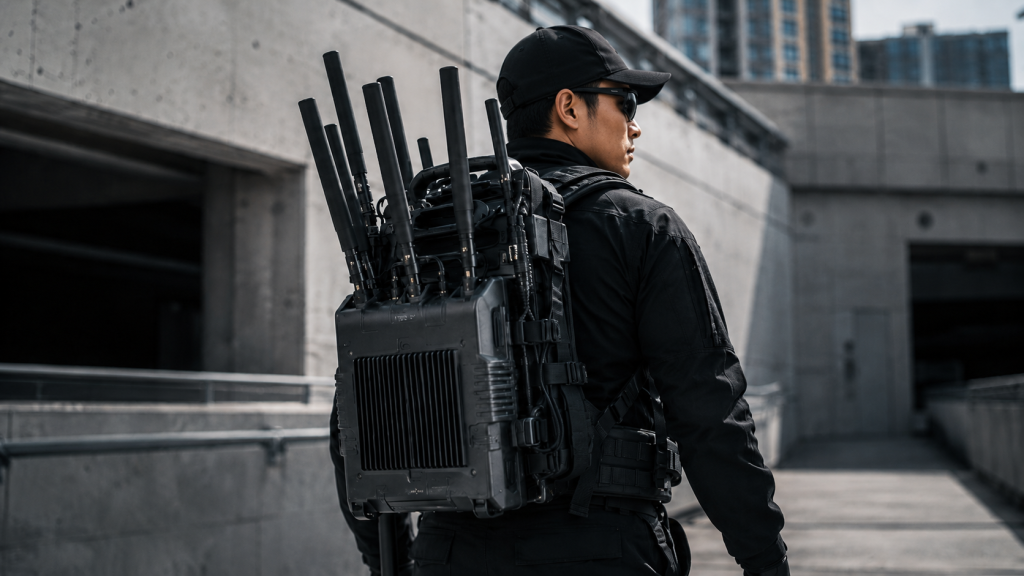
A tactical Drone Jammer must weigh under ten kilograms for mobile patrols. Fixed installations cannot protect moving convoys. Security personnel need handheld or backpack configurations. Battery life dictates operational mobility.
What battery types work best?
Lithium iron phosphate cells offer stable discharge rates. They prevent dangerous thermal runaway scenarios.
Ready for the good part? Hot-swappable packs guarantee continuous protection.
- Quick field replacement
- Lightweight architecture
- Long standby durations
Do handheld units lack power?
Miniaturization reduces maximum effective interception ranges slightly. However, mobility offsets this disadvantage.
Key Takeaway: Ergonomic designs allow security teams to deploy countermeasures rapidly during dynamic situations.
| Form Factor | Weight | Mobility |
| Fixed Base | 50kg | None |
| Backpack | 15kg | High |
| Handheld | 5kg | Extreme |
Tactical mobility allows response teams to intercept threats dynamically across large venues.
Which Antennas Optimize a Drone Jammer?
High-gain directional antennas maximize any Drone Jammer by focusing RF energy sharply. Omnidirectional types scatter signals everywhere inefficiently. City environments demand narrow beamwidth projection. Proper polarization matches incoming threat signals.
Why choose circular polarization?
Quadcopters bank and tilt during aggressive maneuvers. Linear signals lose connection during rolls.
This is where it gets interesting: circular beams maintain constant lock.
- Penetrates complex geometry
- Ignores drone orientation
- Reduces signal bouncing
Can antennas be concealed?
Aesthetics matter near luxury hotels or corporate headquarters. Radomes disguise equipment perfectly.
Key Takeaway: Selecting correctly polarized directional antennas guarantees stable disruption links regardless of UAV orientation.
| Antenna Type | Polarization | Target Tracking |
| Panel | Linear | Fair |
| Helix | Circular | Excellent |
Circularly polarized hardware ensures uninterrupted signal disruption during erratic target movements.
Does Your Drone Jammer Need Smart Tracking?
An automated Drone Jammer utilizes smart tracking to engage targets without human intervention. Manual aiming fails against high-speed racing quads. Integrated optical cameras verify targets visually. Radar components calculate exact trajectories instantly.
How does AI improve defense?
Machine learning identifies specific drone silhouettes accurately. Software ignores birds completely.
Here is the secret: automation drastically reduces reaction times.
- 24/7 autonomous monitoring
- Instant threat classification
- Automatic frequency selection
Is manual override necessary?
Human operators must retain final engagement authority. Friendly police units require safe passage.
Key Takeaway: Integrating passive radar alongside visual tracking creates a foolproof autonomous defense perimeter.
| Tracking Tech | Range | Accuracy |
| Optical | Short | High |
| RF Scanner | Medium | Medium |
| Micro-Radar | Long | Extreme |
Multi-sensor fusion provides unparalleled situational awareness for automated countermeasure deployment.
How to Ensure Drone Jammer Legal Compliance?
Operating a Drone Jammer demands strict adherence to federal communications regulations globally. Unauthorized civilian jamming carries severe criminal penalties. Only designated agencies may block airspace actively. Commercial properties must utilize passive detection initially.
Who authorizes active jamming?
Military bases and federal prisons hold permanent operation licenses. Local police request temporary permits.
Truth be told: navigating bureaucracy requires specialized consultants.
- Submit federal applications
- Prove operational necessity
- Pass site inspections
What alternatives exist for businesses?
Private companies deploy protocol-takeover systems instead. These exploit software vulnerabilities legally.
Key Takeaway: Understanding local telecommunication laws prevents disastrous legal liabilities during security system procurement.
| Entity Type | Legal Status | Allowed Tech |
| Military | Fully Legal | All Jammers |
| Police | Restricted | Approved Units |
| Private | Illegal | RF Sensors |
Strict regulatory compliance ensures smooth operational deployment without risking severe federal penalties.
What Budget Fits a Quality Drone Jammer?
A reliable Drone Jammer requires an investment ranging from $10,000 to over $150,000. Cheap online knockoffs fail during critical emergencies. Professional engineering demands high-quality internal components. Maintenance contracts add ongoing operational costs.
Are custom solutions expensive?
Engineering bespoke networks increases initial expenditures significantly. However, tailored systems perform flawlessly.
Consider this fact: protecting core assets justifies premium pricing.
- Prevents million-dollar sabotage
- Stops corporate espionage
- Secures human lives
How long do systems last?
Industrial electronics operate reliably for five to seven years. Regular calibration extends lifespans.
Key Takeaway: Allocating sufficient capital guarantees procurement of military-grade hardware capable of mitigating genuine threats.
| System Tier | Price Range | Target Market |
| Handheld | $5k – $15k | Patrol Teams |
| Fixed Base | $30k – $80k | Buildings |
| Automated | $100k+ | Military |
Investing in scalable architecture provides long-term value while matching evolving security demands.
Securing urban airspace requires robust technology and strategic implementation. You have learned how frequency selection, power management, and tracking mechanisms define successful deployments. Our team solves complex RF challenges flawlessly. We provide military-grade manufacturing capabilities tailored for your exact infrastructure. Reach out and contact us today to start your project. CorelixRF engineers absolute truth into every high-power radio frequency solution.
Q1: Can I operate these devices on private property?
No. Federal laws strictly prohibit private citizens from operating active signal disruptors due to collateral risks.
Q2: What’s the best frequency band to target?
Targeting 2.4GHz and 5.8GHz simultaneously works best. The vast majority of commercial quadcopters utilize these specific frequencies for control.
Q3: How do I know if my system needs smart tracking?
You need automation if your facility lacks dedicated security personnel continuously monitoring airspace. Smart tracking engages threats instantly during off-hours.
Q4: Can I disrupt drones without affecting local Wi-Fi?
Yes. Utilizing highly directional antennas focuses the disruption beam narrowly, leaving surrounding civilian networks untouched.
Q5: What’s the best form factor for event security?
Backpack units provide the optimal balance. They offer substantial battery life while keeping security guards mobile within crowds.
Authorized RF engineering and compliance review
For regulated RF systems, this page should be used as an engineering and compliance review path, not as a public deployment checklist. CorelixRF starts with authorization status, operating region, frequency plan, output limit, antenna interface, safety controls, thermal limits and acceptance documents.
- RFQ checklist – send the data buyers usually forget, including band, power, duty cycle, interface and test standard
- delivery documentation – check what documents can support incoming inspection, FAT review and long-term maintenance
- quality and certification review – review the quality and compliance evidence before the project moves into procurement
- RF front-end platform – compare the RF chain as a system instead of selecting one isolated module
- RF configurator – turn frequency, power, thermal and interface requirements into a first configuration brief
- case studies – review similar engineering paths before sending an RFQ
- engineering contact – send the application notes, block diagram or target specification to engineering sales
This keeps the discussion inside lawful, authorized RF programs while still giving procurement teams a clear way to request amplifier, antenna, SDR source, documentation and factory review.
Urban RF System Review Path
For authorized urban C-UAS RF reviews, align interference constraints and coverage assumptions with RF front-end filtering and protection, RF power amplifier sizing and antenna/load interface planning. Send bands, duty cycle, output targets, site constraints, VSWR exposure and documentation needs through the RF inquiry form.