
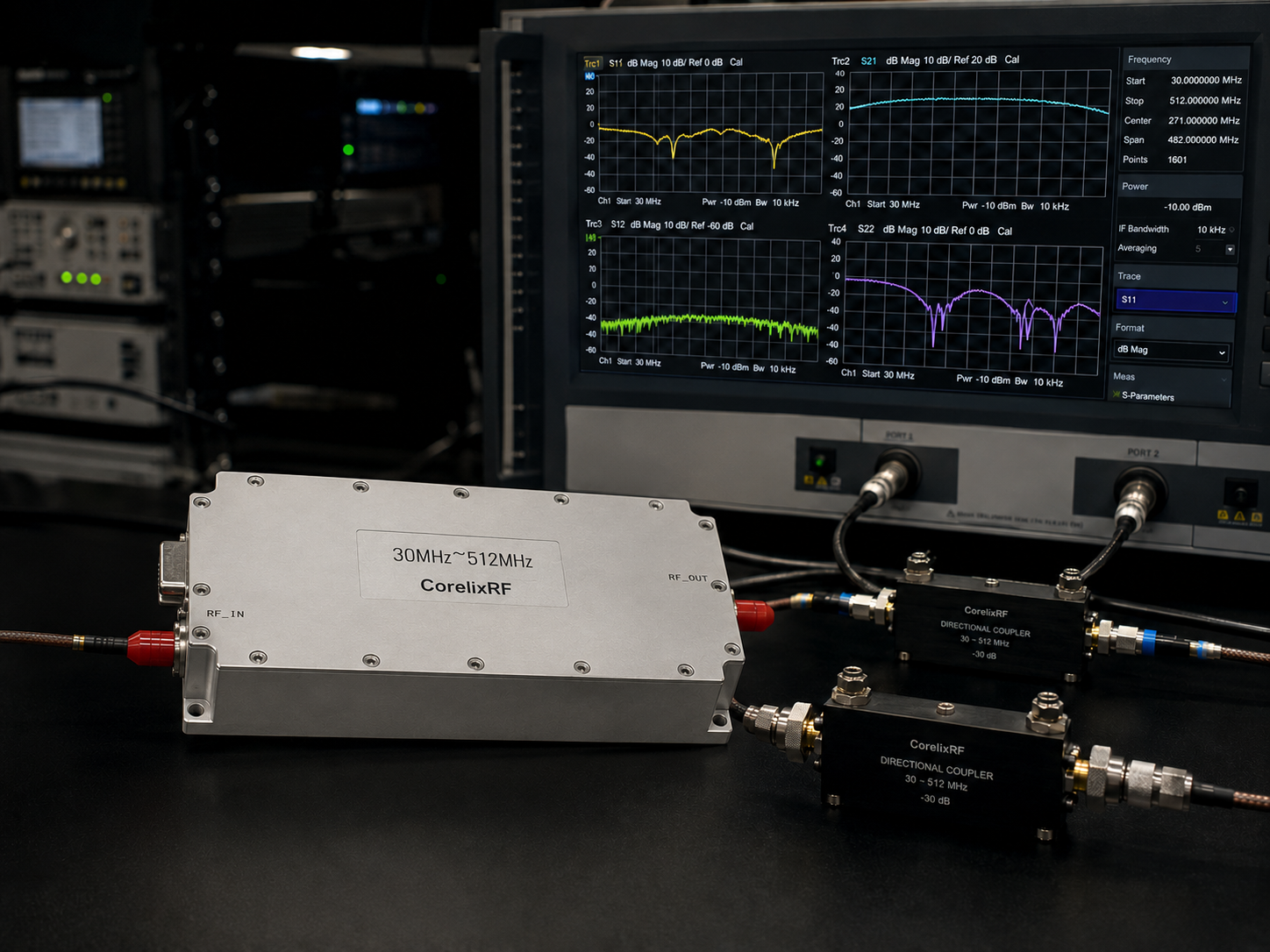
A 30-512 MHz RF power amplifier is often selected for VHF/UHF systems where the engineering challenge is not only output power. OEM teams also need to confirm power supply capacity, thermal path, connector access, mechanical fit, control expectations, and documentation before the amplifier is built into a larger platform.
CorelixRF’s public 30-512 MHz platform gives engineers a useful starting point because it lists standard 30 W, 50 W, 100 W, 150 W, and 200 W classes, typical gain ranges, 28 VDC architecture, air cooling, and SMA-F / N-F connector options. That makes the 30-512 MHz RF amplifier page a stronger topic for VHF/UHF buyers than another microwave-only article.
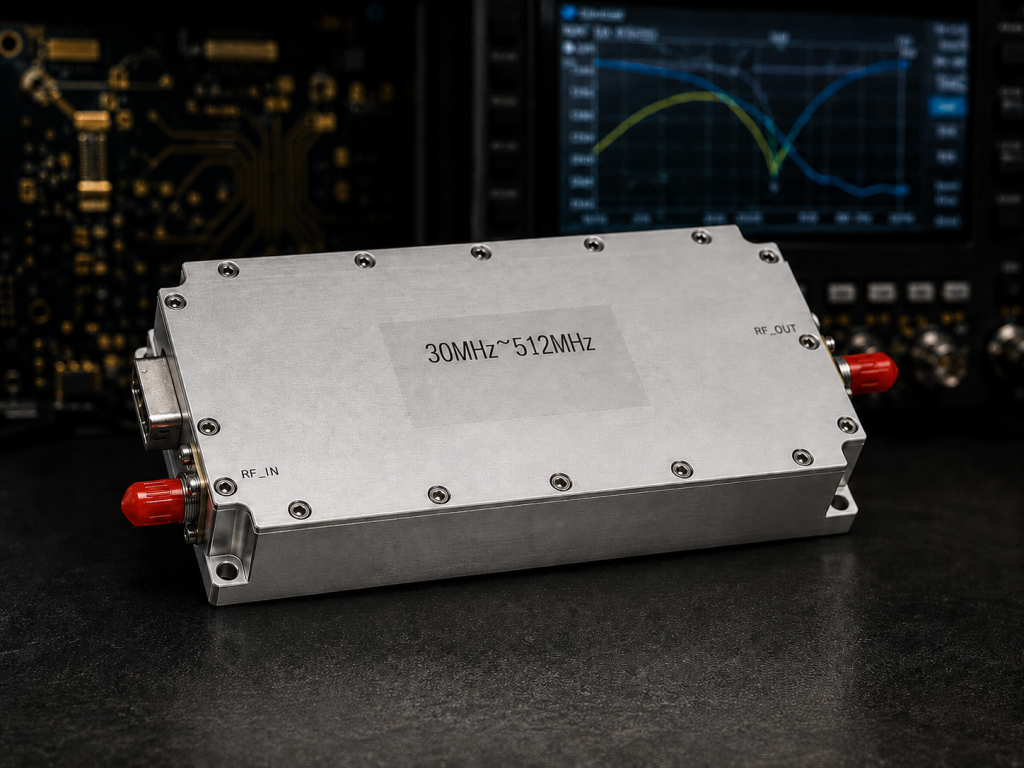
Why VHF/UHF Amplifiers Need Early Integration Review
VHF/UHF hardware often goes into mobile, industrial, vehicle-based, field, or laboratory platforms. In these systems, the amplifier is not a bench accessory; it is a power stage that must coexist with the DC supply, enclosure, heat path, antennas, filters, couplers, and control logic.
The selection process should start with four questions. What frequency span is actually needed? What output power is required at the load, not only at the amplifier connector? Is full 30-512 MHz coverage necessary, or would a custom sub-band be more appropriate? What supply, cooling, and mounting limits already exist in the customer’s platform?
Standard Power Classes and Practical Tradeoffs
CorelixRF’s standard 30-512 MHz range includes 30 W through 200 W classes. Lower output models can suit compact lab validation and moderate-current deployments. Higher output models can support more demanding VHF/UHF transmit chains, but they also require more careful supply and thermal planning. The published model table shows current demand rising with output class, which is exactly why engineers should not choose power by headline wattage alone.
A 200 W amplifier may look attractive, but if the system has limited airflow or an undersized DC path, a lower class or custom review may be more realistic. Conversely, a 30 W unit may be electrically convenient but insufficient after cable, filter, switch, and antenna path losses are counted.
When a Custom Sub-Band Makes More Sense
Not every project benefits from full wideband coverage. If the operating band is narrower than 30-512 MHz, CorelixRF can review whether a custom sub-band may improve the balance of flatness, efficiency, thermal behavior, or integration fit. That is especially relevant for OEM systems where the amplifier must be tuned to a defined channel plan rather than used as a general lab source.
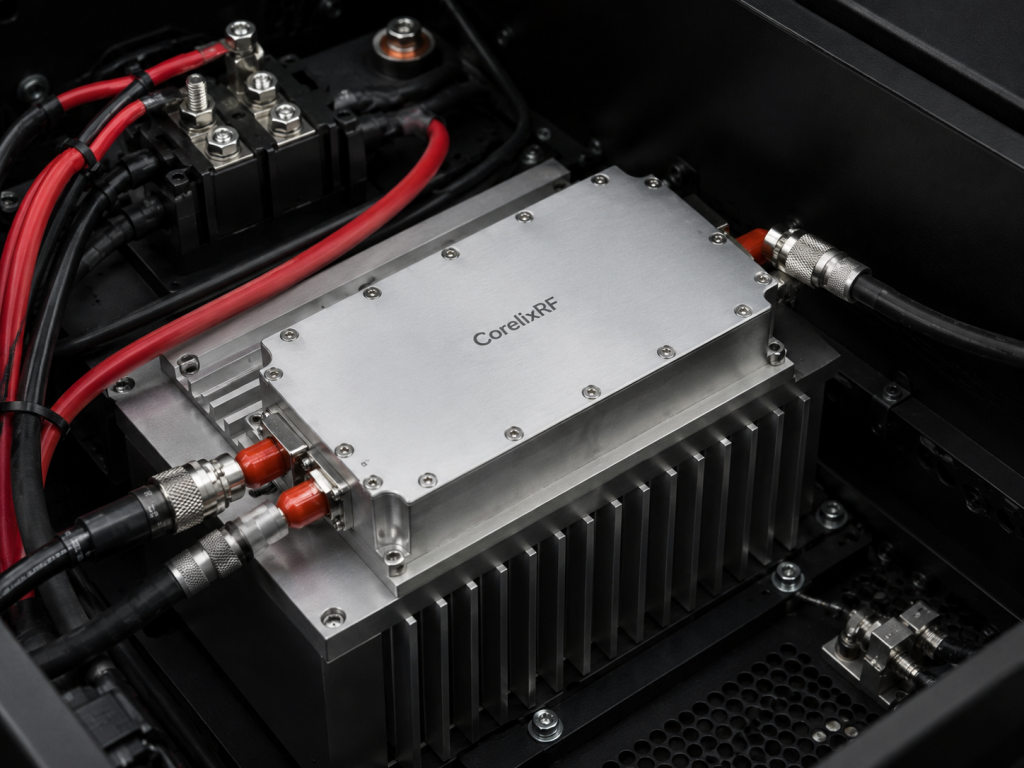
Buyers comparing standard versus custom paths should also review CorelixRF’s broader custom RF amplifier options. The right intake should include frequency range, output target, mode, duty cycle, load condition, connector preference, supply constraints, cooling method, and mechanical envelope.
FAQ
What is a 30-512 MHz RF power amplifier used for?
It is used for broadband VHF/UHF RF systems, OEM integration, RF laboratories, communication test platforms, and custom sub-band amplifier projects.
Is 28 VDC important for OEM integration?
Yes. A native 28 VDC architecture can simplify system-side supply planning in industrial, mobile, and vehicle-based platforms, but current budget still must be confirmed.
Should I choose full 30-512 MHz coverage or a custom sub-band?
Choose full coverage for broad test flexibility. Choose a custom sub-band review when the real operating range is narrower and efficiency, flatness, or integration fit matters more.
What should I send with an RFQ?
Send frequency range, output power, operating mode, duty cycle, connector preference, load condition, cooling method, supply limits, and mechanical constraints.