
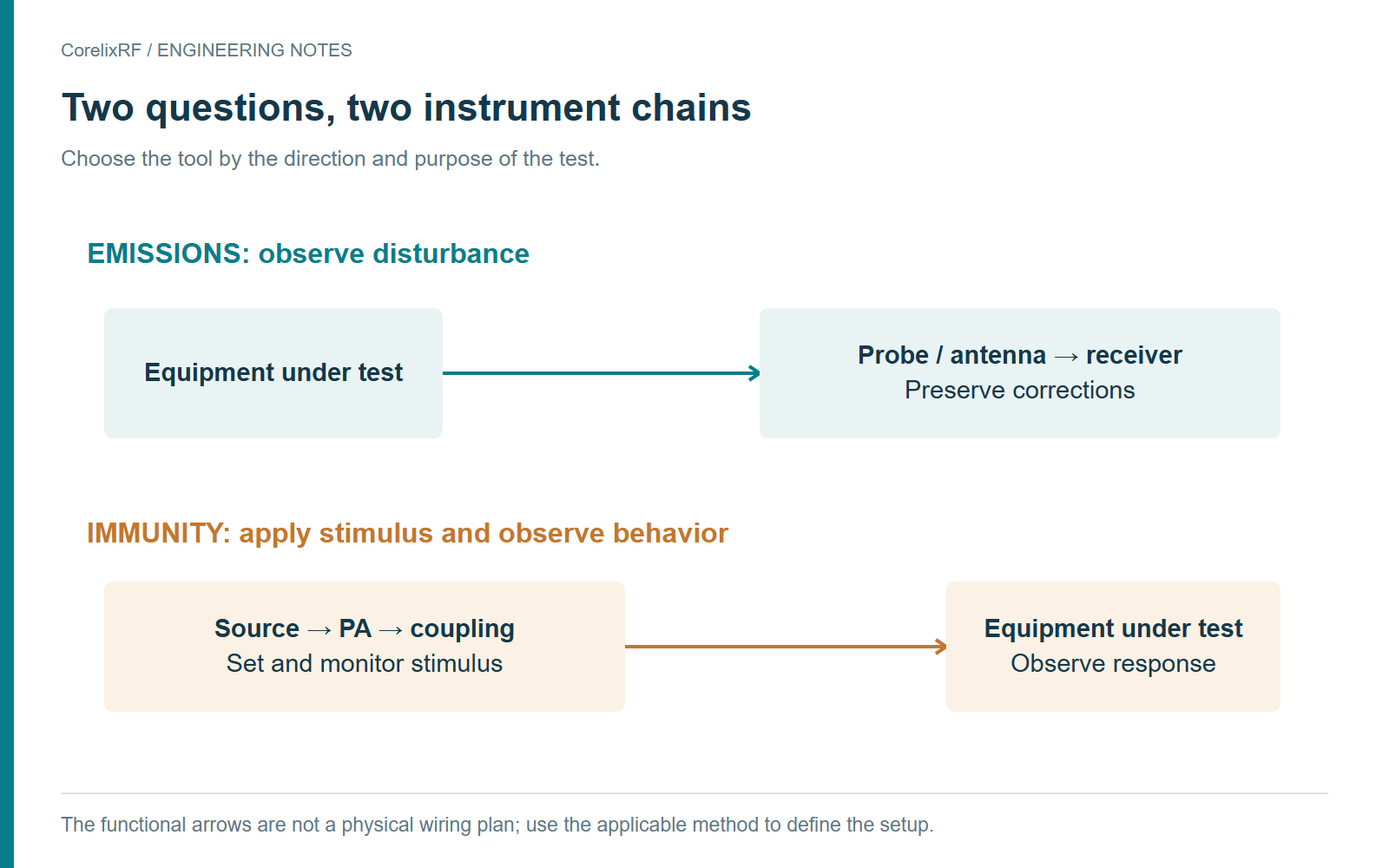
EMC precompliance testing equipment should be chosen for the specific emissions, source-location, or immunity question the test must answer. The instrument set depends on whether the task is locating an emission, estimating a standard-defined emissions result, or assessing susceptibility. These tasks should not be treated as one interchangeable test.
Separate emissions and immunity
Identify the applicable standard and edition, product configuration, ports, modes and required method. The RF test fixture review checks load, coupling hardware and instrument compatibility for those actual conditions.
Select the measurement chain
The task-to-tool matrix below separates the three instrument functions. For an immunity amplifier chain, broadband amplifiers for SDR and EMC testing explains the task boundary, while the RF amplifier test-bench review identifies stimulus, coupling and observation planes.
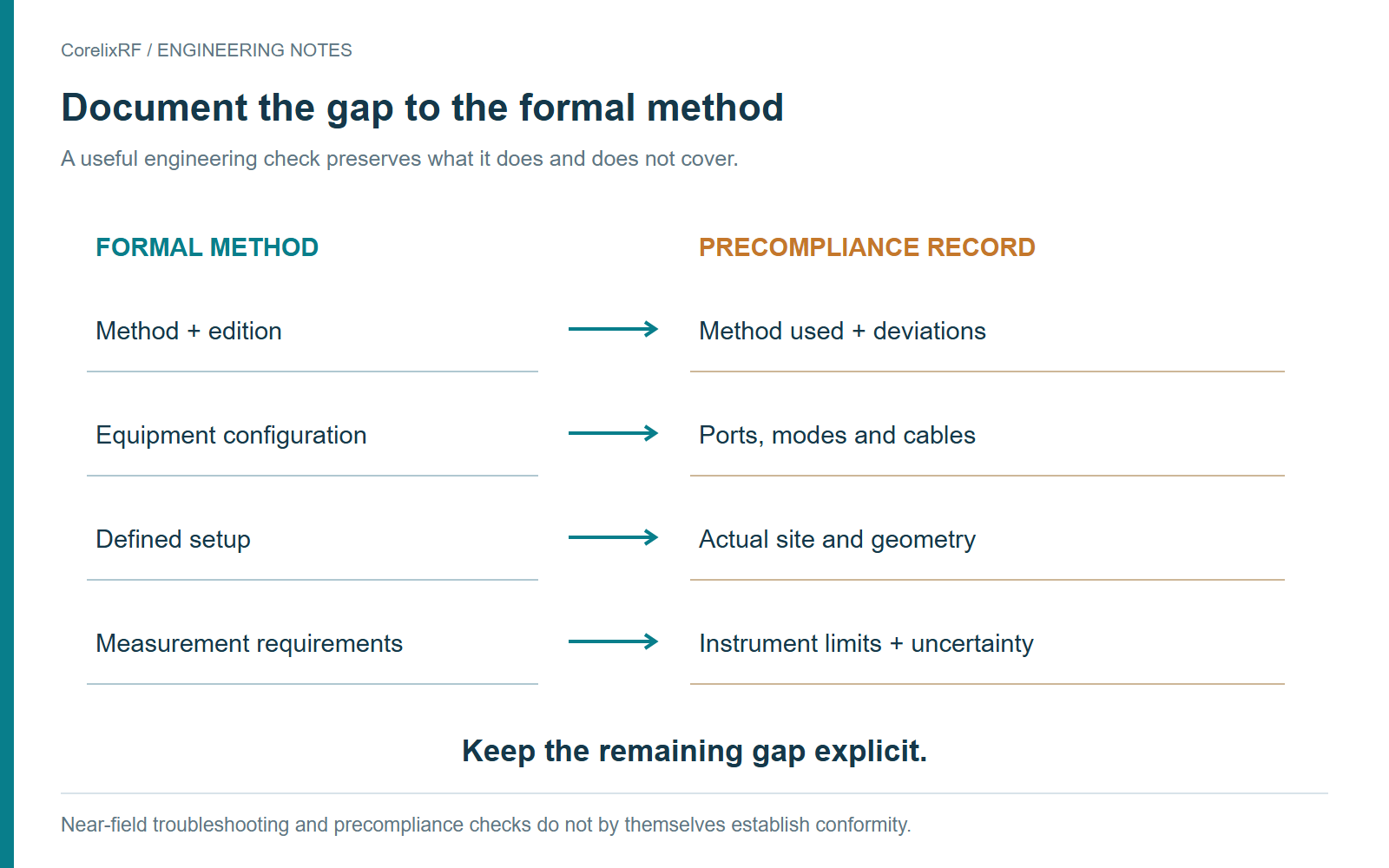
Record the gap to the formal method
Record detector/bandwidth, calibration, transducers, site limitations, background and method deviations. Check any quality or certification document for its actual scope; it cannot replace the missing test evidence for this product and setup.
Choose the instrument by the EMC question
Keep precompliance investigation and formal compliance evidence distinct. The chosen method must match the intended requirement.
| Question | Tool and necessary chain | What the result can establish |
|---|---|---|
| Where is an emission generated? | Near-field probe and receiver/analyzer with position and setup retained | Source-localization observation; not a far-field standard-limit decision |
| What emission leaves the defined boundary? | Method-appropriate receiver, coupling network or antenna, cables and corrections | Corrected measurement at that port/site under the method; retain precompliance deviations |
| How does equipment respond to disturbance? | Defined source, amplifier if needed, coupling/monitoring and functional observation | Response under the calibrated stimulus and defined performance criterion |
Specify the governing method before formal testing and retain development limitations in the precompliance report. Use the factory testing and documentation scope to request matching records; a spectrum screenshot without setup is insufficient for conformity.
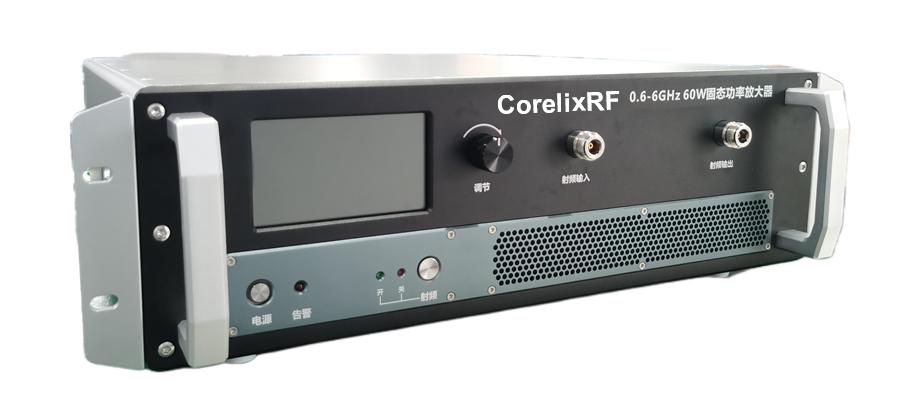
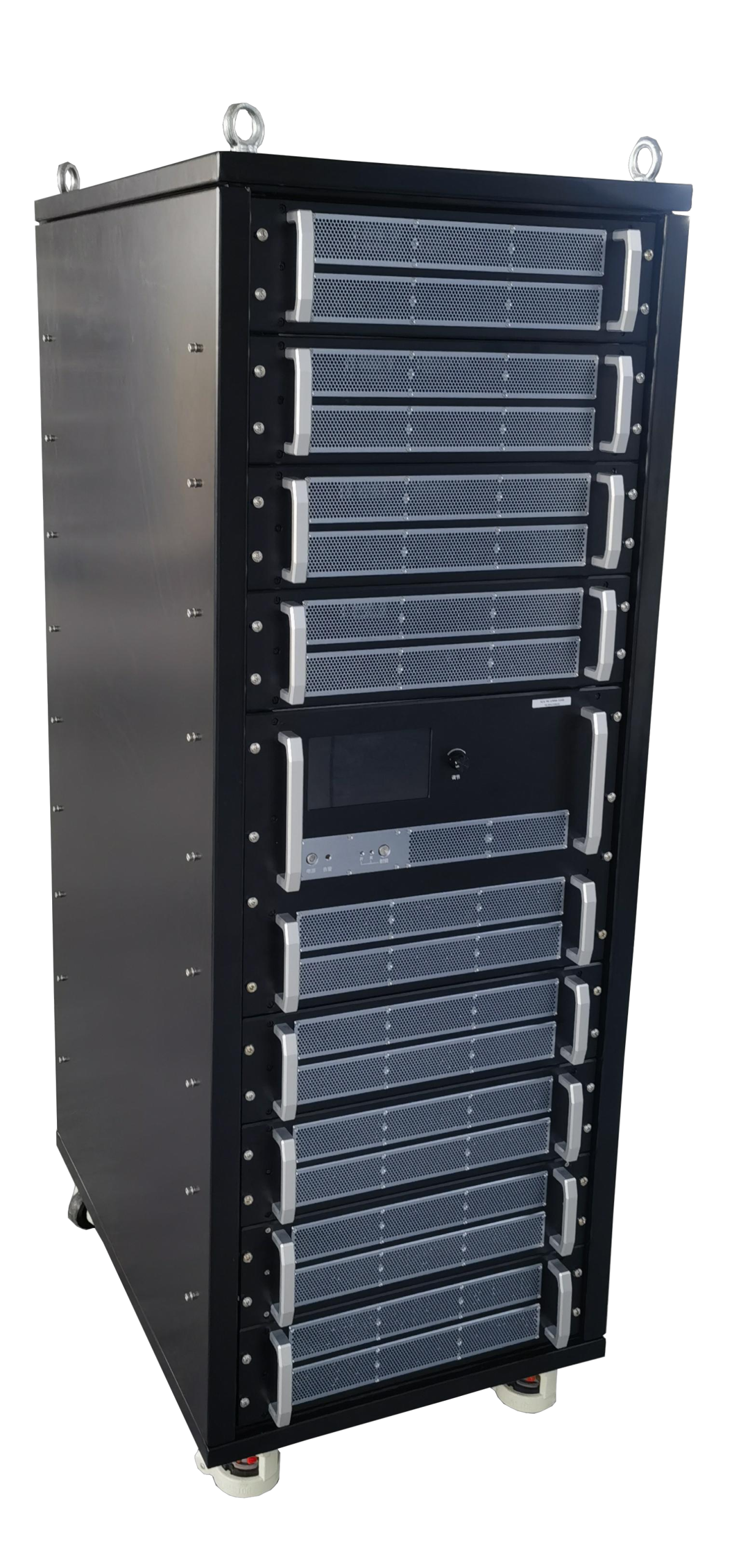
For the amplification stage of immunity stimulus, use the EMC RF amplifier family to discover a candidate matching frequency, output, load and monitoring requirements. Verify it with the selected coupling arrangement; the product supplies one function in the test chain, not the method or its conformity decision.
The Rohde & Schwarz EMC overview distinguishes development precompliance from standard-conformant testing. Final conformity conclusions require the applicable evidence and process; a convenient bench result or instrument purchase does not supply them.
Share the intended precompliance test, band, field or conducted level, and RF amplifier or accessory requirements.
Discuss EMC Test RF Hardware