
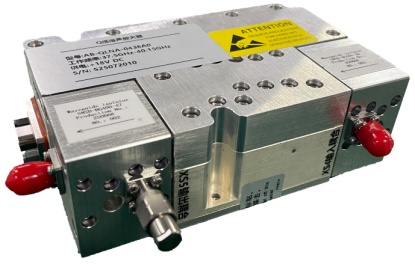
LNA input protection should be assessed for survival, receive-path insertion loss, and recovery under the relevant unwanted-input conditions. A limiter’s presence does not prove that the downstream device stays within its limits under every input condition.
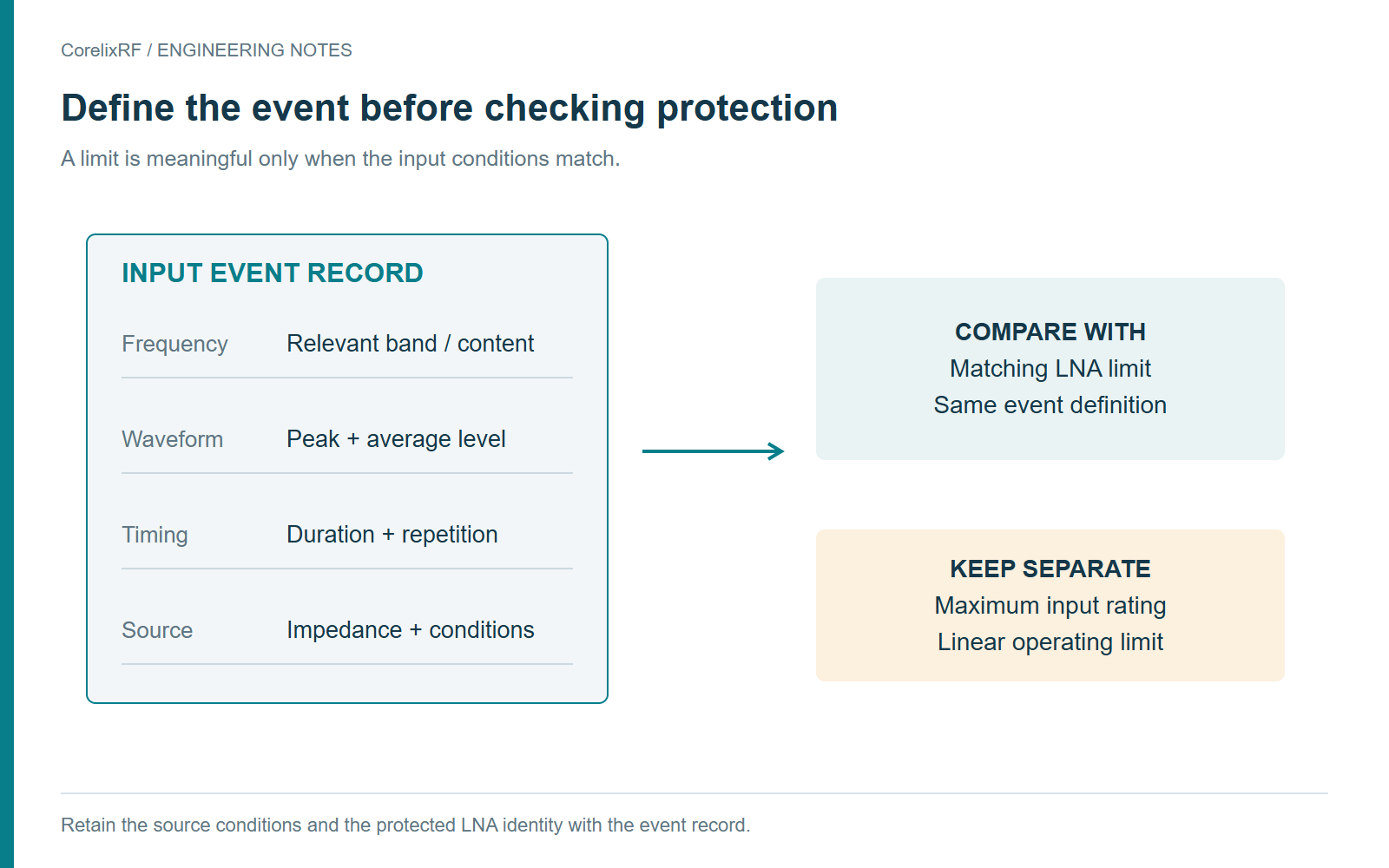
Define the unwanted input
Define unwanted-input frequency, waveform, peak/average level, duration, repetition and source condition. Preserve the LNA input-limit convention. Receiver blocking concerns receive degradation under strong input and is separate from the damage limit.
Review the complete protection path
Place limiter, filter and interconnects in the real order and obtain leakage, loss, handling and recovery evidence for that event. Use LNA selection to compare the protected complete modules; a typical leakage result from another waveform cannot replace a required worst-case condition.
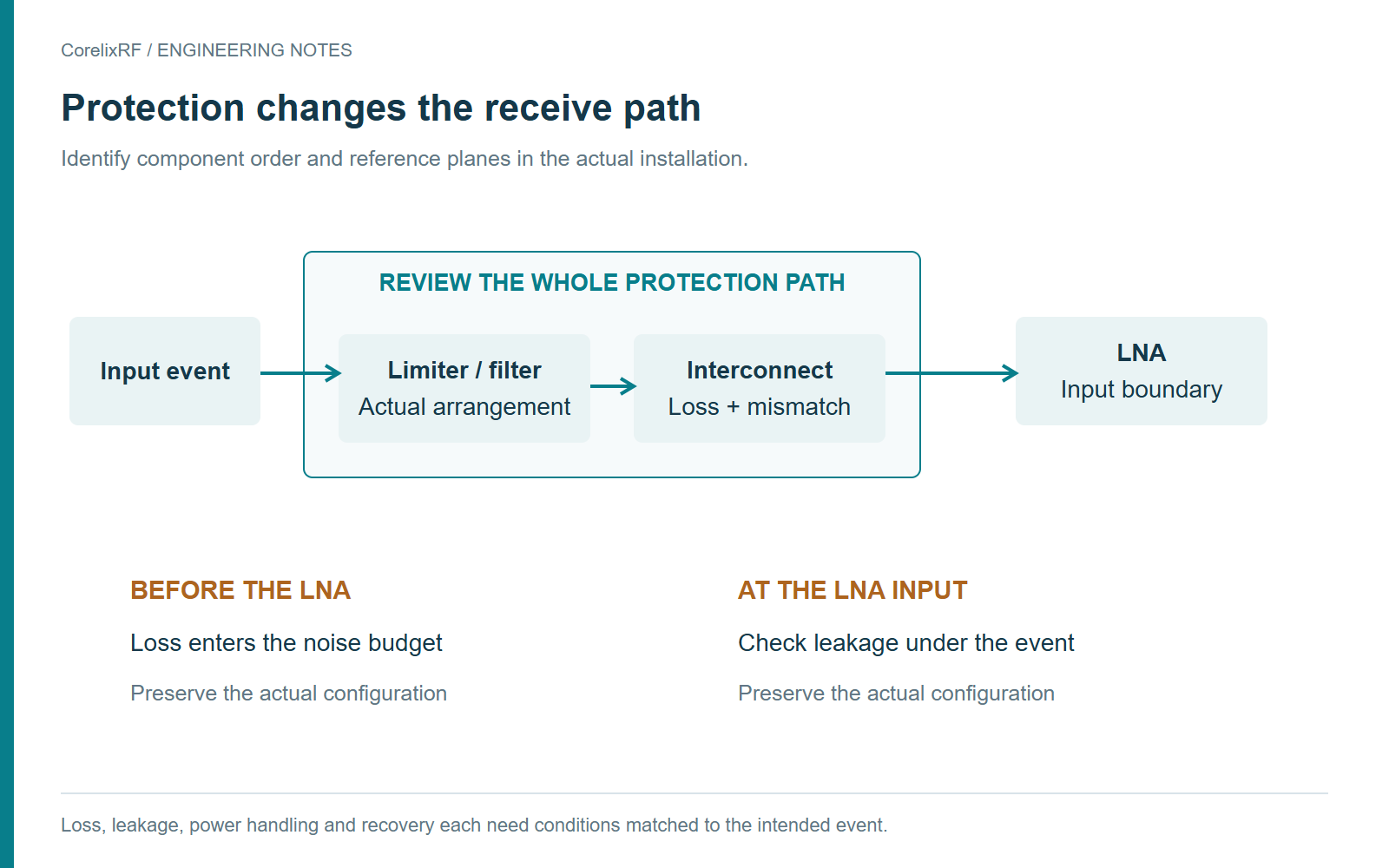
Loss ahead of the first gain stage changes the receiver noise budget. LNA design review considers this protection-versus-noise compromise; changing the protector’s location changes which device is protected as well as the loss boundary.
Define incident input before the protector and residual signal at the LNA input, including the path between them. Compare documented residual level, waveform and duration with the LNA limit under the same applicable conditions. A residual above that limit is a conflict for the proposed event; absent or mismatched leakage evidence leaves the comparison unresolved. A limiter’s name alone supplies neither result.
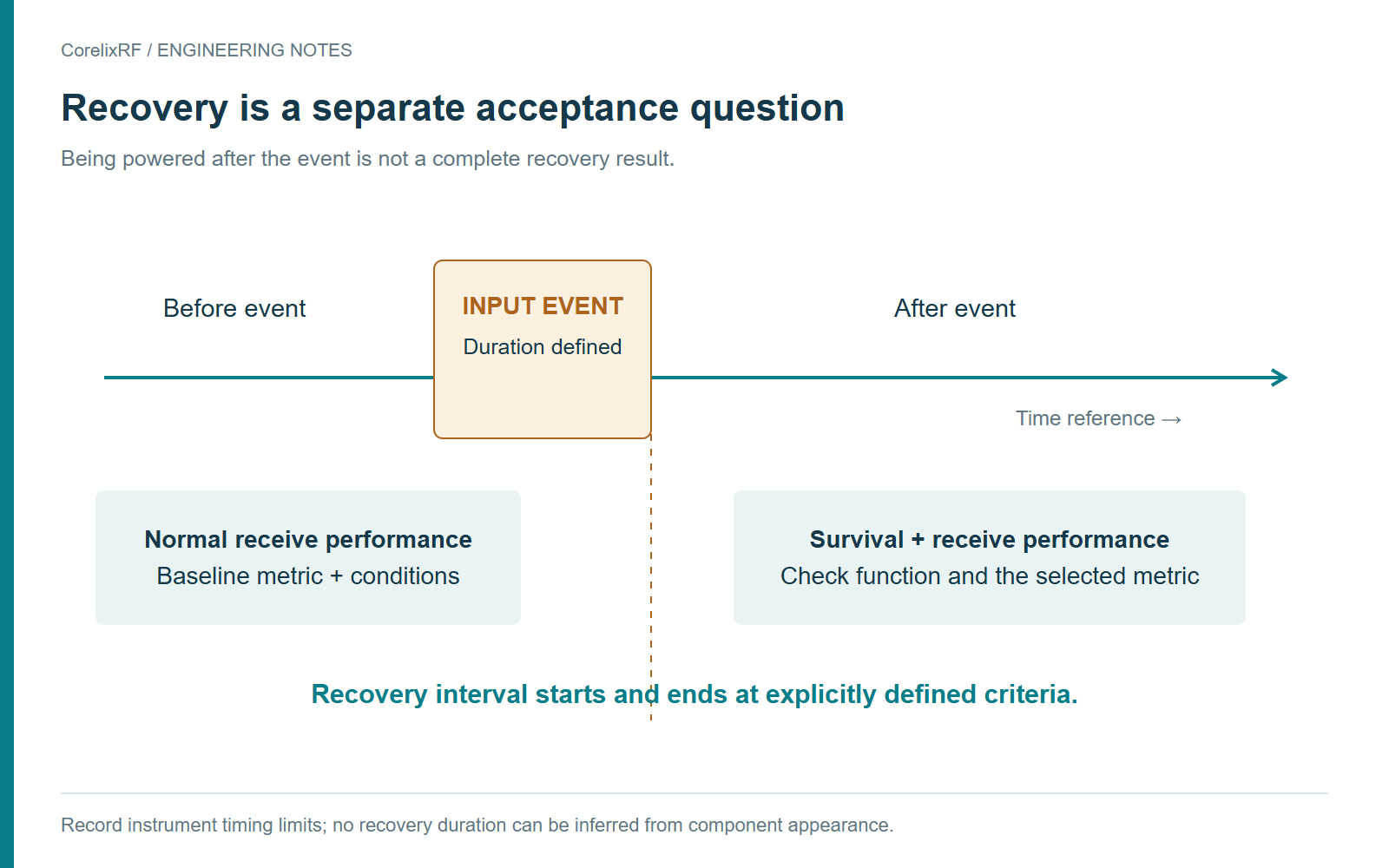
Verify recovery as well as survival
Measure recovery from the specified event end or other agreed reference instant to the point where the chosen receive metric again meets its criterion, including any required persistence window. Preserve bandwidth, signal and instrument timing limits. Hardware powered on or producing output is not that receive-performance endpoint.
Separate survival, receive performance and recovery
A protection review needs three different outcomes. Record the applicable input event and the conditions used to assess each.
| Outcome | Measure or evidence | Question |
|---|---|---|
| Survival | Documented limit and post-event functional checks | Was the device damaged under that event? |
| Normal reception | Insertion loss, matching and noise effect | What receive performance is lost by adding protection? |
| Recovery | Time-aligned selected receive metric after the defined event | When does that metric meet the required criterion from the agreed start instant? |
Keep maximum permitted input, 1 dB compression point and recovery criteria in separate fields. None of the three replaces another, and the protection record must identify the exact LNA configuration.
Deliver the three outcome rows and use the receiver cascade review for the added path loss. Ask for missing leakage or recovery records within the factory testing and documentation scope rather than marking those outcomes passed.
Provide the LNA input limits, proposed protection path, loss budget, and recovery evidence needed for your configuration.
Discuss LNA Input Interfaces