
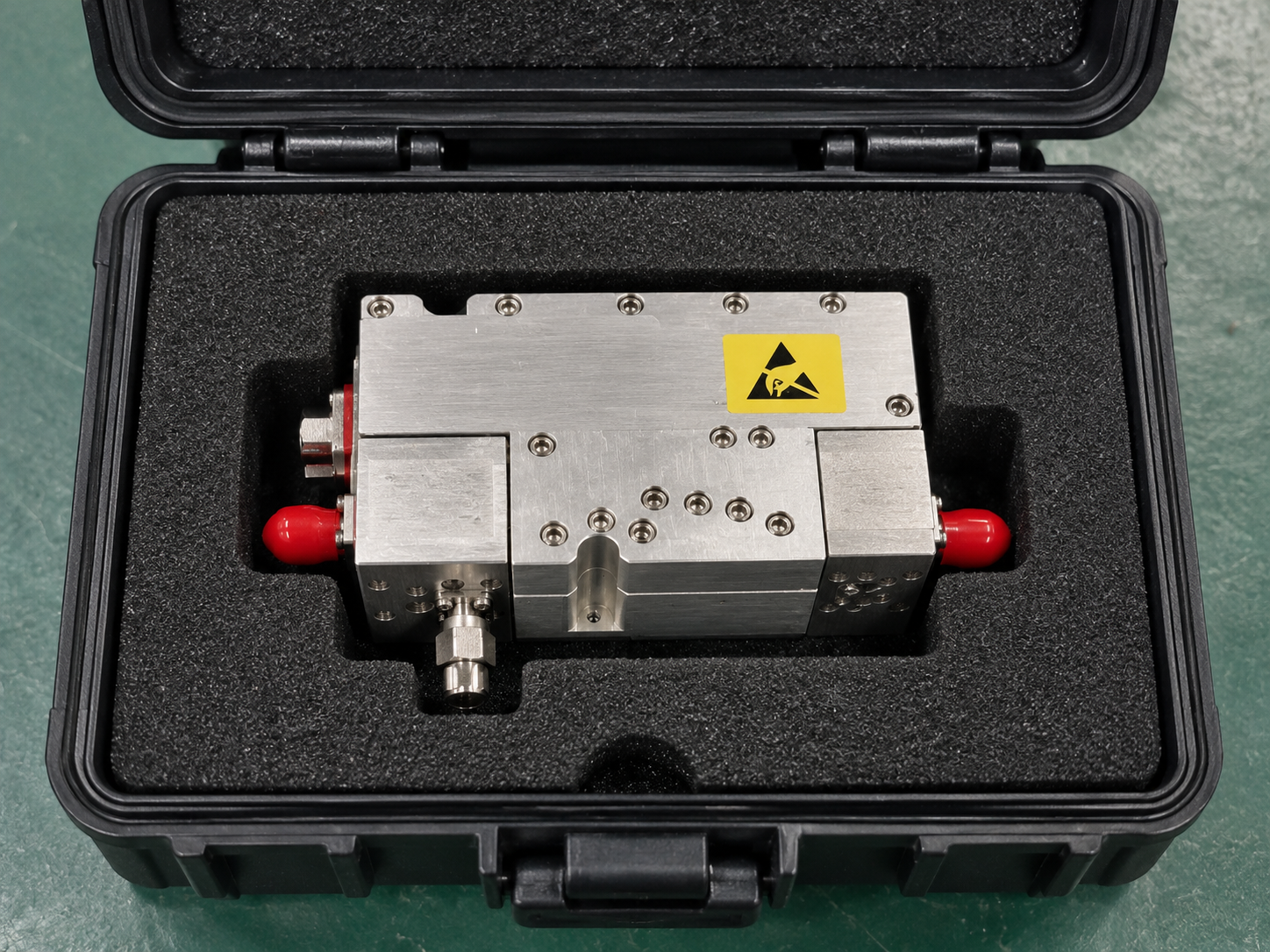
Low noise amplifier design chooses a noise, gain, matching, stability and large-signal compromise for the actual receiver input. The lowest device noise figure alone may leave insufficient downstream headroom or an unsuitable source match; increasing gain cannot recover signal-to-noise ratio already lost ahead of the LNA.
Start with the receiver boundary
Define the input plane, frequencies, wanted-signal range and strongest port signals. Put pre-LNA loss in the receiver budget. If source data use noise temperature, apply noise-temperature to noise-figure conversion only after confirming the device boundary and reference definition.
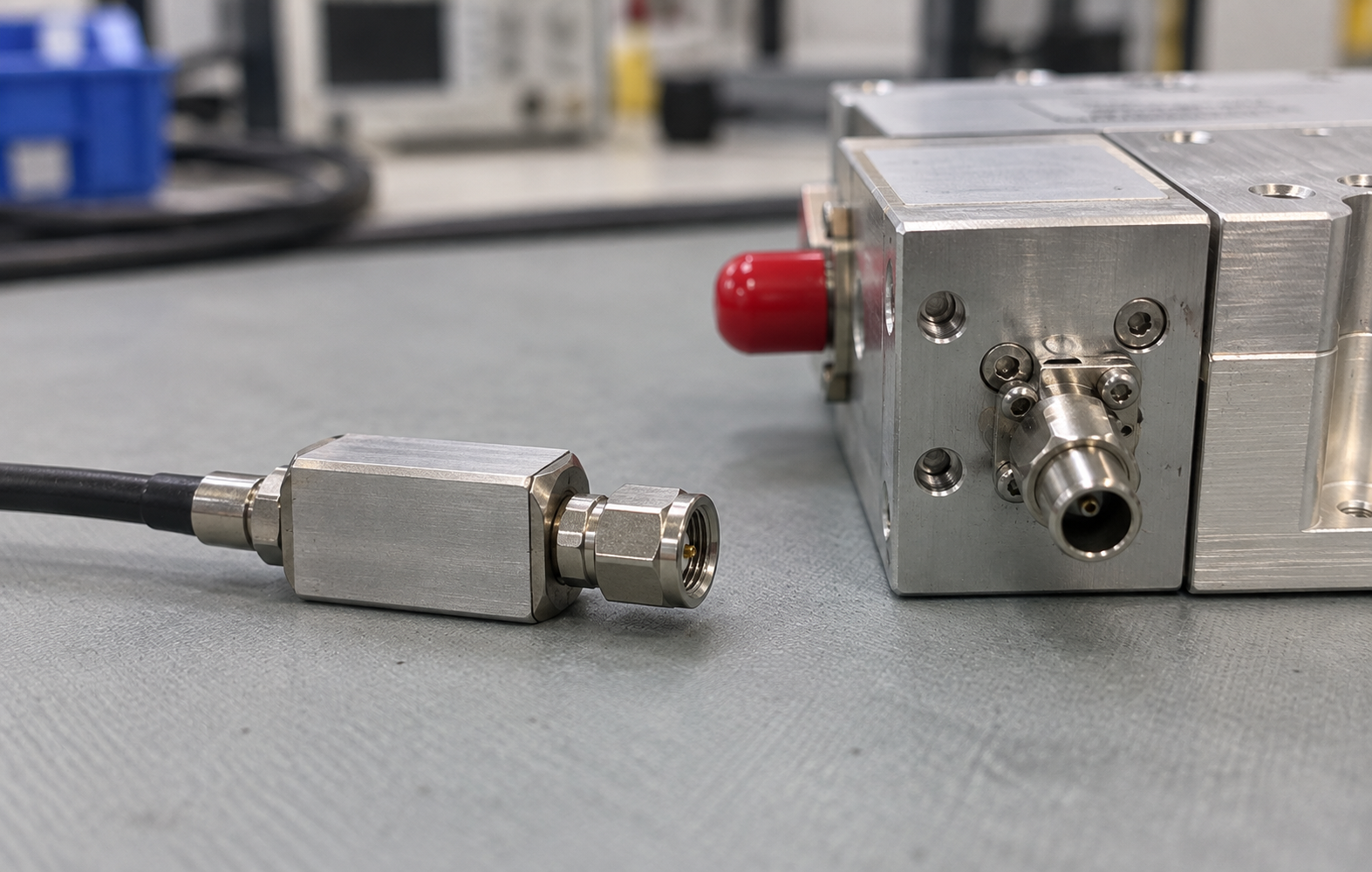
Write down the functions assigned to the LNA and those assigned to filters, limiters, mixers, and later gain stages. A broad component specification is not a complete receiver sensitivity specification.
Use gain to manage downstream noise, not to erase it
For a linear cascade under the conditions of the Friis noise-factor model, the second stage’s contribution is divided by the first stage’s available power gain. Increasing first-stage gain can reduce the relative importance of downstream noise. It cannot remove the first stage’s own noise or restore signal-to-noise ratio lost before it.
Choose gain together with the next stage’s input limits. Excess gain can reduce downstream headroom when strong wanted signals or blockers are present. A gain number alone therefore cannot identify the best design. Detailed receiver budgeting belongs in the receiver-chain noise and headroom review.
Separate noise matching from power matching
The source impedance associated with minimum noise figure need not be the impedance associated with maximum power transfer. Use the device’s noise parameters and S-parameters at the intended bias and frequency. Record which compromise the matching network is intended to make, instead of assuming that a good return loss proves minimum noise figure. The Analog Devices matching discussion distinguishes maximum-gain matching from other design objectives.
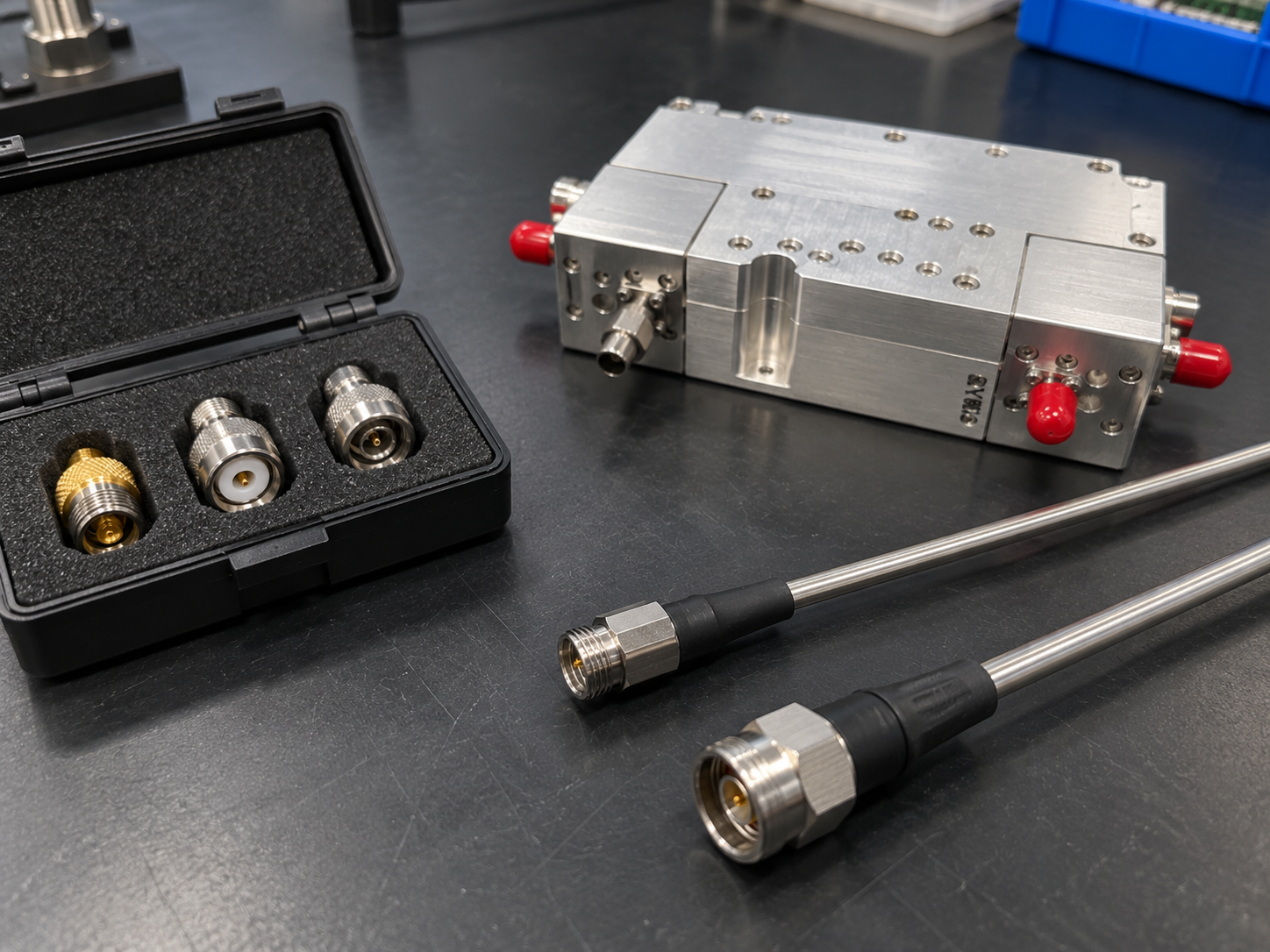
Include package connections and board parasitics in the matching network. Use applicable noise and S-parameter data at the chosen bias and frequency, with planes supported by the S-parameter measurement method. A package or layout change can invalidate the modeled source impedance and requires a new comparison.
For a noise-priority match, first verify the expected NF improvement with the device’s noise data. Then check the resulting gain and port reflection, stability under the required source/load conditions, and compression/blocker behavior at that bias. A choice remains conditional if the noise target is met but a mandatory stability or large-signal check is missing; a good input return loss is not a substitute for any of them.
Check large-signal behavior independently
Small-signal gain does not describe gain in compression. Input and output P1dB are different reference conventions, and IP3 is an extrapolated linearity metric rather than an allowed output-power rating. These distinctions matter when comparing devices or assigning gain before a mixer.
Evaluate LNA input protection with its own protected level, duration and recovery evidence, then include its insertion loss in the input budget. Protecting the device and meeting receiver performance are separate acceptance tasks.
Verify a design at its actual conditions
Verify the selected compromise under intended supply, bias, frequency, temperature and load conditions. LNA temperature compensation requires separate gain, noise and linearity evidence; a room-temperature gain plot cannot establish those temperature-dependent results.
Make the design tradeoff explicit
Use the same noise-priority choice to examine what was gained and what still needs verification, rather than treating the rows as independently optimal designs.
| Priority | Evidence used | Tradeoff to check |
|---|---|---|
| Low noise contribution | Noise parameters and input-path loss | Gain, matching and stability |
| Sufficient gain | Receiver cascade budget | Downstream compression and blockers |
| Large-signal tolerance | Defined compression/intermodulation tests | Noise, bias power and recovery |
| Input protection | Protected level, duration and recovery evidence | Insertion loss and receive performance |
Accept the compromise only after its mandatory rows are supported. If a required large-signal or stability condition fails, revise the design choice; do not conceal that result with the improved noise figure.
Before selecting hardware, prepare a design review sheet that lists each requirement, the supporting source, the reference plane, and the unresolved tradeoff. Use the LNA selection matrix for comparing complete candidate specifications after these design priorities are established.
Share your LNA band, source interface, noise and gain targets, and large-signal constraints.
Discuss LNA Design Requirements