
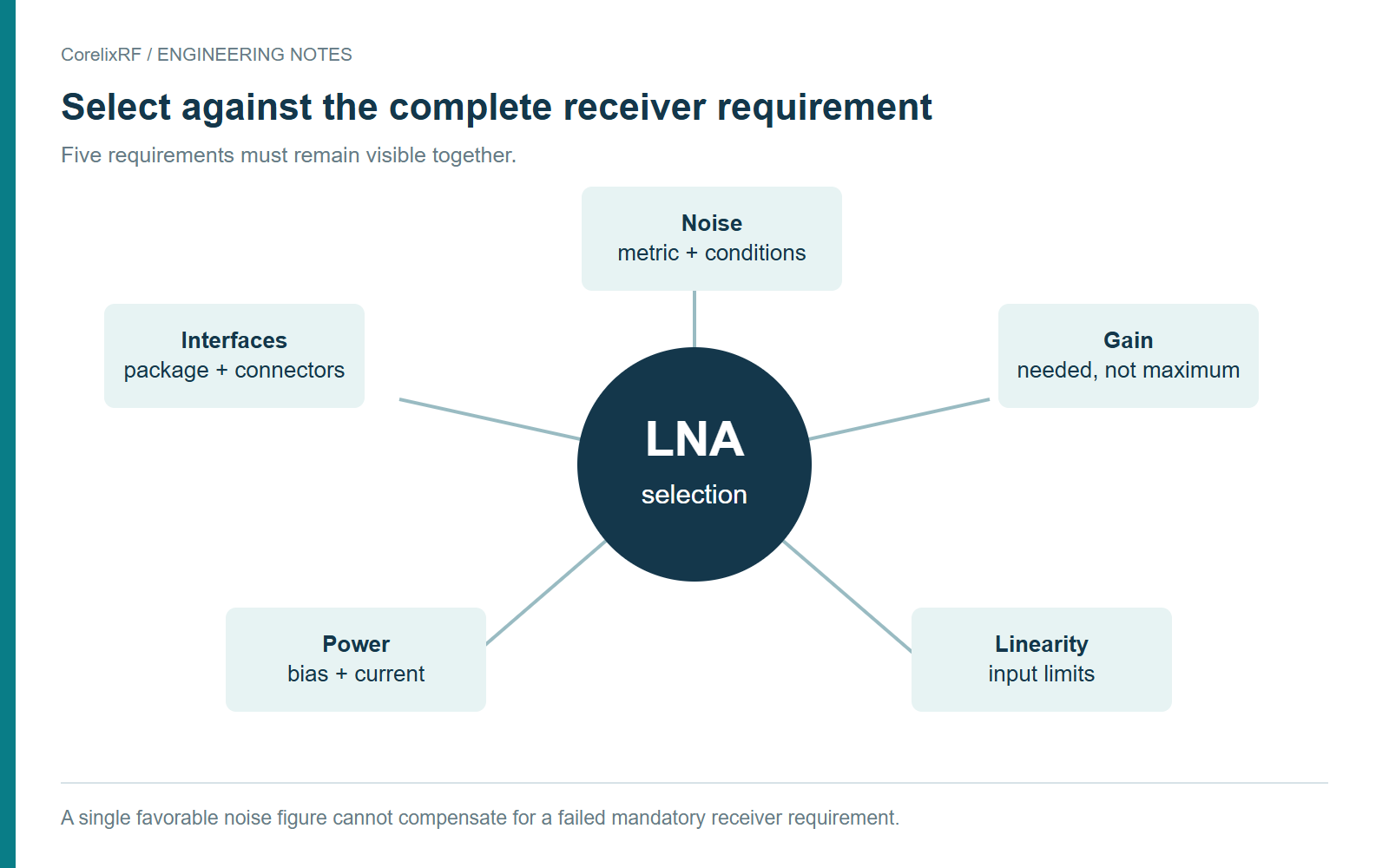
LNA selection compares complete candidate specifications against the receiver’s noise, gain, linearity, and interface requirements. The comparison must preserve frequency, source and load conditions, bias, temperature, and the definition of every limit.
Put candidates on the same basis
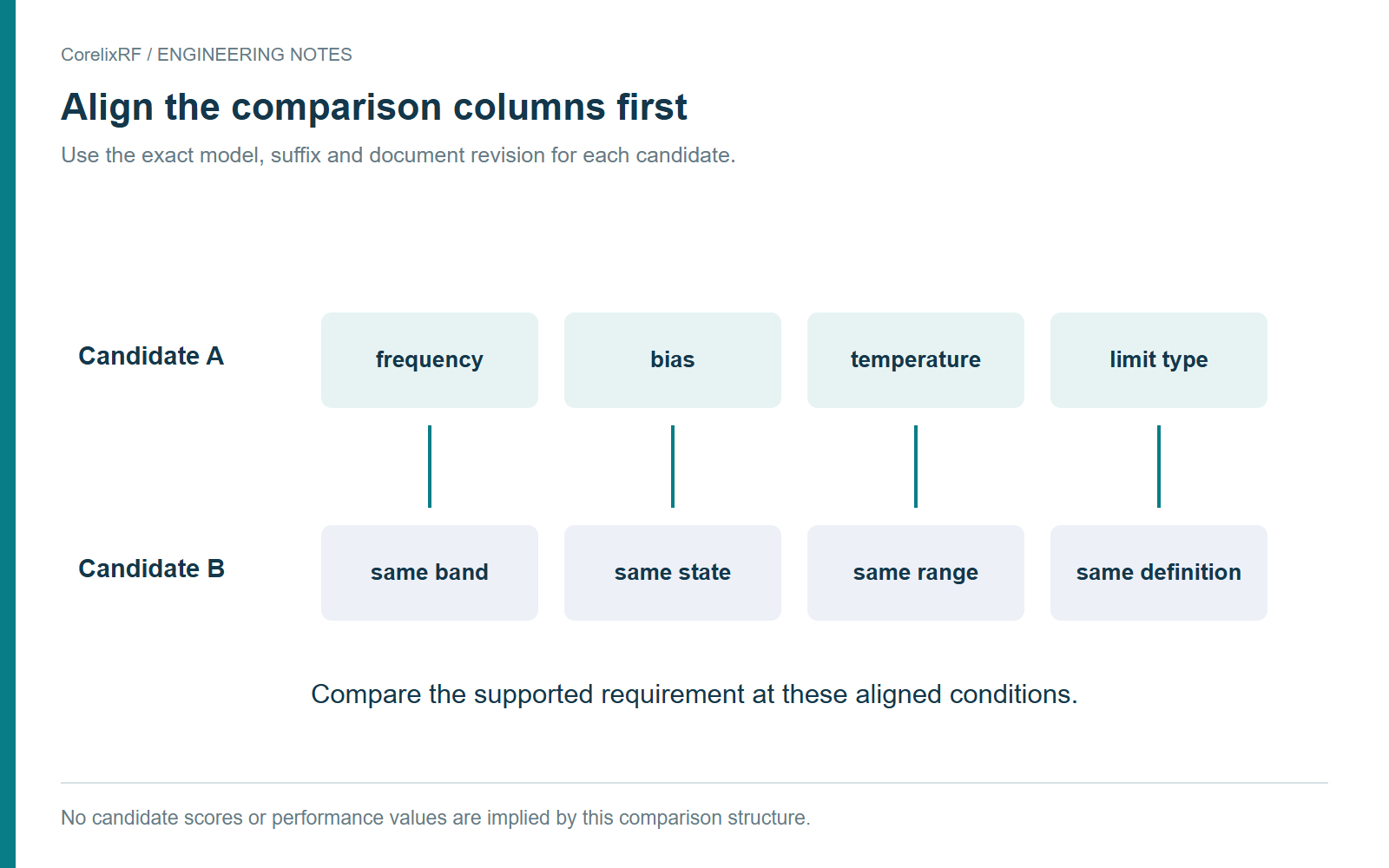
Create rows for frequency coverage, noise figure or equivalent noise temperature, gain and flatness, compression, intermodulation data where required, input limits, current or power, package, and interfaces. Distinguish minimum, typical, maximum, and measured values. Record the applicable model suffix and document revision.
Use a valid conversion when comparing noise temperature with noise figure; do not compare the numbers directly. The noise conversion guide explains the reference-temperature assumption.
Compare complete, purchasable LNA amplifiers or modules at the same boundary. Transistor noise and matching data are design inputs, not a substitute module column. Include loss ahead of the LNA and the next stage’s limits before ranking noise or gain.
Check competing requirements
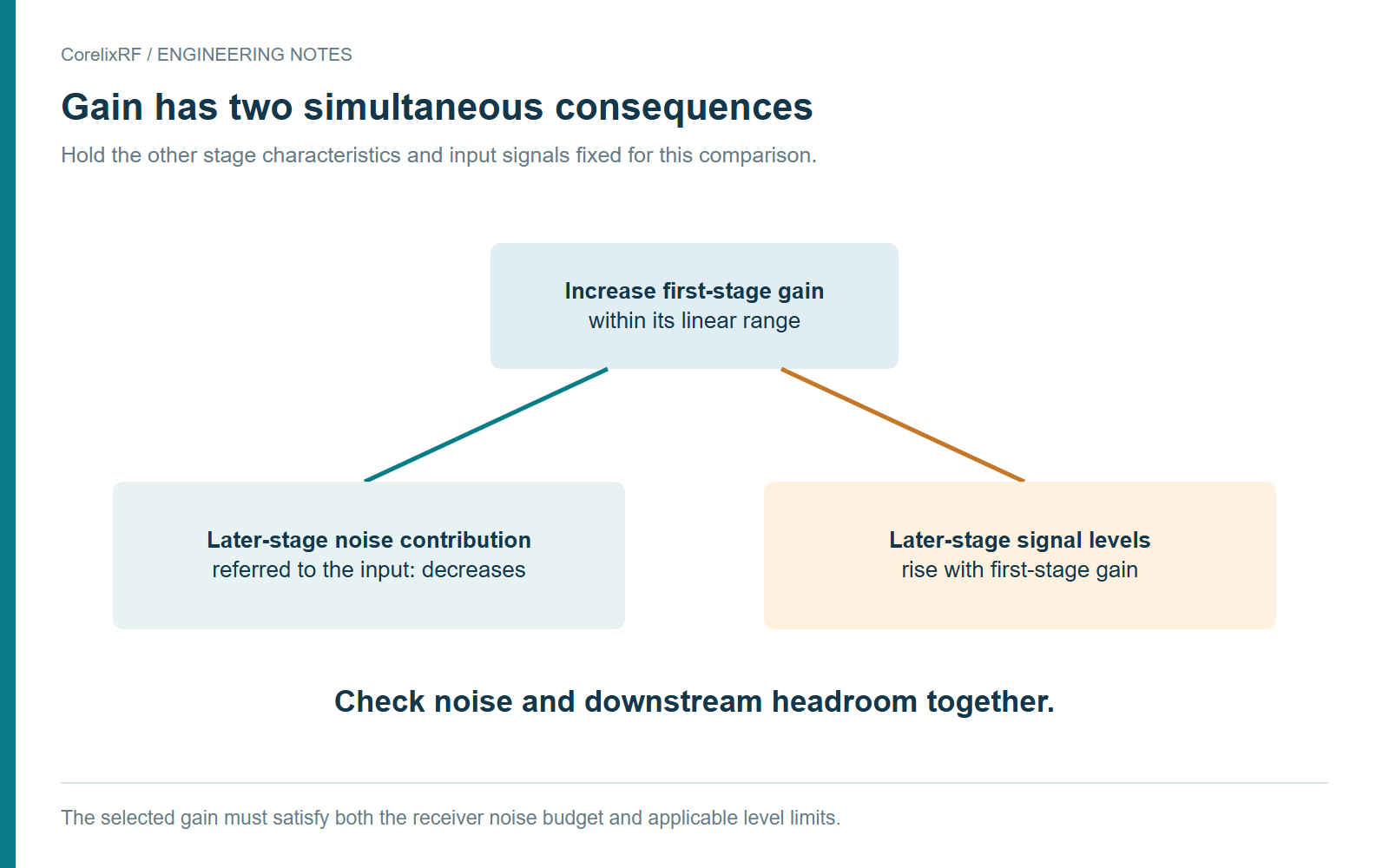
Gain reduces the relative downstream-noise contribution while increasing downstream levels. The LNA design review explains noise, gain, matching, and linearity trade-offs. Use the actual candidate’s datasheet and applicable test conditions to verify its specifications.
Resolve the decisive gaps
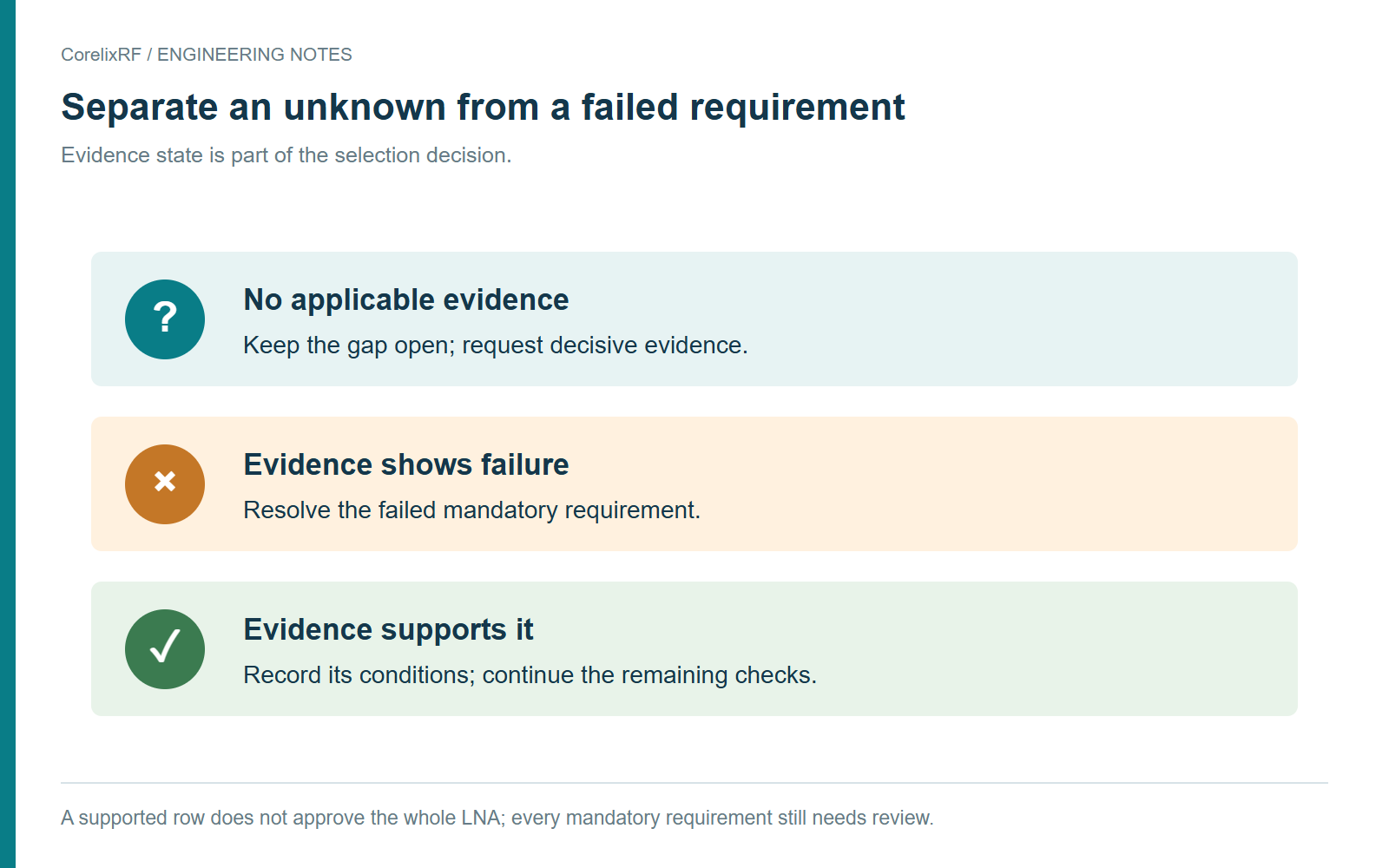
Identify which candidate meets each requirement with evidence and which depends on an unverified condition. Request the missing curve, test, or interface confirmation before releasing the selection. Avoid averaging unrelated good specifications into a single score that hides a failed mandatory requirement.
A candidate LNA comparison matrix
Create a column for each exact complete module, suffix and revision. Every row needs its value, conditions and source at that same product level.
| Row | Required context | Selection test |
|---|---|---|
| Noise | NF or noise temperature, frequency and noise reference plane | Definitions and included input paths are comparable |
| Gain | Range and operating conditions | Enough for noise budget without excessive downstream level |
| Linearity and limits | Compression, IP3 and maximum input separately; input protection and receiver blocking where required | Mandatory levels, recovery and receiver quality satisfy their own criteria |
| Integration | Bias, consumption, package, cooling and control | Required interfaces can be supported |
Mark missing evidence separately from an out-of-limit value. Compare preferences only after mandatory requirements are supported; do not average an input-rating conflict into a passing total.
The final matrix should state a candidate, its supported operating conditions, remaining uncertainties, and the acceptance evidence needed. Receiver-level gain and loss allocation remains a separate cascade review.
After both anonymous candidates satisfy mandatory rows, suppose A has lower NF while B has more gain or greater large-signal headroom. Use the actual pre-LNA loss, downstream noise and blocker levels to determine which advantage changes the receiver decision. If later-stage noise is already negligible, extra gain may offer little noise benefit while using headroom. If downstream noise dominates, the gain difference needs the cascade calculation. No fixed score or invented model values choose between them.
Share your candidate LNA requirements and identify the noise, gain, linearity, power, or interface rows still awaiting evidence.
Discuss Your LNA Selection Matrix