
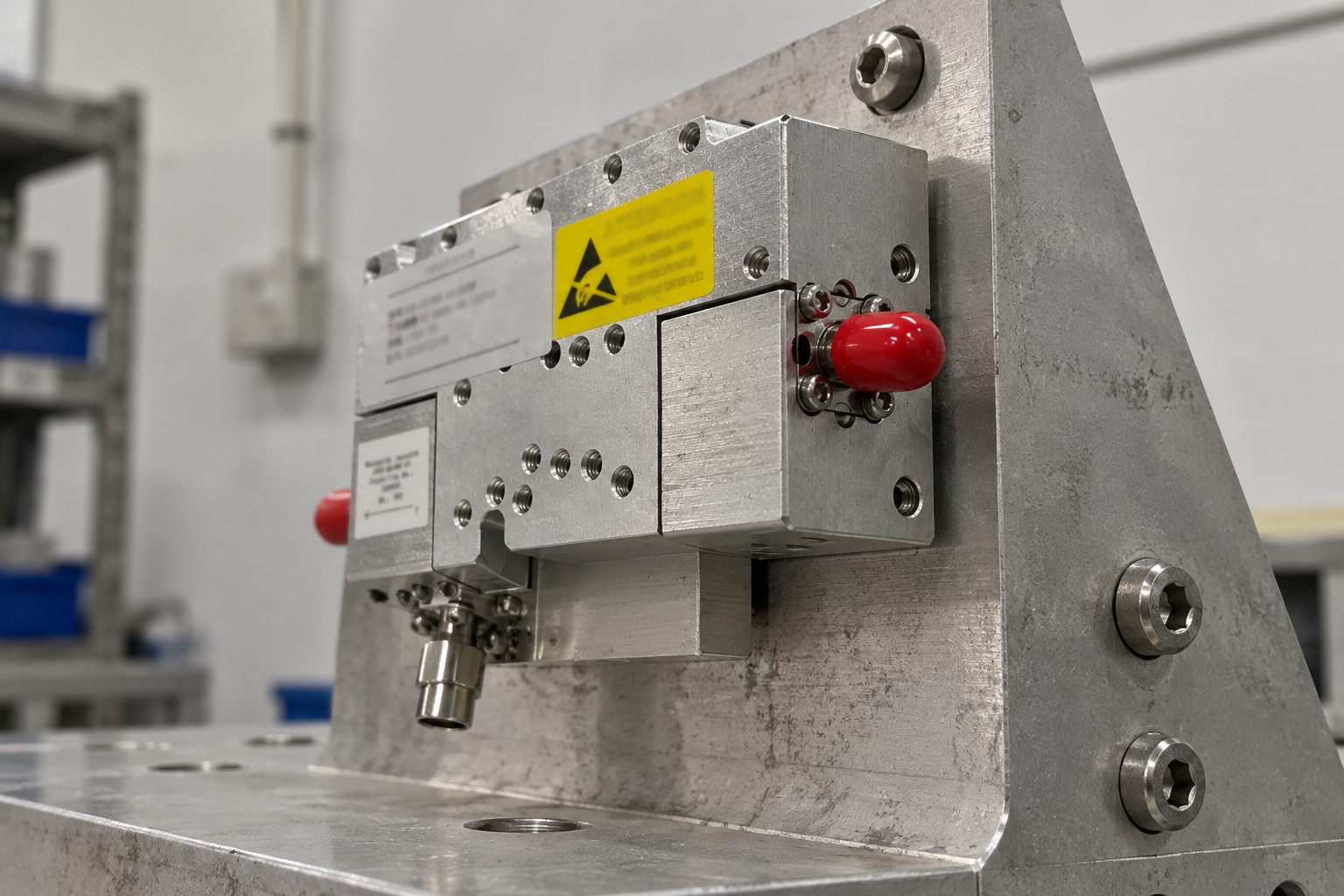
LNA temperature compensation must name its target: bias current, gain or another defined quantity. Evaluate that target at settled temperature points, then check noise and linearity separately before describing the usable operating range.
Identify the controlled quantity
Record the controlled variable, sensor location and documented limits. RF amplifier temperature ratings distinguishes the relevant temperature definitions. A temperature sensor may only monitor; its presence does not prove feedback control of gain or current.
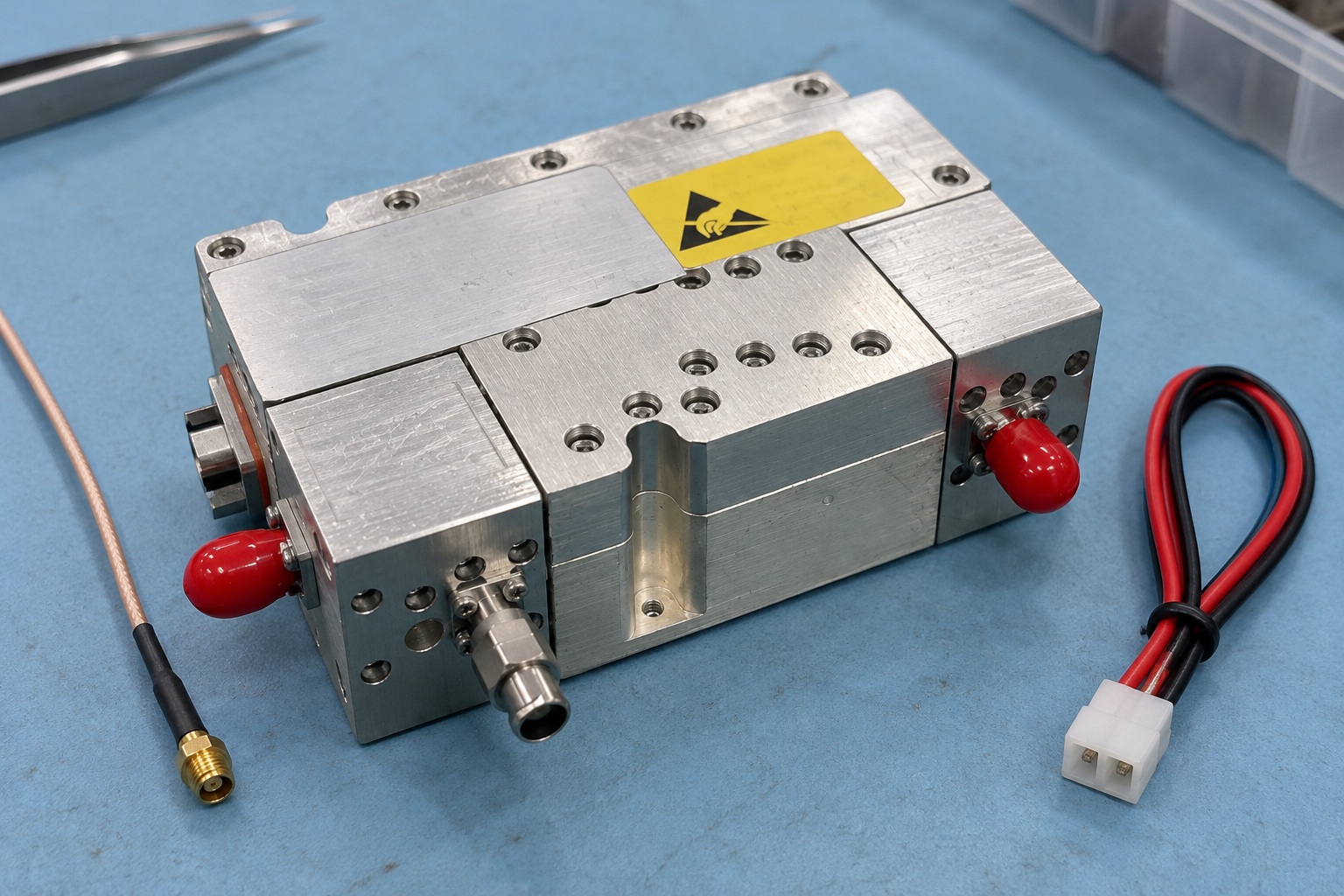
Compare settled temperature points
At each point in the approved test plan, retain temperature location, supply, bias, frequency, input level, and measurement configuration. Establish that the setup has met its stability criterion before comparing points. Time-dependent warm-up readiness is handled separately in the thermal-drift test guide.
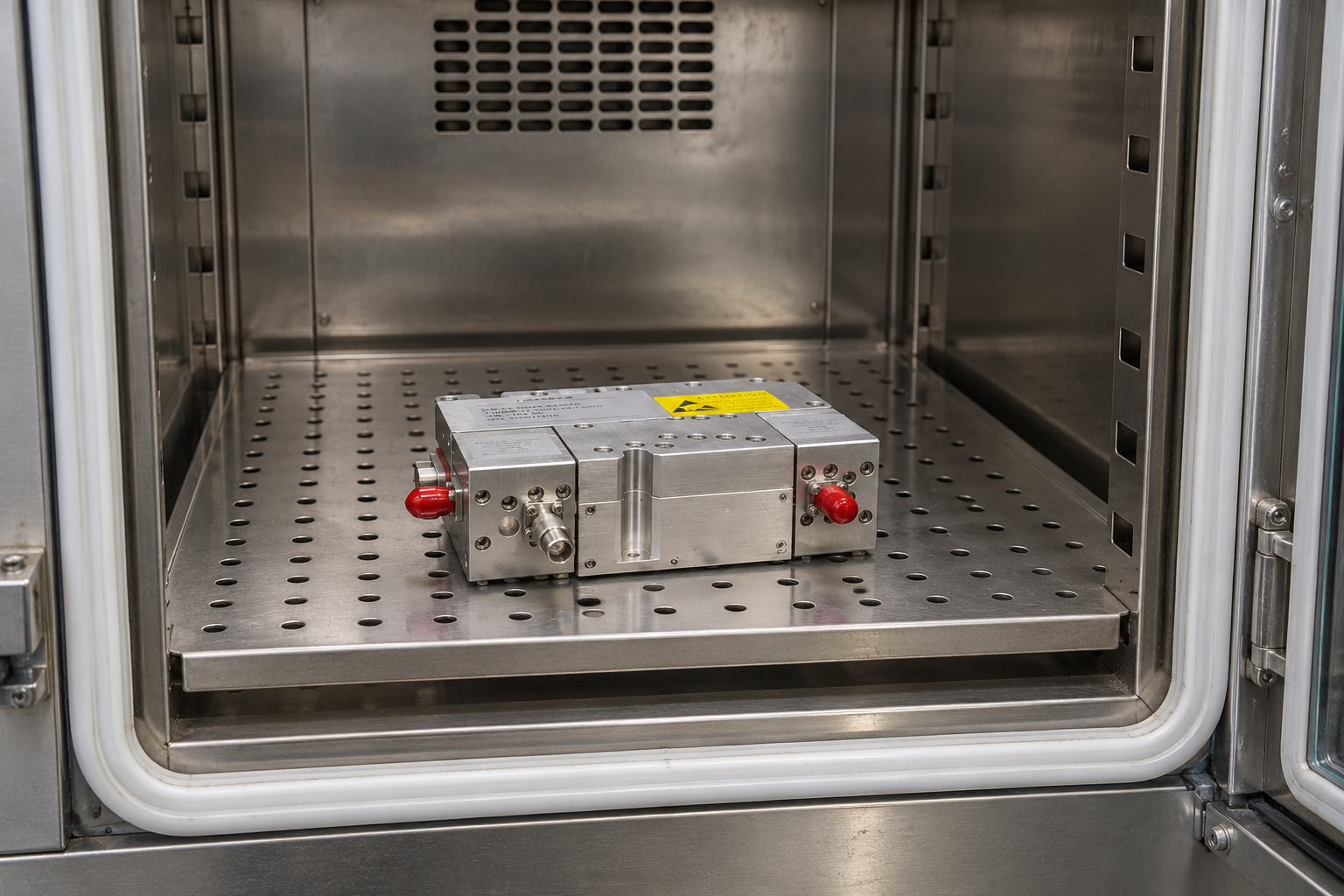
At each settled point, record gain, current, noise and the selected large-signal metric independently, preserving sample identity and conditions. A bias-current result supports bias behavior; a gain result supports gain behavior. Neither supplies an unmeasured metric.
Evaluate the compensation claim
Use only a documented, permitted reference configuration and state what differs. If the design provides no valid uncompensated reference, report the measured configuration’s behavior rather than disabling an unknown bias circuit. The LNA design tradeoff review explains why gain, noise, matching and linearity need separate decisions.
Noise must be measured at the relevant bias, frequency, boundary and settled temperatures. Noise-temperature and noise-figure conversion changes the metric representation at the stated reference temperature; it does not supply the missing dependence on physical temperature.
A temperature comparison that separates the metrics
For example, a permitted reference comparison may show reduced gain drift while noise is not measured. Conclude only that the gain target improved under the compared conditions. If measured linearity changes, compare that result with its own criterion; meeting the gain target does not close a failed or unresolved linearity row.
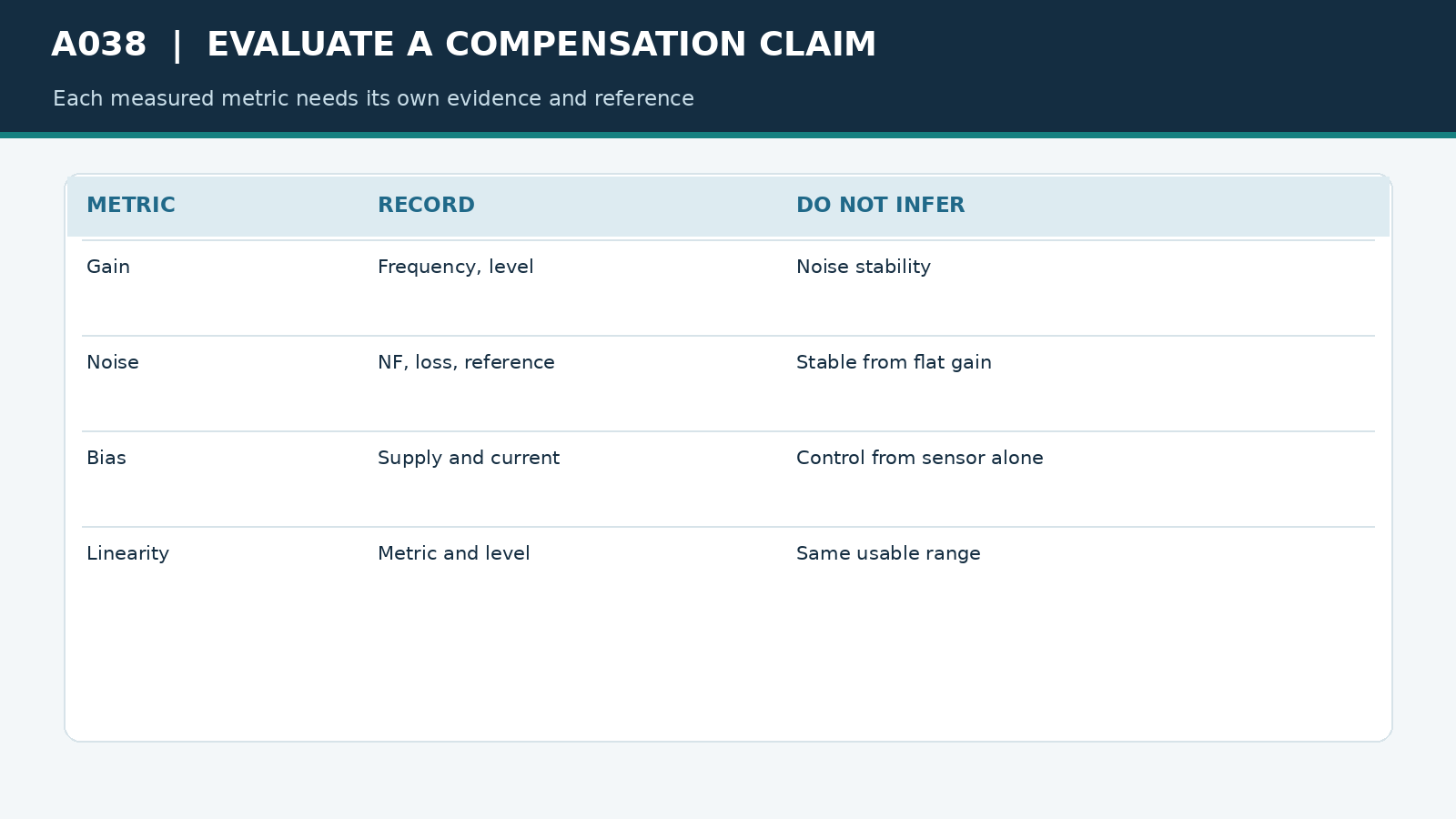
| Metric | Record at each point | What remains separate |
|---|---|---|
| Gain | Frequency, input level and gain result | Gain stability does not establish noise stability |
| Noise | NF or equivalent noise temperature and convention | Preserve input loss and reference conditions |
| Bias | Applied supply and measured current | A sensor reading alone is not proof of compensation |
| Linearity | Chosen metric and operating level | Check whether the bias change affects the usable range |
Without a valid reference, retain the observed gain-versus-temperature result and leave the claimed compensation improvement unquantified. With a reference, keep both records and their exact configuration differences.
Use the supported metric results in LNA candidate selection, retaining unmeasured rows. Evaluate their effect on the full receiver through the cascaded noise-figure budget; a compensated LNA does not establish temperature-independent behavior of the complete chain.
Provide the LNA configuration, temperature conditions, and separate gain, noise, and bias records needed for review.
Discuss LNA Temperature Conditions