
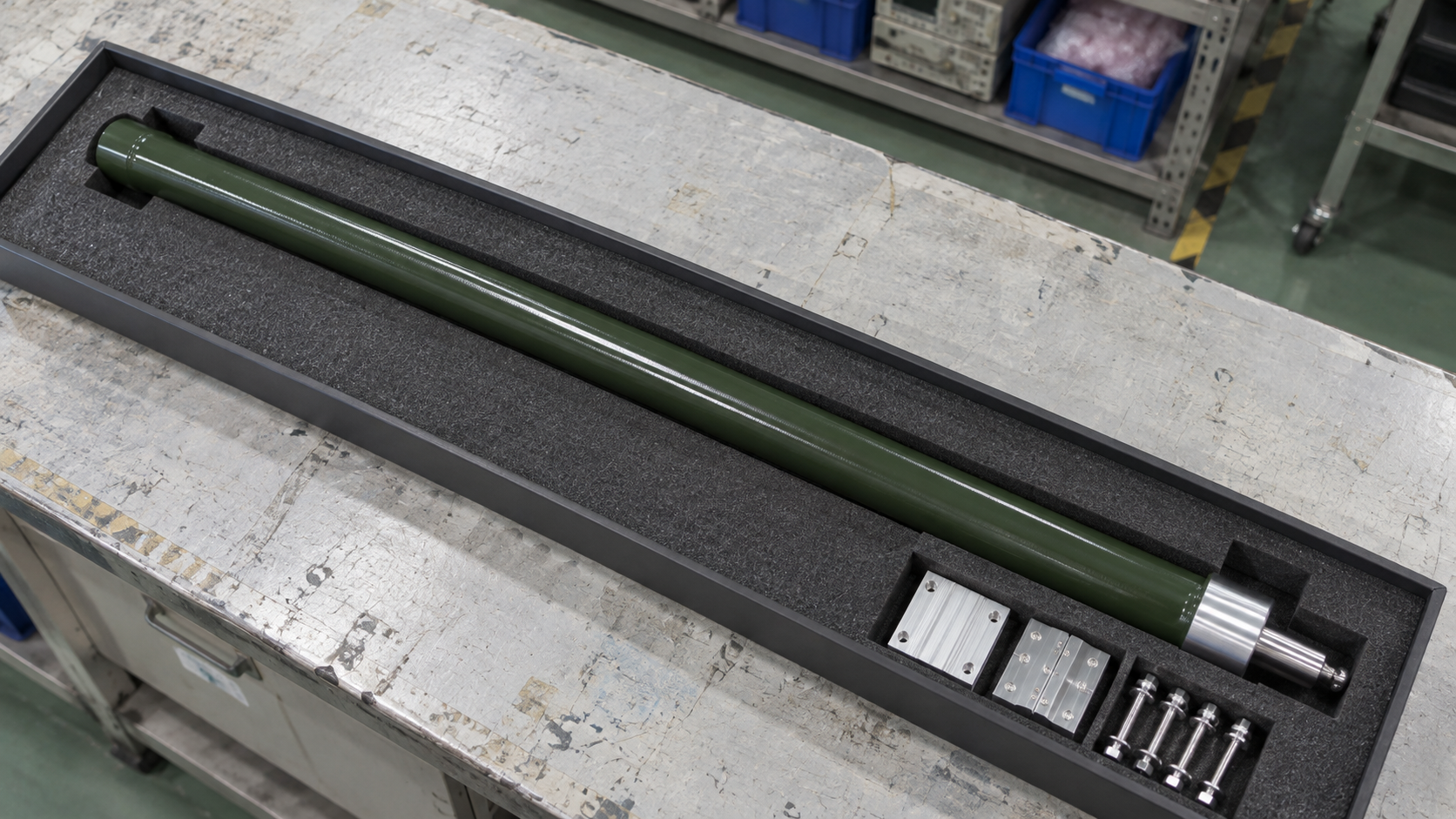
Compare VHF and UHF antennas by actual sub-band, required pattern, polarization and installation, using the ITU definitions below as labels rather than a product-coverage claim. The choice depends on the installed task, not an assumption that either band is universally superior.
Compare the actual type and configuration
For comparable antenna types and tasks, examine electrical size: wavelength is c/f, so the same physical envelope represents different fractions of a wavelength at different frequencies. Actual loading, matching and radiation mode still depend on the design, not that relationship alone. For a directional task, use directional selection before examining directional antenna candidates with the required patterns and mounting space.
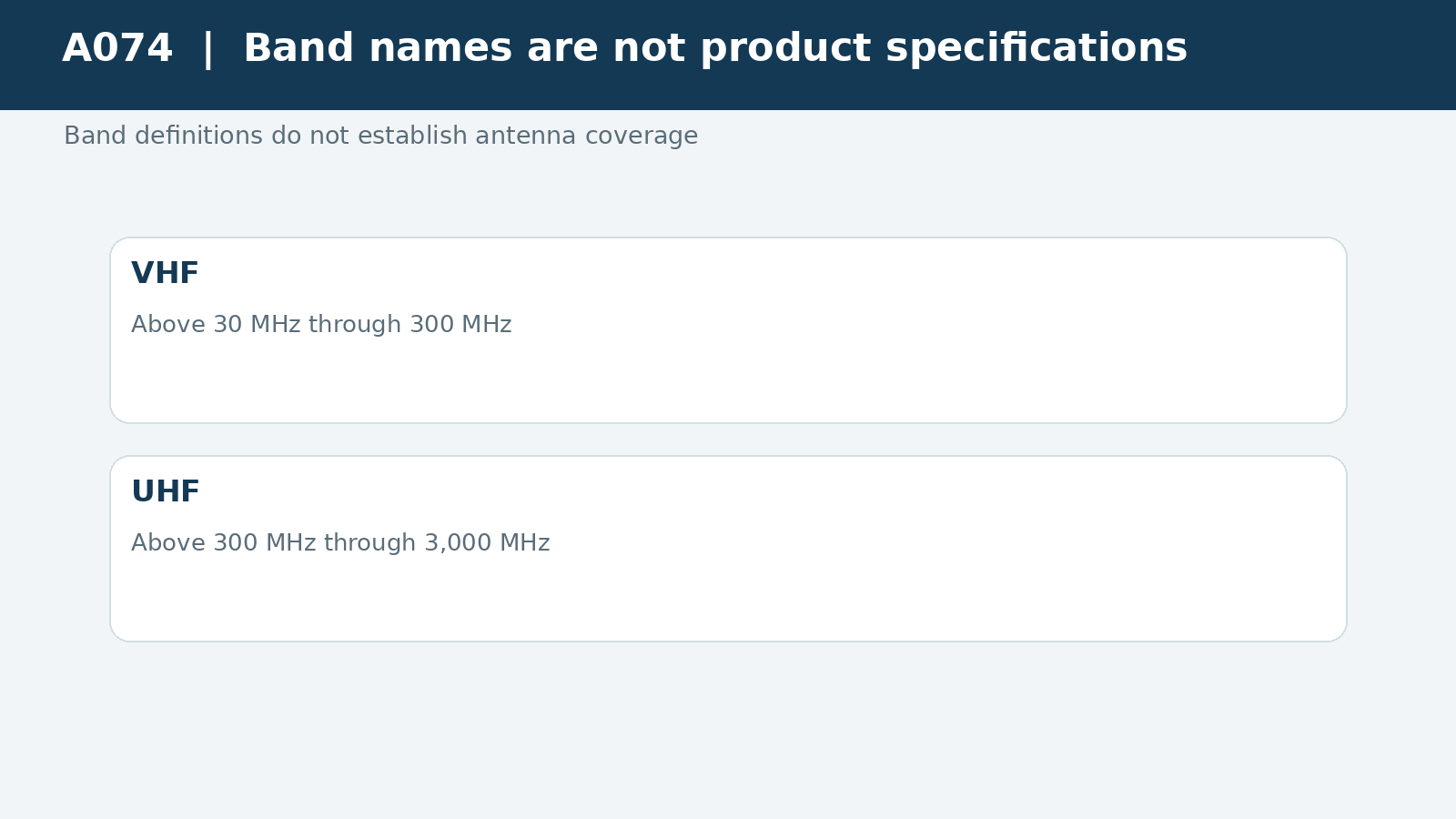
Record each candidate’s documented numeric lower and upper limits beside the required interval. A design covering one VHF or UHF sub-band need not cover another part of the same named band.
Preserve gain and pattern definitions
Compare gain on the same dBi or dBd reference at the required frequencies and polarization. The omnidirectional pattern review checks elevation as well as azimuth; directional candidates also need the relevant cuts. Preserve measured or modeled configuration with each curve.
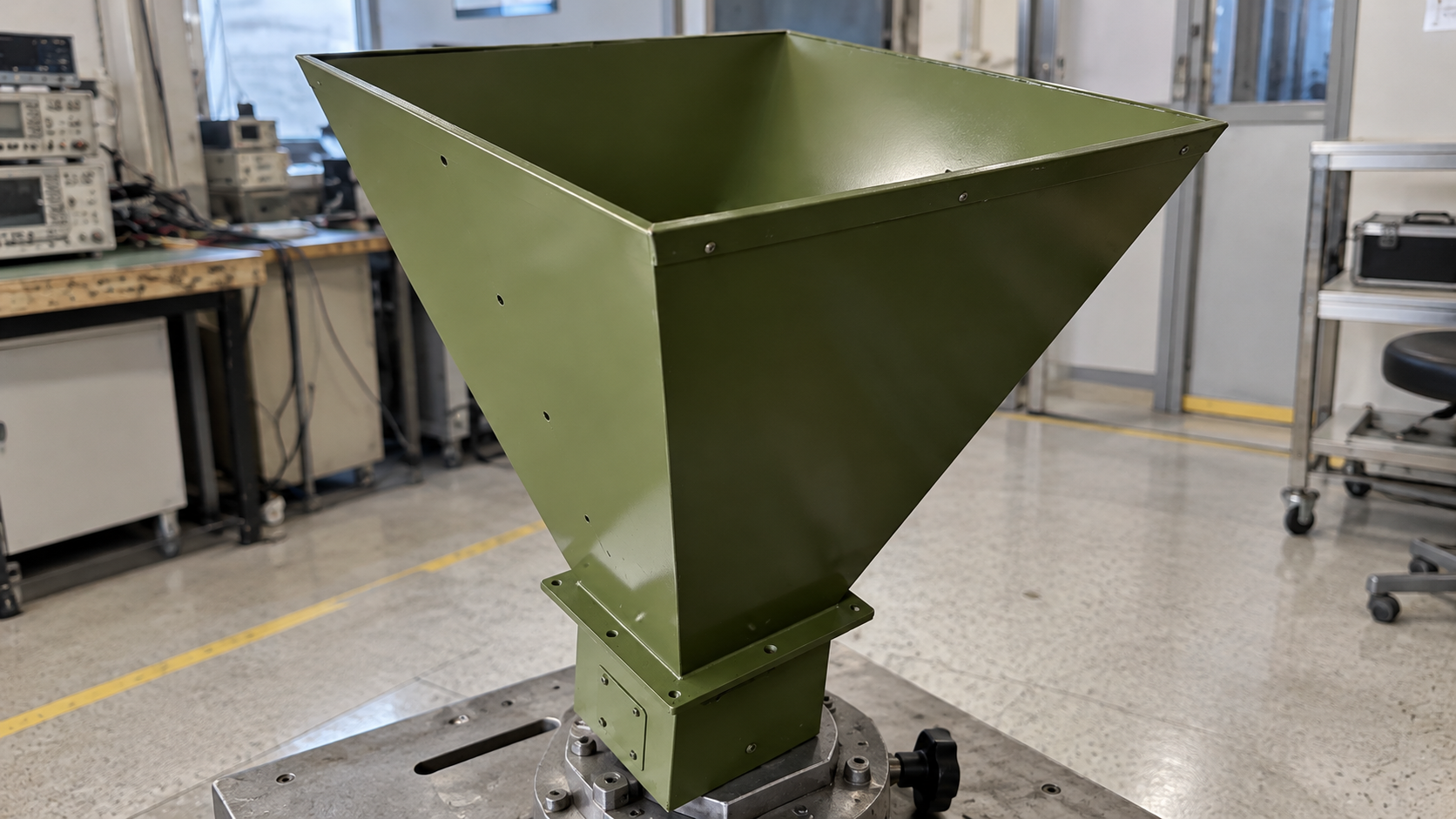
Include the feed and mount
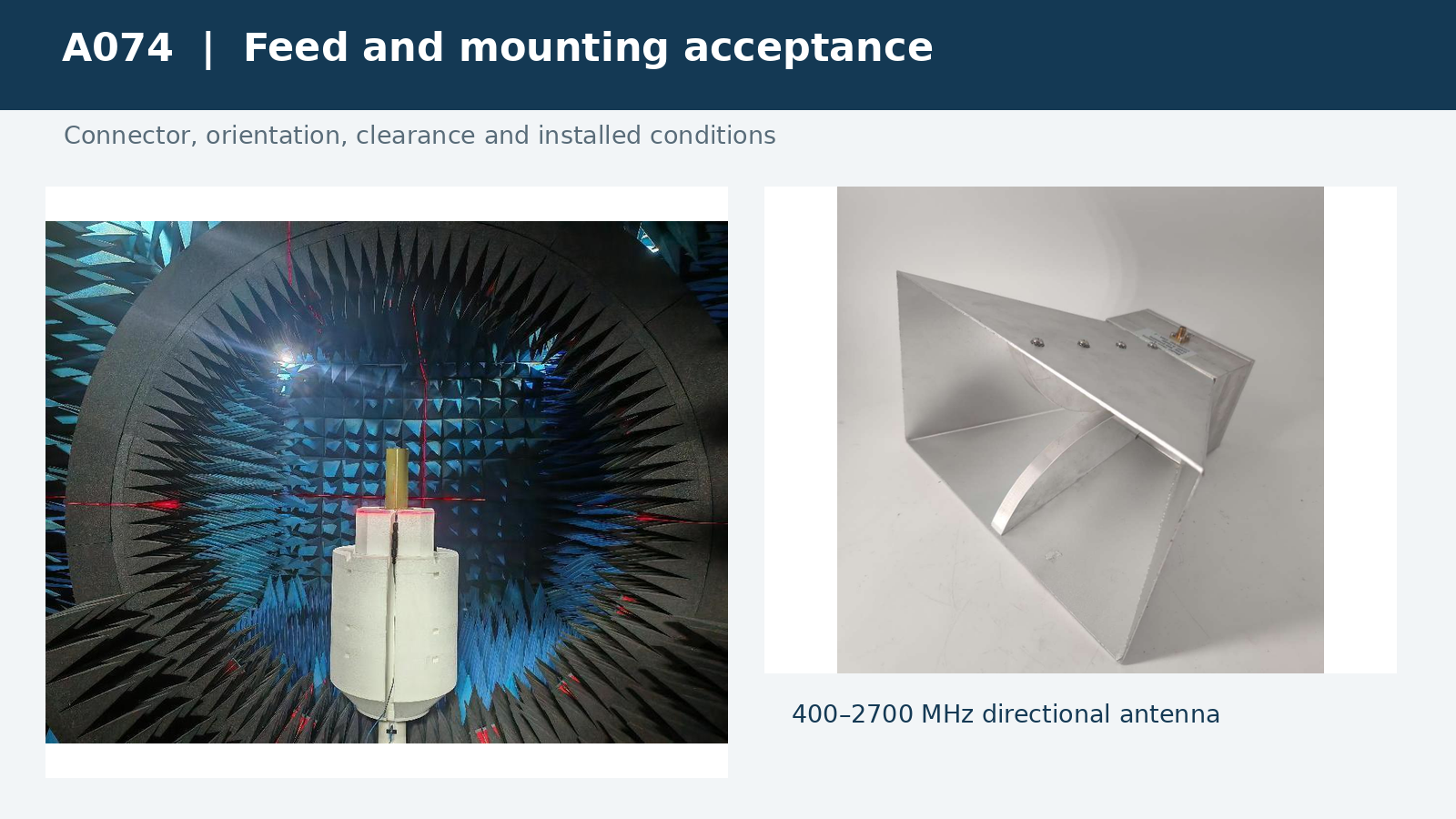
Compare feed loss at each actual frequency, not one cable value reused across both bands. Preserve connector, impedance, power, ground-plane, mounting and nearby-structure conditions. For an azimuth-coverage task, inspect omnidirectional candidates against those same numeric band and installation requirements.
Separate band names from antenna acceptance
ITU-R V.431 defines these intervals with the lower endpoint excluded and the upper included. The nomenclature does not allocate a frequency for a project.
| Band | Frequency interval | Still needed for antenna selection |
|---|---|---|
| VHF | Above 30 MHz through 300 MHz | Exact required range and installed pattern |
| UHF | Above 300 MHz through 3,000 MHz | Exact required range and installed pattern |
Resolve coverage geometry through the directional-versus-omnidirectional review, then use RF antenna families to discover candidates. End with the supported sub-band, pattern, feed and installation acceptance plan. Neither frequency label alone supports a greater-range or better-penetration conclusion.
Specify the actual VHF or UHF sub-bands, pattern needs, power conditions, and antenna connection requirements.
Discuss VHF and UHF Antenna Needs