
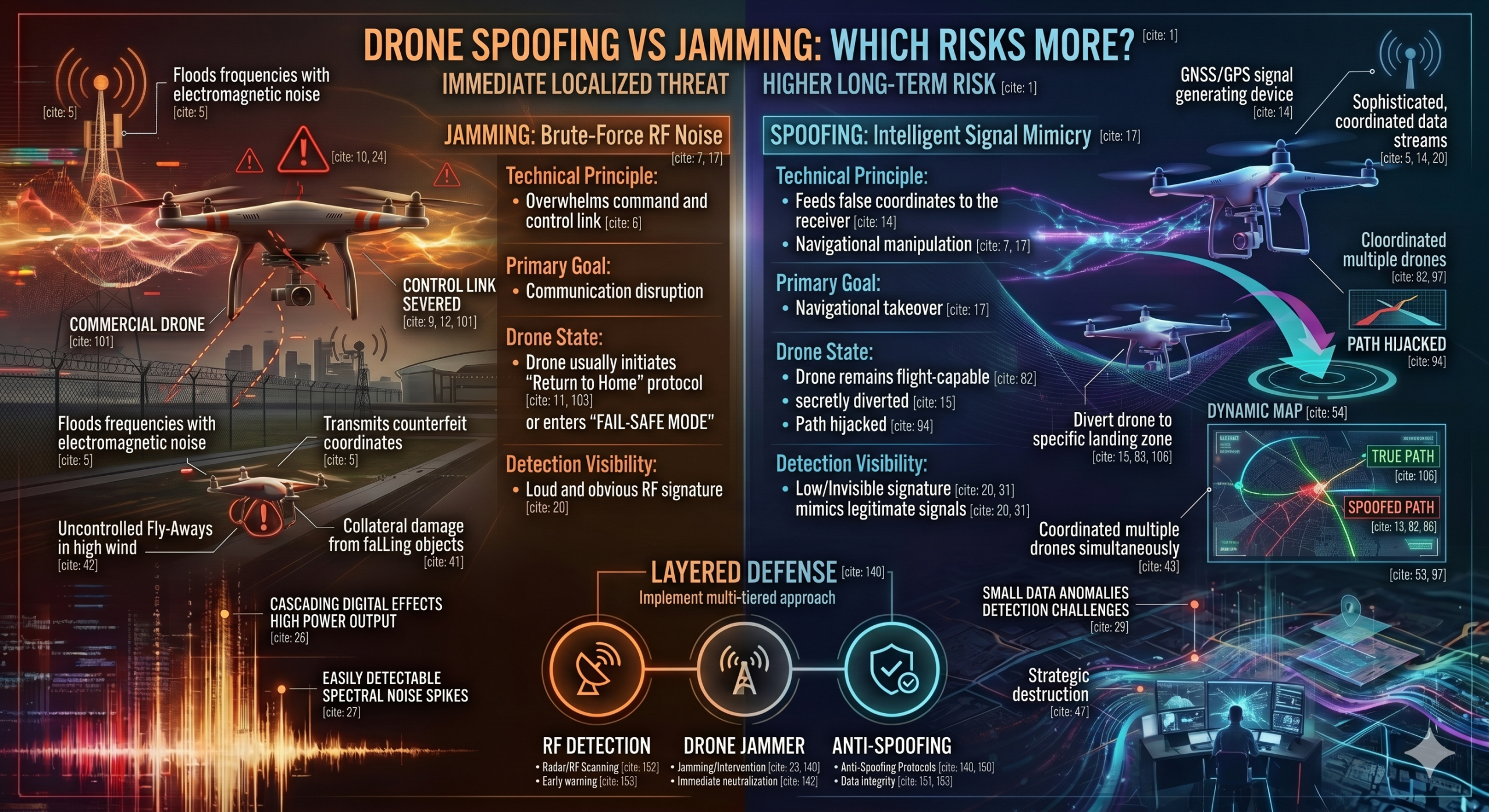
Spoofing typically poses a higher long-term risk due to its deceptive nature, whereas jamming is a more immediate, localized threat. Unauthorized drones can bypass your traditional security perimeters with ease, leaving your sensitive data and physical assets exposed. If you fail to identify the specific nature of an aerial intrusion, you risk either a total signal blackout or a complete takeover of your own systems. You need a balanced strategy using high-performance Drone Jammers to secure your airspace and mitigate these escalating threats effectively.
How do their technical principles differ?
Jamming works by flooding frequencies with electromagnetic noise, while spoofing transmits counterfeit coordinates to the drone’s receiver. Drone Jammers are designed to overwhelm the communication link between the pilot and the aircraft, forcing it into a fail-safe mode. This brute-force approach is highly effective for immediate area denial but lacks the surgical precision of navigational manipulation. By understanding these differences, you can better implement solutions that match your specific security profile.
What is the mechanics of jamming?
The primary goal of jamming is to break the radio frequency (RF) link that allows the drone to receive instructions. By emitting high-powered noise on bands like 2.4 GHz or 5.8 GHz, you can effectively “blind” the drone’s receiver.
- Frequency disruption prevents command and control.
- The drone usually initiates a “Return to Home” protocol.
- Immediate signal loss ensures the pilot cannot view the live camera feed.
How does spoofing manipulate a drone?
Think about it: what if the drone believes it is somewhere it isn’t? Spoofing mimics legitimate Global Navigation Satellite System (GNSS) signals to feed the drone false coordinates, which the receiver prioritizes over real satellite data. This allows an attacker to divert the drone to a specific landing zone without the original operator ever noticing the deviation.
| Technical Aspect | Jamming | Spoofing |
|---|---|---|
| Method | Brute-force RF noise | Intelligent signal mimicry |
| Primary Goal | Communication disruption | Navigational takeover |
| Visibility | High RF signature | Low/Invisible signature |
Use this comparison to decide whether you need to prioritize immediate signal blockage or sophisticated navigational protection.
Key Takeaway: Jamming is an aggressive tool for stopping drones immediately by severing links, while spoofing is a stealthy method of hijacking control through false data.
Which method is harder to detect?
Spoofing is significantly harder to detect because it mimics legitimate satellite signals, unlike the loud and obvious signature emitted by Drone Jammers. Because a spoofer’s signal is designed to look like a real GPS transmission, standard RF sensors often fail to flag it as a threat. You must utilize advanced sensor fusion to identify the subtle discrepancies in signal strength and timing. Integrating high-quality Drone Jammers into a detection suite helps ensure you have a fallback when stealthy threats appear.
Why are jammers so visible?
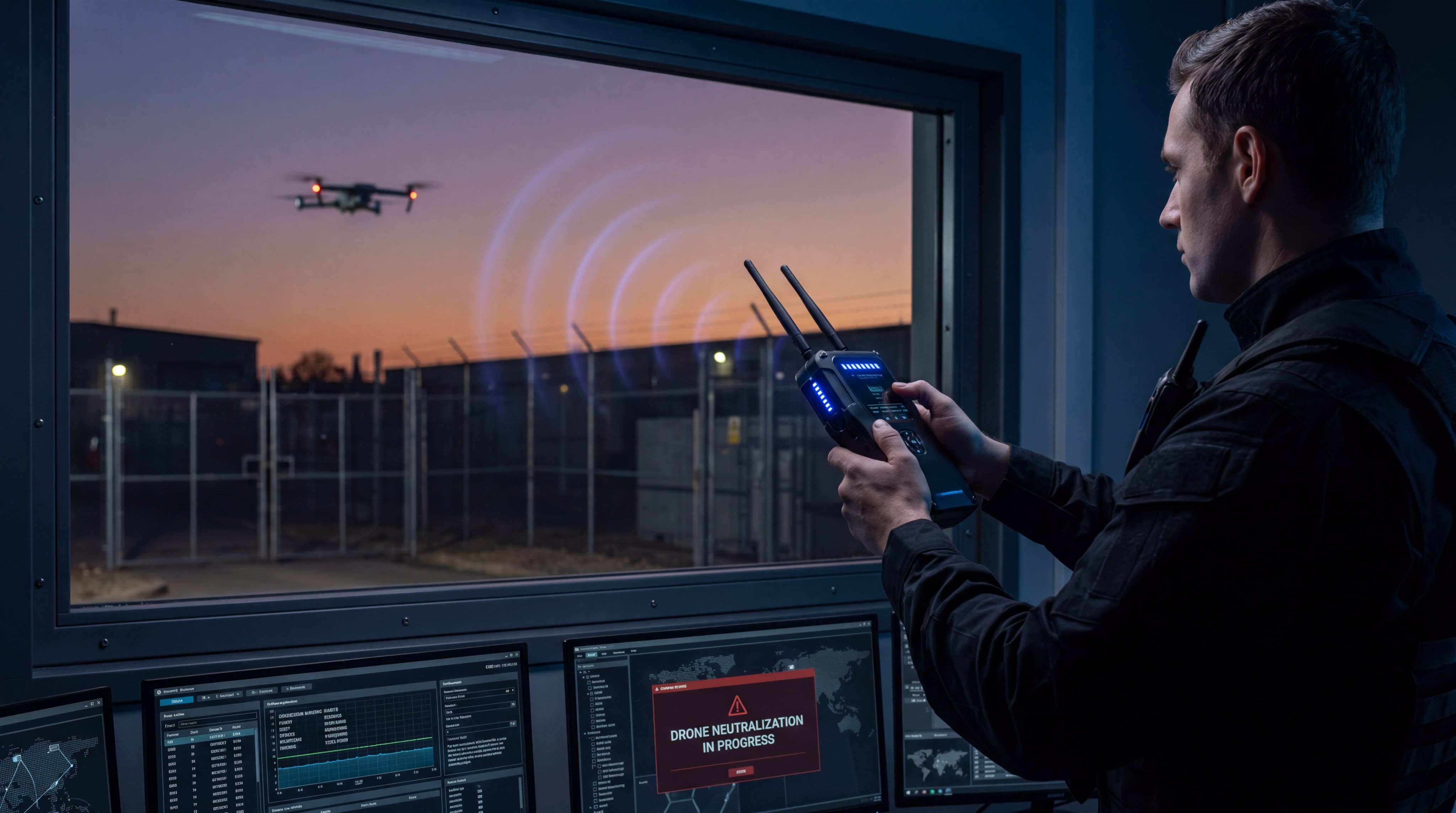
Radio jammers emit a massive amount of energy across a wide spectrum to be effective. This creates a “loud” signature that any basic RF scanner can triangulate in seconds.
- Directional energy allows for quick localization of the source.
- Spectral noise spikes are easily identified by automated monitoring systems.
- High-power output makes stealth impossible for the operator.
Is spoofing truly invisible?
The best part? Spoofing can be detected, but only if you are looking for specific data anomalies. Since the false signal must be stronger than the real one to be “captured” by the drone, specialized monitors can look for power-level inconsistencies.
| Detection Factor | Jamming | Spoofing |
|---|---|---|
| RF Signature | High and obvious | Low and deceptive |
| Triangulation | Very easy | Extremely difficult |
| Equipment Cost | Basic/Intermediate | High-end specialized |
Evaluate your detection hardware to see if it can differentiate between a signal loss and a signal manipulation event.
Key Takeaway: Detecting a jammer is a routine task for RF security, but identifying a spoofer requires advanced forensic analysis of signal integrity.
Who endangers critical infrastructure more?
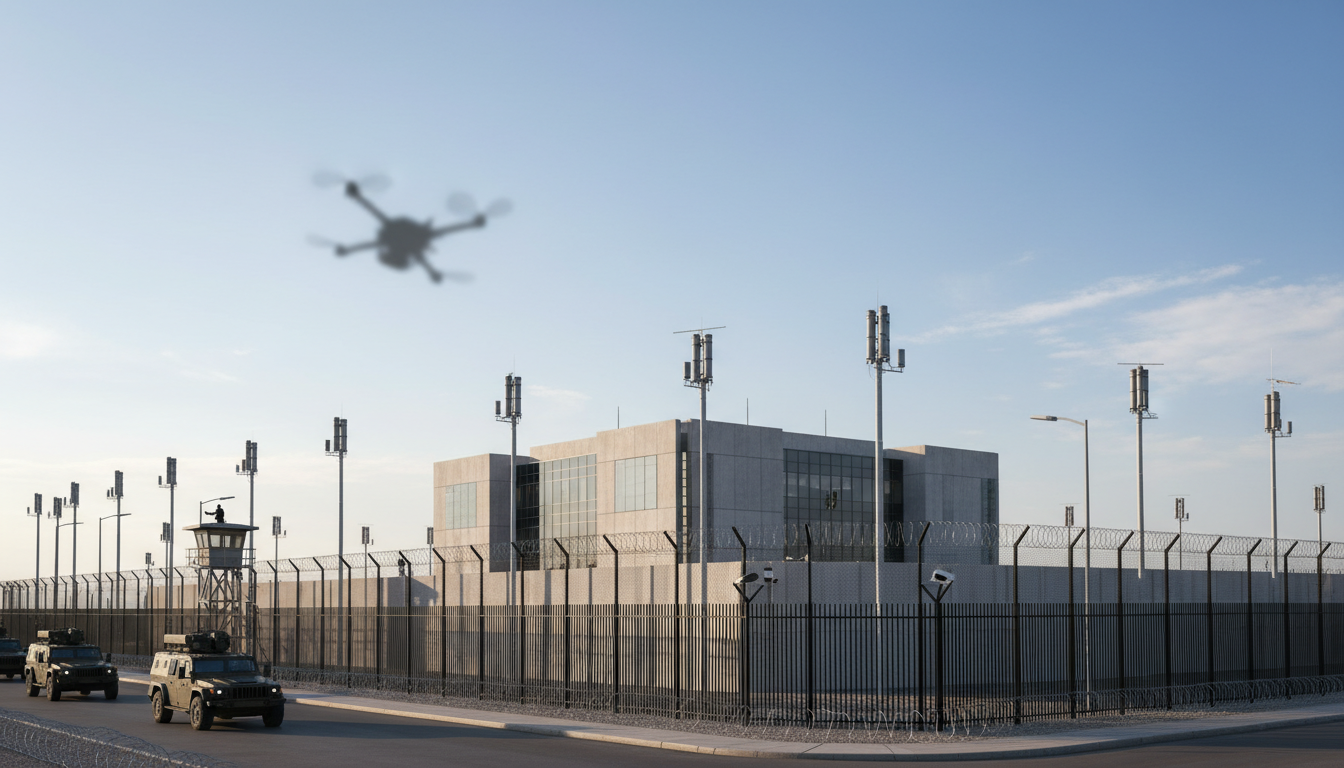
Spoofing presents a greater risk to critical infrastructure by allowing attackers to turn drones into precisely guided weapons. While Drone Jammers can cause a drone to fall, they typically trigger a controlled landing or a return to the launch point. In contrast, a spoofed drone can be guided into sensitive equipment, such as power transformers or fuel tanks, with centimeter-level accuracy. Learning more about us and our protective technologies can help you mitigate these high-stakes risks.
What are the risks of jamming?
The primary danger of jamming in sensitive zones is the “blind” landing. If a drone loses its link over a crowded airport or a power grid, it may descend onto structures or personnel.
- Collateral damage from falling objects.
- Interference with legitimate local wireless networks.
- Potential for uncontrolled fly-aways in high wind.
How does spoofing scale the threat?
Here is the kicker: a spoofer can coordinate multiple drones simultaneously. By broadcasting a blanket of false coordinates, an attacker can redirect an entire swarm toward a specific target within your facility. This turns a nuisance into a high-consequence, coordinated kinetic attack that traditional barriers cannot stop.
| Risk Category | Jamming Risk | Spoofing Risk |
|---|---|---|
| Targeting | Random/Uncontrolled | Surgical/Precise |
| Collateral | High frequency interference | Systemic infrastructure damage |
| Intent | Obstruction | Strategic destruction |
Analyze your facility’s physical vulnerabilities to determine if a falling drone or a guided drone poses the higher threat.
Key Takeaway: While jamming causes unpredictable signal noise, spoofing transforms a rogue drone into a precisely guided threat against your most critical assets.
How do they impact military operations?
Military operations are more vulnerable to spoofing as it can lead to strategic chaos and friendly fire across entire combat zones. Tactical Drone Jammers are essential for protecting convoys and temporary bases from immediate reconnaissance. However, the corrupting influence of spoofing can lead friendly units into ambushes by altering their own GPS-guided equipment. Using the right Drone Jammers allows for tactical area denial without compromising the integrity of your broader navigational data.
What is the tactical role of jamming?
In a combat environment, jamming provides a localized shield that blinds enemy drones. It prevents real-time data transmission back to enemy command centers, buying your troops time to reposition.
- Immediate disruption of enemy spotting capabilities.
- Protection against remotely detonated explosive drones.
- Prevention of localized communication between enemy units.
What is the strategic weapon of spoofing?
Wait, there’s more. Spoofing is a strategic weapon that targets the very foundation of modern warfare: data integrity. By spoofing coordinates on a large scale, an adversary can cause missiles to miss their targets or lead entire battalions off-course, creating mass confusion at the highest levels of command.
| Operational Level | Jamming Impact | Spoofing Impact |
|---|---|---|
| Tactical | Localized protection | Mission-critical redirection |
| Strategic | Minimal long-term effect | Widespread navigational corruption |
| Personnel | Immediate safety from drones | High risk of friendly fire |
Military planners must weigh the need for local jamming against the broader risk of spoofing-induced navigation failure.
Key Takeaway: Jamming wins local skirmishes by blinding the enemy, but spoofing can lose entire wars by corrupting the information your forces rely on.
What are the operational risks of jamming?
The main operational risks of jamming involve signal interference with public communications and the potential for dangerous drone crashes. High-powered Drone Jammers do not discriminate; they flood the spectrum, which can accidentally knock out emergency radios, cellular towers, and medical equipment. You must carefully calibrate your hardware to minimize this “spillover” effect in urban environments. To ensure you are using these tools safely, you should contact us for professional implementation advice.
Are signal interference hazards real?
Yes, they are significant. Brute-force jammers can disrupt essential Wi-Fi and cellular frequencies in a several-mile radius if not properly shielded.
- Loss of connectivity for local emergency services.
- Disruption of commercial aviation communication links.
- Interference with automated industrial control systems.
What about collateral signal damage?
Look at it this way: jamming is like a megaphone. If you shout loud enough to stop a drone, everyone nearby is going to hear the noise too. This is especially problematic in hospitals or data centers where precision signal management is required for life-saving equipment and server uptime.
| Impact Area | Interference Level | Consequence |
|---|---|---|
| Public Safety | High | Emergency service outages |
| Commerce | Medium | Cellular and Wi-Fi downtime |
| Infrastructure | Low/Medium | Potential industrial system lag |
Consult your local RF regulations to ensure your jamming deployment doesn’t result in massive fines or public safety crises.
Key Takeaway: Jamming is a double-edged sword that requires careful frequency management to avoid disrupting the very infrastructure you are trying to protect.
Why is spoofing considered a greater risk?
Spoofing is more dangerous because it enables full hijacking and weaponization without the drone operator’s knowledge. Unlike Drone Jammers, which usually force a drone to stop moving or go home, spoofing keeps the drone flight-capable while serving a new master. This allows for clandestine intelligence gathering or the delivery of harmful payloads to a specific, high-security target. You can browse our advanced products to see how we address these sophisticated hijacking threats.
Can spoofing hijack paths?
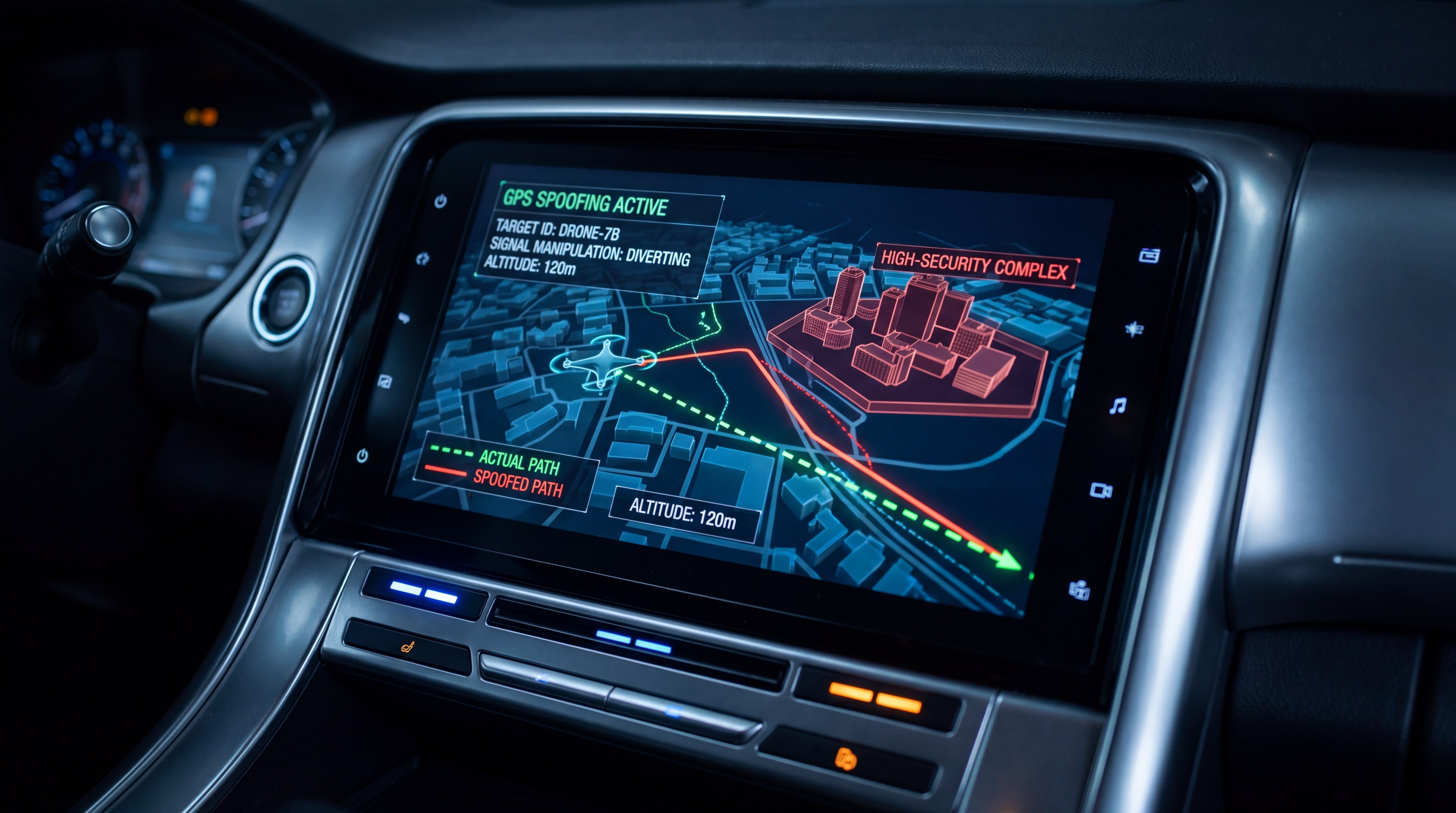
Absolutely. By slowly transitioning from real to fake GPS signals, a spoofer can “capture” the drone’s navigation without triggering any onboard alarms.
- The drone remains stable and appears to be on course.
- The original pilot sees false telemetry data on their screen.
- The attacker assumes full control of the final landing point.
How are drones weaponized via spoofing?
It’s simpler than you think. A spoofed drone is no longer just a camera; it is a delivery vehicle that can be forced to drop a payload onto a specific, vulnerable location. Because the drone is still flying normally, your automated “drone down” alerts may never even trigger, allowing the attack to be completed successfully.
| Threat Element | Jamming | Spoofing |
|---|---|---|
| Control | Link severed | Path hijacked |
| Payload Risk | Falling hazard | Directed delivery |
| Awareness | Immediate | Delayed or none |
Consider the value of your assets; if a directed landing could be catastrophic, spoofing is your primary threat.
Key Takeaway: The ability to hijack a drone’s flight path silently makes spoofing the ultimate tool for sophisticated espionage and sabotage.
Which solution offers faster neutralization?
Jamming provides faster neutralization by instantly severing the command link and triggering the drone’s internal fail-safe modes. When you activate Drone Jammers, the response from the aircraft is usually immediate, as it can no longer receive the heartbeat signal from the controller. Spoofing, by comparison, often requires a “signal lock” period where the counterfeit signal is slowly introduced to avoid the drone crashing due to sudden data jumps.
Is fail-safe activation immediate?
In almost every commercial drone, the loss of a control link triggers an instant response programmed by the manufacturer.
- Drones will often hover in place for 30 seconds.
- The “Return to Home” (RTH) function initiates automatically.
- The video feed to the attacker is instantly terminated.
Why is spoofing control gradual?
The truth is, spoofing requires patience. If you suddenly tell a drone it is 100 miles away from its current position, the flight controller will detect a GPS glitch and ignore the data. To take over, the spoofer must mimic the real coordinates first and then slowly “drift” them to lead the drone away.
| Neutralization Speed | Jamming | Spoofing |
|---|---|---|
| Response Time | Seconds | Minutes |
| Drone State | Fail-safe / Landing | Controlled flight |
| Success Rate | High (for most drones) | Variable (depends on GPS lock) |
Determine if your threat profile allows for a gradual diversion or if you require an instant signal blackout to prevent data leaks.
Key Takeaway: Jamming is the superior choice for high-speed neutralization when every second of signal transmission represents a security breach.
How do countermeasure costs compare?
Jamming solutions are generally more cost-effective for localized defense, while spoofing countermeasures require high-end integration and expensive signal generation hardware. You can find entry-level Drone Jammers that provide excellent perimeter security without the massive investment required for intelligent spoofing systems. Most businesses find that a well-deployed jamming network offers the best return on investment for standard site protection.
Are portable systems affordable?
Yes, handheld and backpack-style jammers have become increasingly accessible for private security teams.
- Low maintenance costs compared to complex sensor suites.
- Easy to train personnel for rapid field deployment.
- Modular designs allow for easy frequency upgrades.
Why is integrated tech high-end?
Believe it or not, spoofing systems require the processing power of a small server to generate real-time, convincing satellite data. They must also be integrated with radar and RF detection to “know” when to activate, driving up the total system cost significantly beyond a simple directional jammer.
| Cost Factor | Jamming Solution | Spoofing Solution |
|---|---|---|
| Hardware Price | Moderate | Very High |
| Expertise Required | Basic Training | Specialized RF Engineers |
| Maintenance | Low | High (Software Updates) |
Balance your budget against the value of the protected assets to determine which technology provides the most viable defense.
Key Takeaway: Jamming is the practical choice for budget-conscious security, while spoofing is reserved for high-value government or military installations.
What are the global legal implications?
Legal restrictions often favor detection over active jamming or spoofing due to the extreme risk of public frequency interference. Most countries have strict laws governed by bodies like the FCC or ITU that prohibit the use of Drone Jammers by civilians or private companies. Violating these laws can lead to severe criminal penalties and heavy fines. Before you deploy any active countermeasures, you must verify the local legal framework or work through government-approved channels.

Are there regulatory restrictions?
Yes, and they are quite rigid. Most jammers are classified as illegal devices for the general public because they disrupt the public “commons” of the radio spectrum.
- Strict licensing is required for any active signal emission.
- Authorized use is typically limited to law enforcement and defense.
- Cross-border equipment shipping is heavily monitored.
What are public safety considerations?
The bottom line? If your jammer causes a drone to fall on a pedestrian, you are legally liable for the damages. Governments prefer that you detect and track drones rather than intervene kinetically, as the risk of collateral damage often outweighs the benefit of stopping the drone.
| Legal Factor | Jamming | Spoofing |
|---|---|---|
| Permissibility | Strictly Restricted | Heavily Regulated |
| Liability Risk | High (Physical Damage) | High (Data Corruption) |
| Compliance Needs | Federal Licensing | Military-Grade Authorization |
Check with your legal department to ensure any counter-drone technology you purchase can be legally operated in your jurisdiction.
Key Takeaway: Navigating the legal landscape is as important as the technology itself; active countermeasures are powerful tools with heavy regulatory burdens.
How should you build a layered defense?
Building a layered defense requires combining RF detection with Drone Jammers and anti-spoofing verification for a complete security net. You cannot rely on a single technology to stop every threat; you need a system that detects the drone miles away and then applies the appropriate countermeasure based on the risk level. By integrating multiple sensors, you ensure that if one method fails, another is ready to protect your airspace.
Can you combine detection and jamming?
This is the industry standard for high-security sites. You use RF scanners to find the drone’s signal and then activate a directional jammer to neutralize it only when necessary.
- Reduces the risk of accidental interference with neighbors.
- Provides forensic evidence of the drone’s path and pilot.
- Saves energy by only operating when a threat is verified.
What is the role of anti-spoofing?
You might be wondering: how do I stop my own drones from being spoofed? Adding anti-spoofing logic to your fleet ensures that your aircraft verify satellite data against their own inertial sensors. This prevents an external attacker from hijacking your internal operations and turning your own tools against you.
| Defense Layer | Function | Goal |
|---|---|---|
| Detection | Radar/RF Scanning | Early warning |
| Mitigation | Jamming/Intervention | Immediate neutralization |
| Verification | Anti-Spoofing Protocols | Data integrity |
Implement a multi-tiered approach to ensure your perimeter remains secure against both brute-force and intelligent aerial threats.
Key Takeaway: A single countermeasure is a vulnerability; true security comes from a layered approach that detects, identifies, and then neutralizes.
*
Common Counter-Drone Questions
Can I legally use a drone jammer on my private property?
In most countries, including the US and UK, it is illegal for private citizens to operate drone jammers. These devices interfere with public communication channels and are typically reserved for government or military use only.
What’s the best way to detect a drone before it gets close?
The most effective detection method is a combination of RF sensing and radar. RF sensors can identify the control link, while radar can track the physical presence of the drone even if it is not emitting signals.
Do drone jammers work on all types of drones?
Most jammers work on commercial drones that rely on 2.4 GHz, 5.8 GHz, and GPS. However, specialized “dark drones” that fly via pre-programmed waypoints without a control link may require GPS jamming or spoofing to stop.
How far can a handheld drone jammer reach?
A typical handheld jammer has an effective range of 500 meters to 2 kilometers, depending on the power output and the environmental conditions. Stationary systems can reach much further, often exceeding 5 kilometers.
Will a jammer stop a drone from recording video?
Yes, jamming the control and data links will usually cut the live video feed to the operator. However, if the drone is recording directly to an internal SD card, that footage will remain intact until the drone is recovered.
For a comprehensive review of your facility’s security needs, contact us today to speak with an RF specialist.
Authorized RF engineering and compliance review
For regulated RF systems, this page should be used as an engineering and compliance review path, not as a public deployment checklist. CorelixRF starts with authorization status, operating region, frequency plan, output limit, antenna interface, safety controls, thermal limits and acceptance documents.
- RFQ checklist – send the data buyers usually forget, including band, power, duty cycle, interface and test standard
- delivery documentation – check what documents can support incoming inspection, FAT review and long-term maintenance
- quality and certification review – review the quality and compliance evidence before the project moves into procurement
- RF front-end platform – compare the RF chain as a system instead of selecting one isolated module
- RF configurator – turn frequency, power, thermal and interface requirements into a first configuration brief
- case studies – review similar engineering paths before sending an RFQ
- engineering contact – send the application notes, block diagram or target specification to engineering sales
This keeps the discussion inside lawful, authorized RF programs while still giving procurement teams a clear way to request amplifier, antenna, SDR source, documentation and factory review.
GNSS Interference RF Chain Review Path
For authorized security, test or integration programs, use this article as a compliance-first planning reference rather than an operating instruction. The practical next step is to review the RF chain as an engineered system: source, amplifier, antenna, control interface, load condition, thermal margin and acceptance evidence.
- Review RF front-end platform architecture when the project combines signal source, amplifier, antenna and control logic.
- Compare RF power amplifier platforms for band, output power, duty cycle, cooling and protection behavior.
- Match RF antenna platforms to coverage pattern, gain, connector, VSWR and installation limits.
- Prepare an RFQ checklist before requesting datasheets, test data or a factory engineering review.
Send your RF system requirements to CorelixRF engineering for a compliance-aware review path.