
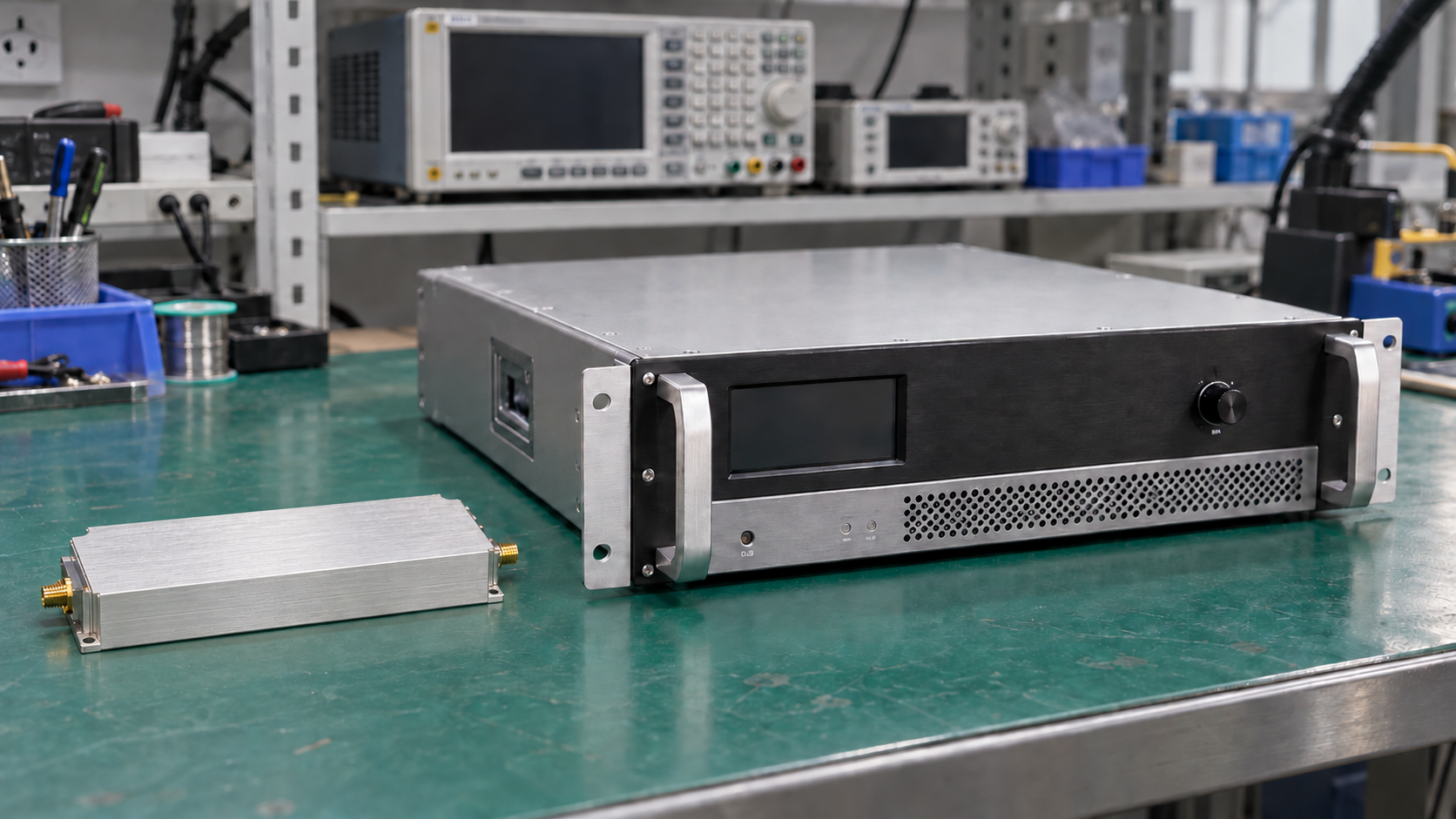
A module quotation can look attractive until the project adds a power supply, cooling hardware, an enclosure, assembly work, and testing. A rackmount quotation can include work your equipment team has already completed elsewhere. Either comparison can mislead if the two prices cover different deliveries.
The useful starting point is the equipment you intend to build and the integration work you can support. Select an RF amplifier format around that project. Then compare the actual quoted configurations at the same RF performance and installation boundary.
The Choice Depends on Where Integration Work Belongs
A module gives the equipment designer a component to incorporate into an assembly. A rackmount offer describes an amplifier packaged for a rack installation. Those descriptions do not settle which power, cooling, cables, or operating features are included. The quotation and configuration documents must do that.
Consider what your team would receive on the delivery day. Which parts could it install immediately? Which parts would still require a drawing, a purchase order, or a test fixture? The remaining work affects engineering effort and readiness, even if both amplifier candidates have acceptable RF ratings.
For an OEM with a developed chassis, purchasing another enclosure may add little value. For a laboratory without mechanical integration resources, obtaining more of the assembly within the supplier’s scope may remove work the team cannot undertake. Neither situation establishes a universal winner.
A suitable format leaves a manageable set of tasks with the customer and places the rest in an explicitly agreed supply scope. That division can differ between two offers bearing the same “rackmount” label.
Three Project Situations Lead to Different Choices
An OEM is adding amplification to an existing product
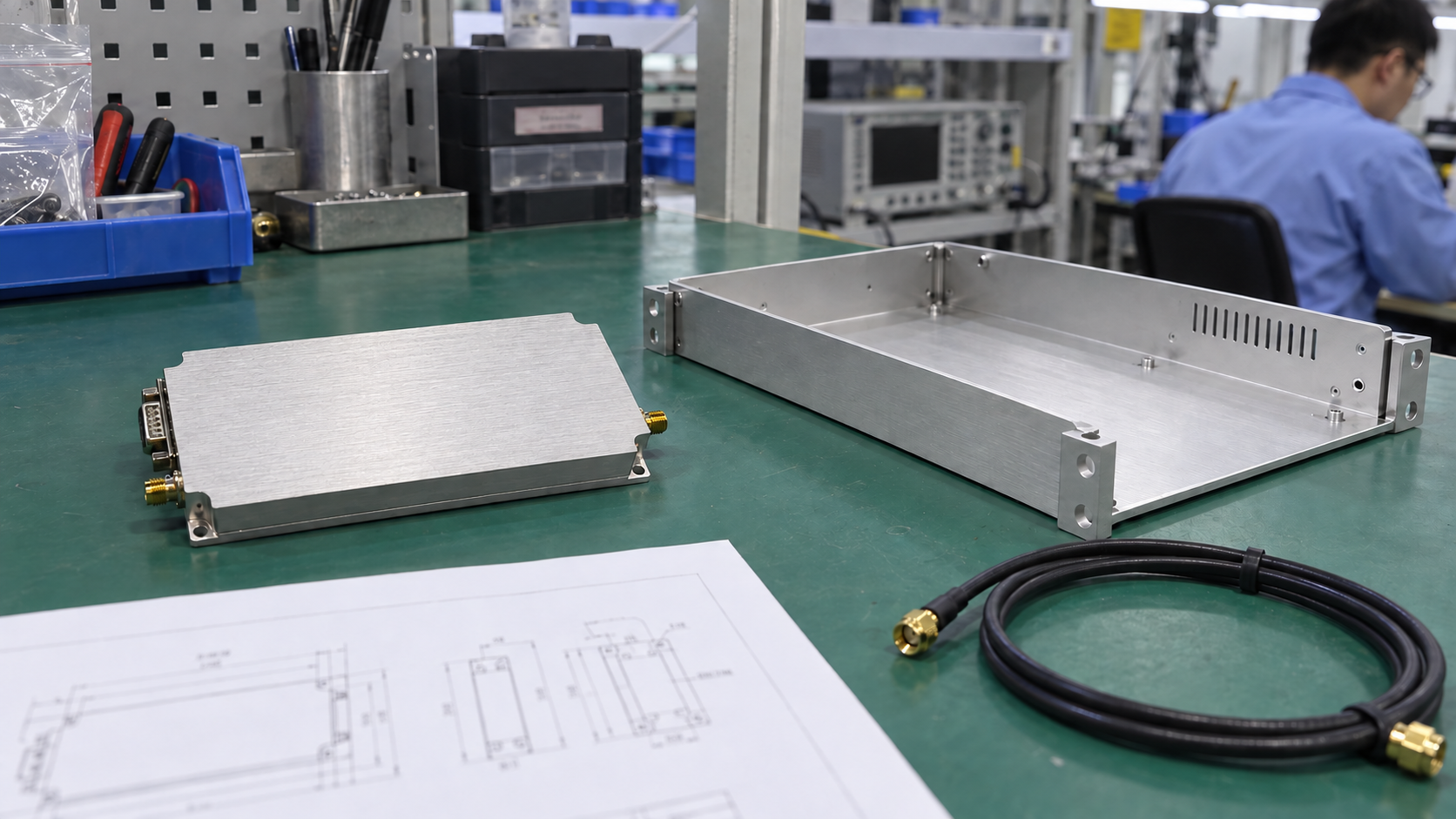
If the host equipment already has an appropriate supply, cooling arrangement, mounting structure, and RF routing, a module deserves early evaluation. The integration team can judge it against interfaces that already exist.
The advantage depends on those interfaces being usable. A module that requires a different supply or a revised thermal structure can introduce work throughout the host product. Its small external dimensions do not capture the space needed by the final cable routing and cooling hardware.
Ask what the production team would assemble repeatedly. A module may fit the available space, yet demand a mounting operation or cable connection that remains difficult inside the finished chassis. Those operations belong in the production estimate. The engineering prototype should represent the assembly method intended for later units.
This route fits a team prepared to own installation design and repeatable build instructions. If those resources are absent, add their provision to the module proposal before comparing it with a more assembled offer.
A laboratory needs an amplifier for a test station
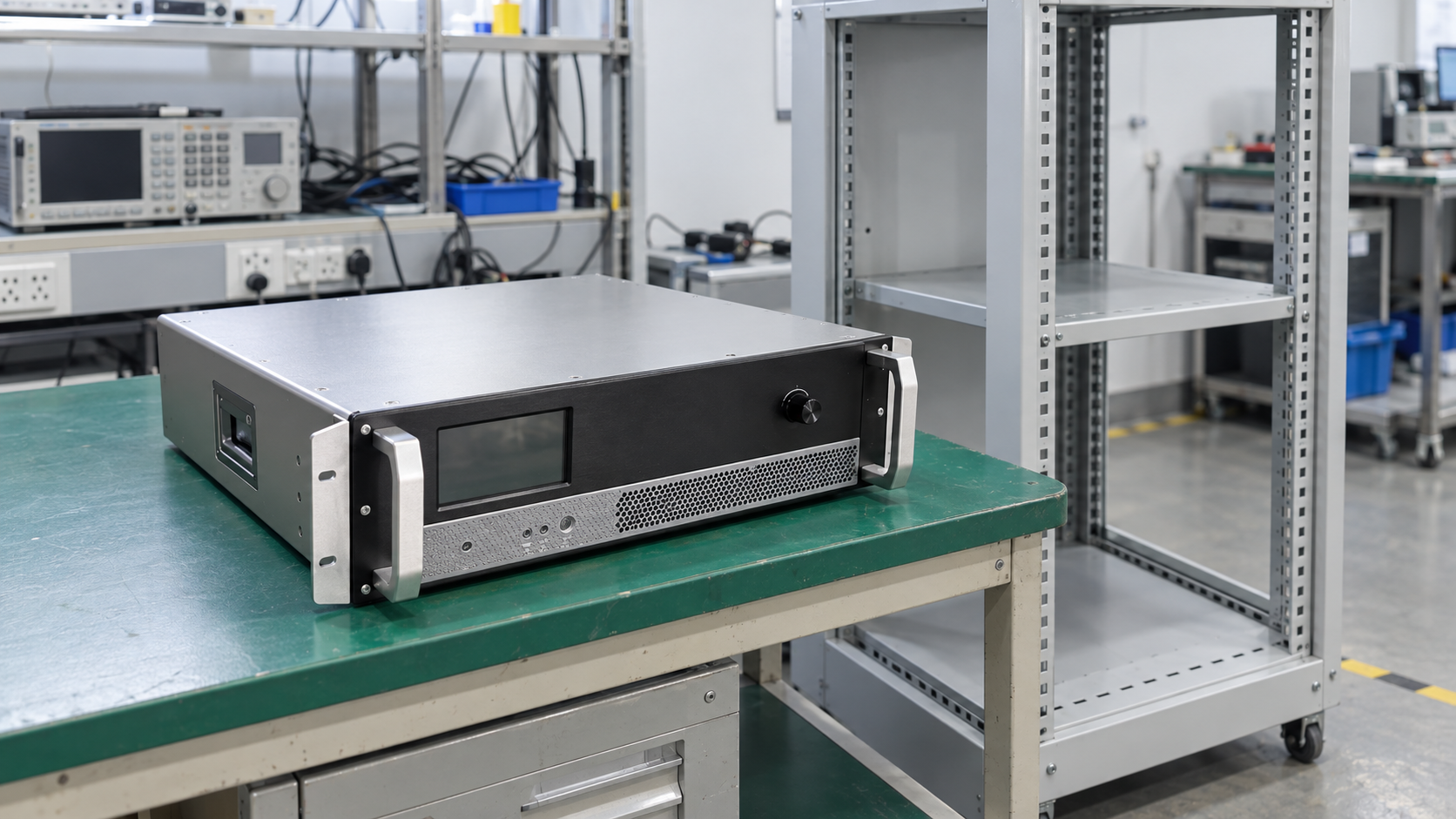
For a station with available rack space and a team focused on measurement, a rackmount configuration may fit the working arrangement. Its value depends on the assembly work included in the offer and the connections still required at the site.
Review the cabinet as it will be used. Reserve rear cable clearance, confirm the support arrangement, and check whether the specified installation orientation is practical. Review rack cooling requirements against the actual cabinet inlet and exhaust paths. Space around the enclosure remains part of the installation even when cooling hardware is supplied.
At microwave and millimeter-wave frequencies, coaxial and waveguide interface choices can also affect access and the connections to existing instruments. Check the locations of both ports before accepting a layout.
A module can serve a bench evaluation too, provided the setup supplies its documented power, cooling, and connection requirements. Include that supporting assembly in the comparison. A bare-module price and a complete evaluation arrangement answer different purchasing questions.
A rack prototype is intended to become a module-based product
An evaluation configuration and a production configuration can serve different project stages. A rack assembly may support early characterization, while a module is later considered for the final equipment. Evaluate that route with both configurations visible from the beginning.
Identify what will change between stages: power distribution, thermal contact, mounting, RF cables, operating connections, and measurement planes. Decide which prototype results can remain applicable and which require repetition after integration. Related amplifier hardware does not automatically make the two installed systems equivalent.
Budget the work for the production version before committing to the prototype route. Include the later drawings, fixtures, assembly procedure, and affected system tests. Otherwise, the project can approve an evaluation purchase without accounting for the work needed to reach production.
The opposite route also requires review. Moving from a module prototype into a rack assembly can change the external interfaces and the conditions under which performance is specified. Choose the delivery form for each stage deliberately, with an owner for the work between them.
A Comparable Quotation Includes the Unfinished Work
Once the project situation is clear, request offers against the same required outcome. Identify the RF band, output definition, waveform, duty, and relevant environmental conditions. Agree on whether the accepted output is measured at a module port or an external assembly port.
Retrieve the candidate information from the RF amplifier datasheet library, then match each document to the quoted version. Ask for clarification if the drawing, datasheet, and accessory list describe different configurations. A shared product-family name is insufficient to resolve that mismatch.
The comparison should expose work that remains outside each price.
| Scope item | Module-based proposal | Rackmount proposal | What the quotation must resolve |
|---|---|---|---|
| Power connection | External source, wiring, and any supplied power components | Actual assembly input and any included supply | Required site connection and who provides each item |
| Heat removal | Mounting interface and required cooling provision | Supplied cooling arrangement and cabinet conditions | Product-to-site cooling boundary |
| Mechanical assembly | Host enclosure, fixing parts, and cable routing | Rack mounting, support, depth, and rear access | Included parts and installation responsibility |
| RF path and testing | Module reference planes plus the intended host RF path | External reference planes of the delivered assembly | Applicable performance records and remaining system tests |
| Documentation and service | Installation instructions, build records, and replaceable assembly | Operating instructions and agreed service assembly | Documents supplied and repair scope |
Classify items as included, optional, customer-supplied, or unconfirmed. An accessory in a product photograph does not establish its inclusion in the order.
Apply the same discipline to operating features. Remote control, telemetry, alarms, or automatic fault recovery cannot be inferred from an enclosure. If the project requires a function, request an explicit response for that configuration. An unanswered requirement remains unresolved in both proposals.
Calculate Cost at the Planned Build Quantity
Use the cost of an accepted installation as the comparison boundary. Separate work performed once from work repeated for each unit.
A simple planning calculation is:
Estimated cost per installed unit = recurring hardware and build cost + one-time engineering cost ÷ planned quantity
The recurring amount includes the amplifier, required accessories, assembly labor, and per-unit testing. One-time engineering includes the drawings, integration work, fixtures, and initial verification needed for that particular design. Avoid counting an item twice when it is already included in a supplier quotation.
For a small build, one-time integration effort can materially affect the result. At a larger quantity, that effort is distributed across more units, while repeated assembly operations continue to add cost to every build. A module proposal with a lower purchase price can lose its advantage if each unit requires substantial manual assembly or testing.
The rack proposal also needs a complete estimate. Include site mounting, connections, and system acceptance left to the customer. Buying an enclosure does not automatically close those tasks.
Use the planned quantity and a plausible lower-volume case to examine the decision. Keep supplier quotations separate from internal labor estimates and assign an owner to each assumption. If a cooling assembly or cable arrangement has not been defined, leave its cost open rather than treating it as zero.
Service provisions may be quoted as spares, support, repair terms, or internal maintenance work. Add them according to the project’s actual arrangement. Do not assign a general savings percentage or repair-time advantage to either format without supporting information.
Choose a Service Boundary Your Team Can Support
Consider the assembly a technician would remove when service is required. Would the equipment owner replace an amplifier module, a larger internal assembly, or the complete rack unit? That choice affects access, spare stock, repair responsibility, and the checks needed before return to use.
A module inside a tightly packed chassis may need more disassembly than its size suggests. Review access with neighboring parts and cables in place. If the mounting surface also provides cooling, the service procedure must restore the documented thermal interface.
A rack assembly still needs sufficient access for its removal, cable disconnection, and replacement. Confirm how the supplier defines the serviceable unit and which actions remain with the equipment owner. Packaging alone cannot establish the repair method.
For repeat production, the same boundaries need to appear in build documents. A technician should receive the correct parts list, wiring information, mounting instructions, and test procedure for that configuration. Changes to a supply or cooling component should prompt a review of the affected evidence.
Assign the installed-system acceptance to a named owner. The supplier’s product test can support handover, but it does not cover every condition introduced by the customer’s equipment. Agree on the remaining checks as part of the chosen delivery arrangement.
Turn the Choice into a Configuration Brief
The purchase decision should state why the proposed delivery form suits the project and name the work remaining after delivery. A one-page brief can cover six items:
- Project setting: host equipment, laboratory station, or a defined prototype-to-production route.
- Selected configuration: model, revision, delivery form, and included accessories.
- RF acceptance boundary: required operating conditions and measurement planes.
- Customer work: assigned power, cooling, mechanical, connection, and system-test tasks.
- Cost basis: quantity, included supplier scope, internal estimates, and open items.
- Handover and service: responsible owners, required documents, and the assembly to be supported.
A module choice should be supported by available integration resources or a funded plan to provide them. A rack choice should identify which assembly tasks the purchase covers and why that scope suits the installation. If the document cannot explain those points, the comparison needs more information.
Use the RF amplifier RFQ checklist to supply the technical inputs with this brief. For a CorelixRF inquiry, send the proposed delivery scope and project installation conditions, including the work your team intends to retain. Ask for an offer that responds to that division of responsibility.
FAQ
Q1: Does a rackmount amplifier always provide more RF power?
No. Output depends on the specified model and operating conditions. Compare the actual candidates using the same waveform, duty, temperature, and measurement boundary.
Q2: Can an amplifier module be used during bench evaluation?
Yes, with the supporting supply, cooling, connections, and operating setup required by its documentation. Include those parts and their assembly effort in the evaluation budget.
Q3: Does every rackmount amplifier include its own power supply?
The delivery list and input specification must confirm that. Also establish the required site connection and any external equipment or cables the customer must provide.
Q4: Can a rack prototype be replaced by a module in production?
That route can be planned, but production integration needs its own review. Identify changed interfaces and test conditions, then decide which prototype evidence remains applicable.
Q5: Is a module always cheaper after integration?
No. Compare the same accepted installation at the intended quantity. Include one-time engineering, recurring hardware, assembly, testing, and the agreed service provision.