
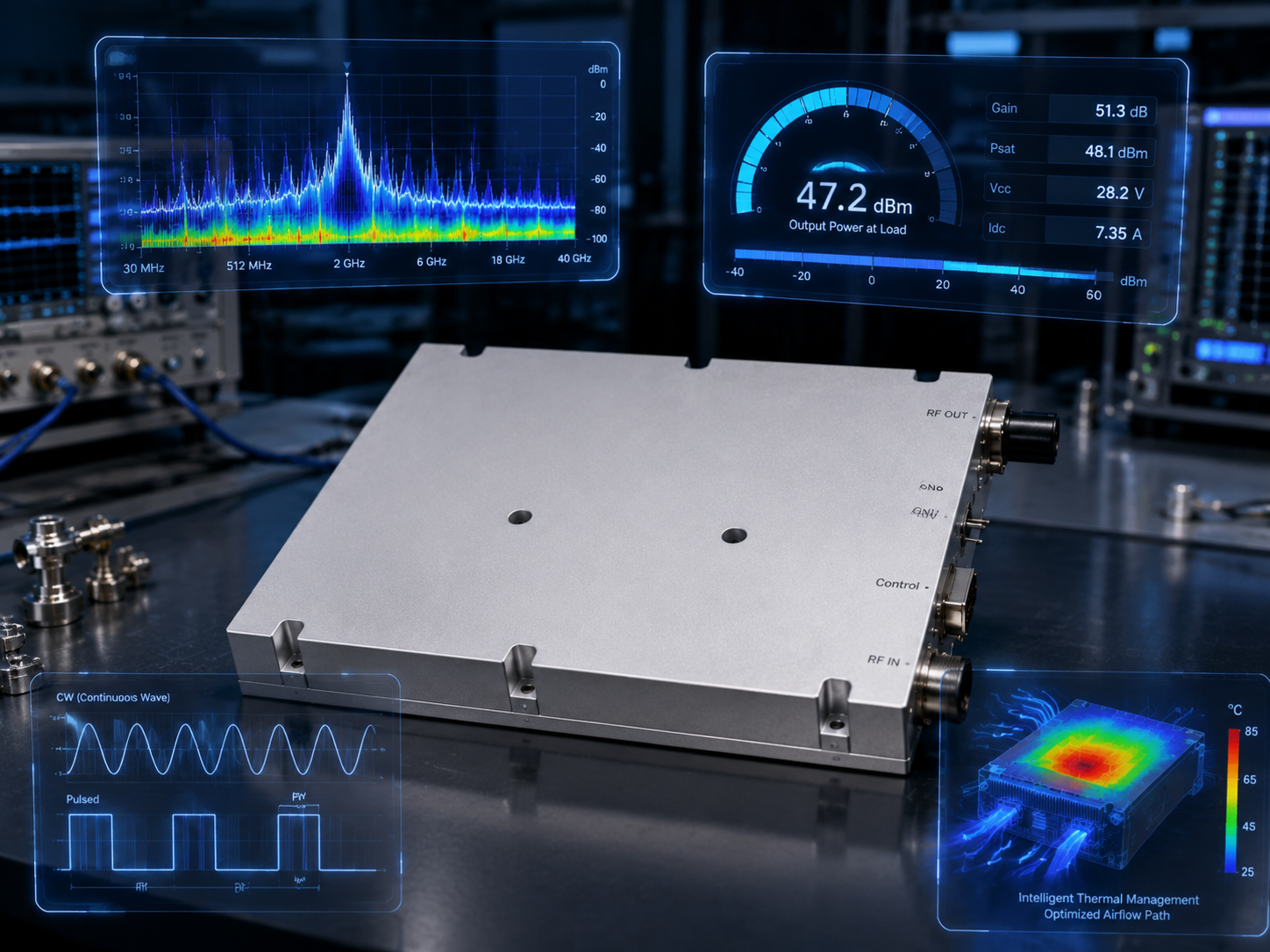
Define the operating envelope of an RF power amplifier as the combinations the system must support. Independent ranges for frequency, drive, output and temperature do not show which conditions occur together. Give each required operating profile an identity and keep undefined combinations visible before comparing candidates.
Build profiles around actual system jobs
| Profile field | State for each required job | Keep associated with it |
|---|---|---|
| Frequency and signal | Required points/range, occupied bandwidth and waveform | Whether the case is fixed-frequency, swept or concurrent-signal operation |
| Input and output | Available drive and required output definition | Input/output planes, path state, load and permitted limits |
| Time and thermal boundary | Duty/run sequence, duration, ambient/baseplate reference and cooling | The installation and services present during this profile |
| Supply and controls | Applicable input condition, commands, monitoring and permitted state transitions | Configuration/options and the responsible system interface |
Mark which conditions must occur together
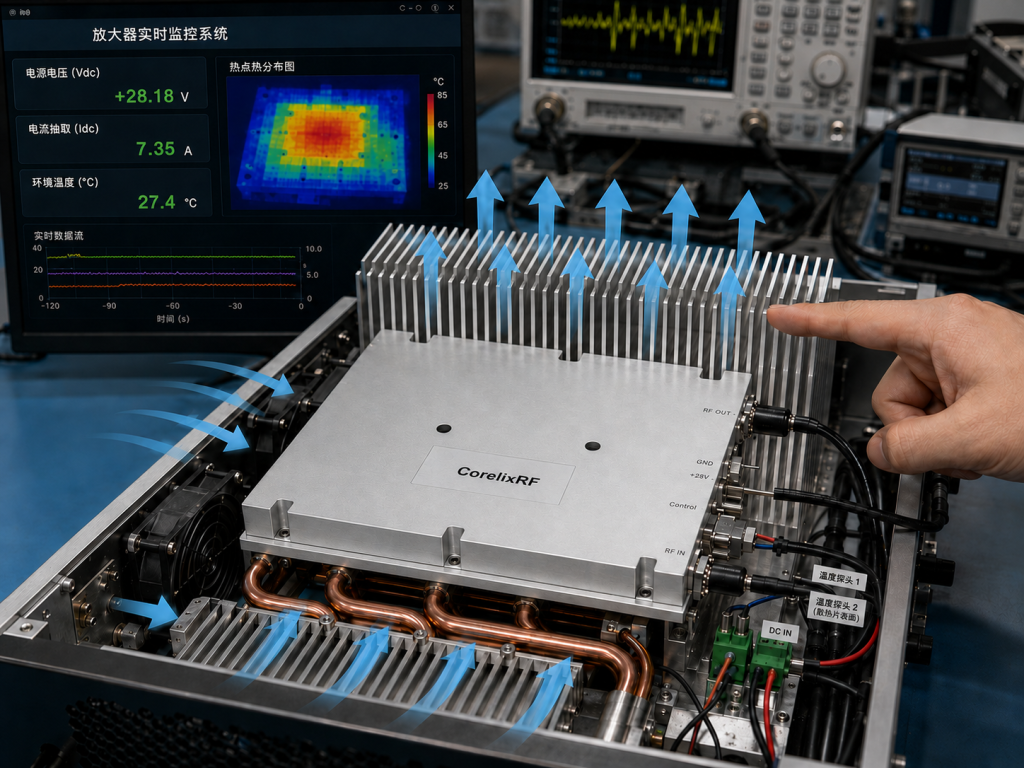
For each profile, state whether maximum required output coincides with the demanding thermal boundary, whether source capability changes with frequency and whether the load changes during the run. Do not combine every independent extreme automatically, but do not assume a nominal condition covers a required combined case.
Separate normal required operation, proposed fault-response checks and explicitly excluded states. Any fault or mismatch test needs a permitted method and limits; listing a system concern in this matrix does not authorize imposing it on a unit.
Map evidence to a profile, not to an isolated headline
Compare a candidate record with the complete stated profile. A power result at one waveform or cooling condition cannot silently close a different combination. Mark the matched scope, the changed condition and the evidence still required. An unsupported combination remains open; it is not automatically a product failure. For the related system or selection decision, see A Practical Guide to RF Power Amplifier Specifications.

Control changes to the required combinations
Retain the profile revision with its source requirement and owner. When the waveform, path, cooling, supply or operating sequence changes, identify the affected combinations before reusing a previous candidate decision. Keep optional future cases separate from the mandatory envelope.
Send the record for review
Use RF front-end integration paths to identify system responsibilities and RF amplifier product families to compare the relevant configurations. Send CorelixRF the required operating-profile matrix with the applicable configuration, source files and unresolved inputs.