
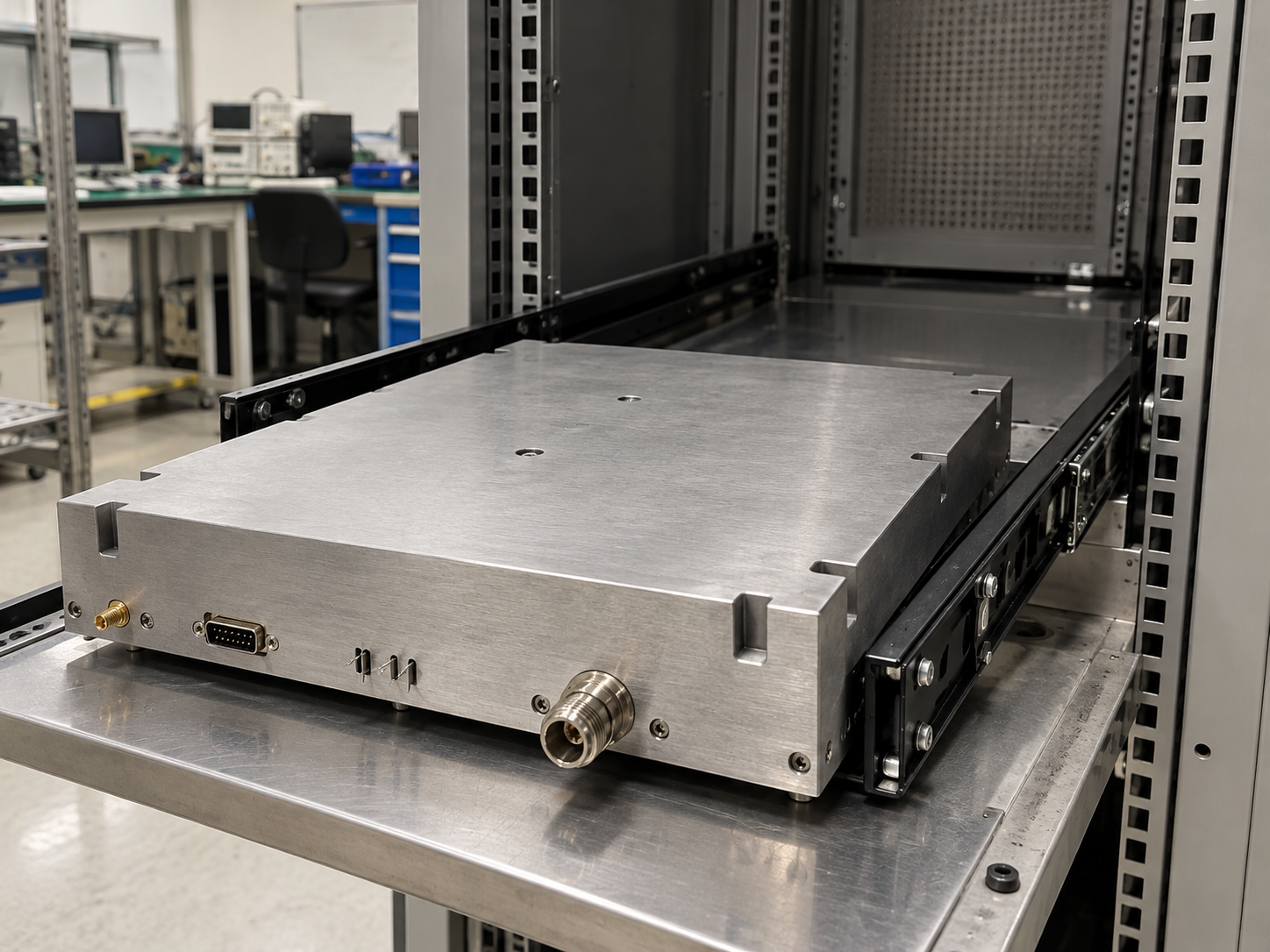
A TWTA-to-SSPA replacement needs a difference review of the installed electrical, control, mechanical, and acceptance boundaries. The objective is to identify every consequential difference before accepting an SSPA replacement. Matching frequency and headline power is only an initial screen.
Recover the installed baseline
Recover the installed unit revision, rack drawing and actual controller behavior. For an undocumented alarm, first locate the old interface definition and controller input logic; obtain approved observations of startup, fault and reset states where records are absent. Record unknown behavior explicitly rather than treating years of operation as an interface specification.
Build a difference matrix
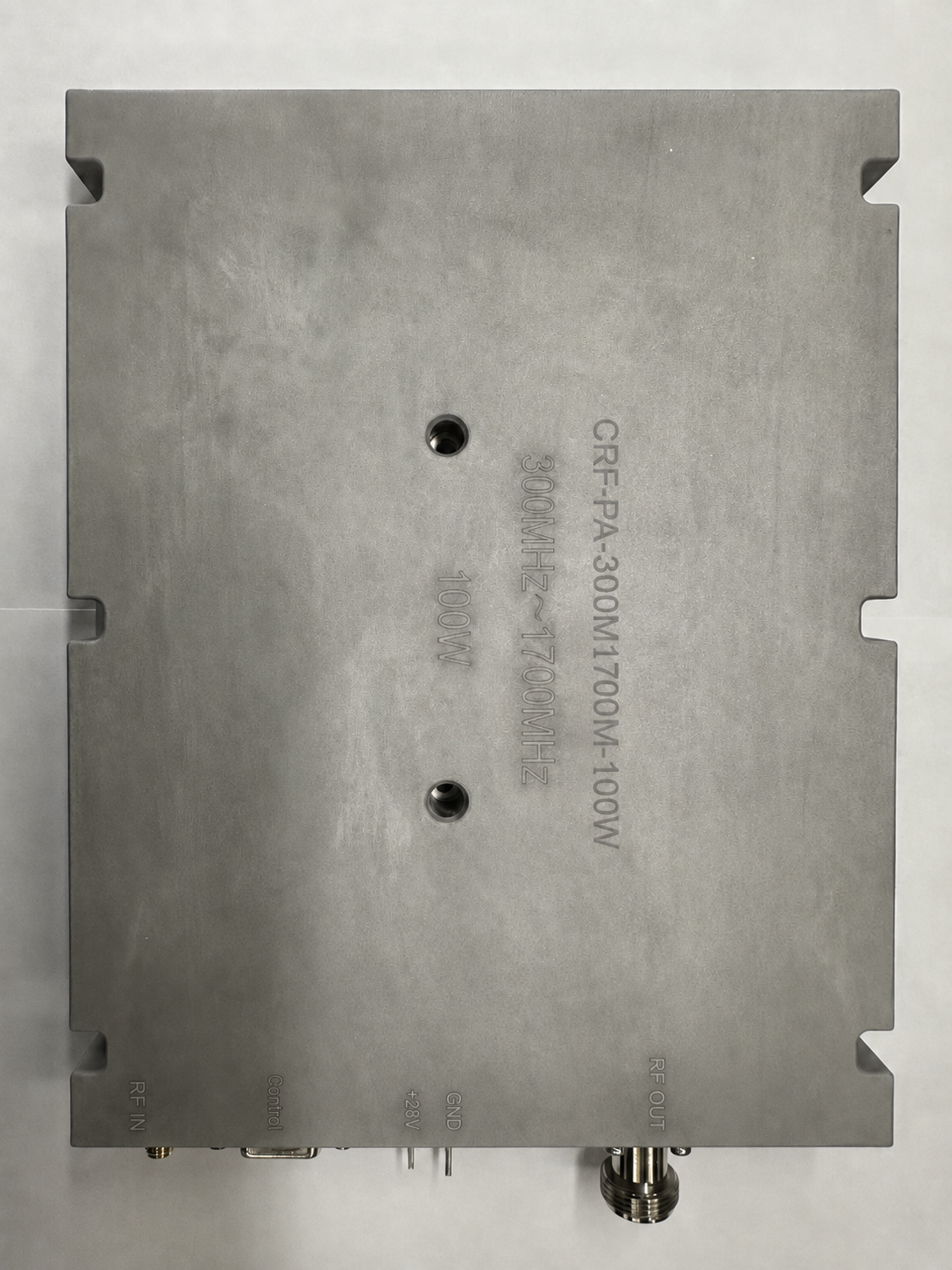
Use the RF amplifier replacement compatibility review for general RF, DC, cooling and mechanical checks. The retrofit matrix must additionally compare each recovered legacy expectation with the proposed SSPA declaration and identify an adapter, behavior test or unresolved dependency.
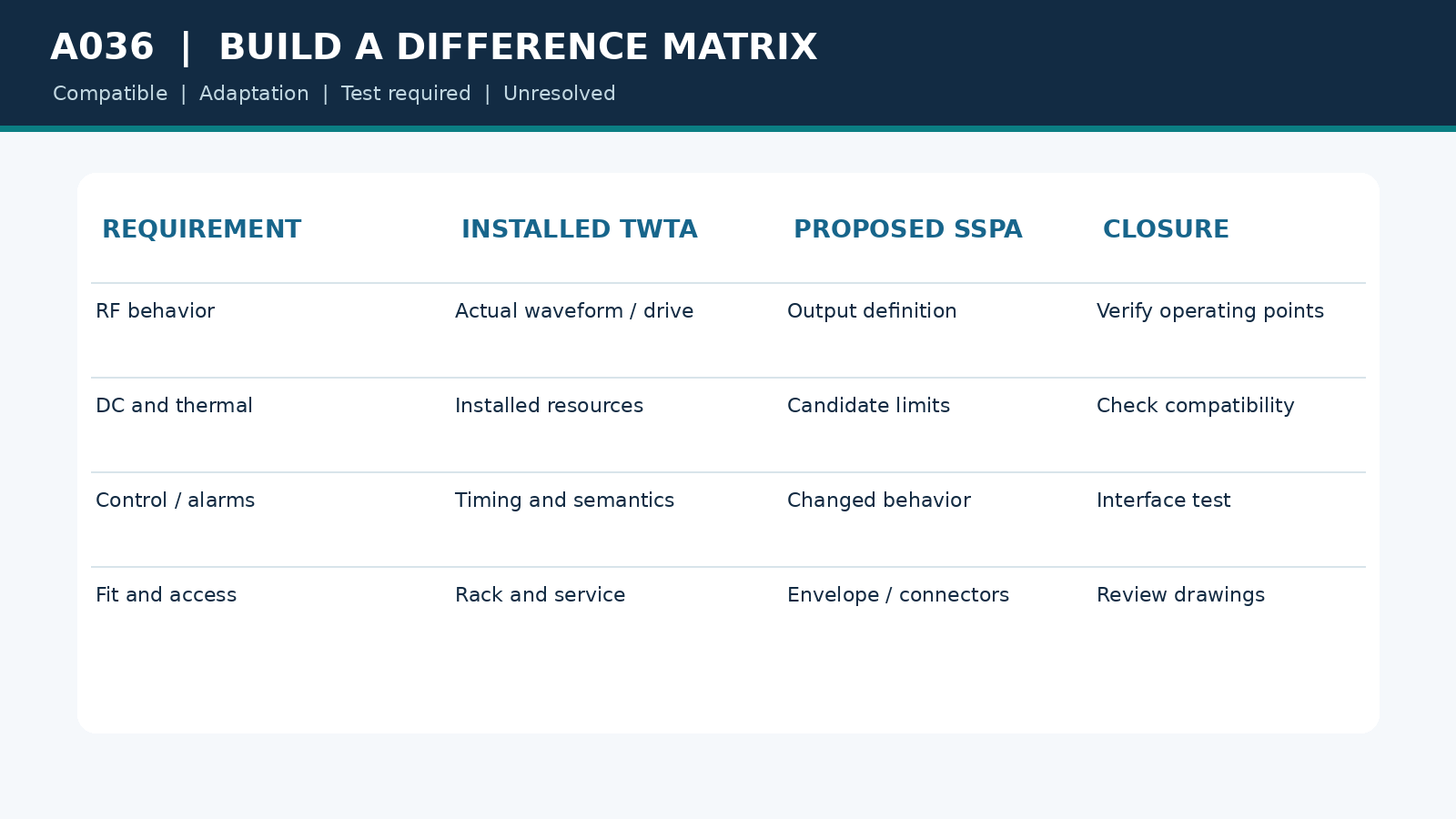
Any controller or adapter change belongs in the supplied scope, revised drawing and acceptance plan. Use the RF hardware integration support scope to assign the work; do not design a polarity converter or assume its inclusion from a nominal signal label.
For an alarm-polarity or enable-timing difference, put the old output, the controller’s expected input and the proposed SSPA behavior in the endpoint interface record. If they conflict, identify the required translation and its owner without inventing electrical levels. Verify the controller’s interpreted normal, fault and reset states against the agreed cases.
Agree the retrofit acceptance
Bind the revised drawing, adapter configuration and behavior-test result through RF change control. Before implementation, the system owner approves the configuration to restore and the check confirming restored service. Close the control difference only when the revised behavior and recovery reference are both accepted.
Map the installed-to-replacement differences
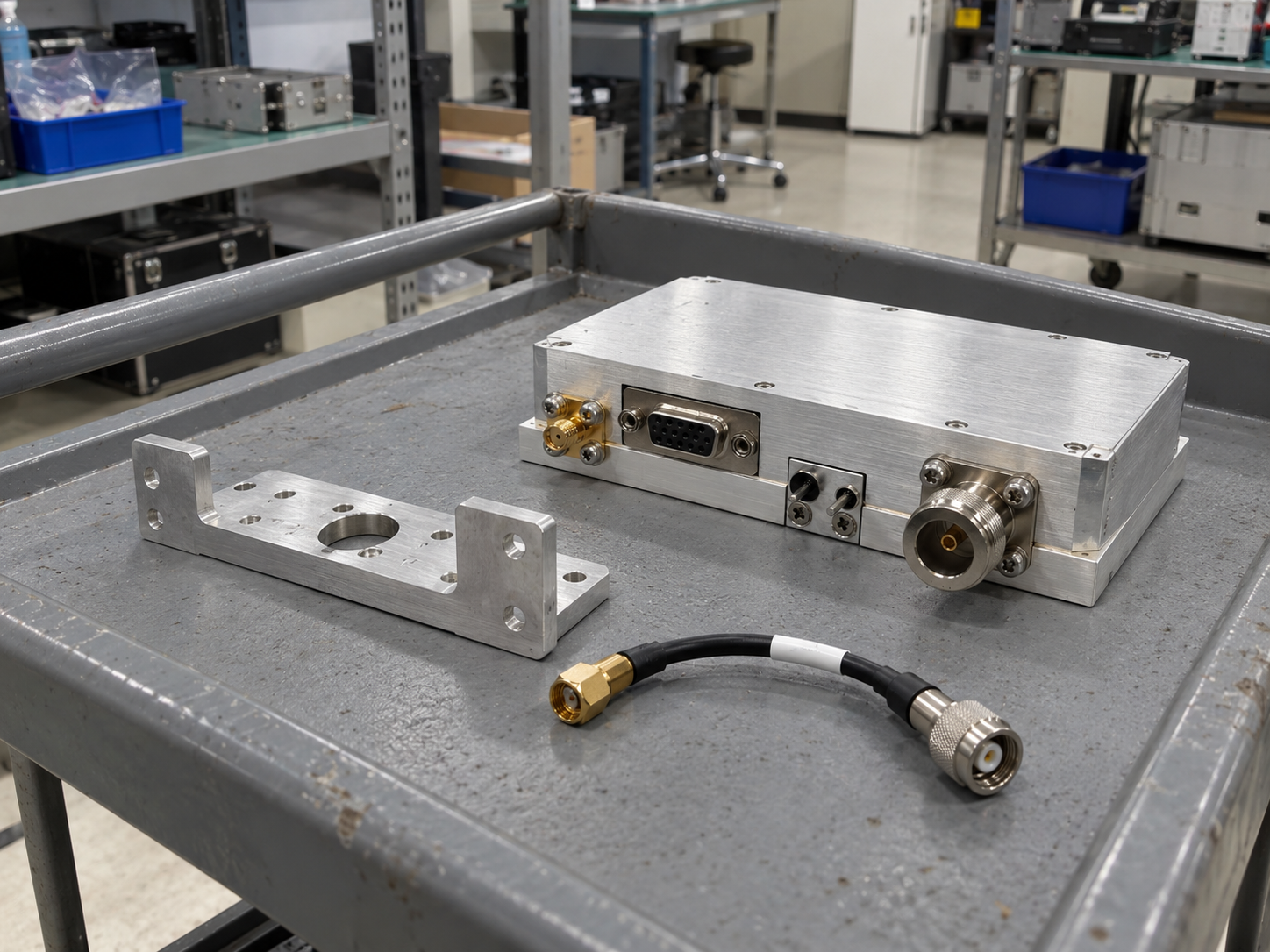
Start with evidence from the installed equipment, including undocumented dependencies discovered during inspection. Keep the replacement proposal in a separate column.
| Difference area | Compare | Closure |
|---|---|---|
| RF behavior | Waveform, output criterion, gain and permitted load | Verify the required operating points |
| Power and cooling | Installed resources versus replacement conditions | Confirm installation compatibility |
| Control and alarms | Old output → existing controller interpretation → proposed SSPA or adapter behavior | Revised drawing plus normal/fault/reset verification accepted by the interface owner |
| Physical/service interface | Envelope, access, mounting and recovery procedure | Approve affected drawings and rollback reference |
Release the bounded retrofit with each surviving legacy dependency and each requalified difference identified. Keep the previous configuration and its approved restoration record available if the replacement is rejected.
Where the difference matrix calls for changes to the amplifier assembly, the custom RF amplifier review path is the relevant product entry. Provide the installed interface drawings and the differences to resolve before treating an SSPA proposal as a replacement.
For the broader technology comparison, see SSPA versus TWTA. The retrofit decision itself should be driven by the difference matrix and its closure evidence.
Send the existing TWTA interfaces and required replacement conditions for an SSPA hardware comparison.
Discuss an SSPA Retrofit