
Authorized RF Review Boundary
Power Plant Counter-UAS RF Security Review is maintained as a compliance-first engineering page. CorelixRF discusses regulated counter-UAS RF topics only for authorized programs with documented scope, lawful operating boundaries and buyer-side approval.
- RF front-end platform review for amplifier, antenna, source and control interfaces.
- Custom RF system review for enclosure, thermal, control and documentation needs.
- RFQ checklist for band, power, duty cycle, load, interface and acceptance inputs.
- Delivery documentation for inspection records, test curves and FAT-style evidence.
- Contact CorelixRF engineering sales with authorized project documents.
This page does not provide public deployment, evasion, interference, power-setting or bypass instructions. If a project cannot document legal authority, the correct next step is compliance review.
Primary Topic Hub and RFQ Path
This primary guide now consolidates related authorized C-UAS and RF safety review topics. Use it for lawful scope definition, RF interface review, documentation and factory RFQ preparation.
- How to Secure Your Facility With Anti Drone Systems? – consolidated reference
For regulated counter-UAS or interference-adjacent topics, CorelixRF keeps the discussion at authorized RF engineering review, documentation, test evidence and procurement boundaries. This page does not provide public deployment, evasion or unlawful interference instructions.
- RFQ checklist – prepare band, power, duty cycle, interface, cooling and acceptance inputs.
- RF configurator – turn project requirements into a first engineering brief.
- Delivery documentation – align test curves, inspection records and FAT-style evidence.
- Case studies – review how CorelixRF frames RF problems for buyer decisions.
- Contact engineering sales – submit the documented scope for review.
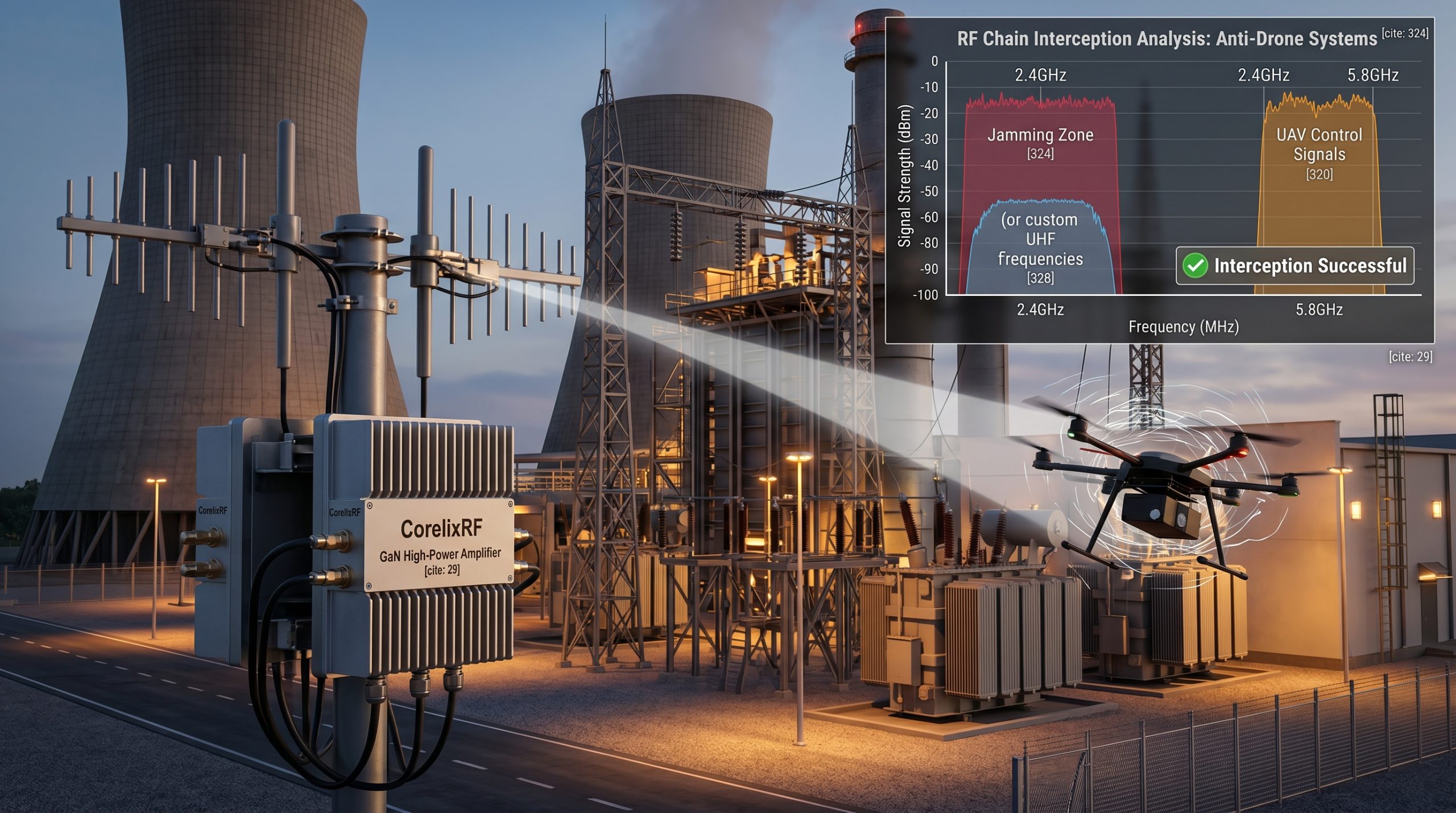
These systems operate as specialized defense mechanisms designed to detect, track, and neutralize unauthorized unmanned aerial vehicles around highly sensitive energy infrastructure. Unidentified aerial vehicles flying near exposed cooling towers create severe security risks for facility managers. A rogue operator dropping a payload or crashing into a transformer causes immediate catastrophic outages and mechanical fires. A single incident halts operations completely. Implementing highly calibrated Anti-Drone Systems mitigates these threats effectively. CorelixRF delivers the precise radio frequency engineering required to secure the airspace and keep your facilities running smoothly.
Why Do Power Plants Need Drone Defense?
Power plants require Anti-Drone Systems to protect sensitive reactors, turbines, and grid connections from airborne attacks and unauthorized surveillance. Unregulated flying objects present an immediate physical risk to exposed industrial equipment. Facility managers face constant pressure to maintain grid stability and prevent unauthorized intrusions.
Energy sites present massive targets for activists and hostile actors seeking to cause disruption. A single interference forces complete grid shutdowns, causing massive financial losses. Security personnel cannot rely solely on ground-level fencing to stop modern aerial intrusions.
Are physical fences enough anymore?
Ground barriers fail to stop airborne threats completely. Here is the deal… drones easily bypass traditional perimeter walls to reach core infrastructure in seconds. Security teams need three-dimensional coverage to detect objects moving at high speeds above the tree line.
Implementing radio frequency monitoring provides the necessary situational awareness for your guard force. Operators receive alerts before the object crosses the property line.
What components make up a solid defense?
A robust strategy requires multiple layers of technology working together seamlessly. Integrating different sensor types creates a complete airspace picture for the control room.
- Radio frequency detection antennas
- High-resolution optical tracking cameras
- Radar movement tracking units
- Signal jamming amplifiers
| Component Type | Primary Function | Detection Range |
| | | |
| RF Sensors | Signal tracking | Up to 10 miles |
| Radar | Movement detection | Up to 5 miles |
| Optical Cameras | Visual confirmation | Up to 2 miles |
Analyzing the component data shows RF sensors provide the earliest possible warning for security personnel.
Key Takeaway: Combining RF sensors with visual confirmation tools creates an impenetrable protective dome over sensitive operations.
What Are the Main Surveillance Risks?
Hostile actors bypass Anti-Drone Systems to gather intelligence on facility layouts, guard rotations, and vulnerable entry points if defenses remain weak. Unauthorized cameras capture high-resolution imagery of proprietary operations and security patrol paths. Competitors or hostile states extract sensitive information without ever touching the ground.
Surveillance flights often precede physical attacks or sabotage attempts. Identifying these reconnaissance missions early allows security teams to alter patrol routes and harden exposed zones. Protecting operational secrecy keeps the entire facility secure from future ground assaults.
How do spies use consumer drones?
Consumer electronics carry powerful cameras capable of zooming in on security badges or computer screens through windows. What is the real story? Off-the-shelf equipment provides military-grade surveillance capabilities to anyone with a few hundred dollars. These devices transmit live video feeds directly to operators hiding miles away.
Facility managers must treat every unauthorized flight as a potential intelligence-gathering operation. Ignoring a seemingly harmless hobbyist flight invites serious breaches later.
Can we trace the data back?
Tracking the radio frequency signal allows security teams to locate the operator’s position instantly. This data provides actionable intelligence for local law enforcement to execute arrests.
- Identify the exact GPS coordinates of the pilot
- Record the flight path history and altitude
- Intercept the video feed transmission
- Classify the drone model and payload capacity
| Data Type | Operational Value | Threat Level |
| | | |
| Pilot Location | Allows immediate arrest | High |
| Flight Path | Reveals targeted areas | Medium |
| Video Feed | Shows what was compromised | Severe |
Reviewing the intercepted data helps security teams patch exposed vulnerabilities before a subsequent attack occurs.
Key Takeaway: Early detection of surveillance flights prevents hostile actors from mapping your security vulnerabilities.
How Do Drones Disrupt Operations?
Physical interference from unauthorized flights forces operators to shut down turbines unless proper Anti-Drone Systems neutralize the threat immediately. Even a small plastic quadcopter sucked into a cooling vent causes millions in mechanical damage. Unplanned outages cascade through the regional power grid, affecting thousands of homes.
Activists intentionally fly consumer models into transformers to trigger short circuits. The resulting electrical fires destroy surrounding infrastructure and endanger onsite personnel. Recovering from these physical strikes takes months of intense repair work.
What happens during a physical strike?
A direct collision with high-voltage equipment creates immediate cascading failures across the entire substation. Ready for the good part? Advanced radio frequency jammers stop these collisions by cutting the control signal mid-air. The aircraft simply hovers or returns home safely.
Relying on physical capture nets often fails when dealing with high-speed targets. RF disruption remains the most reliable method for preventing impact.
How do we calculate the financial impact?
Every minute of downtime costs utility companies staggering amounts of revenue. Repairing custom-built transformers requires long lead times and expensive specialized labor.
- Direct repair costs for damaged components
- Regulatory fines for failing to deliver power
- Overtime pay for emergency repair crews
- Lost revenue during the outage period
| Cost Category | Average Expense | Recovery Time |
| | | |
| Transformer Damage | $500,000+ | 3-6 Months |
| Grid Outage Fines | $100,000/Day | Varies |
| Emergency Repairs | $50,000 | 1-2 Weeks |
Studying these financial metrics proves that investing in preventative RF technology saves massive amounts of money.
Key Takeaway: Deploying high-power RF jammers prevents catastrophic mechanical damage and massive financial losses.
Why Conduct Airspace Vulnerability Assessments?
Security teams cannot deploy effective Anti-Drone Systems without first understanding the specific flight patterns and frequency usage around their site. Conducting an assessment reveals exactly how many unauthorized flights occur weekly. This data justifies the budget required for permanent defensive infrastructure installations.
Many facility managers severely underestimate the amount of local aerial traffic around their property. A simple two-week monitoring period often exposes dozens of hidden incursions. Gathering hard data eliminates guesswork from security planning.
What data does an assessment provide?
Temporary sensor deployments track all local radio frequencies associated with commercial aircraft protocols. This is where it gets interesting… the software logs the exact time, altitude, and duration of every single flight. Managers receive a clear map of local airspace activity.
This mapping highlights the most common intrusion vectors. Security teams use these vectors to position permanent jammers and cameras effectively.
How do we measure the actual threat?
Not every flight poses a direct danger to the reactors. Security software categorizes flights based on their behavior and proximity to sensitive zones.
- Flights crossing directly over critical zones
- Repeated visits from the same MAC address
- Hovering behavior near security checkpoints
- Nighttime flights using stealth configurations
| Flight Behavior | Classification | Action Required |
| | | |
| Direct Crossing | Critical Threat | Immediate Jamming |
| Border Hovering | Surveillance | Track & Record |
| Distant Transit | Low Risk | Monitor |
Classifying the threats based on this table allows operators to automate their defense responses efficiently.
Key Takeaway: Vulnerability assessments provide the exact data needed to design a custom, highly effective RF defense architecture.
How Do RF Sensors Detect Threats Early?
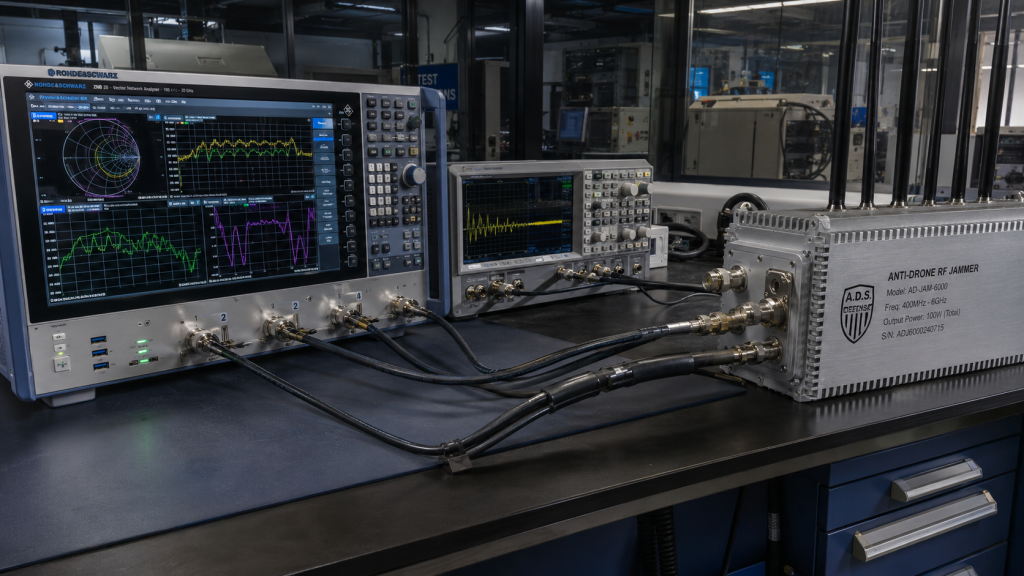
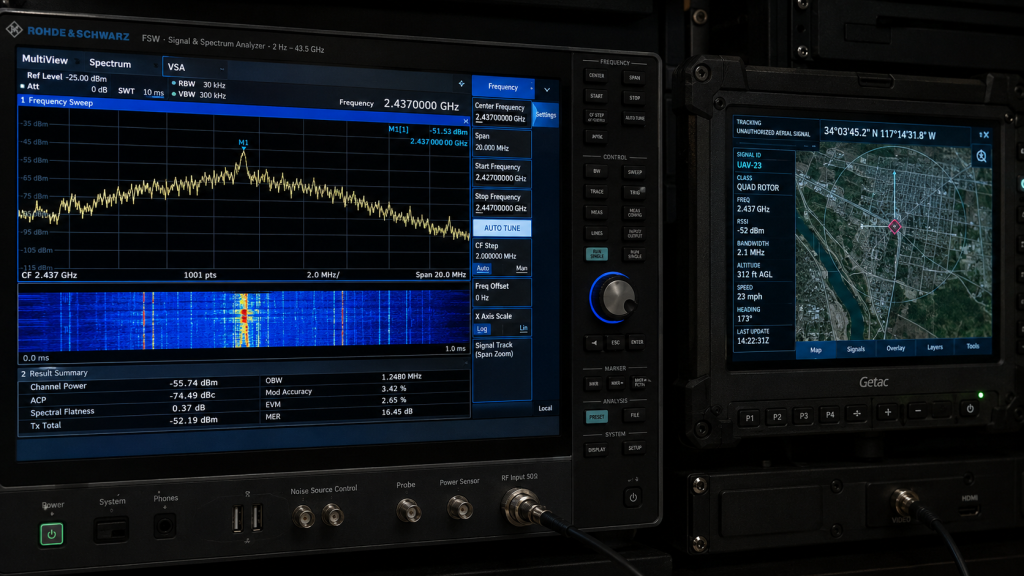
Scanning the electromagnetic spectrum allows Anti-Drone Systems to identify the unique communication signatures connecting the pilot to the aircraft. These sensors detect the transmission milliseconds after the operator turns on the remote control. This provides a massive time advantage over optical detection methods.
High-power RF analyzers decode the telemetry data instantly. Security teams know the exact make and model of the incoming threat before it even takes off. This advanced warning allows for calculated, precise countermeasures.
Why is RF better than radar?
Radar struggles to differentiate between small consumer quadcopters and local bird populations. But here is the kicker… RF sensors read the digital handshake between the controller and the drone, eliminating false positives completely. You only receive alerts for actual mechanical threats.
Relying solely on radar leads to alarm fatigue among security personnel. Clean, accurate RF data keeps guards focused on real incursions.
How do antennas track the signal?
Directional antenna arrays calculate the angle of arrival for the incoming radio waves. Software triangulates these angles to pinpoint the exact location in three-dimensional space.
- Scans the 2.4GHz and 5.8GHz frequency bands
- Analyzes proprietary communication protocols
- Filters out background Wi-Fi interference
- Updates positional data multiple times per second
| Frequency Band | Common Usage | Detection Difficulty |
| | | |
| 2.4 GHz | Older consumer models | Low |
| 5.8 GHz | Modern HD video feeds | Low |
| Custom UHF | Military/Custom builds | High |
Evaluating the frequency bands in this chart dictates which type of high-power amplifier you need to supply for effective jamming.
Key Takeaway: Passive RF monitoring provides the earliest, most accurate warning system by detecting controller signals instantly.
Can Jamming Neutralize Threats Safely?
Activating high-power amplifiers within Anti-Drone Systems severs the command link, forcing the aircraft into an automatic landing or return-to-home protocol. This non-kinetic approach prevents the drone from falling unpredictably onto sensitive reactor equipment. It neutralizes the danger without causing explosive collateral damage.
Using kinetic weapons like shotguns or net guns risks missing the target and striking facility pipes. RF jamming provides a clean, invisible barrier against aerial threats. The electromagnetic interference overwhelms the receiver quietly and efficiently.
What makes a good GaN amplifier?
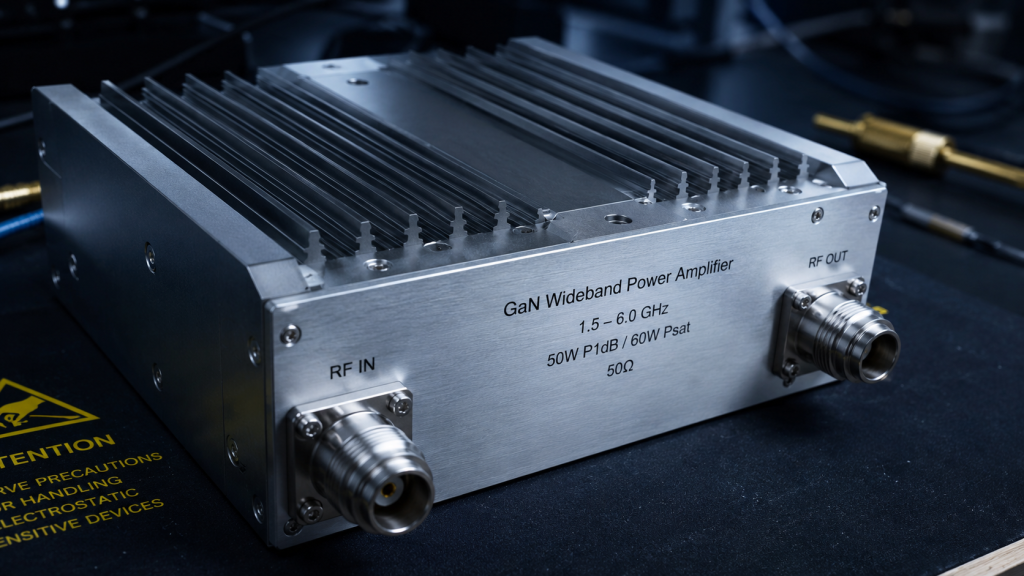
Gallium Nitride technology allows amplifiers to run at extremely high power levels without overheating. What is the real story? Older silicon amplifiers melt down during continuous operation, leaving the facility defenseless. GaN components deliver sustained, reliable interference across wide frequency bands.
CorelixRF designs these specific modules to withstand harsh industrial environments. They maintain consistent output power even in extreme temperatures.
How do we target specific frequencies?
Broadband jammers blast noise across the entire spectrum, which sometimes disrupts the facility’s own communications. Smart jammers only target the exact frequency used by the intruder.
- Isolate the specific control channel
- Generate a matching noise profile
- Amplify the noise using GaN modules
- Direct the interference using high-gain antennas
| Jamming Strategy | Power Required | Collateral Risk |
| | | |
| Broadband Sweep | Very High | High |
| Targeted Channel | Low | Minimal |
| Protocol Spoofing | Very Low | None |
Analyzing these strategies proves that targeted RF disruption offers the safest neutralization method for crowded industrial sites.
Key Takeaway: GaN-powered RF jammers safely force drones away without risking physical damage to the surrounding infrastructure.
Can RF Technology Localize Pilots?
Advanced Anti-Drone Systems track the telemetry signals backward to pinpoint the exact GPS coordinates of the operator on the ground. Catching the pilot stops the attacks permanently. Merely destroying the aircraft allows the hostile actor to simply buy another one and try again tomorrow.
Law enforcement relies heavily on this localization data to make arrests. The system provides a digital trail of evidence showing exactly where the operator stood. This capability turns a defensive posture into an offensive deterrent.
How accurate is the localization?
Modern triangulation algorithms calculate the pilot’s position down to a few meters. Here is the deal… you can dispatch security guards directly to the operator’s vehicle before the flight even finishes. This rapid response catches criminals holding the control pad.
Waiting for police to search a general area gives the perpetrator time to escape. Precise coordinates allow for immediate, targeted interception.
What evidence does the system collect?
The RF sensors record everything transmitted between the controller and the aircraft. This data package becomes extremely valuable during legal prosecution.
- Drone serial number and MAC address
- Controller GPS location history
- Altitude and speed metrics
- Unencrypted video feed intercepts
| Evidence Type | Legal Use | Collection Method |
| | | |
| MAC Address | Links device to owner | RF Intercept |
| GPS History | Proves trespassing | Triangulation |
| Video Feed | Shows intent to spy | Packet Sniffing |
Reviewing the collected evidence in this table gives prosecutors the necessary tools to secure convictions against malicious operators.
Key Takeaway: Pinpointing the pilot’s location allows security to neutralize the human threat behind the machine.
How Does Software Integrate Drone Data?
Centralized command software aggregates data from all connected Anti-Drone Systems to create a single, unified dashboard for security operators. Guarding a massive energy site requires seamless communication between RF sensors, cameras, and jammers. Isolated equipment creates blind spots and delayed reaction times.
The interface automates the response protocols based on predefined rules. When an RF sensor detects a signal, the software automatically slews the PTZ camera to that exact coordinate. This removes human error from the tracking process.
Can we connect this to existing security?
Modern platforms use open APIs to connect directly with legacy video management systems. Ready for the good part? You do not need to replace your entire control room to add aerial defense. The drone alerts pop up on the exact same screens your guards already monitor.
Unifying the ground and air security feeds prevents operator confusion during a crisis. A single pane of glass provides total situational awareness.
What does automated defense look like?
Setting up geofenced zones allows the system to react instantly without waiting for a human to push a button.
- Define critical no-fly zones around reactors
- Assign threat levels to different perimeter rings
- Automate camera tracking upon RF detection
- Trigger jammers automatically if the red zone is breached
| Automation Rule | Trigger Event | System Action |
| | | |
| Zone 1 Breach | RF Detection | Alert Guards |
| Zone 2 Breach | Cross Fence Line | Slew Cameras |
| Zone 3 Breach | Enter Reactor Area | Activate Jammers |
Implementing the tiered automation rules shown above guarantees a rapid, scaled response to any aerial incursion.
Key Takeaway: Integrated software platforms automate threat tracking, reducing human error and drastically improving response times.
What Are the Regulatory Challenges?
Operating high-power Anti-Drone Systems requires strict compliance with federal communication laws regarding radio interference. Energy companies cannot simply blast broadband noise into the sky without authorization. Interfering with commercial aviation or emergency responder communications leads to severe legal penalties.
Facility managers must work closely with regulatory bodies to secure the proper operating licenses. Understanding the legal boundaries dictates what type of equipment you can legally deploy. Compliance guarantees your defense strategy remains sustainable long-term.
Who controls the jamming regulations?
Federal communication authorities heavily restrict the sale and operation of signal blockers. This is where it gets interesting… working with an established RF manufacturer like CorelixRF guarantees your equipment meets all legal technical specifications. We design amplifiers with strict frequency cutoffs to prevent accidental spectrum bleed.
Purchasing uncertified equipment from overseas traders exposes your company to massive liability. Engineering precision is mandatory for legal compliance.
How do we stay within the law?
Deploying passive detection systems requires zero special permits because they do not emit any signals. Active mitigation requires careful planning and coordination.
- Rely heavily on passive RF listening arrays
- Use highly directional antennas for jammers
- Limit jammer output power to the minimum required
- Coordinate with local spectrum management offices
| Mitigation Type | Legal Status | Permit Required |
| | | |
| Passive RF Scanning | Fully Legal | No |
| Optical Tracking | Fully Legal | No |
| Active RF Jamming | Restricted | Yes (Varies) |
Consulting this legal framework helps utility managers plan a defense architecture that stops threats without breaking federal laws.
Key Takeaway: Partnering with a professional RF engineering firm guarantees your active countermeasures comply with strict spectrum regulations.
How to Choose the Right Defense System?
Selecting effective Anti-Drone Systems demands a thorough understanding of your specific environmental interference and operational goals. A site located near a busy urban center requires different RF filtering than a remote desert facility. Off-the-shelf commercial packages rarely provide the exact frequency coverage needed for industrial sites.
You need a manufacturing partner capable of customizing the RF chain from the ground up. Relying on basic traders means you get generic equipment that fails under extreme stress. Industrial facilities require military-grade engineering.
Why does the RF chain matter?
Every component from the signal generator to the amplifier and antenna must match perfectly. What is the real story? Mismatched impedances cause power reflection, which burns out the amplifier during a critical jamming event. True defense requires a holistically designed RF ecosystem.
CorelixRF manufactures every module in-house, guaranteeing seamless integration and maximum power output.
What questions should you ask suppliers?
Vetting your technology provider prevents you from buying expensive paperweights. Demand real engineering data from your supplier.
- Do you manufacture your own GaN amplifiers?
- Can you provide continuous coverage from 30MHz to 6GHz?
- What is your power redundancy rating?
- Do you offer custom interface protocols?
| Supplier Trait | Trader/Reseller | True Manufacturer (CorelixRF) |
| | | |
| Customization | None | Full RF Chain |
| Quality Control | Basic | 46-Step Military Grade |
| Thermal Mgmt | Standard fans | Aluminum integrated heat-sinks |
Evaluating suppliers based on this matrix proves that dealing directly with a high-power RF manufacturer yields superior security results.
Key Takeaway: True airspace security requires custom-engineered RF platforms built by a dedicated manufacturing facility.
Securing your power plant from aerial threats requires proactive planning and industrial-grade RF engineering. Combining passive detection with targeted GaN-powered jamming creates an impenetrable shield around your critical infrastructure. Our team engineers the exact high-frequency modules required to keep your airspace secure and your operations running smoothly. Connect with our engineering team to contact us today and discuss your custom system architecture. CorelixRF remains dedicated to Engineering Truth, delivering realistic, verifiable RF power solutions for the world’s most demanding security environments.
FAQ
Q1: Can I integrate new RF sensors with my old security cameras?
Yes, you absolutely can. Modern detection software uses open APIs to push coordinates directly to legacy PTZ cameras, allowing your old hardware to automatically track aerial threats.
Q2: What is the best way to stop a drone without crashing it?
Targeted radio frequency jamming provides the safest mitigation. Overwhelming the control signal forces the aircraft to initiate its built-in safety protocols, usually resulting in a slow, controlled descent.
Q3: How do I know if drones are flying over my facility at night?
Passive RF scanners operate continuously regardless of lighting conditions. These antennas detect the radio telemetry signals 24/7, logging every nighttime incursion for your review.
Q4: Can I track the person flying the drone?
Yes, advanced triangulation algorithms can pinpoint the operator. The system analyzes the angle of arrival of the controller’s radio signal, providing exact GPS coordinates for law enforcement.
Q5: What is the best frequency band to jam?
It depends entirely on the specific threat. While consumer models use 2.4GHz and 5.8GHz, custom threats require wideband GaN amplifiers capable of sweeping continuously from 30MHz to 6GHz to ensure total coverage.
Authorized RF engineering and compliance review
For regulated RF systems, this page should be used as an engineering and compliance review path, not as a public deployment checklist. CorelixRF starts with authorization status, operating region, frequency plan, output limit, antenna interface, safety controls, thermal limits and acceptance documents.
- RFQ checklist – send the data buyers usually forget, including band, power, duty cycle, interface and test standard
- delivery documentation – check what documents can support incoming inspection, FAT review and long-term maintenance
- quality and certification review – review the quality and compliance evidence before the project moves into procurement
- RF front-end platform – compare the RF chain as a system instead of selecting one isolated module
- RF configurator – turn frequency, power, thermal and interface requirements into a first configuration brief
- case studies – review similar engineering paths before sending an RFQ
- engineering contact – send the application notes, block diagram or target specification to engineering sales
This keeps the discussion inside lawful, authorized RF programs while still giving procurement teams a clear way to request amplifier, antenna, SDR source, documentation and factory review.
Critical Infrastructure RF Review Path
For authorized critical-infrastructure RF security reviews, connect the site constraints to RF front-end system planning, high-reliability amplifier options and antenna/load interface checks. Submit operating bands, output power, cooling, redundancy, enclosure and compliance evidence needs through the RF inquiry form.