
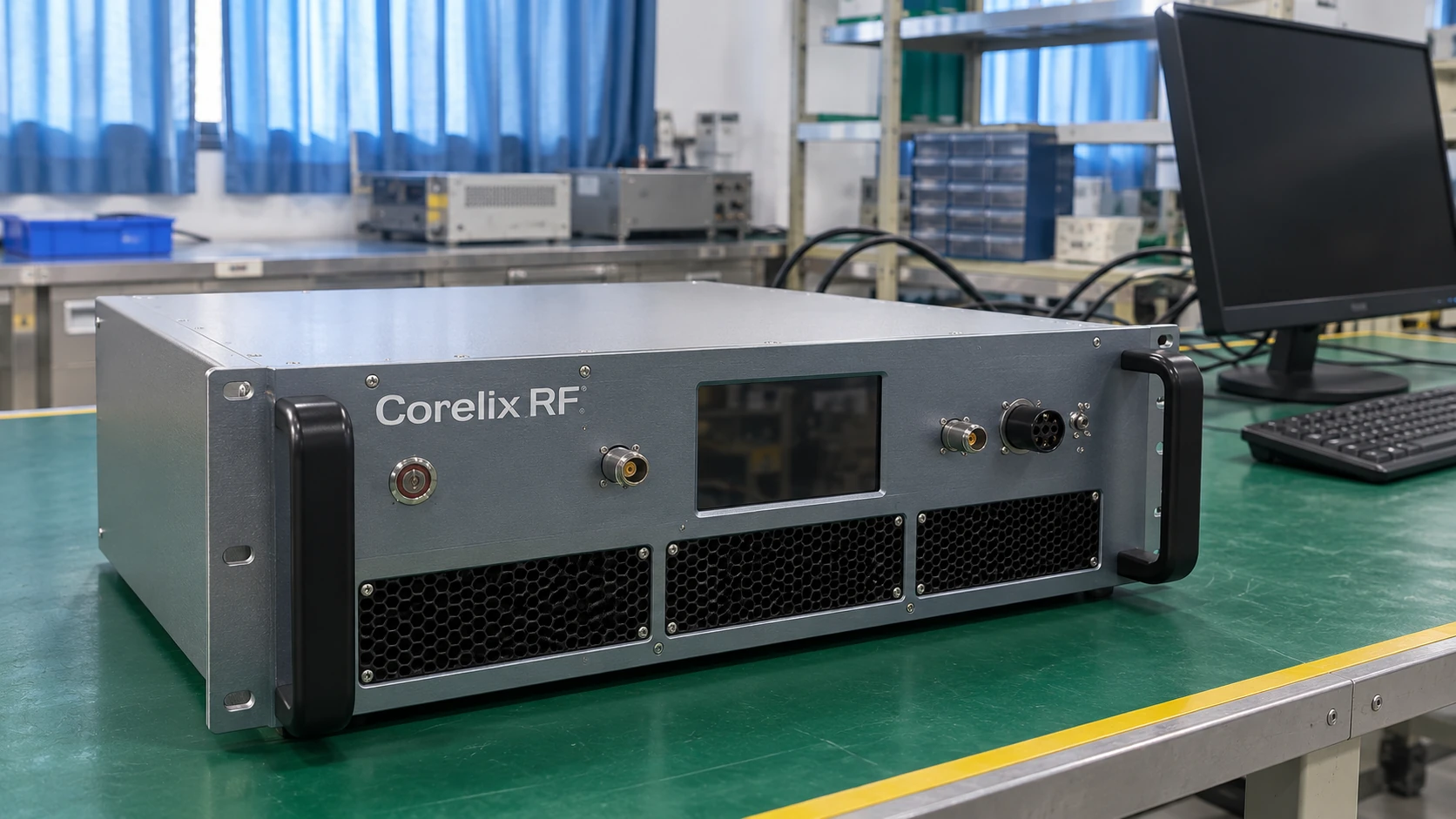
A test rack is not ready to resume just because its LAN connection has returned. For RF amplifier LAN control, establish what the host requested, which device state is current, and what evidence confirms the RF condition you need to accept.
Imagine your team is handing over an automated RF test rack. A state-change request times out; the network reconnects, but the dashboard still shows the last received status. The immediate question is whether that information is enough to resume the test. The same question belongs in the purchase specification: what should happen when communication is lost, and how will the delivered configuration demonstrate it?
1. Start with the Handover Decision
Before reviewing a successful connection, agree what you are accepting. Is the requirement host communication, the device’s reported state, or an RF condition at a defined reference plane? Give each requirement its own result so that a working interface is not mistaken for a completed RF acceptance check.
A command acknowledgement confirms only what the actual protocol defines. Likewise, a reported standby state has the meaning assigned by the supplied device documentation. Neither should be silently substituted for a separate RF acceptance requirement.
Choose evidence for the requirement in front of you. A software communication check does not automatically call for another power measurement; a separate RF requirement needs the method and evidence agreed for that requirement.
| Check | Keep with the result |
|---|---|
| Communication | Target device and configuration, connection event, request and available response |
| Reported state | Status meaning and a way to establish that the information is current for this event |
| RF condition | Agreed observation method, reference plane, applicable criterion and relevant source/inhibit states |
2. Confirm the Delivered Control Configuration
An Ethernet or RS485 interface entry is a starting point for RF amplifier remote control, not a complete interface agreement. Confirm which control and monitoring functions belong to the ordered configuration, along with the applicable protocol and firmware information.
Keep settings, commands, status meanings and fitted monitoring options tied to that configuration. If local and remote control modes are relevant, establish how they affect the project’s permitted operation. Do not assume an interface name defines the command set, available permissions or recovery policy.
Use an OEM configuration handoff to keep the selected hardware and interface documents aligned. The aim is a configuration another engineer can identify and review, rather than a generic statement that the amplifier ‘has LAN’.
3. Keep an Uncertain Command Outcome Uncertain
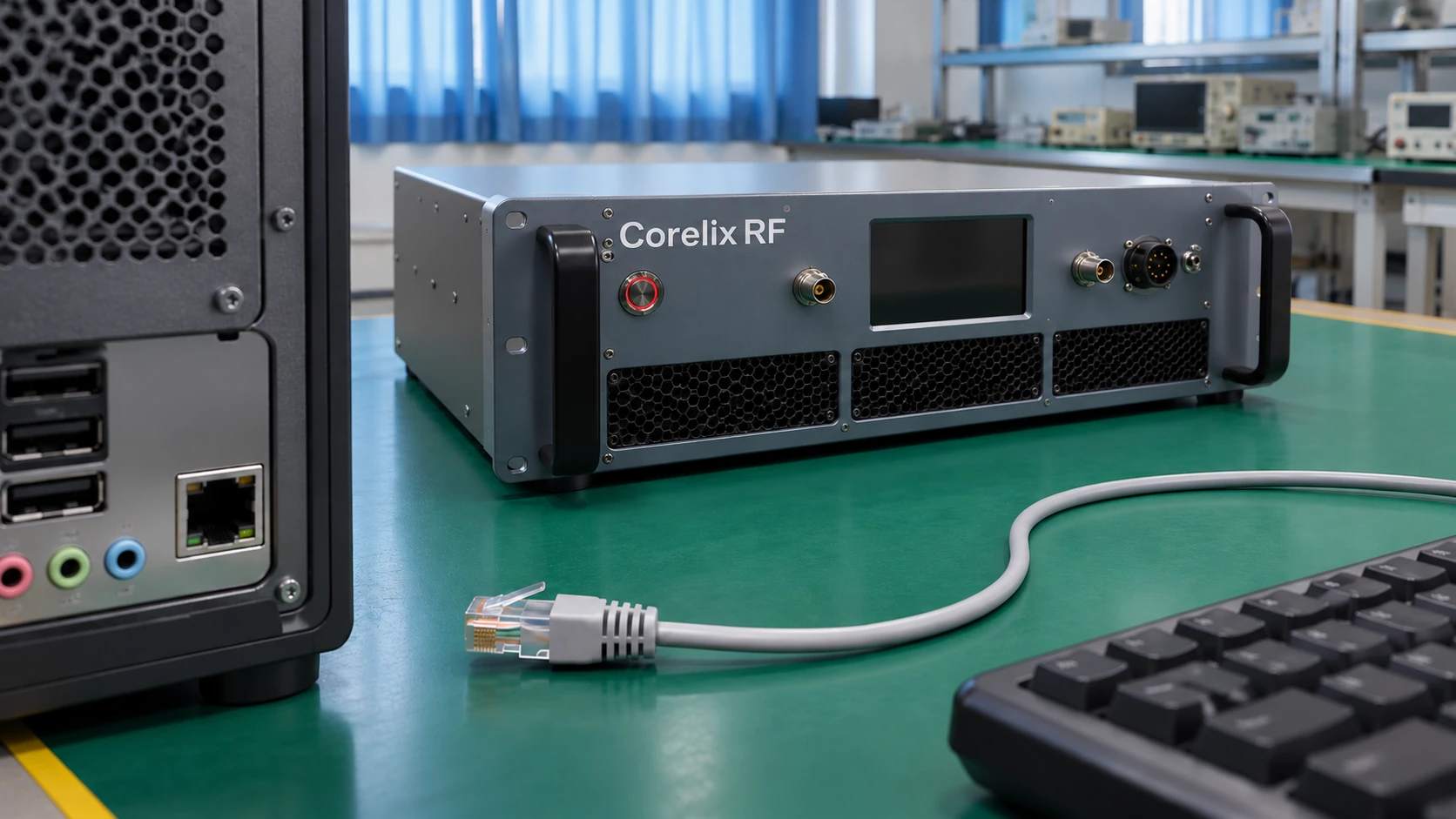
If a state-change request times out, the missing reply alone does not tell you whether the request was applied. Preserve that uncertainty. Review the actual command semantics, available state evidence and project recovery procedure before deciding whether a retry is appropriate.
This is not a rule that all retries are forbidden. It is a reason to avoid blindly replaying an operation because the host did not receive a reply. Do not assume every command has the same repeat behavior or that a request identifier is available.
Communication loss also cannot, on its own, establish that RF is off, still on or restored. Those outcomes depend on the identified configuration and its documented and verified behavior. A stale status display is not new evidence of the current condition.
Keep the source and any external inhibit path in the event record. If the source was already inhibited, a low RF observation may support a system output condition, but it does not by itself prove that the PA independently shut down after losing LAN. Use the agreed observation method and reference plane; an undetected signal is not automatically absolute zero power.
Where the requirement is an independent hardware response, review the RF amplifier hardware interlocks separately. A communication acceptance record does not replace an interlock design review.
4. Work Through the Disconnect-and-Reconnect Event
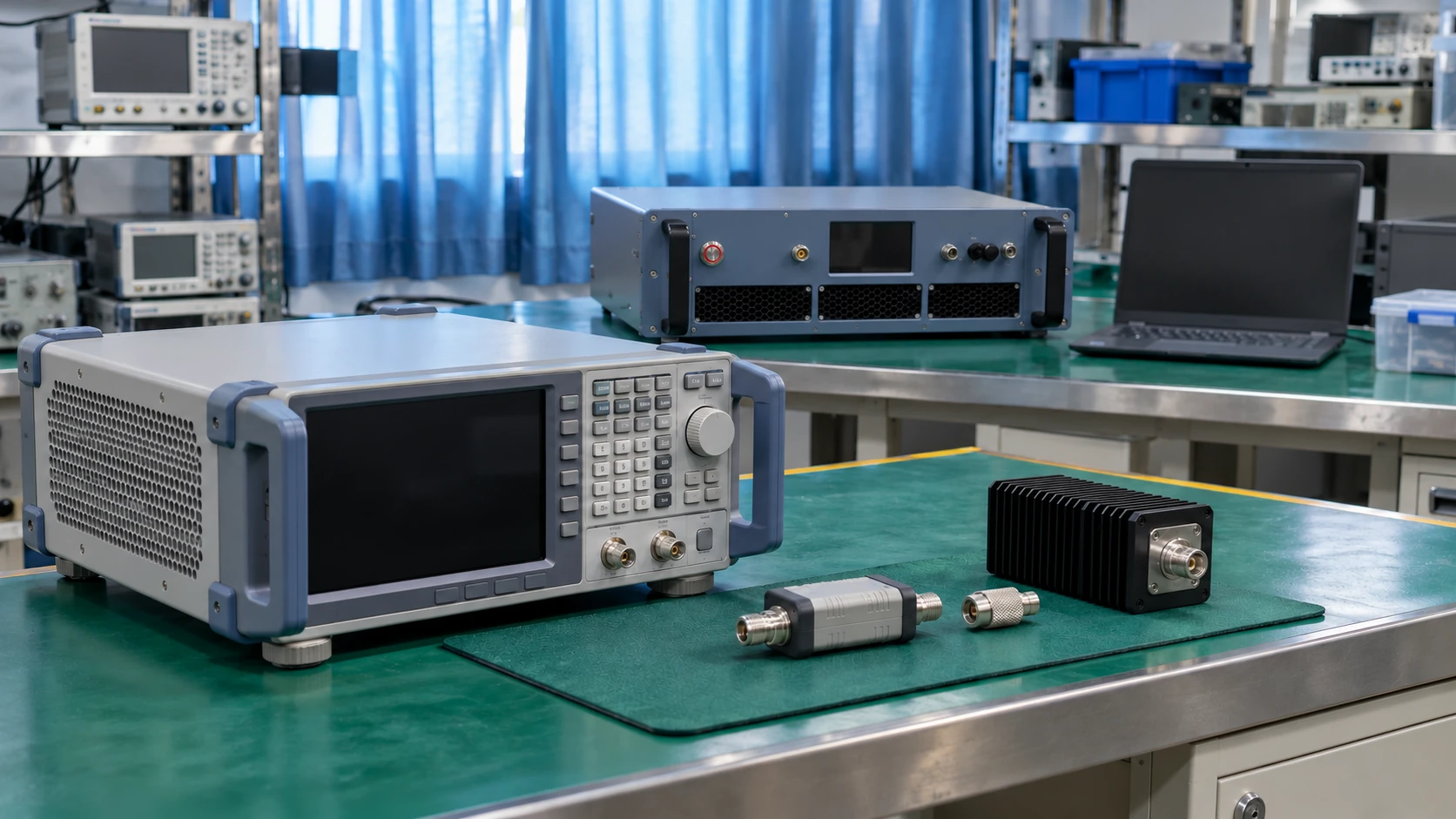
The following Illustrative Example is a hypothetical engineering record, not a CorelixRF measurement or a customer acceptance result. It assumes an authorized conducted test arrangement, suitable load and observation equipment, and a previously agreed RF criterion and reference plane. It introduces no measured values or response times.
Keep the request, current status and RF observation associated with the same event. If their relationship or validity cannot be established, leave the corresponding acceptance item incomplete. A new network session alone does not provide permission to restore operation; use the actual device and project recovery conditions.
| Event | Available evidence | What can be concluded |
|---|---|---|
| A. State-change request times out | Request sent; acknowledgement missing; only an older status is available; no corresponding RF observation | The command outcome and current RF condition remain unconfirmed. Do not interpret the timeout as proof that the request was not applied. |
| B. LAN session reconnects | Connection established; target identity and fresh device state have not yet been confirmed | Communication has returned. The control state and RF acceptance requirement are not yet confirmed. |
| C. New device status is received | Target identity and session have been checked; the new reply reports standby; no valid corresponding RF observation | Record the reported state. Do not close a separate actual-RF acceptance item on this row alone. |
| D. Valid corresponding RF evidence is obtained | Assume the agreed method supports the specified RF condition at the declared plane; source and external inhibit states are recorded | Only that condition for that event can be closed. It is not proof of internal protection behavior, complete FAT or certification. If the source was inhibited, PA-independent shutdown is still not established. |
Optional: keep an eight-field acceptance record
| Field | Record |
|---|---|
| Configuration | Delivered configuration, unit and fitted options; applicable protocol and firmware |
| Acceptance target | Communication, reported-state or RF requirement; reference plane, conditions and agreed criterion |
| Request and response | Actual request, acknowledgement or timeout; correlation information only where the protocol provides it |
| Communication event | Disconnect/reconnect and the available time or session record |
| Status validity | Device identity, meaning and a defensible way to establish current information |
| RF observation | Method, plane, result and limitations; missing evidence stays unknown |
| External paths | Source and external inhibit states that can affect RF output |
| Disposition | Confirmed, incomplete or inconsistent with the agreed requirement; open item, owner and recovery permission |
5. Bring the Rack Requirement to the Product Discussion
If you are evaluating an AC-powered, 19-inch 3U rack configuration in the 6–18 GHz range, the CRF-PA-6000M18000M-50W is a specific configuration to review. The model identifies a starting point for discussion; suitability still depends on the project requirement and the ordered configuration. Use the RF integration support route to define the hardware interfaces, supplied scope and records needed for the proposed installation.
The rack documentation lists RS485/LAN, with LAN monitoring as an option to confirm. Use those entries to ask concrete purchasing questions: which functions are included, which monitoring options are fitted, and which protocol applies to the unit you will receive?
CorelixRF manufactures RF power amplifiers in its own factory and can discuss project-specific configuration and customization. Bring the required control behavior into that discussion before treating a quotation as an agreed interface. Match what the rack needs with the applicable hardware, options and interface scope.
A LAN entry alone does not establish a watchdog, a communication timeout, autonomous RF shutdown or a reconnection policy. Customization is not a promise that every protocol, software function or recovery policy can be supplied, and it does not imply a complete host/network system. The 50W model designation is not a full-band P1dB or linear-output guarantee.
| Project question | Verified starting point | What to establish for your order |
|---|---|---|
| Does this fit the proposed rack configuration? | 6–18 GHz AC-powered, 19-inch 3U rack identity | Review the actual operating requirement against the delivered configuration. |
| Can the host use the required control functions? | RS485/LAN listed in the rack documentation | Confirm the supplied functions and matching interface/protocol documents. |
| Which information can the host monitor? | LAN monitoring identified as an option | Confirm the ordered monitoring functions, field meanings and status validity. |
| What should happen after communication is lost and restored? | The interface name does not establish this behavior | State the required outcome, responsible control path and the evidence that will confirm it. |
6. Send the Requirement You Have Today
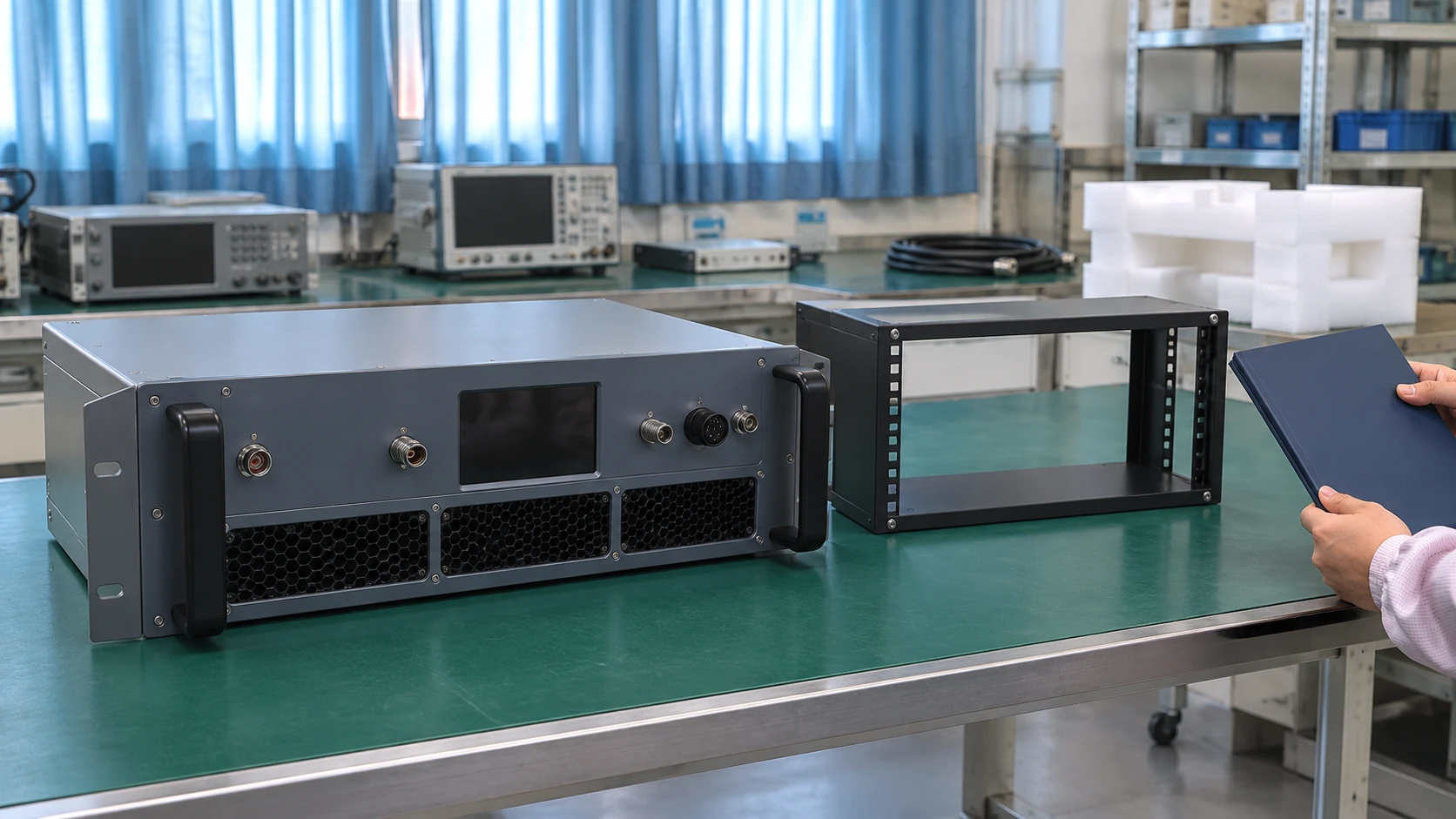
Start the configuration discussion with three inputs: the operating band and waveform or mode; the host/control interface already in use; and the behavior you want when communication is lost and restored.
A short message is enough to state that requirement: “Band/mode: __. Host/interface: __. Required disconnect/reconnect behavior: __.” If one item is undecided, identify it as open rather than filling in an assumed amplifier feature.
You do not need to complete the eight-field acceptance record before making contact. Add the applicable protocol documents, an available event log and the proposed RF criterion as the discussion becomes more specific.
Send your RF control requirement to CorelixRF. Keep unconfirmed behavior in the requirement list until the selected configuration and its evidence have been reviewed.