
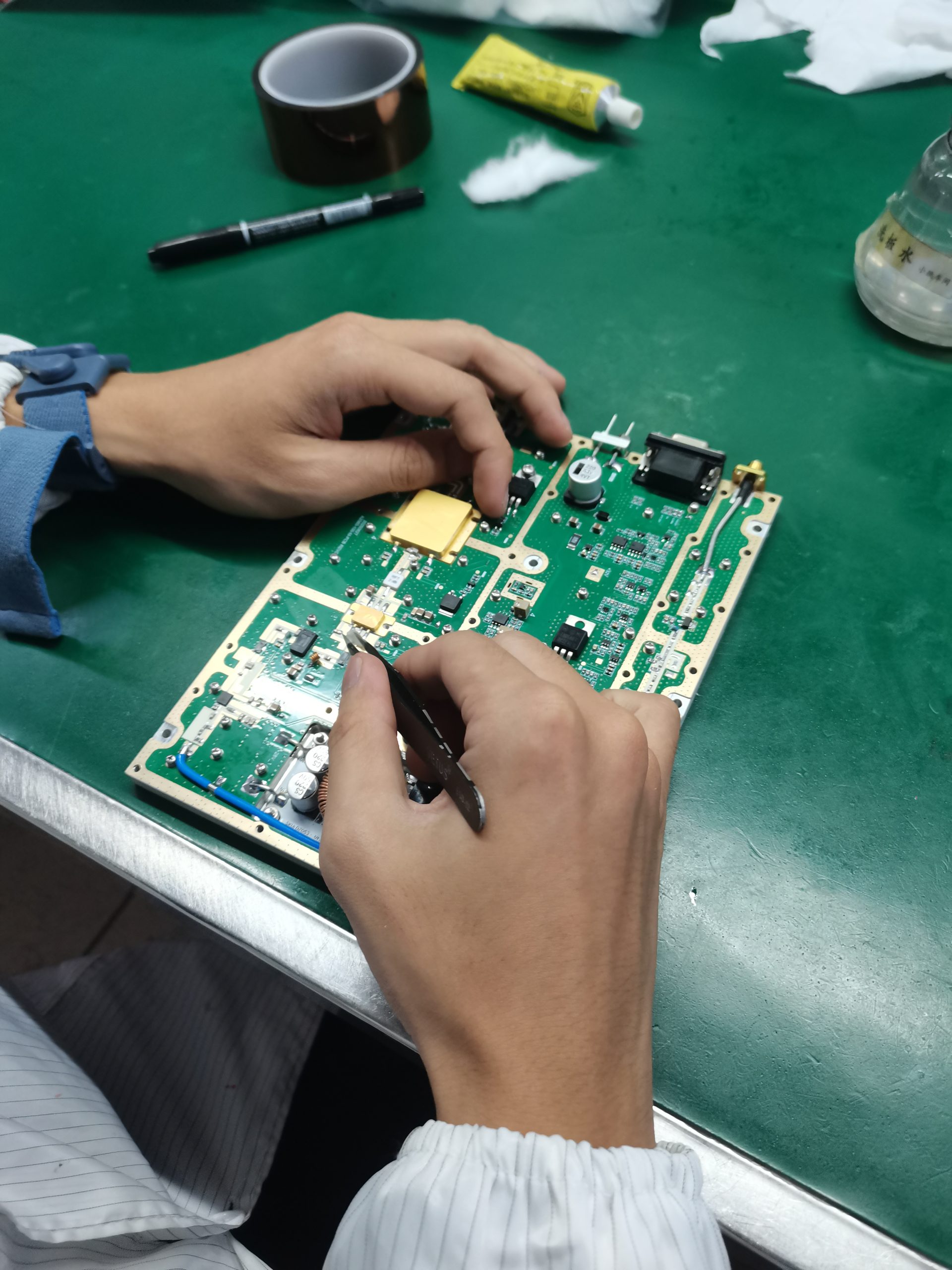
GaN amplifier applications should be evaluated from the required operating conditions and the evidence for the candidate configuration. Compare the selected module’s documented behavior under the project’s waveform, supply, load, and cooling conditions.
Translate the application into measurable requirements
State frequency coverage, occupied bandwidth, required output definition, duty, permitted distortion, and the receiving or test criterion. Distinguish an amplifier requirement from a system-level outcome. If the outcome depends on antennas, propagation, processing, or another subsystem, retain those dependencies explicitly.
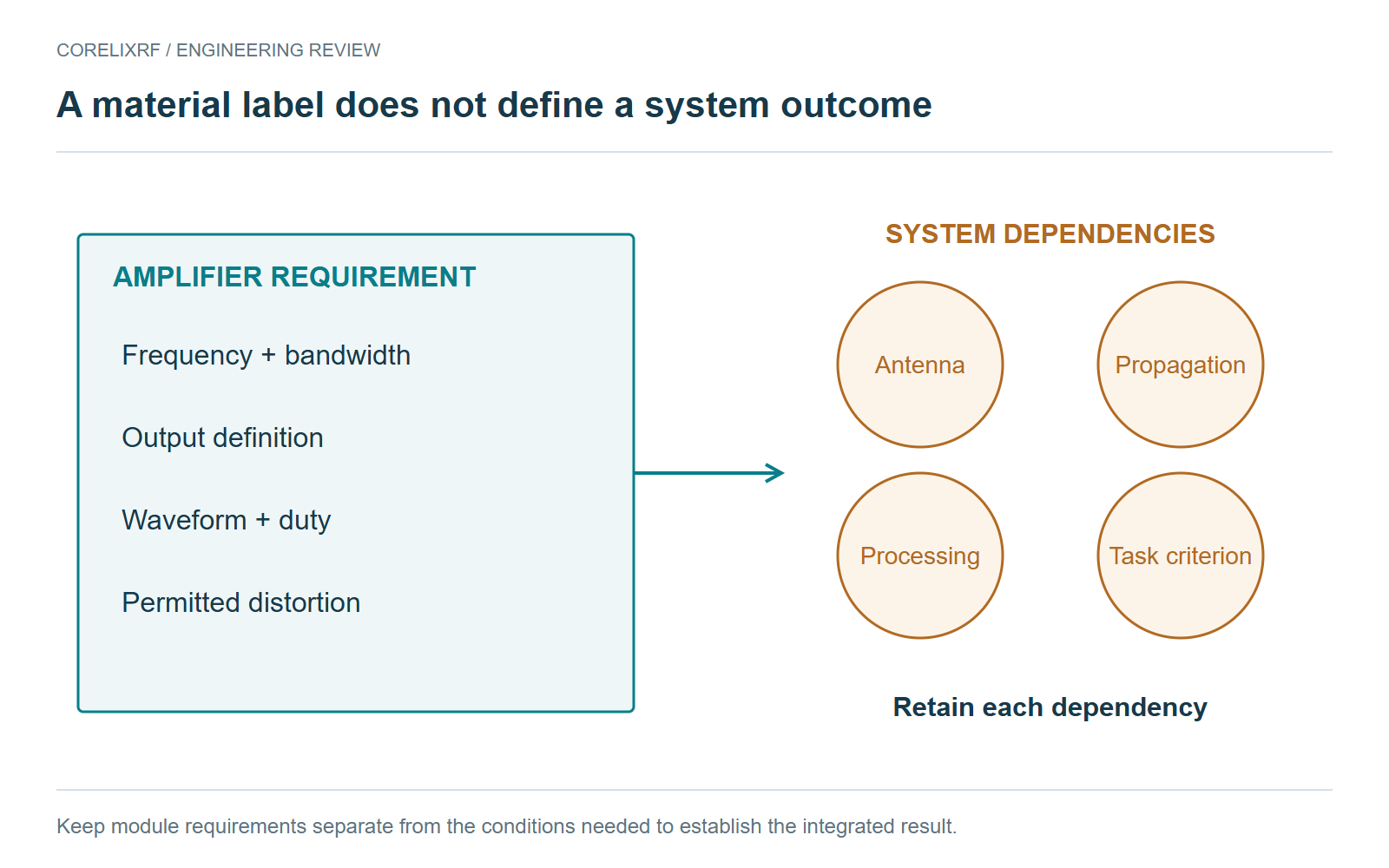
GaN identifies a device technology. A finished module still needs documented frequency, linear output, cooling and control behavior. If material choice is the question, use the separate GaN versus GaAs or GaN versus LDMOS comparison rather than inferring an application advantage from the label.
Compare like operating points
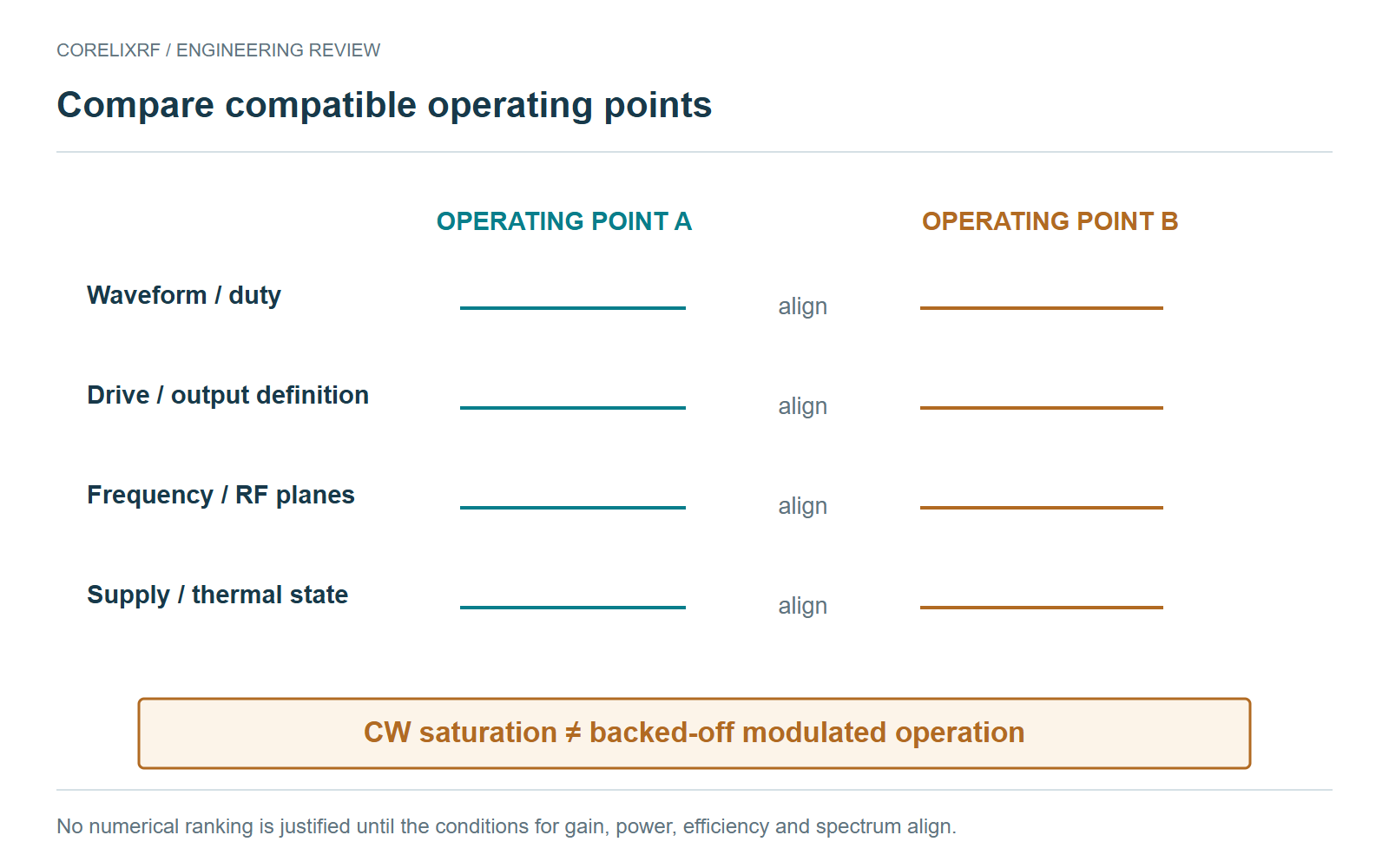
For a required modulated output, first fix waveform, bandwidth and output-quality criterion. Then compare the usable operating point, with its defined back-off reference, rather than substituting Psat. Power amplifier efficiency explains that operating-point tradeoff; the efficiency comparison guide aligns RF/DC and temperature conditions across candidates.
Verify the integration limits
Confirm supply quality, input limits, control and load conditions for the selected revision. Follow the GaN amplifier thermal path from the supported device or case boundary through its interface to the external cooler; the required boundary determines which installation evidence is missing.
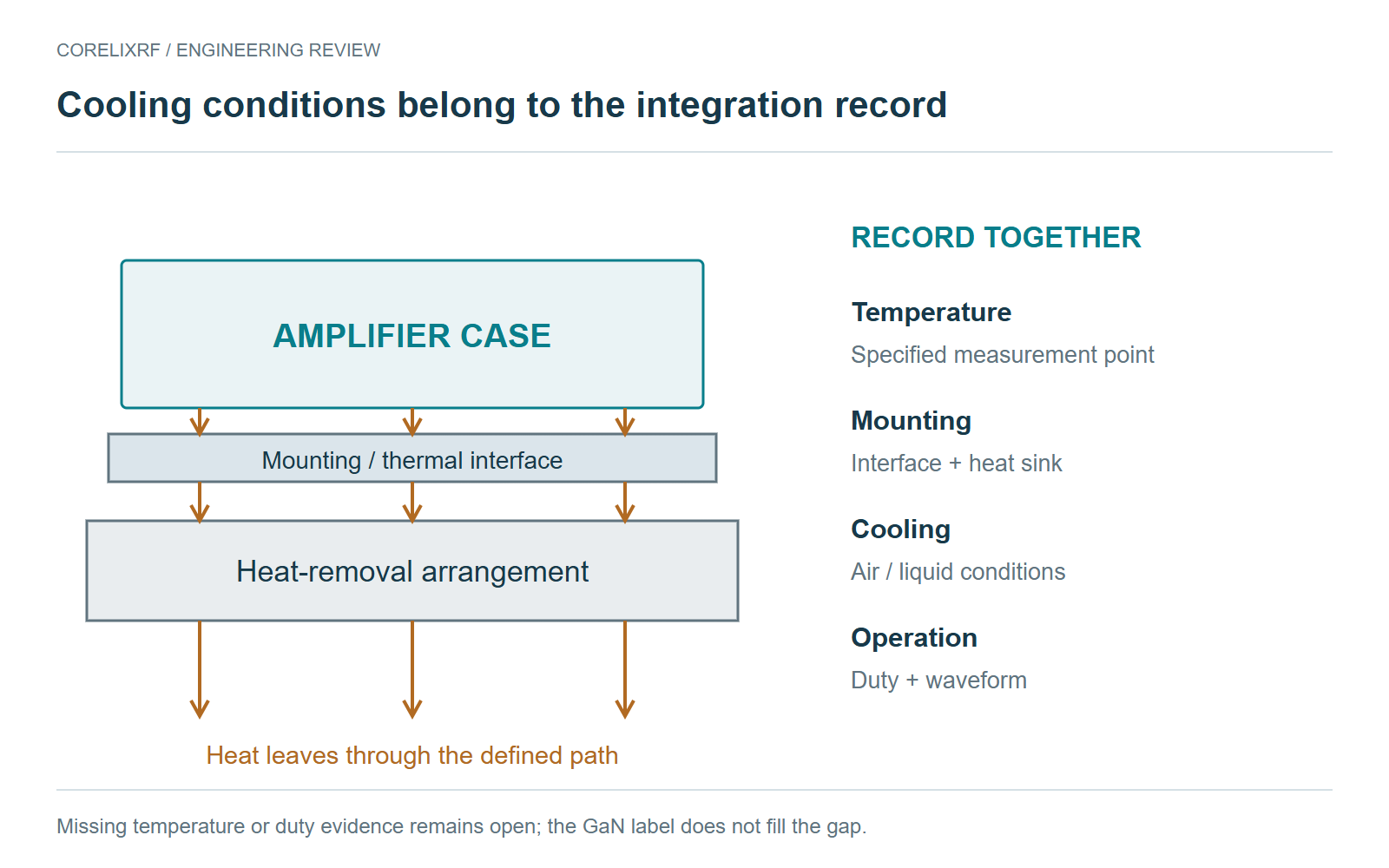
A candidate with only a saturation result remains unproven for the specified modulated quality criterion, even if its headline output exceeds the request. A candidate with matching RF results but cooling evidence for a different mounting boundary needs thermal verification of the proposed installation. Keep those as distinct decisions: output-quality suitability and thermal suitability require different measurements.
Keep the material, module and system claims separate
Use the evidence level that corresponds to the requested decision.
| Claim level | Needed evidence | Limit |
|---|---|---|
| Device technology | Identified device or design documentation | Does not establish completed-module efficiency |
| Amplifier operating point | RF/DC measurements, waveform and thermal conditions | Result applies to that operating point |
| Installed performance | Feed, load, cooling and control compatibility | Integration evidence remains necessary |
| System outcome | System configuration, task criterion and test result | A component rating alone is insufficient |
End the review with the candidate revision, supported operating point, unresolved installation dependencies and the test needed to close each. Test the integrated system against its own requirement when the requested outcome extends beyond the amplifier boundary.
The RF power amplifier product families provide a starting point for a CorelixRF hardware shortlist. Confirm the device technology and waveform-specific evidence for the exact candidate; the category itself does not establish a GaN efficiency advantage.
Specify the required band, waveform, power level, and evidence needed to evaluate a GaN amplifier candidate.
Discuss GaN Amplifier Requirements