
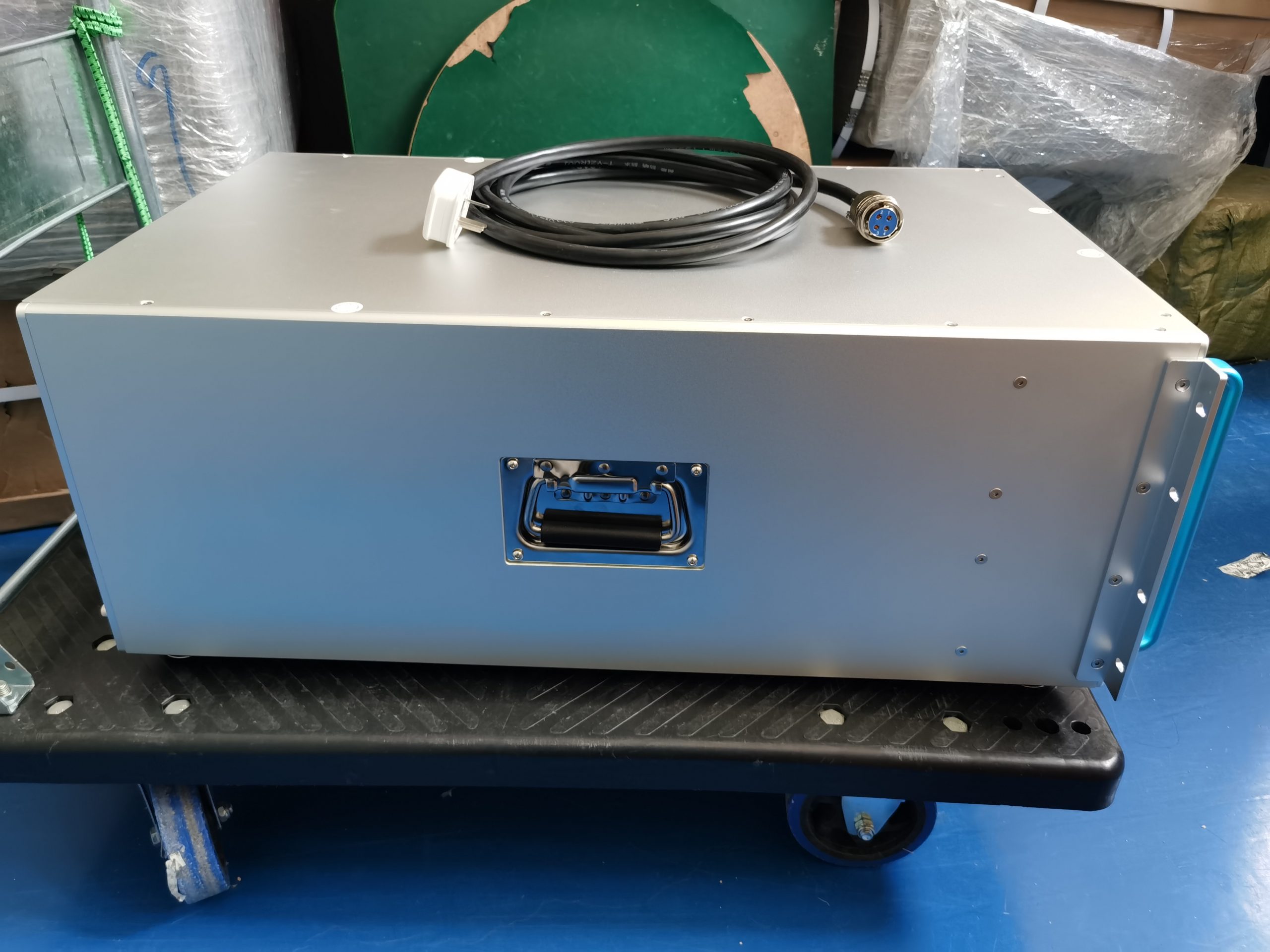
A counter-UAS design review should connect requirements, interface readiness, verification evidence, and the people authorized to sign off each boundary. Its output is a controlled decision record, including conditions and unresolved risks. It is not a declaration that every component or system outcome has already been verified. For the component portion of the requirement, review the RF front-end platform scope and keep its hardware responsibilities separate from complete-system outcomes.
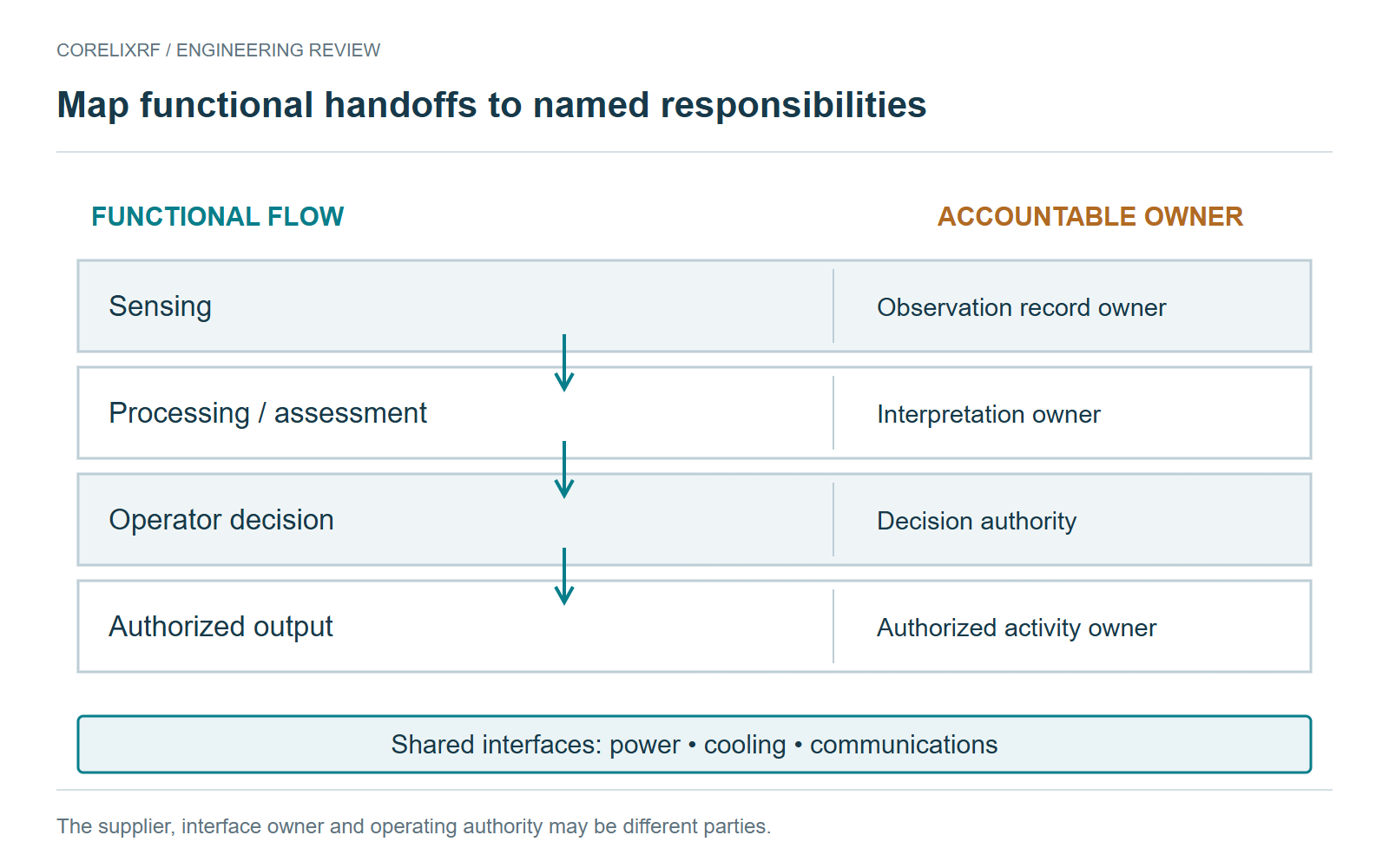
Draw functional and responsibility boundaries
Assign sensing, processing, decisions, outputs and shared-service boundaries to owners. If those functions are not yet allocated, return to system architecture analysis before signoff. Supplying an item and approving its use or result are separate responsibilities.
Trace requirements through the design
Start with testable RF system requirements, then connect each to a design element, interface revision and verification method. Flag missing third-party dependencies rather than allowing an approved drawing to stand in for their verification.
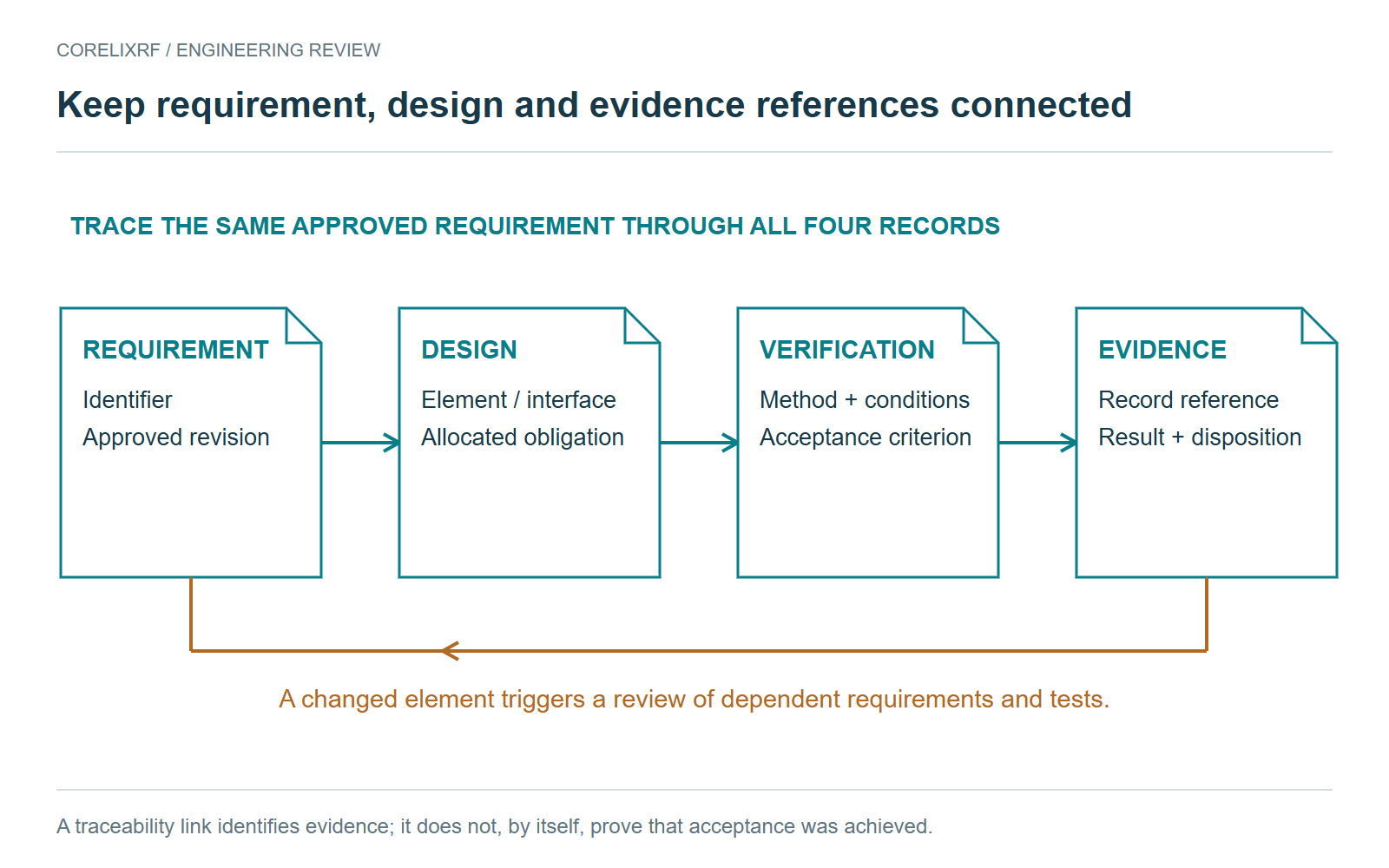
An anonymous trace can read R-01, required cooling condition → I-01, cooling interface revision → V-01, installation verification → acceptance by the thermal-interface owner. If I-01 is unresolved, the signoff must identify which work can proceed and which powered work depends on V-01.
Review failure and change paths
Ask how loss of data, power, timing, communication, or a subsystem is represented and handled within the approved design. Record which functions remain available and which require an operator or engineering decision. Avoid promising automatic recovery without configuration-specific evidence.
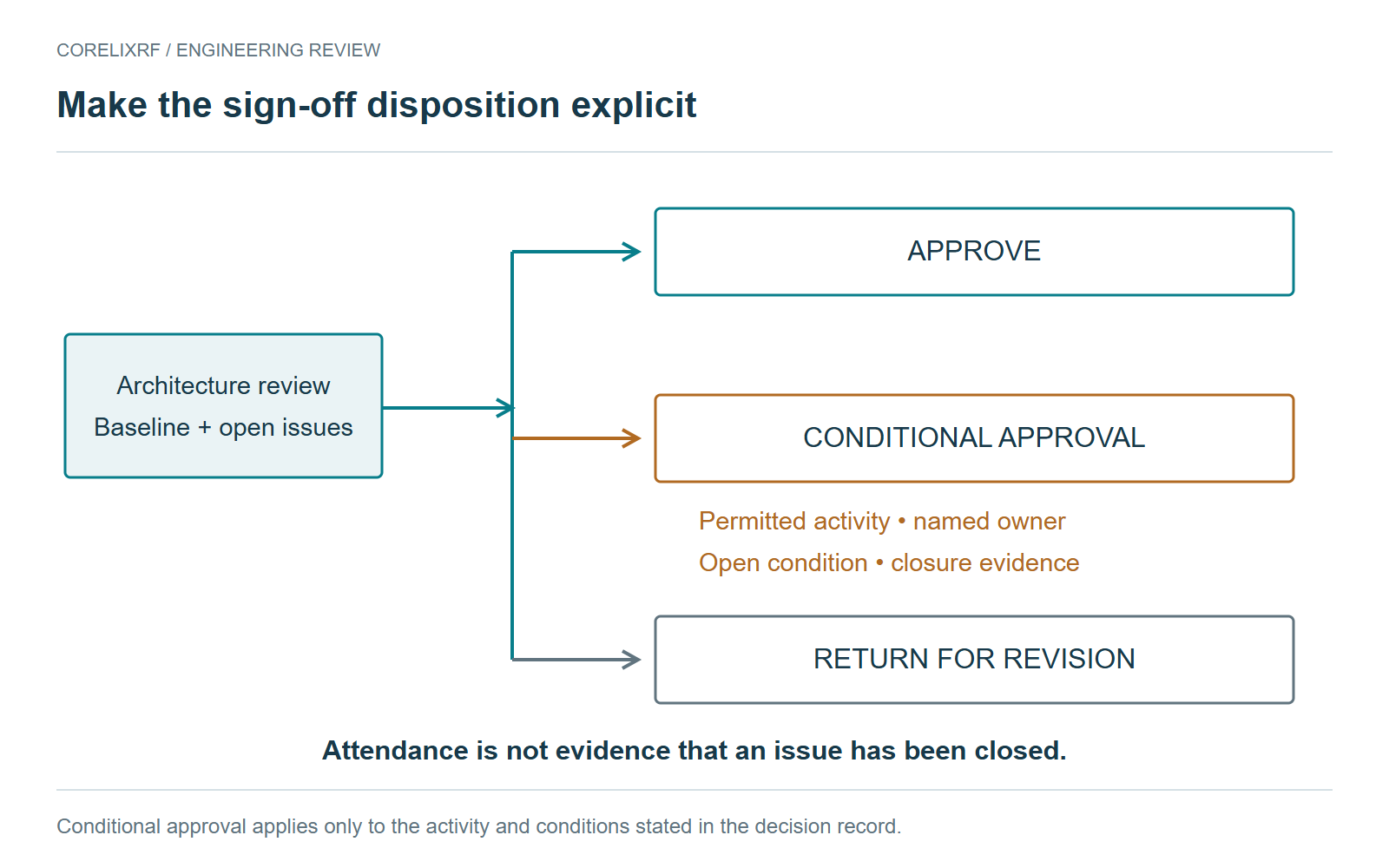
Record the architecture sign-off decision
Use signoff for a named baseline after functions and interfaces are defined. Initial RF project review establishes scope and responsibility earlier; it is not approval of this particular architecture.
| Review item | Evidence presented | Decision record |
|---|---|---|
| Baseline | Architecture drawing, revisions and allocated functions | Name the exact baseline reviewed |
| Interface readiness | Cooling I-01 open; V-01 installation evidence outstanding | Document preparation permitted; powered integration blocked until the owner accepts V-01 for the identified revision |
| System risks | Unresolved assumptions and impact evidence | Accept, mitigate or return each item |
| Approval | Required reviewer roles and decision authority | Approve, approve with conditions, or return |
Record the permitted activity, blocked activity and closing evidence with each conditional decision. Later changes use RF change control to reopen only the affected requirements and tests; attendance at the review does not close a condition.
The review package should contain the diagram, requirement trace, interface ownership, risk list, and decision conditions. The next stage can then prepare the integration sequence and the data exchange contract. A later architecture change should reopen the requirements and tests that it affects.
Share the RF equipment diagram, interface owners, and open supplier questions from your architecture review.
Discuss RF Architecture Interfaces