
A counter-UAS system architecture should show how observations, processing, decisions, and subsystem interfaces connect without assigning unverified functions to RF hardware. Buying a collection of components does not demonstrate that the integrated system can identify intent or deliver a guaranteed outcome. Review what each subsystem observes, what it reports, and what evidence supports the next decision.
Separate a measurement from an assessment
Radar, RF sensing, electro-optical and acoustic sensors deliver different observations. The counter-drone technology comparison examines those differences before a route is selected. Preserve each output’s timestamp, reference information, uncertainty where supplied and acquisition conditions; an alert is not a verified identification or statement of intent.
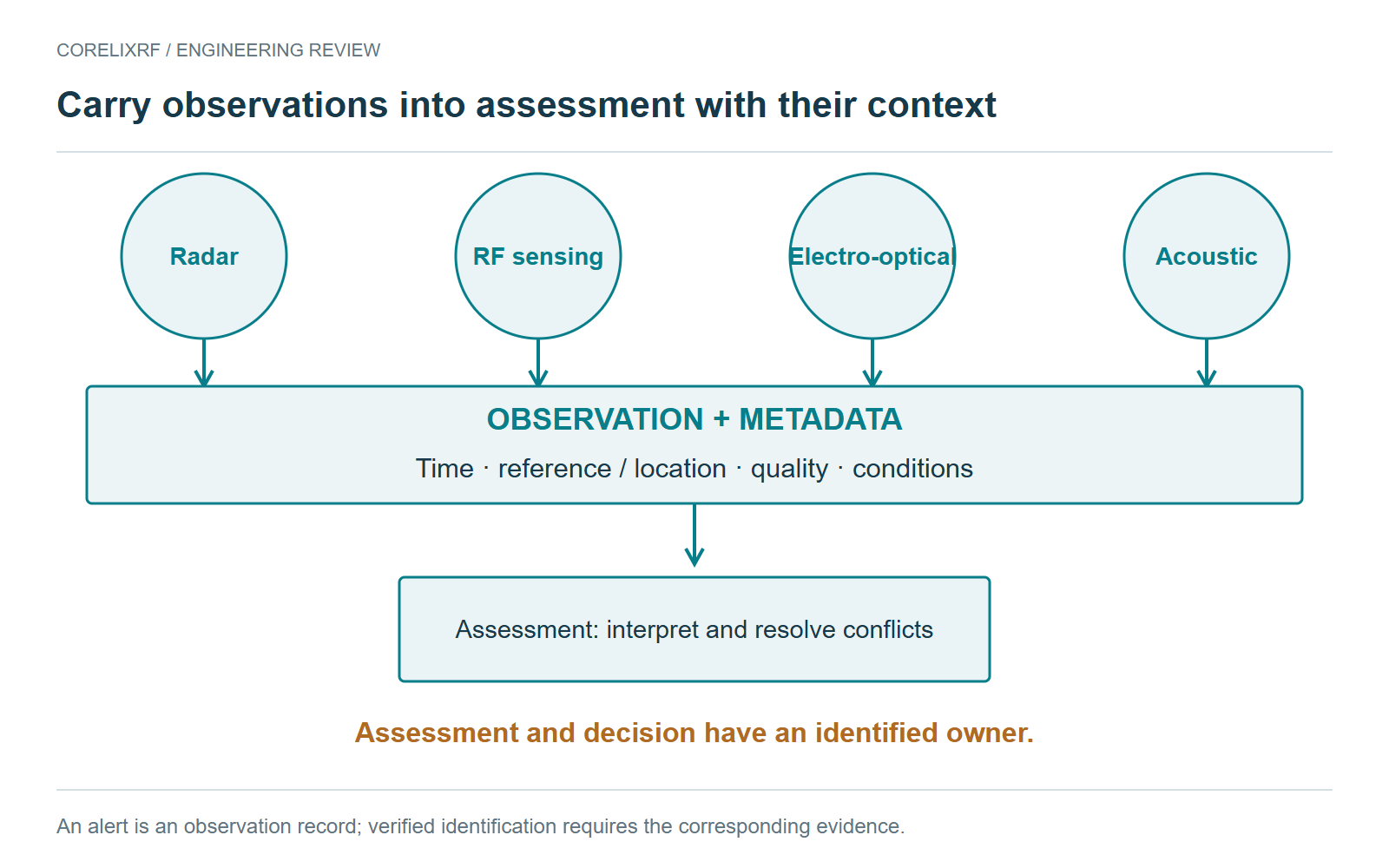
Assign interpretation and any response decision to their responsible subsystem or operator. Contradictory observations require an explicit unresolved state until additional evidence supports an assessment; a sensor’s measurement function does not itself own that decision.
Do not confuse a signal source with a receiver
A signal source produces a defined output for another part of a system or a test. Its presence does not prove passive RF detection capability. If a proposal includes an SDR-labelled item, obtain its exact receive, transmit, processing, and interface functions rather than inferring them from the label.
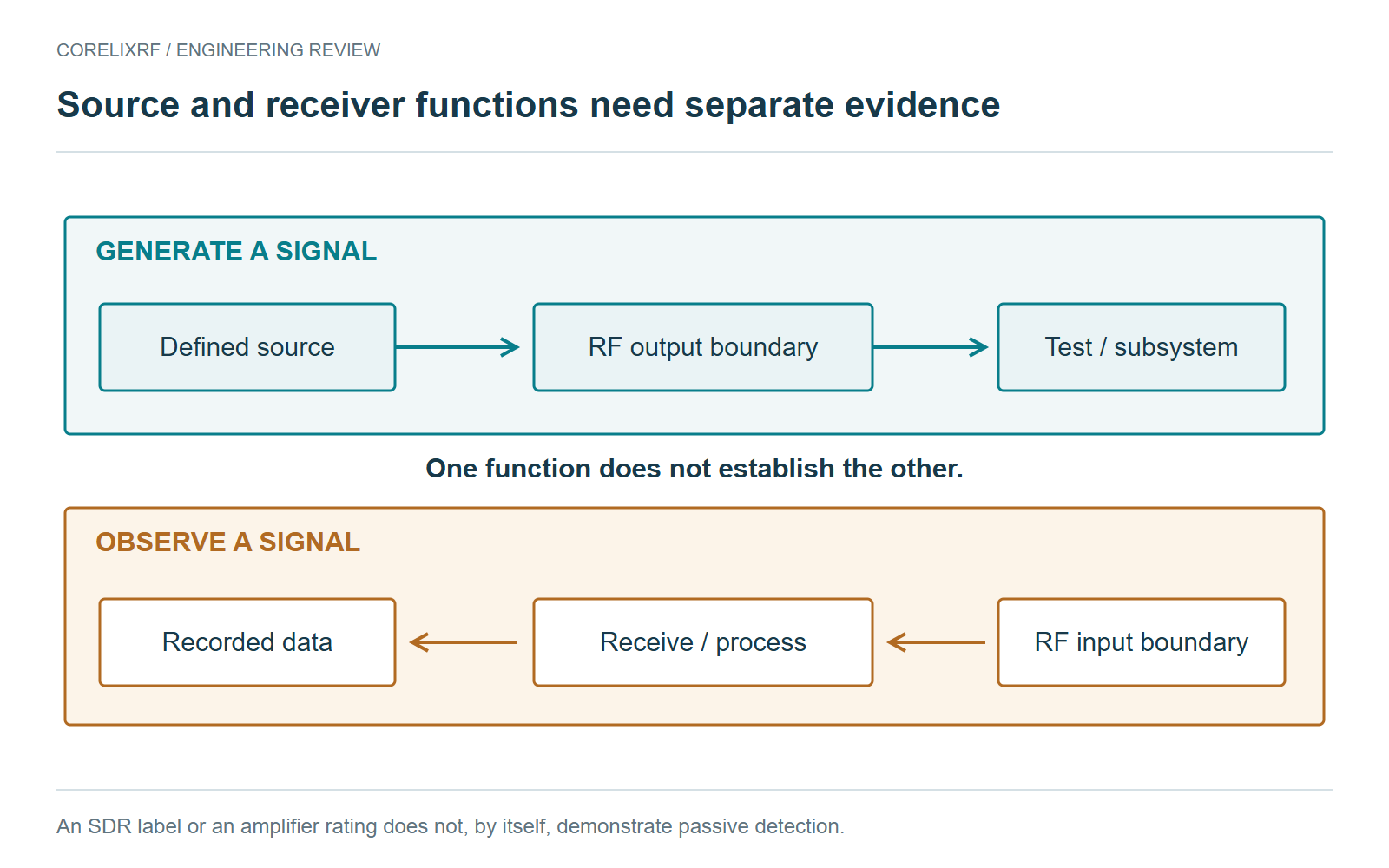
Likewise, a power amplifier’s output specification does not establish detection performance. Keep RF transmit components and receive components separate in the architecture and evidence matrix.
Review the interfaces that join the subsystems
For each data interface, define units, timestamps, update behavior, validity and fault indication in the RF data interface specification. Identify who declares delayed data stale, how a lost sensor is shown, and which supplier owns communications recovery.
An integration review should ask whether the combined evidence remains traceable. Adding more sensors does not by itself resolve calibration, synchronization, incompatible identifiers, or conflicting reports.
Follow one anonymous observation: the sensor emits a time-stamped record with quality metadata; the association process consumes that record and returns an association or unresolved result; the display presents that result to the decision owner. Late data enter the agreed stale-data handling, conflicting observations retain an unresolved association, and loss of the sensor produces a declared unavailable state. Multi-sensor data association testing checks these branches without assuming that adding sensors resolves them.
Define acceptance by function
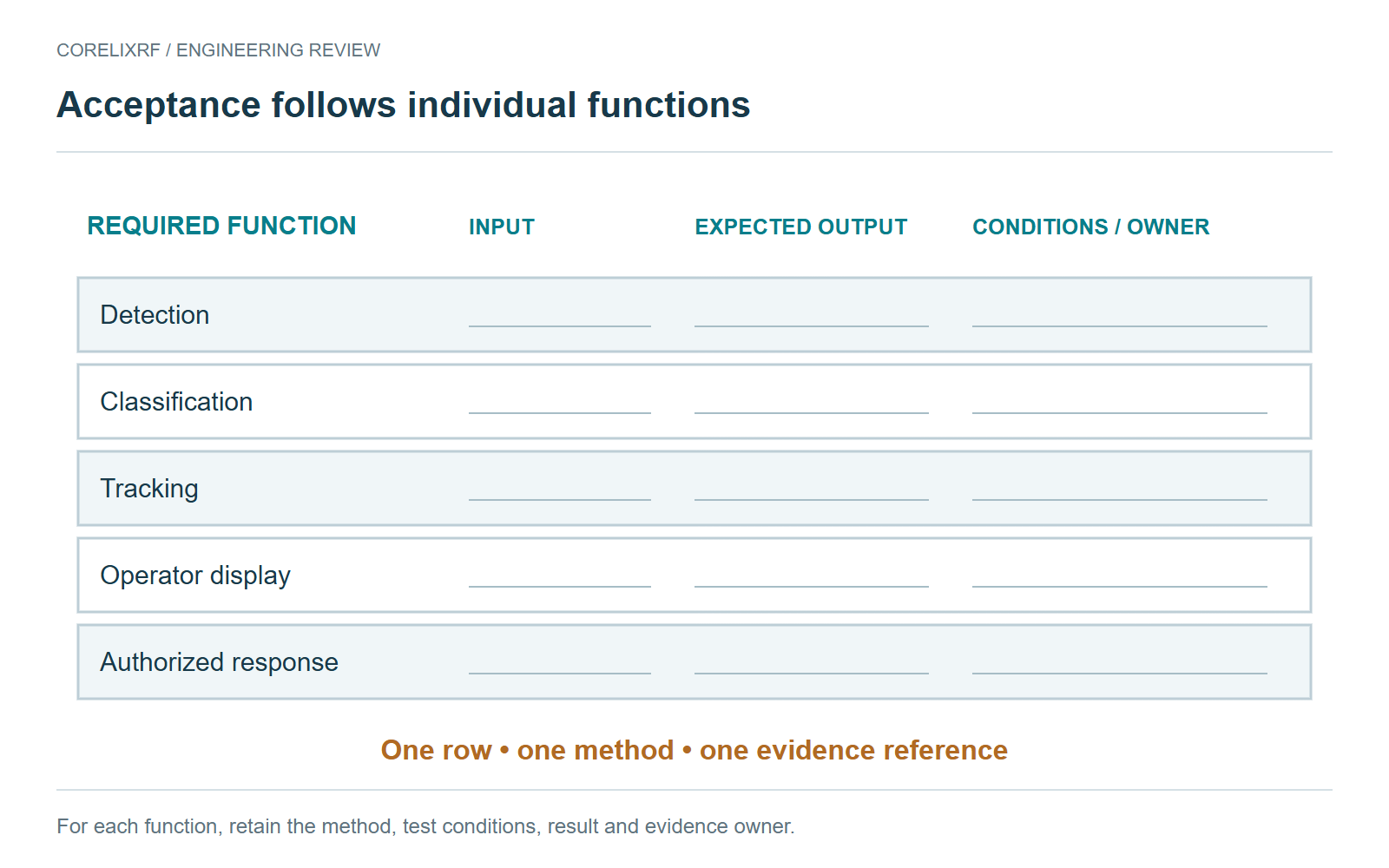
Create one row per required function with its input, expected output, conditions, test method, and evidence owner. Keep detection, classification, tracking, operator display, and response functions separate. Do not let a successful test of one function stand in for the others.
Allocate functions before comparing architecture
Describe each function by the evidence it consumes and the output it produces. Do not infer a complete detection function from a component label.
| Function | Input/output boundary | Review question |
|---|---|---|
| Observation | Sensor data with time and quality metadata | What is directly measured? |
| Association and tracking | Observations to event or track records | How are uncertainty and conflicting inputs represented? |
| Operator decision | Interpreted records to an authorized decision | Who owns interpretation and release? |
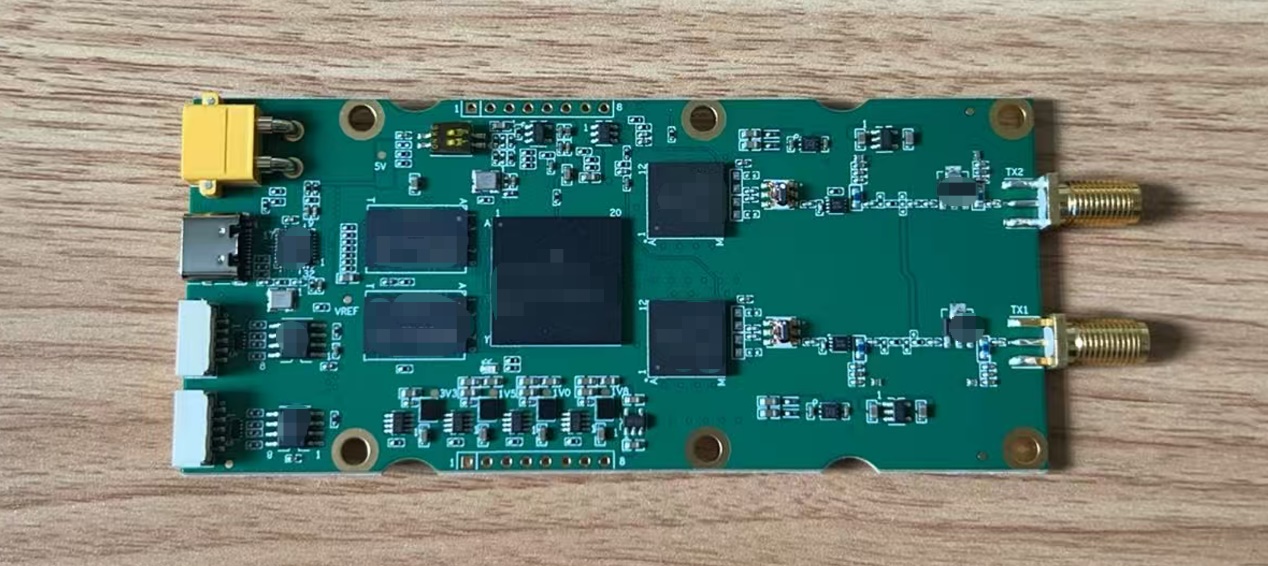
| RF component interface | Specified signal and electrical boundaries | Which performance belongs to the component, which to the system? |
Compare alternative architectures against the same required functions and conditions. After resolving their allocations, submit the selected configuration to the architecture signoff review with its remaining restrictions; comparison and approval are separate decisions. For the component portion of the requirement, review the RF front-end platform scope and keep its hardware responsibilities separate from complete-system outcomes.
The architecture decision is which functions and interfaces need evaluation next. It is not a conclusion that a particular installation is authorized or effective in every environment. Once the required architecture is defined, use the supplier evidence review to compare specific proposals.
An unassigned function calls for adding or reallocating responsibility; duplicate delivery calls for a defined primary output and conflict rule; an external dependency calls for an agreed supplied or customer-furnished boundary. Carry those alternatives into the RF hardware supply-scope review before comparing cost or component count.
Send the RF subsystem diagram and allocated component interfaces to discuss the hardware supply boundary.
Discuss RF Subsystem Boundaries