
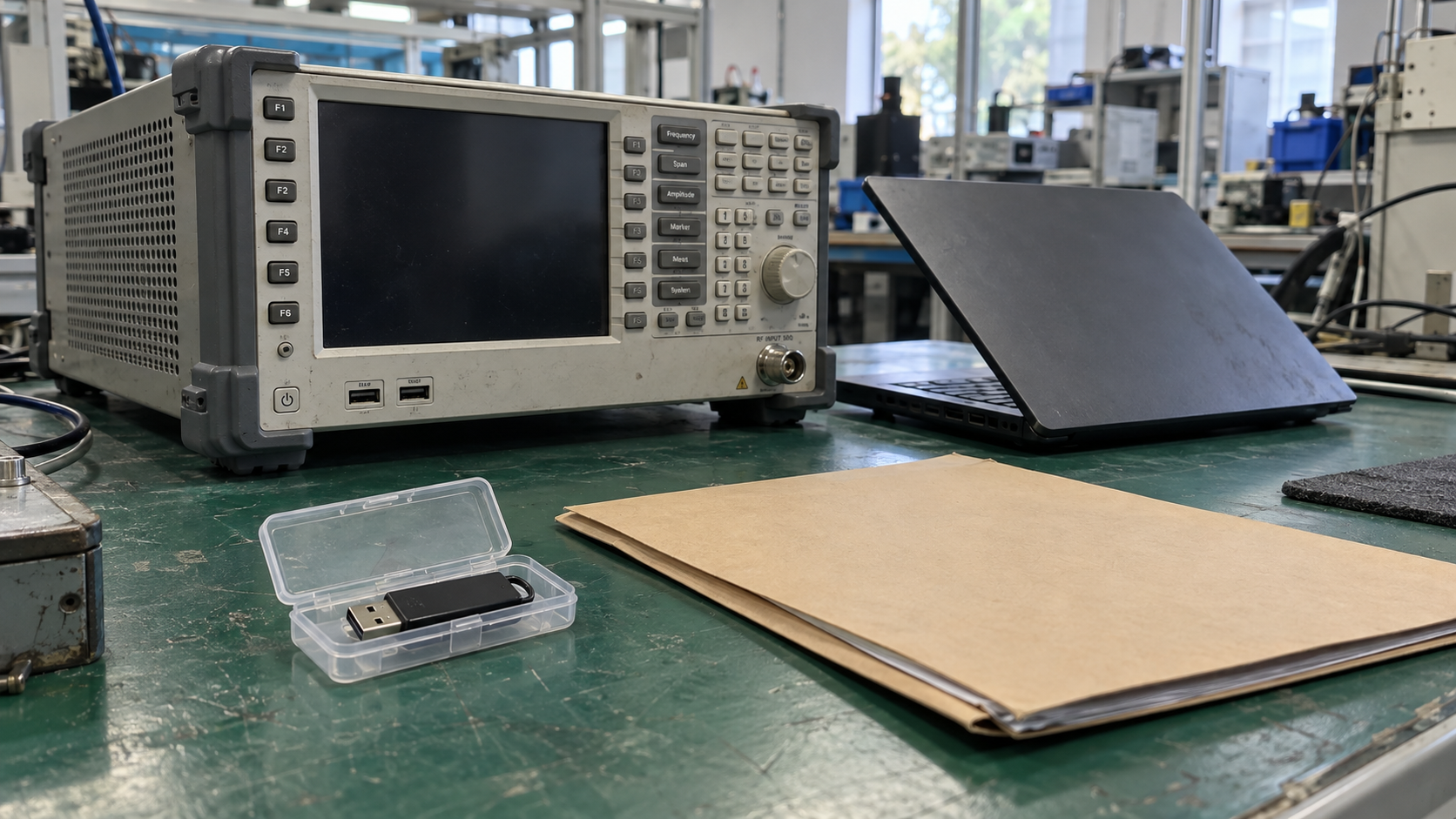
RF incident evidence should preserve capture provenance, time uncertainty and processing history for the responsible investigator. Use the RF project review to identify the scope and owner of any new investigation activity. An unexplained signal is not automatically evidence of a drone or malicious intent.
Preserve the original record
Retain original instrument files and settings, location reference, operator observation, device identity and time basis. Link every filtered export to its parent and processing method. For system messages, preserve the RF data interface specification so measurement time, arrival time and validity can be interpreted correctly.
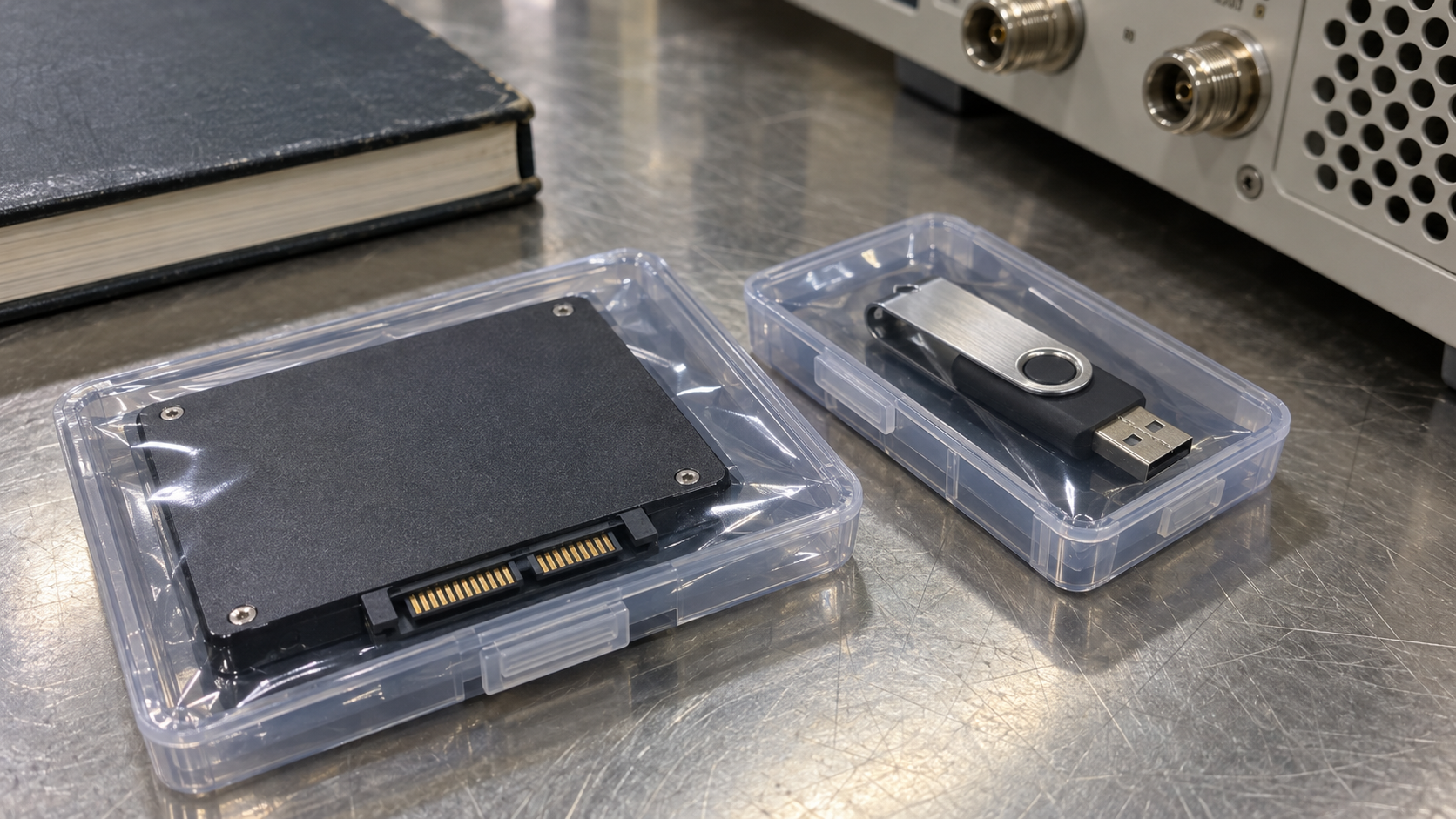
Use the organization’s approved retention and access process. Record who collected, transferred, or changed a file. Where checksums are used, preserve the algorithm and value with the evidence record. A checksum can detect a later byte change; it does not establish that the original interpretation was correct.
Build an event timeline
Separate measurement time, report time, and subsequent actions. Cross-reference relevant site logs using their own time basis. Mark uncertain associations rather than forcing unrelated events into one explanation.

With unaligned recorder clocks, give each observation its time basis and uncertainty interval. Overlapping intervals may leave event order unresolved. Before correlating records, use multi-sensor data association testing to examine the applicable timing and association rules rather than forcing a precise causal sequence.
An evidence handoff log
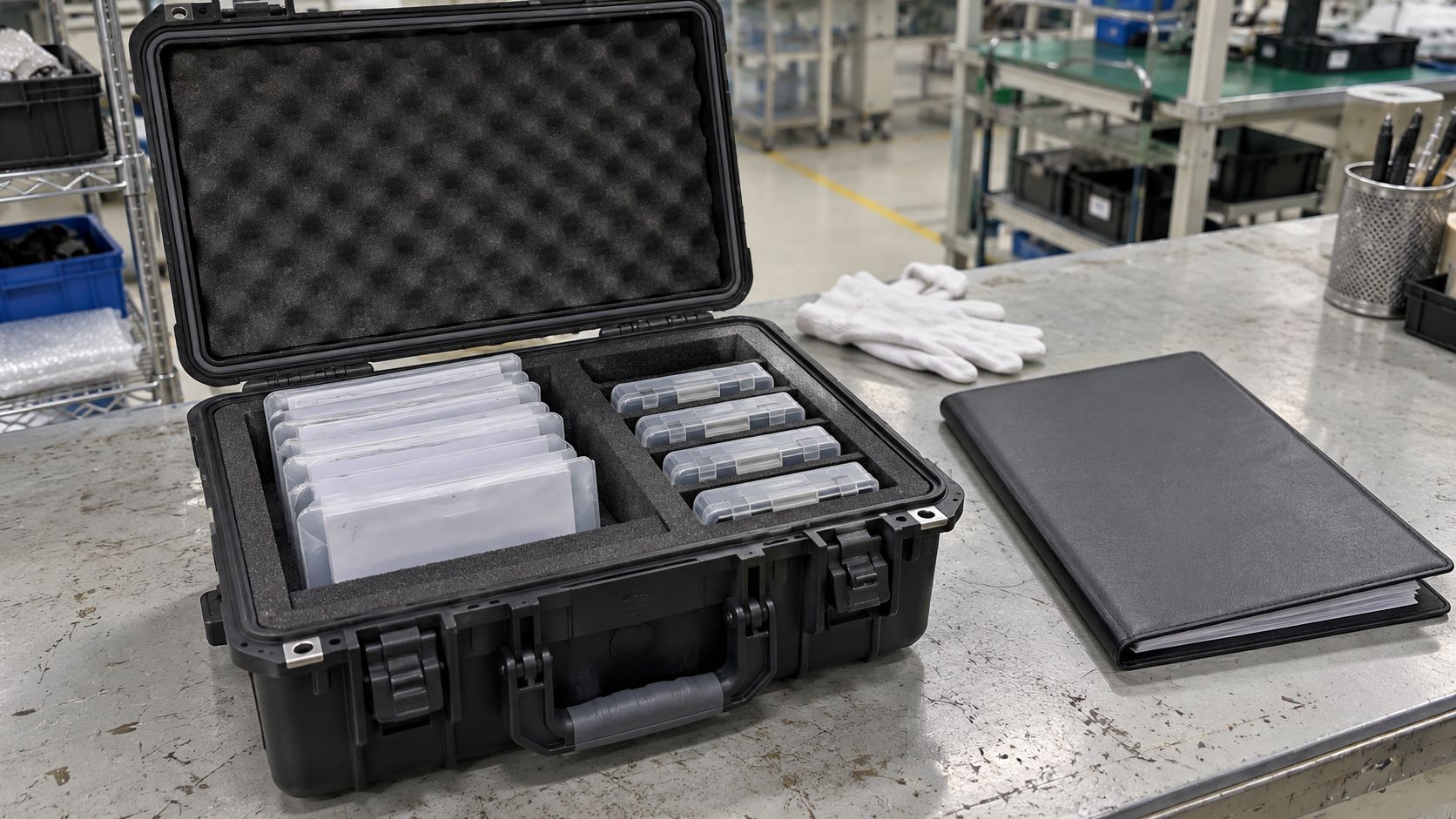
Use one file chain to make custody and processing reproducible. The following anonymous IDs are record labels, not incident findings.
| Record | Minimum contents | Reason |
|---|---|---|
| Original R-01 | Source device, settings, capture time basis and unchanged parent file | Reconstruct acquisition context |
| Derived D-01 | Parent R-01; method/version P-01; parameters and creation time | Reproduce the transformation |
| Observation timeline | Measurement time, reporting time and clock uncertainty | Avoid false event ordering |
| Handoff | Recipient role, transferred R-01/D-01 files, checksum algorithm/value, acknowledgment and open questions | Preserve custody and responsibility |
Escalate a bounded question
Transfer a bounded question, the supported observation and competing interpretations to the responsible investigator. Additional testing needs an RF test plan for its question and conditions, plus a separate check of applicable activity authority through the compliance source index. Permission to collect does not authorize transmission or interference.
The final package should let another reviewer reconstruct the observation and assess competing explanations. A routine site RF baseline provides comparison data when its settings and conditions are compatible.
Contact CorelixRF about RF component identification or equipment-record questions in your evidence package.
Ask About RF Equipment Records